
The complete guide
How to Choose a Camping Kettle That Earns Its Place in the Car
The problem with boiling water outdoors
Everyone underestimates it. At home you flick a switch and get a beep two minutes later. At a campsite you are suddenly boiling water in whatever pot came with the cook set, with the lid balanced half on, waiting for a sign that it is ready. You wander off to peg out a guy line, come back, and the pot has boiled dry or boiled over into the burner.
Hot water is the backbone of camp life. Tea, coffee, instant noodles, porridge, a flask for the walk, hot water for the washing-up bowl, a bottle for a cold sleeping bag. If the way you make it is awkward, every one of those jobs is slightly worse than it needs to be.
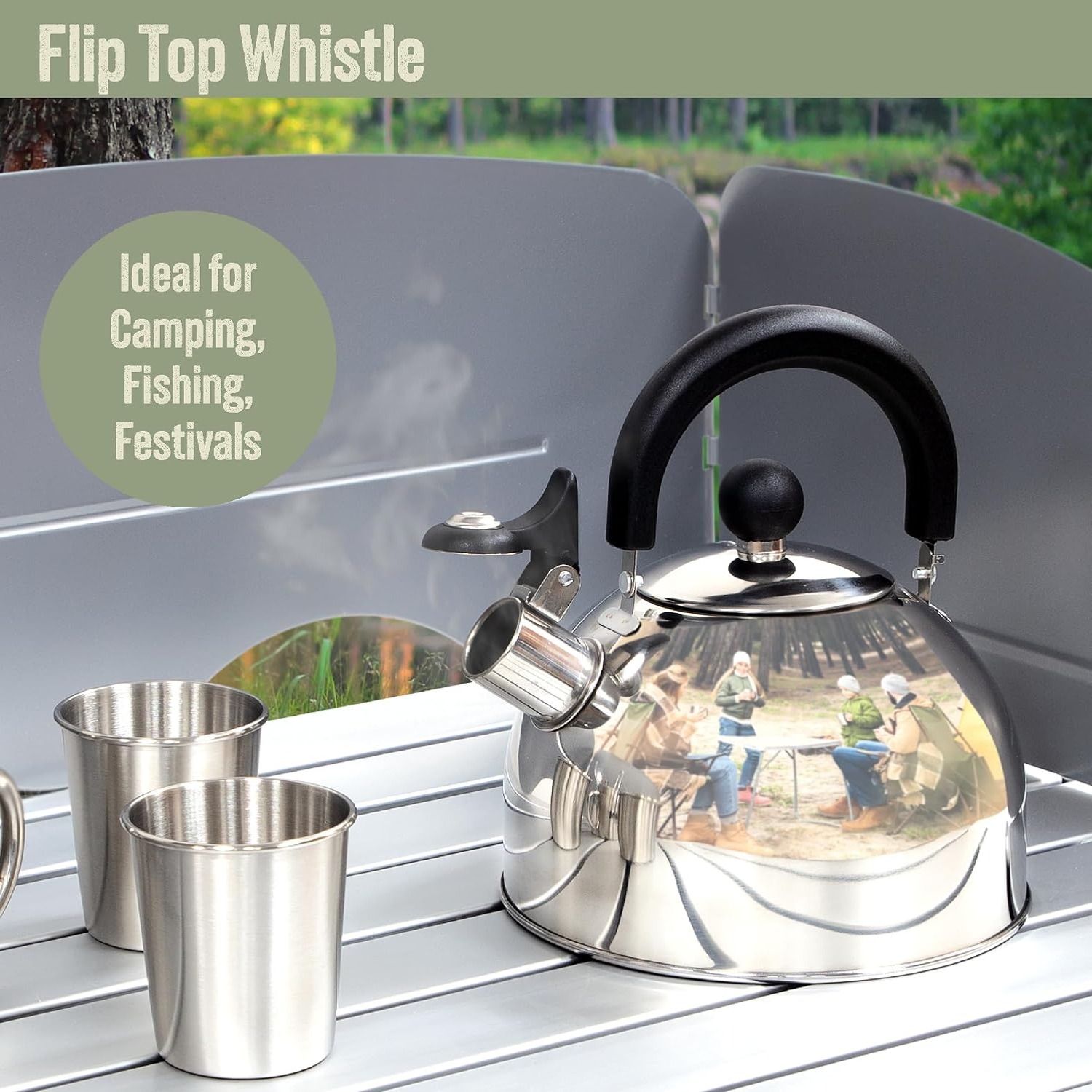
A dedicated camping kettle fixes it with three old ideas. A closed body traps heat so the water gets hotter faster. A spout gives you a controlled pour instead of a slosh. A whistle tells you the moment it is done so you can get on with something else. None of that is clever technology. It just works.
How this kettle works
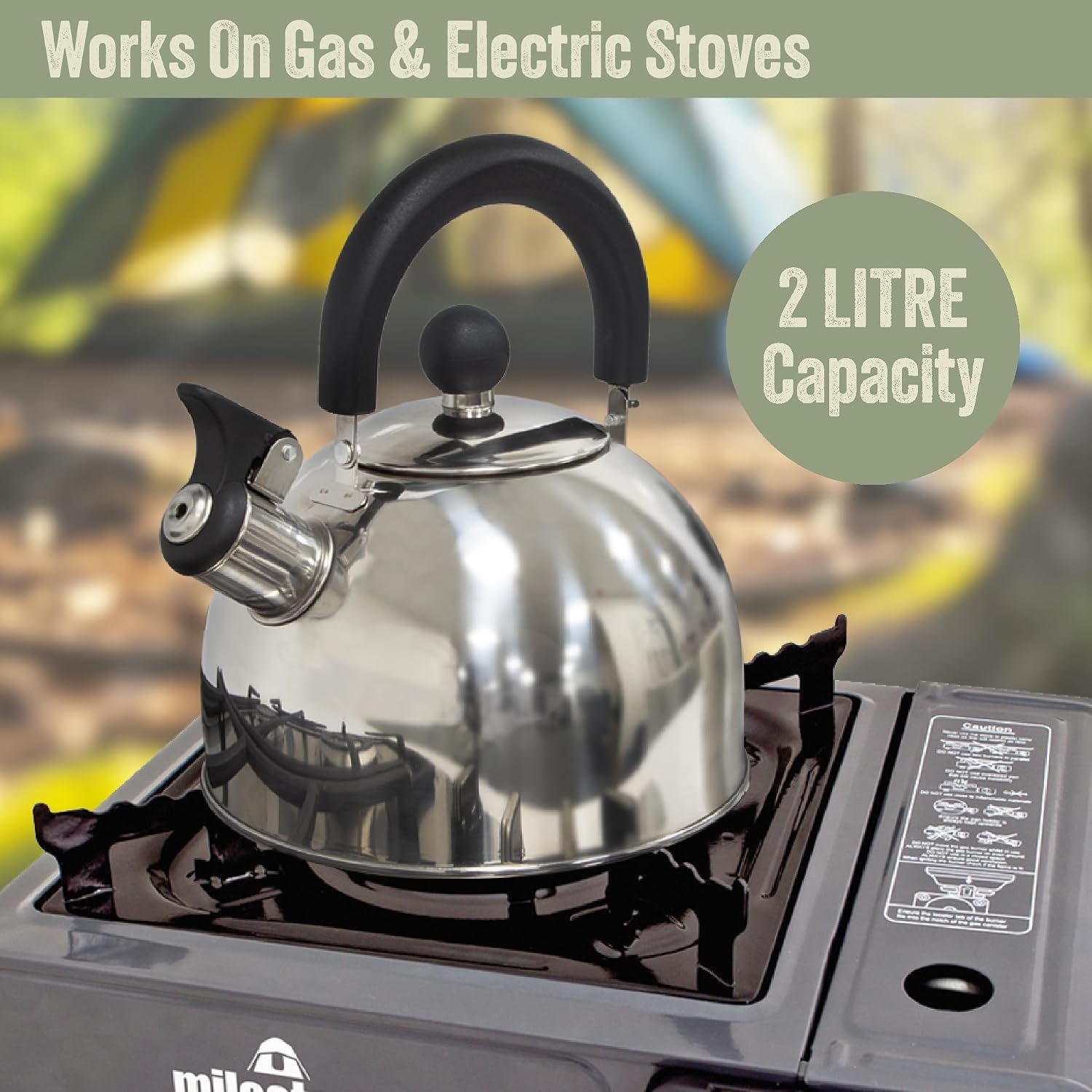
This is a 2 litre stovetop kettle, so it has no electrics, no battery and nothing to fail. You fill it, put it over heat and wait for the sound.
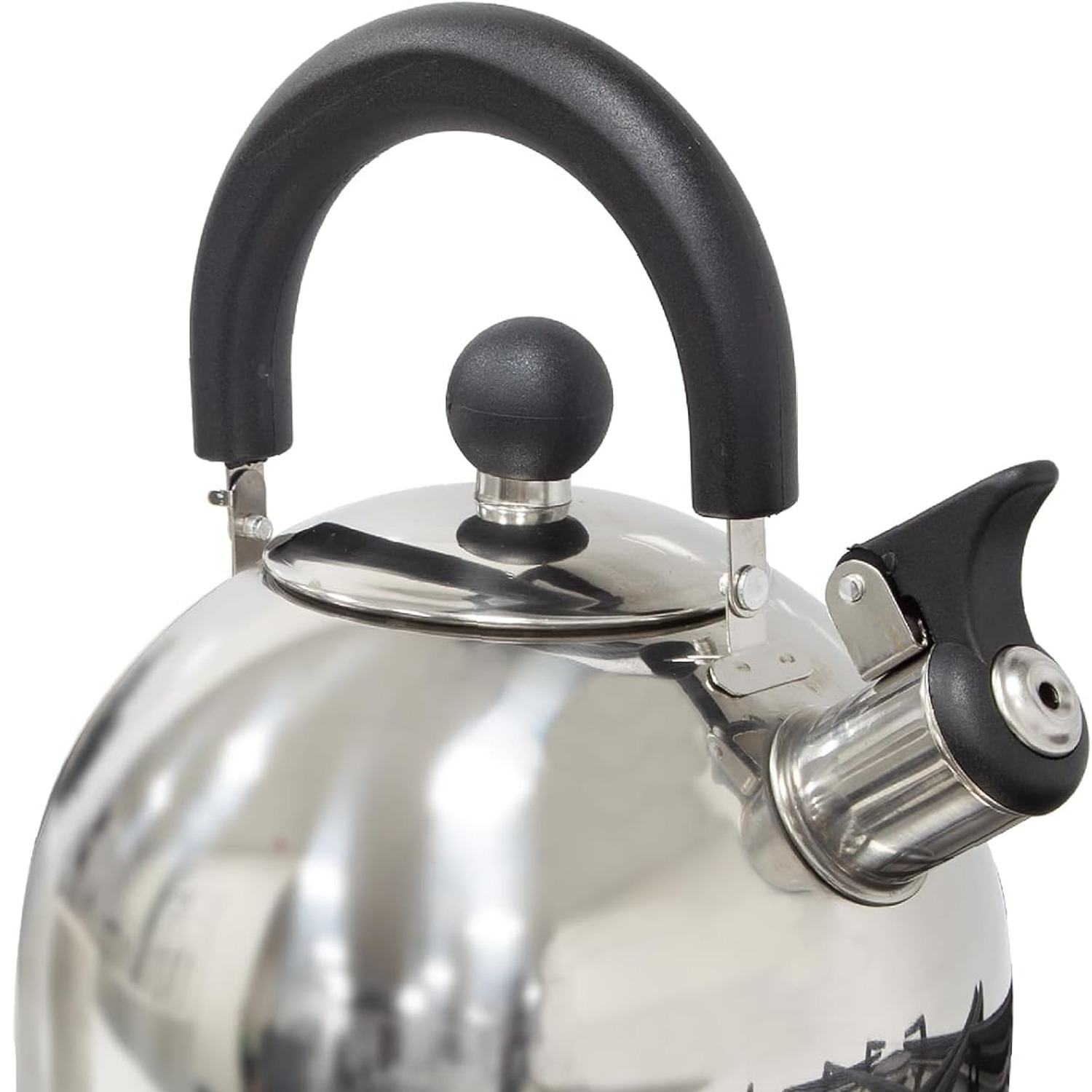
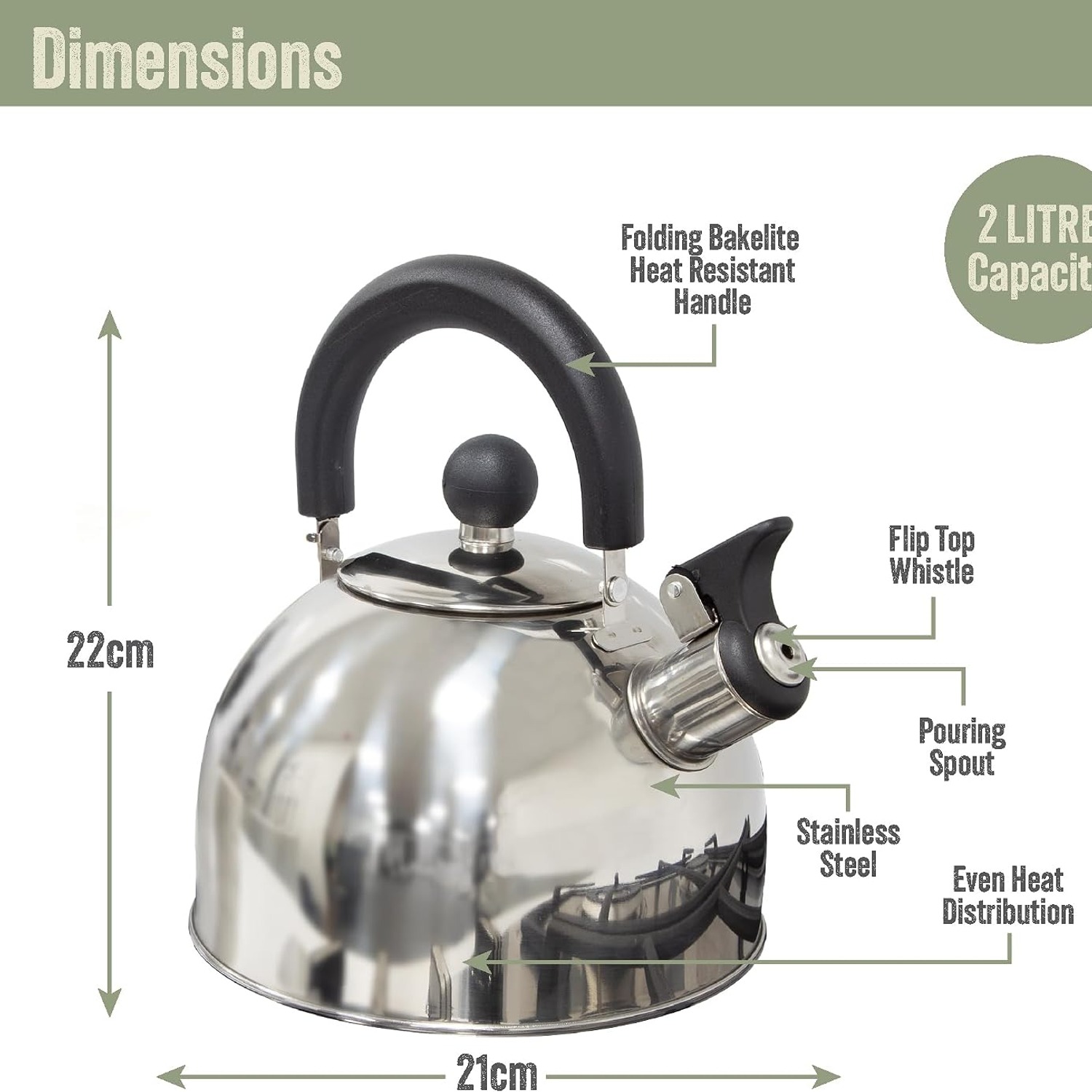
The body combines stainless steel and aluminium. Aluminium is the reason the kettle feels light when you pick it up and the reason heat spreads across the base rather than concentrating in one hot ring. Stainless steel brings the hard-wearing surface and makes up the lid. The combination is a long-standing choice for outdoor cookware because it balances weight against durability better than either metal alone.
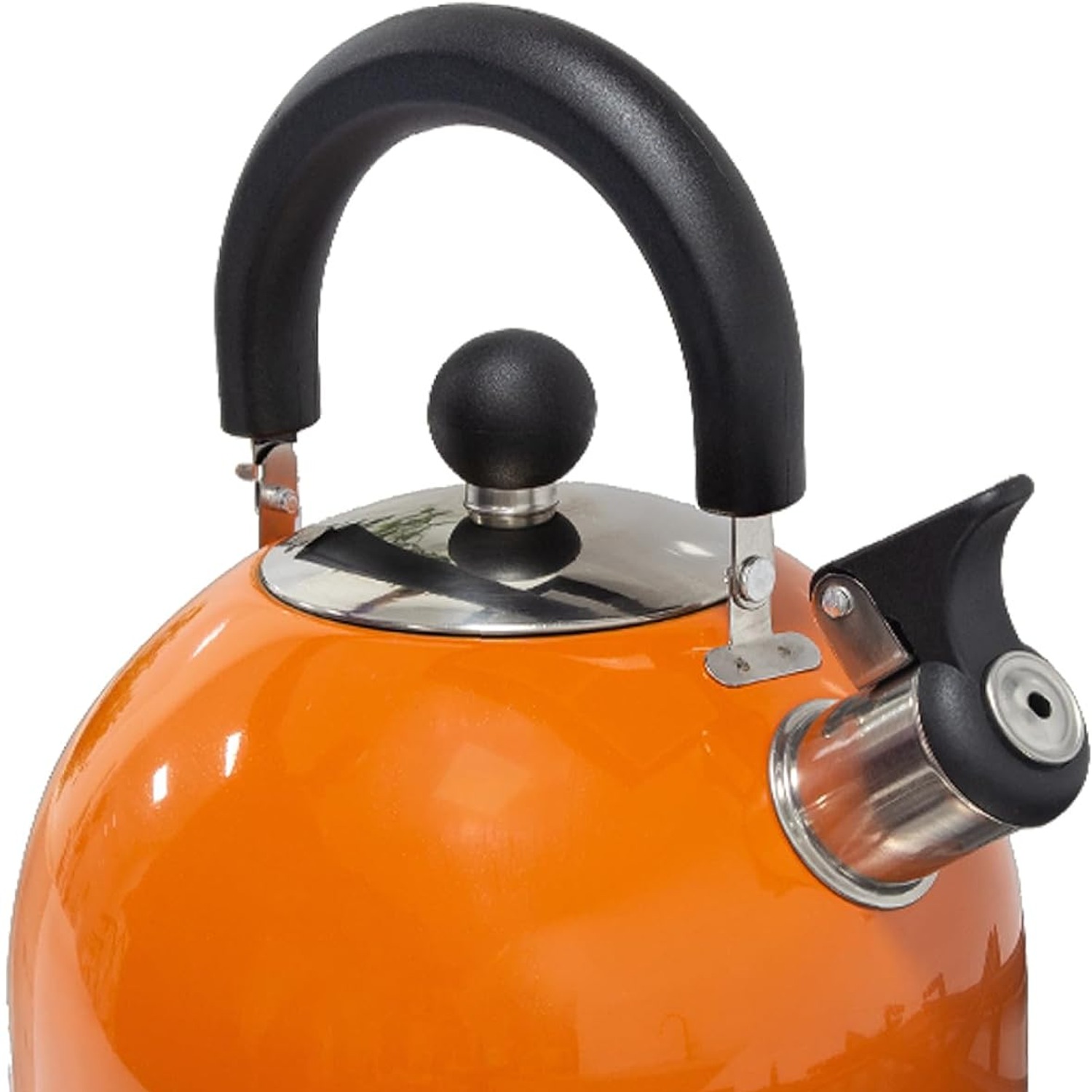
The handle is Bakelite, the dark heat resistant plastic you will recognise from old kettles and pan handles. It stays cool enough to grip when the metal around it is too hot to touch. On this kettle the handle also folds flat, which is genuinely useful. A fixed upright handle is the thing that stops a kettle nesting in a crate. Fold it down and the kettle becomes a flat-topped cylinder you can stack gear on.
Finished size is 18 cm deep by 18 cm wide by 15.5 cm high. It is a squat shape rather than a tall one, which helps in two ways. It sits stable on a camp stove when the ground is not level, and it puts more of the base in contact with the flame.
Who it suits
Families and groups get the most from 2 litres. One boil covers a round of hot drinks for most tents, with enough spare for a flask. If you are the person who ends up making tea for everyone, this saves you doing three separate boils in a small pot.
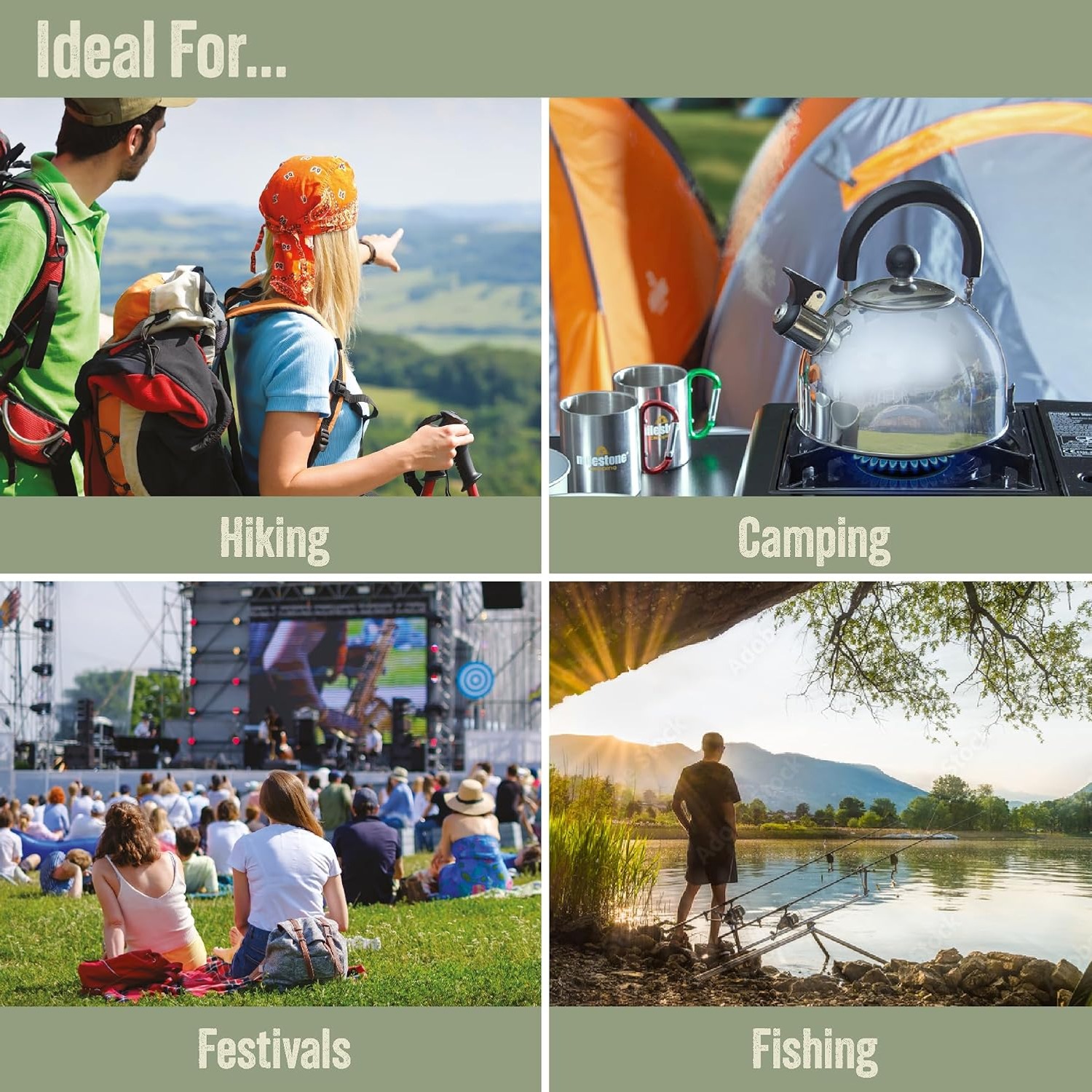
It also suits anyone who cooks away from a kitchen regularly. Fishing on the bank with a single burner. A caravan or motorhome hob where cupboard space is the limit. A boat galley where a low centre of gravity matters. A workshop or garage bench with a gas ring and no plug socket nearby. The brand lists all of those uses, and they all come down to the same thing, which is wanting hot water without mains power.
Solo lightweight hikers are the group this does not suit. If you are counting grams and walking all day, 2 litres is more kettle than you need and a small titanium mug-pot makes more sense. The best camping kettle for one person on foot is a different product to the best one for a family car camping trip.
How to choose a camping kettle
Start with capacity. Count the people and multiply by two mugs. Four people means roughly 1.6 litres before you have made anything else, so 2 litres is about right. Two people can manage with a litre. Six or more and you will be boiling twice whatever you buy.
Then look at the heat source you actually own. Gas camp stoves, caravan hobs and fire grates all take a standard stovetop kettle. Induction is the exception, because it needs a magnetic base. This kettle's compatibility with induction is not confirmed in the product details, so do not assume it. Check with a magnet if that is your setup.
Weigh the handle question. A fixed metal handle survives anything but needs a cloth to hold. A heat resistant plastic handle like Bakelite is kinder to your hands but must be kept out of direct flame. A folding handle packs better than a rigid one. This kettle takes the Bakelite and folding route, which is the right call for car camping and poor for parking the kettle in the embers.
Think about the pour. A narrow spout gives you precision into a mug. A wide one empties faster into a bowl. Whistling kettles need a reasonably narrow spout fitting to work at all, so you get accuracy as a side effect.
Finally, check cleaning. This one is hand wash only. That is normal for a kettle with a mixed metal body and a plastic handle, but it is worth knowing before you pack it, because it means a bowl and a cloth rather than tossing it into a dishwasher at home.
Living with it, trip after trip
Fill it with the amount you need, not the amount it holds. A half fill boils in a fraction of the time and saves gas, which matters when you are rationing one canister across a long weekend.
Keep the flame under the base. Gas that curls up the sides wastes fuel, blackens the body and puts heat where the handle is. Centring the kettle properly is the single biggest difference between a quick boil and a slow one.
Listen for the whistle rather than lifting the lid to check. Every time you open it you let the heat out and start again.
When it has cooled, wash it by hand with warm soapy water and a soft cloth. Skip the steel wool, which scratches the finish. Rinse well, tip it dry and store it with the lid loose so moisture can escape. If your water is hard, run a vinegar and water boil through it every few months to clear scale, then rinse until the smell is gone.
Soot on the outside from a fire grate is cosmetic. Scrub it if it bothers you, leave it if it does not. Plenty of people treat a sooty campfire kettle as a sign of a well-used one.
The short version
This is a straightforward 2 litre whistling camp kettle in stainless steel and aluminium, with a folding Bakelite handle and a shaped pouring spout. It measures 18 by 18 by 15.5 cm, it is hand wash only, and it comes on its own with no extras.
Buy it if you camp with other people, cook on gas, and are tired of waiting on an open pot. Skip it if you hike solo with a tiny stove or need confirmed induction compatibility. For everyone in between, it is the kind of kit that quietly does its job for years and never asks for anything but a wash and a dry.