
The complete guide
How To Choose And Use A Survival Tarp
The problem a survival tarp actually solves
Weather is rarely dramatic. It is usually just annoying. Rain arrives an hour before you planned to set up. The ground is damp from last night. Wind comes across the ridge and takes all the warmth out of a perfectly good afternoon. The temperature drops faster than the forecast said it would, and suddenly everyone is quiet and hunched.
A tarp fixes most of those small problems before they turn into real ones. A good survival tarp fixes them in more than one way, because it is waterproof on one face and heat reflective on the other. That is the difference between a plain groundsheet and something you would actually call emergency kit.
The honest version is this. You will probably use this tarp most often for ordinary things. Sitting on wet grass at a sports field. Covering gear in a ute tray. Shading a camp table. Then one day the car breaks down on a cold road, or a hike runs late, and the same piece of kit is doing something much more serious.
How the two faces work
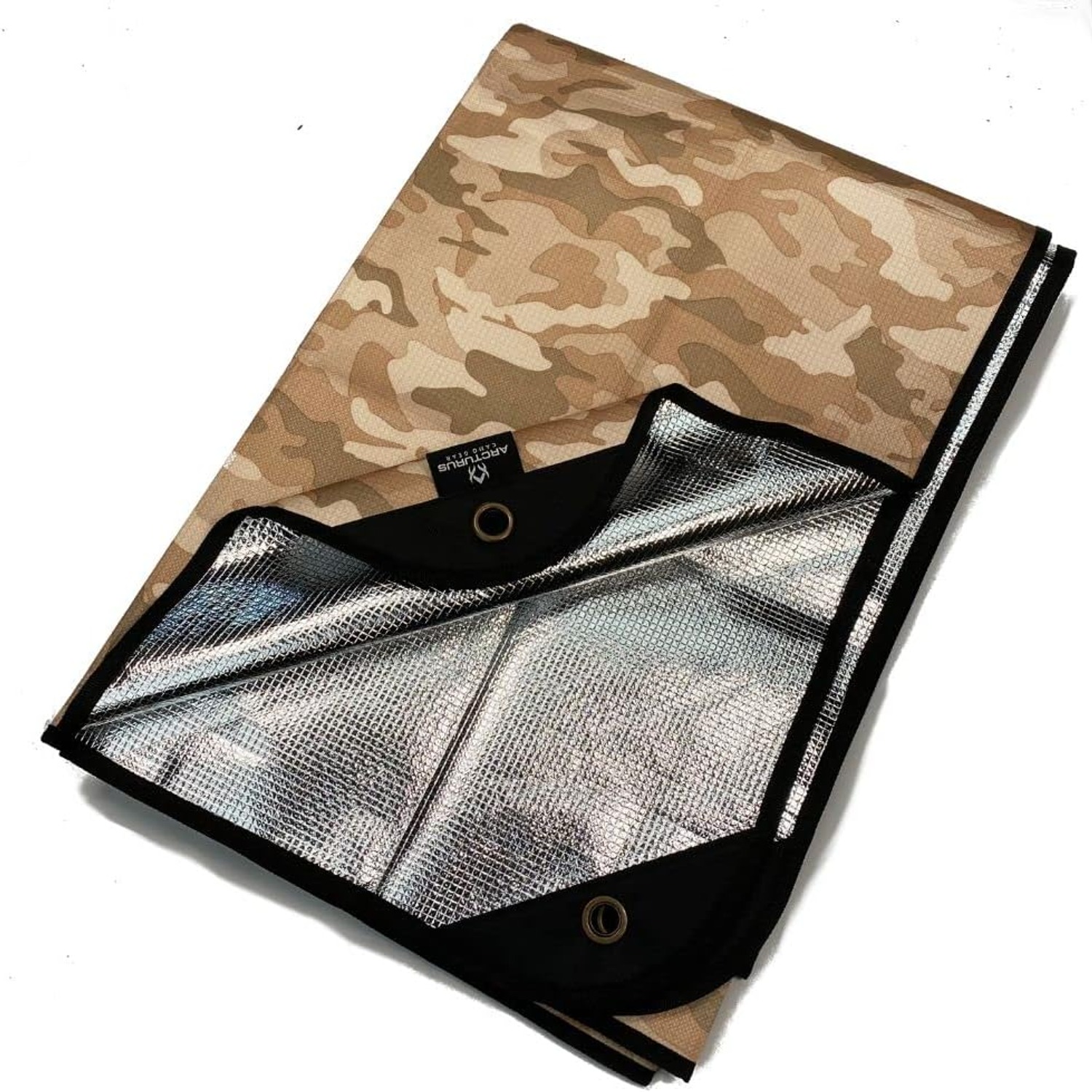
The reflective face is Mylar, an aluminised film. It works as a radiant barrier. Heat leaves your body in three main ways, and radiation is the one most people ignore. A reflective surface near you bounces a share of that radiant heat back instead of letting it disappear into the night sky.
That is why orientation matters so much. Shiny side toward you keeps warmth in. Shiny side out pushes sun away. Same tarp, opposite jobs, decided by which way you flip it. Plenty of people buy the best mylar survival blanket they can find and then pitch it the wrong way round, so it is worth getting that habit right from day one.
The other face is two layers of polypropylene. Polypropylene is a plastic that does not absorb water, which is why it turns up in everything from rope to tarps. Two layers give you a waterproof barrier with some real toughness to it. This is the side that faces the rain, or faces the ground, depending on the pitch.
The tarp also carries UV protection, which slows the fading and brittleness that sun causes in plastic sheeting. It will not make the tarp immortal. It just means a few weeks of summer camping will not wreck it.
The size question
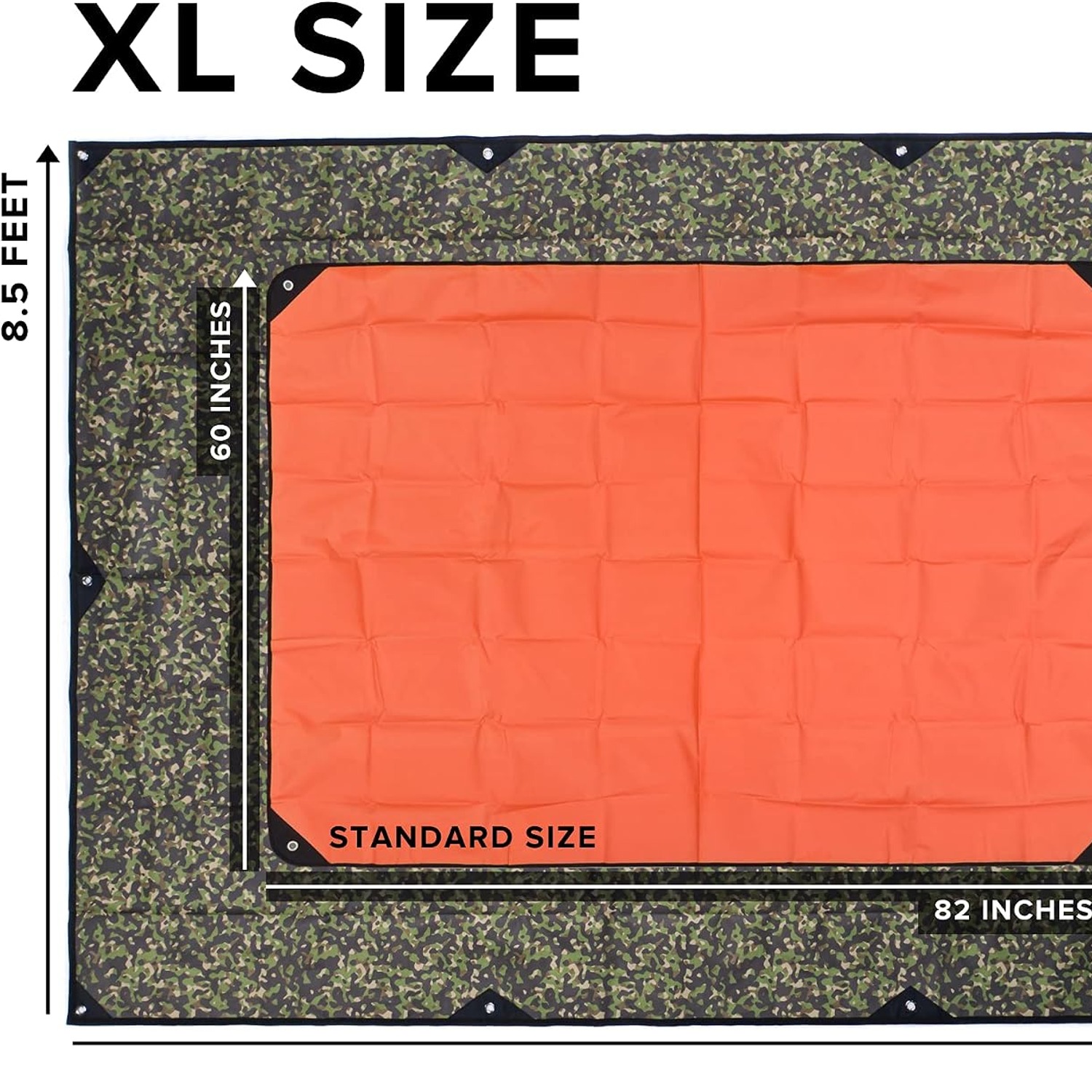
At 2.59 metres by 1.52 metres, this is the extra large version rather than a pocket sheet. One adult can lie on it with room for a pack. Two people can shelter under it in a lean-to. Four can crowd under it in a downpour if they are standing close and nobody minds elbows.
Think about the smallest useful job and the largest likely job. If your smallest job is "dry patch to sit on" and your largest is "sleep under it with one other person", this size works. If you want a family shelter with headroom, you are looking at a different category of tarp entirely, and probably poles.
Weight is part of the size decision. At 1.63 kg it is not the lightest thing in a pack. Ultralight hikers counting grams will go for thin silnylon instead. For everyone else, including hunters, fishers, four-wheel drivers and anyone building a car kit, the weight is fine and buys you durability.
Rigging and the grommets
Most tarps fail at the eyelets. Someone pulls a guy line tight in wind and the metal ring rips straight through the fabric, leaving a torn corner and a useless tarp.
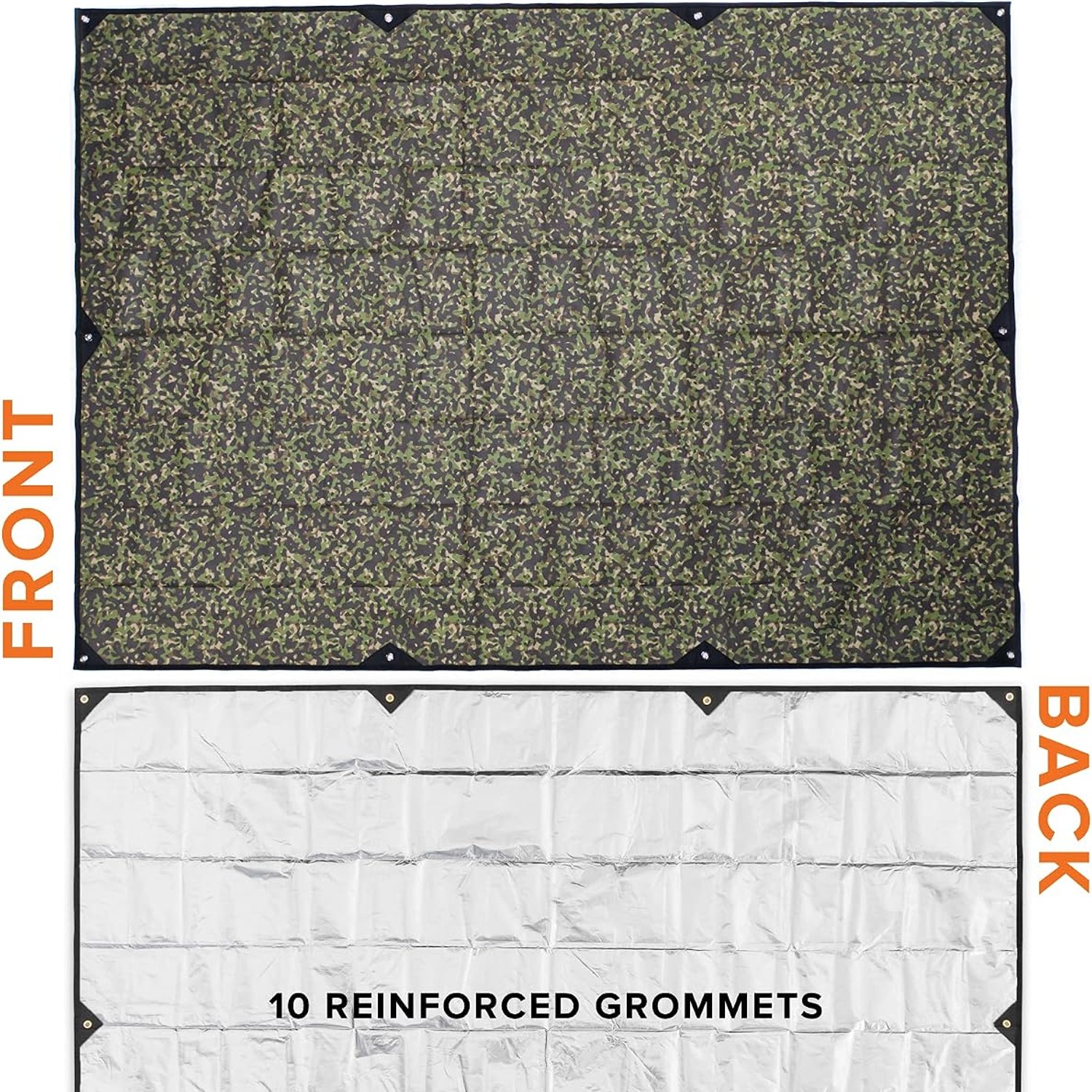
This one uses reinforced nylon patches with claw-style grommets that grip the patch rather than squeezing through it. Ten of them, spread around the edges. That number matters, because tie-down points are what give you options.
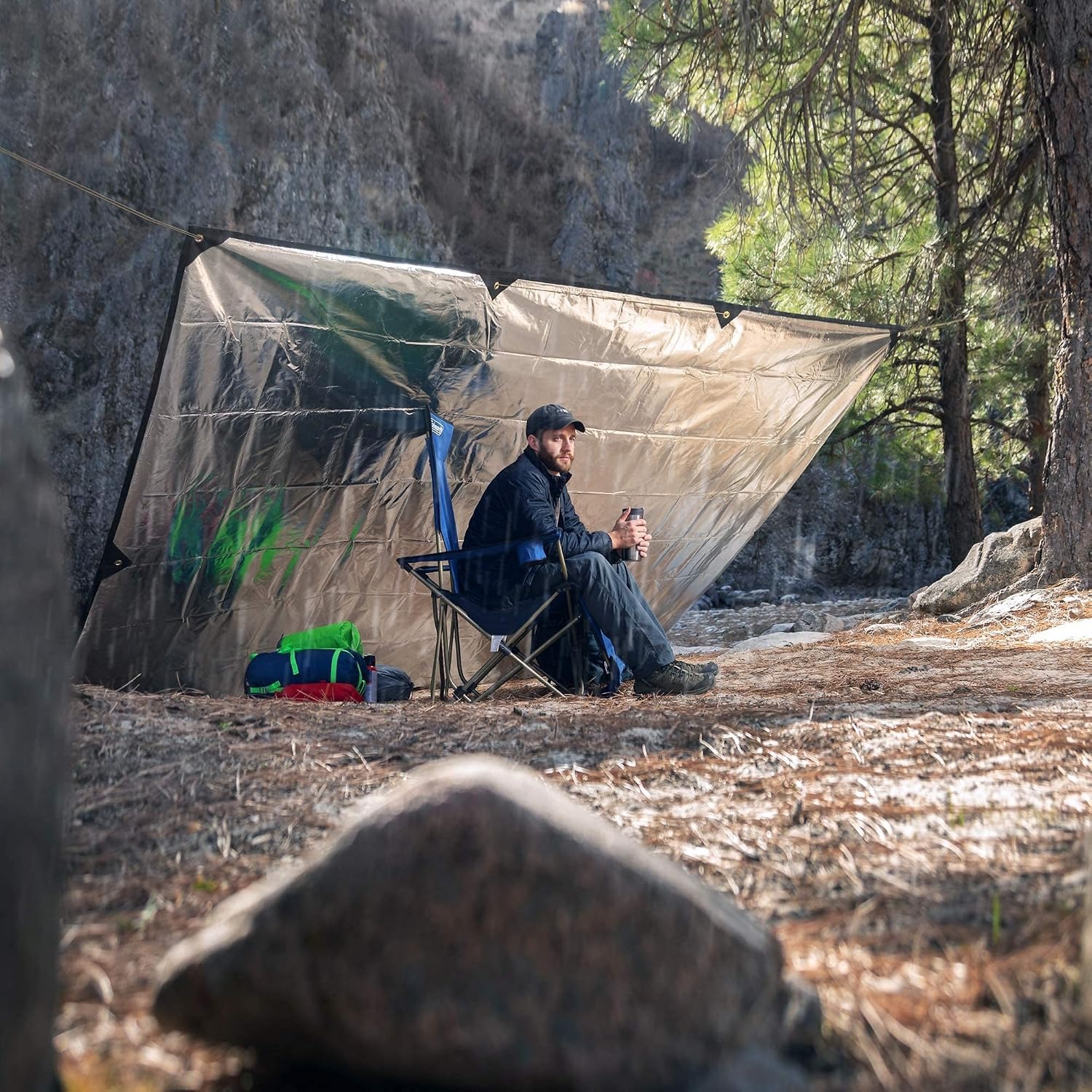
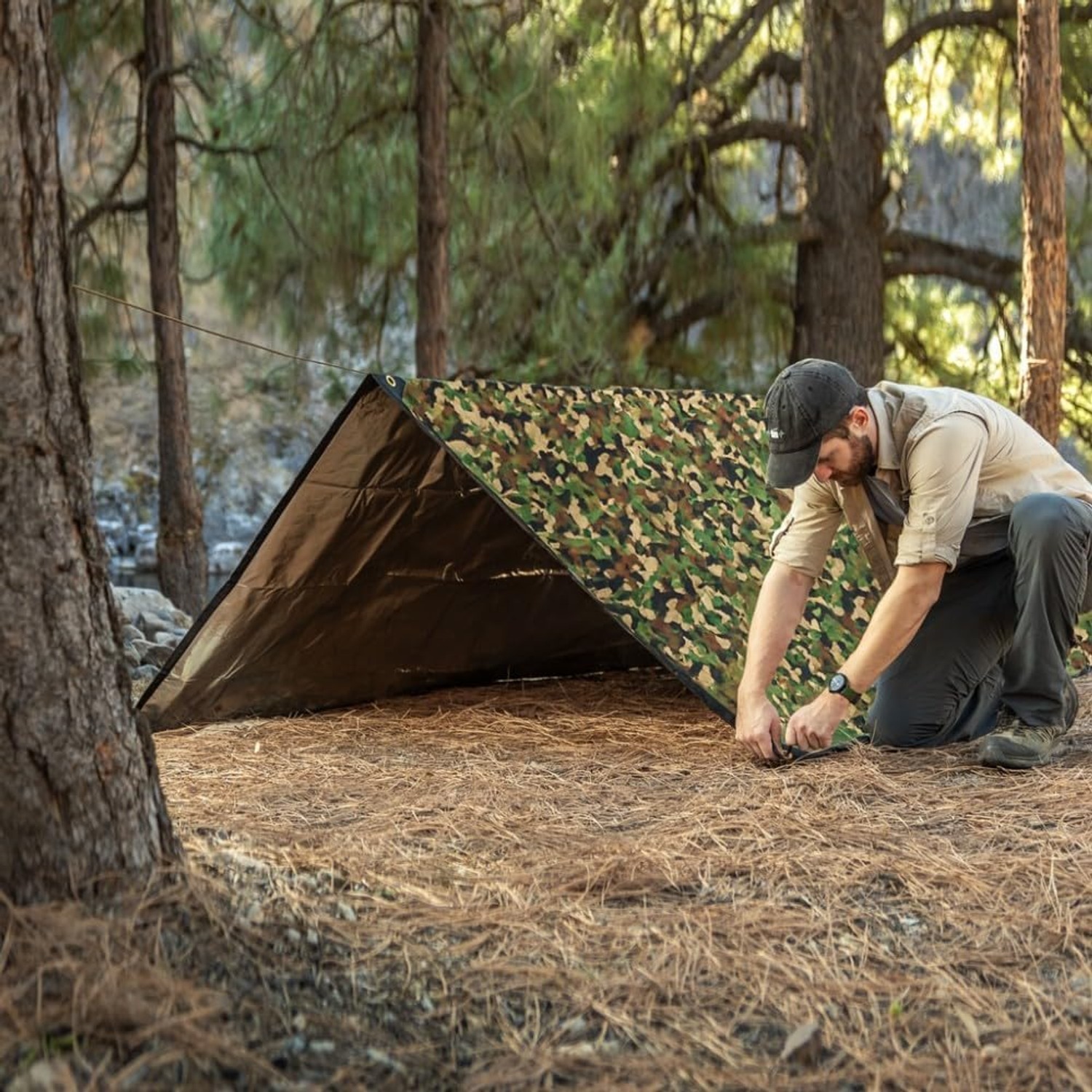
With ten points you can run a simple A-frame over a ridgeline, pitch a lean-to with the back edge pegged low into the wind, or lay it flat as a fly over an existing swag. You can also fold a corner over and tie it off to make a rough bag for firewood or wet gear.
A few rigging habits that help. Spread tension across several grommets rather than hanging everything on one. Use a trucker's hitch or a simple tensioner to pull lines tight without over-straining. Keep the low edge of a lean-to facing the weather, not away from it. And always peg the windward side first.
Who this suits
Campers who already own a tent and want a second layer of protection. A tarp over a tent fly keeps rain off the entry zone and gives you a dry place to take boots off.
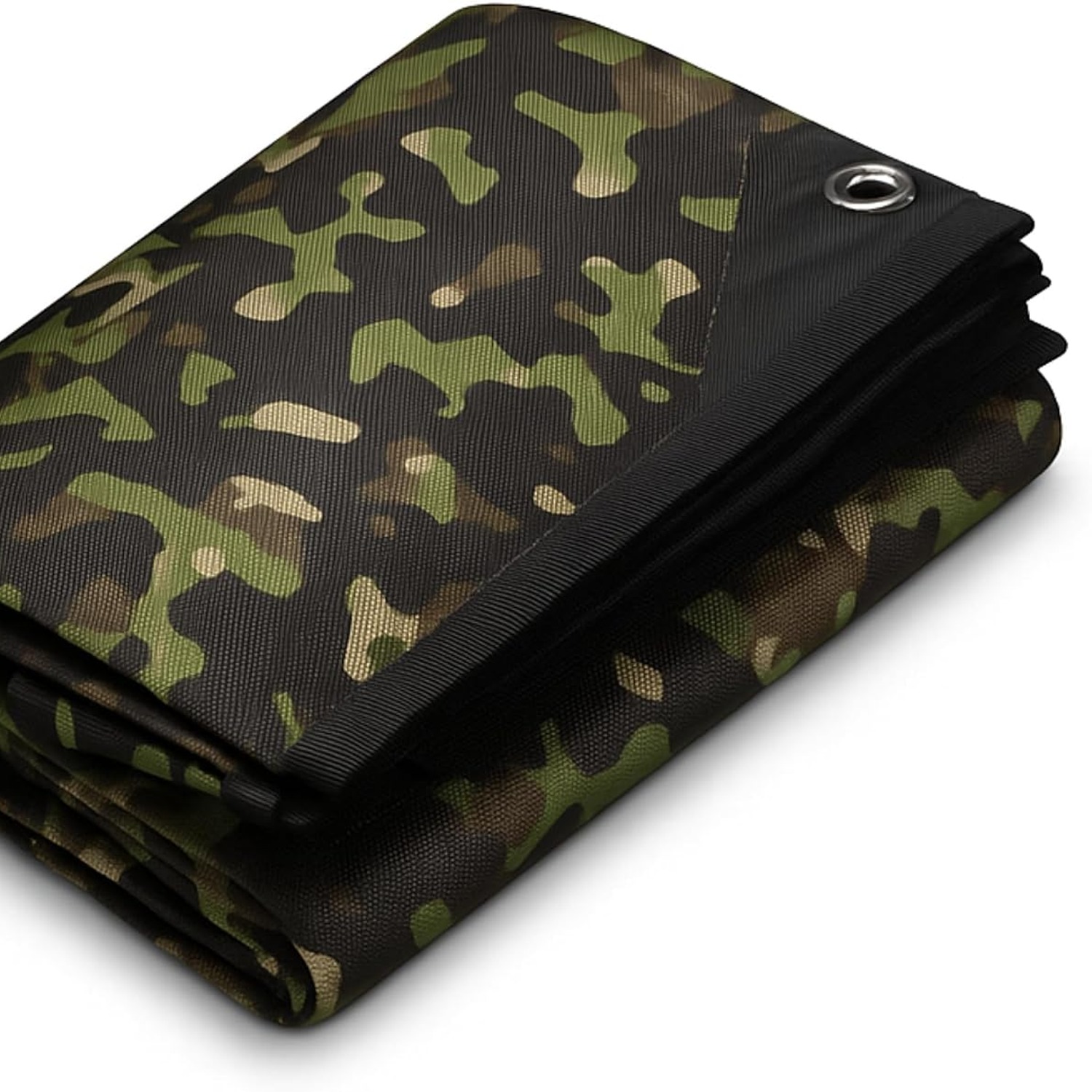
Hunters, because woodland camo keeps a hide quiet and the reflective face can be turned inward for warmth during a cold sit. Anyone searching for the best hunting tarp usually wants exactly that combination of low visibility and real insulation.
Drivers and boat owners who think in terms of preparedness. It lives in the boot or a locker and costs nothing to keep there.
Hikers and backpackers who are happy to carry a little extra for a lot more capability. It is a reasonable pick as the best backpacking tarp shelter for people doing overnight and weekend trips rather than long thru-hikes.
Families who want one useful item for beach, park and sports sidelines. It handles sand, wet grass and sudden drizzle without complaint.
How to choose between tarps
Start with the job. A shade tarp, a shelter tarp and a thermal tarp are different tools even though they look similar on a shelf.
Then check the fabric. Single layer plastic sheeting tears. Two layers of polypropylene is a meaningful step up. If a listing does not tell you the material at all, treat that as a warning sign.
Count the tie-down points and look at how they are reinforced. Four grommets limits you to basic pitches. Ten opens up proper shelter building. Reinforcement patches matter more than the metal itself.
Decide whether you want a reflective layer. If your tarp is purely for shade and rain, you do not need one. If it is part of a car kit or cold-weather plan, a radiant barrier is a genuine advantage and a plain tarp cannot match it.
Finally, think about packed form. A tarp that comes with a carry bag gets stored properly and stays in the vehicle. A tarp without one ends up shoved under a seat and forgotten.
Looking after it
The care routine is short. Shake it out before packing so grit does not grind against the Mylar. If it is muddy, sponge it with cool water and a little mild soap, rinse, then hang it until both faces are completely dry.
Never machine wash it. Never tumble dry it. Heat and agitation are hard on the reflective layer and on the stitched patches. Keep it away from fire, because embers will melt holes in it faster than you can react.
Fold rather than scrunch, and try not to crease it in the same lines every time. Store it loosely in the bag, somewhere dry, out of long periods of direct sun. Looked after that way, a tarp like this stays useful for many seasons.
The short version
This is a big, two-sided tarp that handles rain from one face and heat from the other. Ten reinforced grommets let you pitch it properly instead of just laying it flat. It weighs 1.63 kg, packs into its own bag, and comes in woodland camo.
Buy it if you want one piece of gear that works as a shelter, a ground sheet, a windbreak, a shade panel and an emergency blanket. Skip it if you are counting grams for a long hike or you need a sealed tent with a floor and netting.
For most people, the best insulated camping tarp is the one that ends up living in the car and getting used on ordinary weekends. This one is built for that kind of life.