
The complete guide
Choosing a 6 Person Family Tent, A Practical Buyer's Guide
The problem with "sleeps six"
Tent capacity numbers are the most misleading figures in camping gear. When a tent says it sleeps six, the manufacturer measured six adult sleeping mats laid shoulder to shoulder with no space between them and no room for a single backpack. Nobody camps like that. People bring bags, boots, a cooler, a toddler who sleeps diagonally, and a dog who decides the middle of the floor is hers.
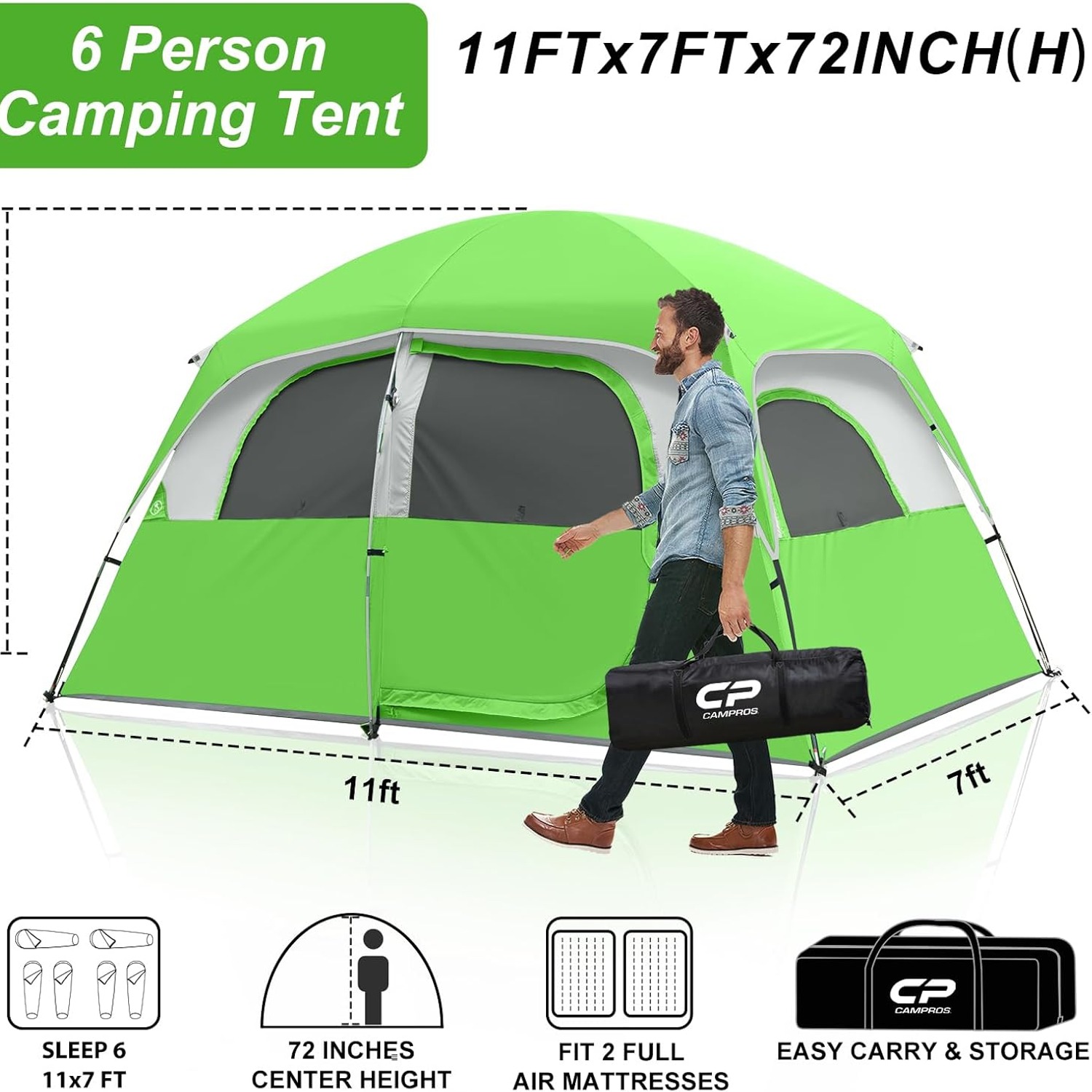
So the first thing to do with any capacity rating is subtract. A six person tent is comfortable for four adults with gear, or two adults and three kids, or a couple who want a palace. If you genuinely need to sleep six bodies, look at an eight person tent or take two smaller tents.
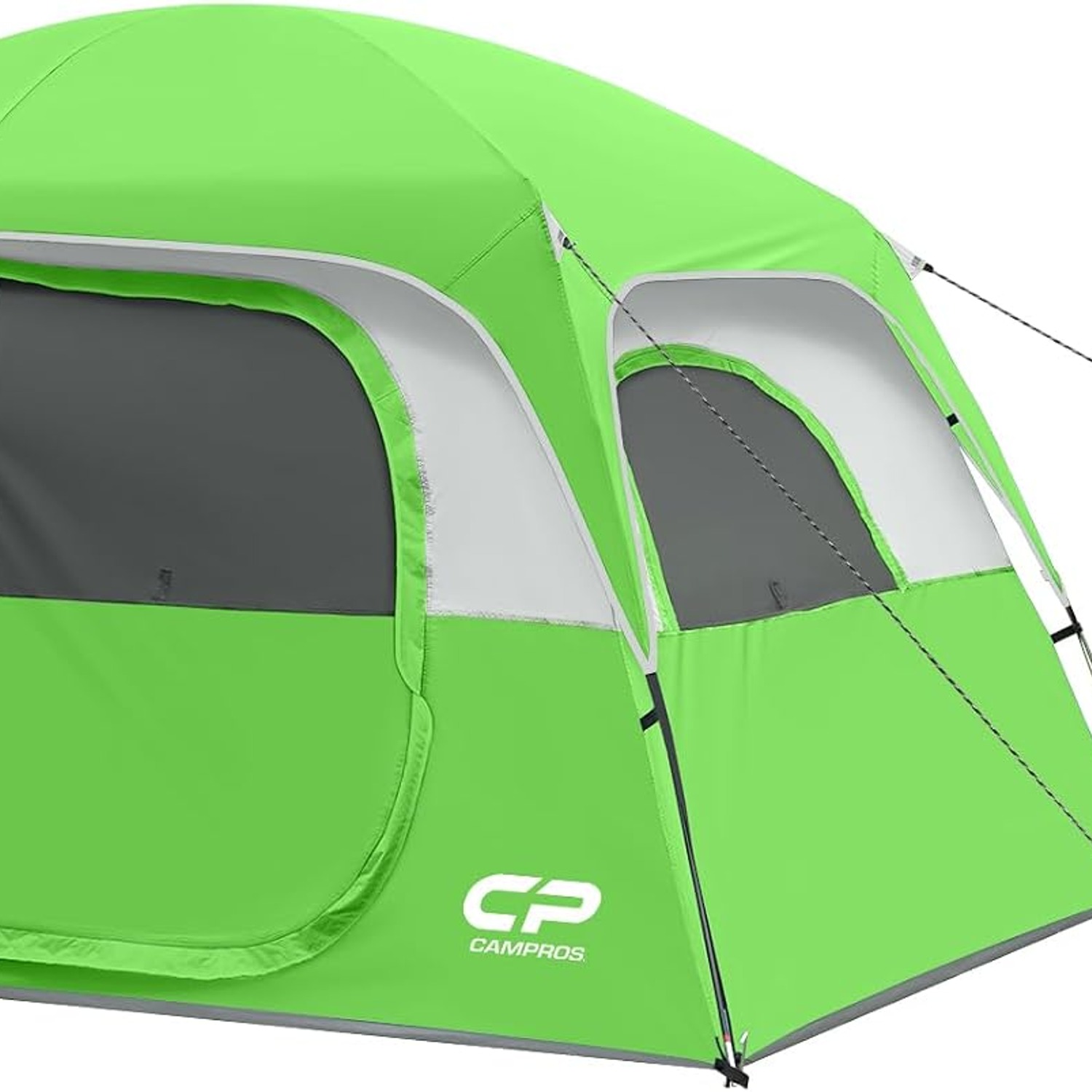
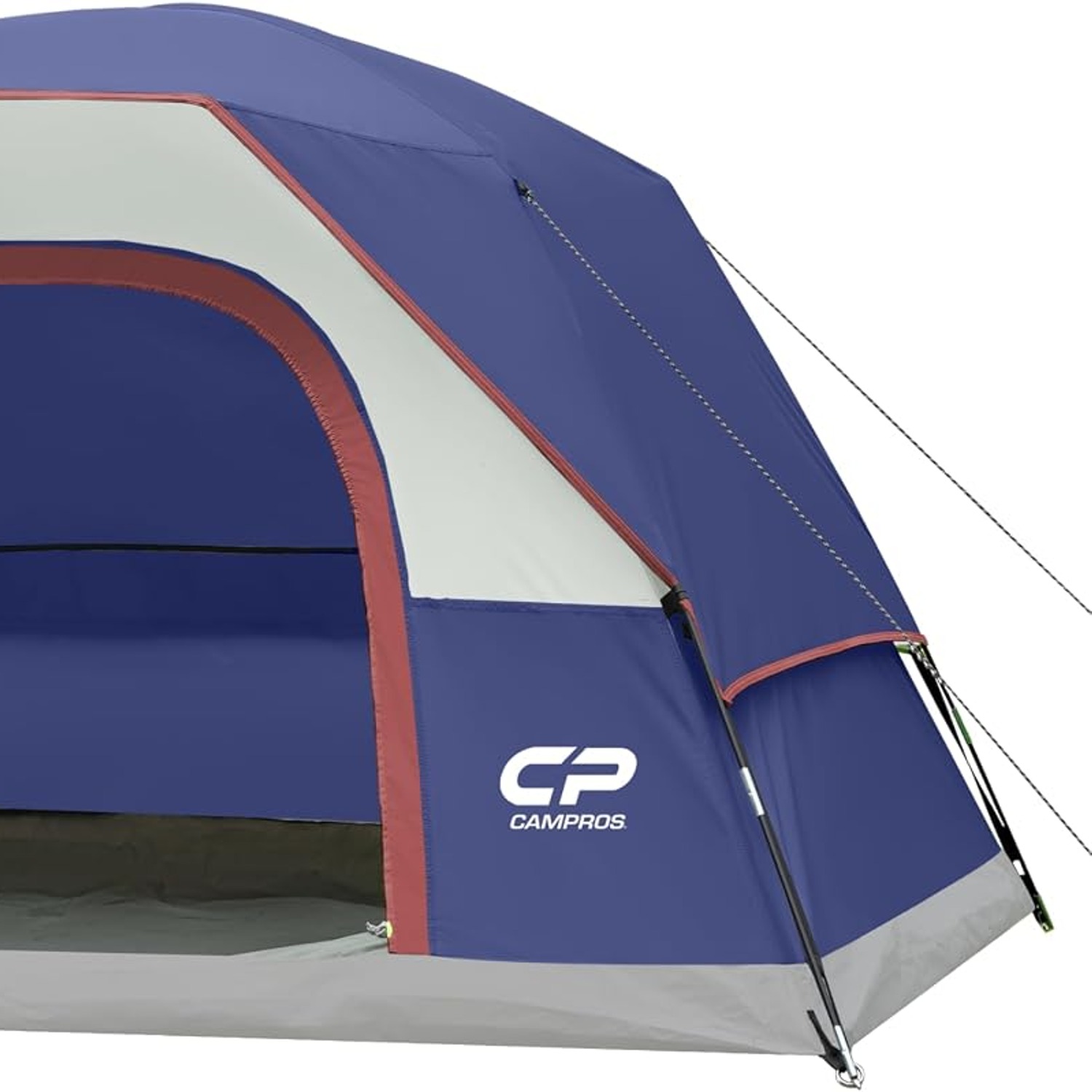
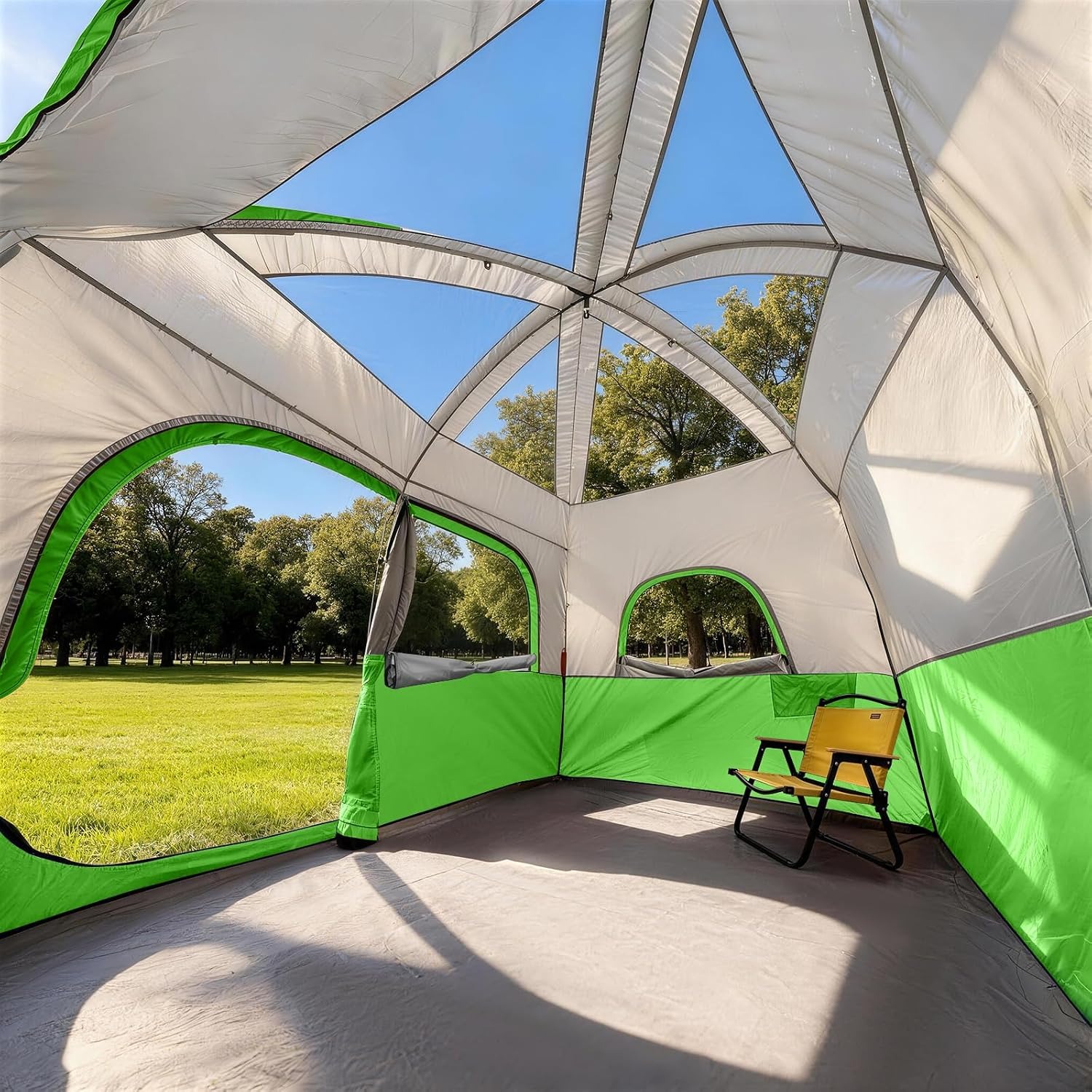
This CAMPROS CP tent gives you a 3.35 metre by 2.13 metre floor, which is 77 square feet. That is a decent rectangle. The useful part is not the square footage though, it is the shape and the height.
Why cabin shape changes how a tent feels
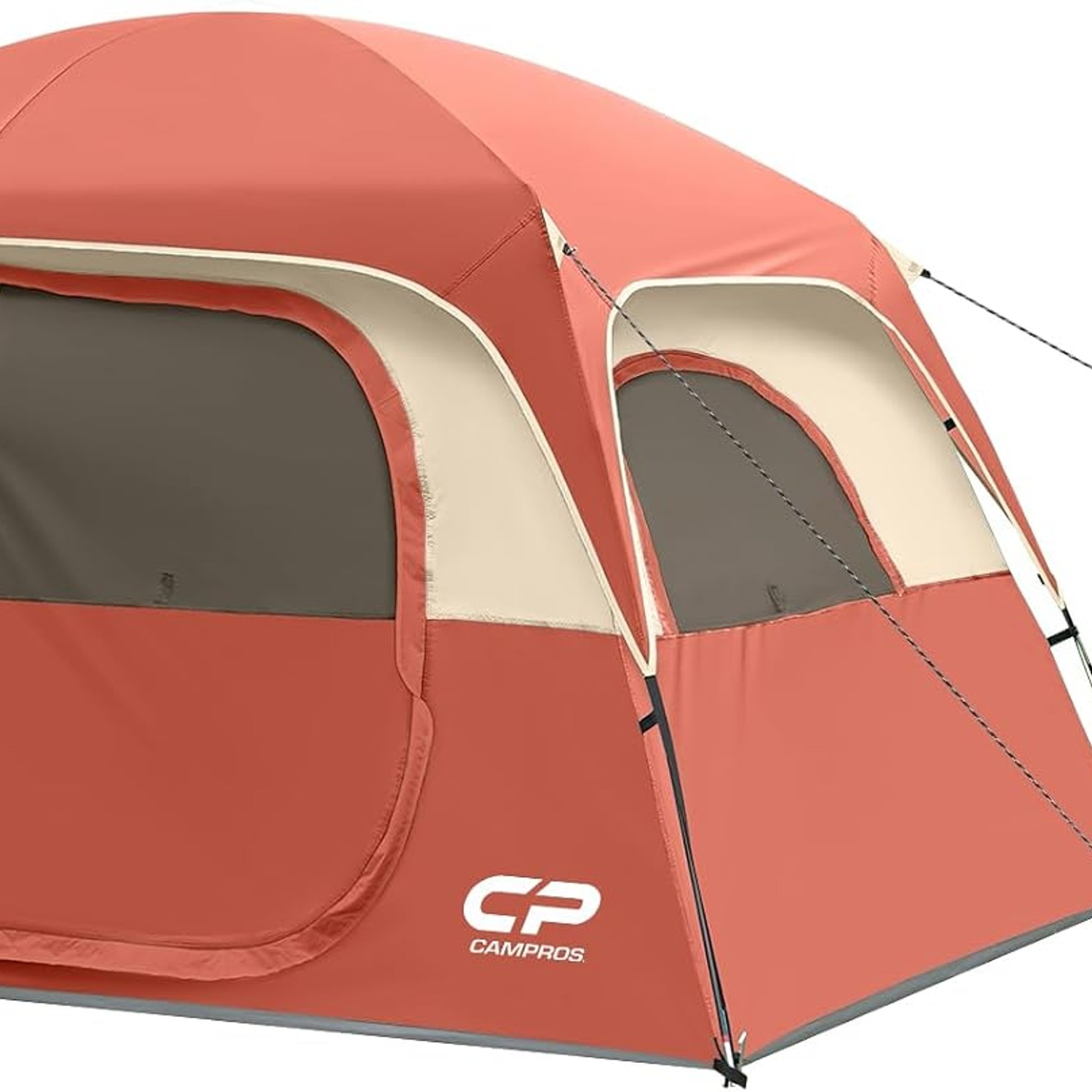
There are two main family tent shapes. Dome tents curve inward from the ground, which makes them strong in wind but means the floor space near the walls is unusable for anything taller than a shoe. Cabin tents have near-vertical walls, so the floor you measure is close to the floor you can actually stand in.
This one is a cabin with a 1.83 metre maximum height. For most adults that means standing up to pull on trousers instead of doing the horizontal wriggle inside a sleeping bag. It sounds minor. After three nights it stops sounding minor.
The trade-off is wind. Straight walls catch more of it. That is why the four guylines matter, and why you should use all of them rather than leaving them coiled in the bag because the forecast looked fine at breakfast.
Weather, fabric and what the numbers mean
The body, floor and rainfly here are all 185T polyester. The T number refers to thread density in the weave. Higher numbers mean a tighter weave, which generally means better water shedding and a bit more durability. Polyester is the standard choice for family tents because it does not sag when wet the way old cotton canvas does, and it resists UV reasonably well.
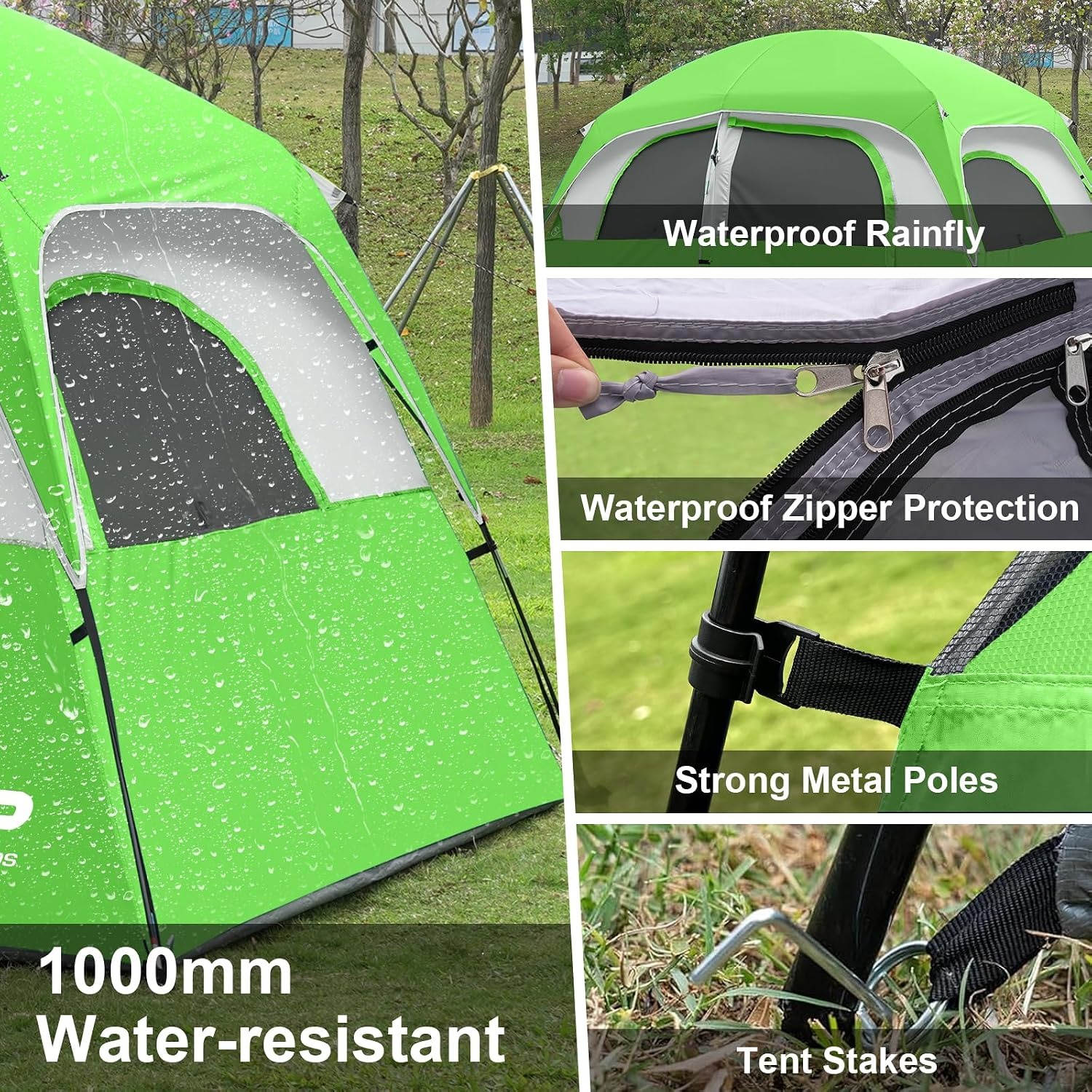
Water resistance is listed at 1000 millimetres. That figure is a hydrostatic head test, which measures how tall a column of water the fabric can support before water pushes through. 1000mm covers normal rain, drizzle and heavy dew. It is a sensible rating for a tent that lives in a car boot and goes out on weekends rather than one that gets dragged up a mountain in a storm.
The rainfly is removable, which gives you two tents in one. Fly off on a still summer night for maximum airflow. Fly on and tensioned when clouds roll in. Just do not leave the fly in the car "because it looked clear", a mistake nearly every camper makes exactly once.
Four poles made from alloy steel feed through sleeves on the tent body. Sleeves take a minute longer to thread than clips but they spread load across the fabric rather than concentrating it at a few points. On a tent this size, that is the right call.
Ventilation and condensation
Condensation is the thing new campers blame on a leak. Six people breathing in an enclosed space overnight put out a surprising amount of moisture, and if that moisture has nowhere to go it collects on the inside of the fabric and drips.
Four mesh windows is a good answer. They sit around the tent, so air comes in one side and leaves the other instead of sitting still. Mesh keeps mosquitoes and midges out while the air moves. On warm nights you can run the windows wide open and still sleep bug-free.
A few habits help too. Leave a window cracked even when it is cool. Do not cook inside. Keep wet boots in the vestibule area near the door rather than in the middle of the floor. Shake the fly out in the morning before packing.
Setting it up without an argument
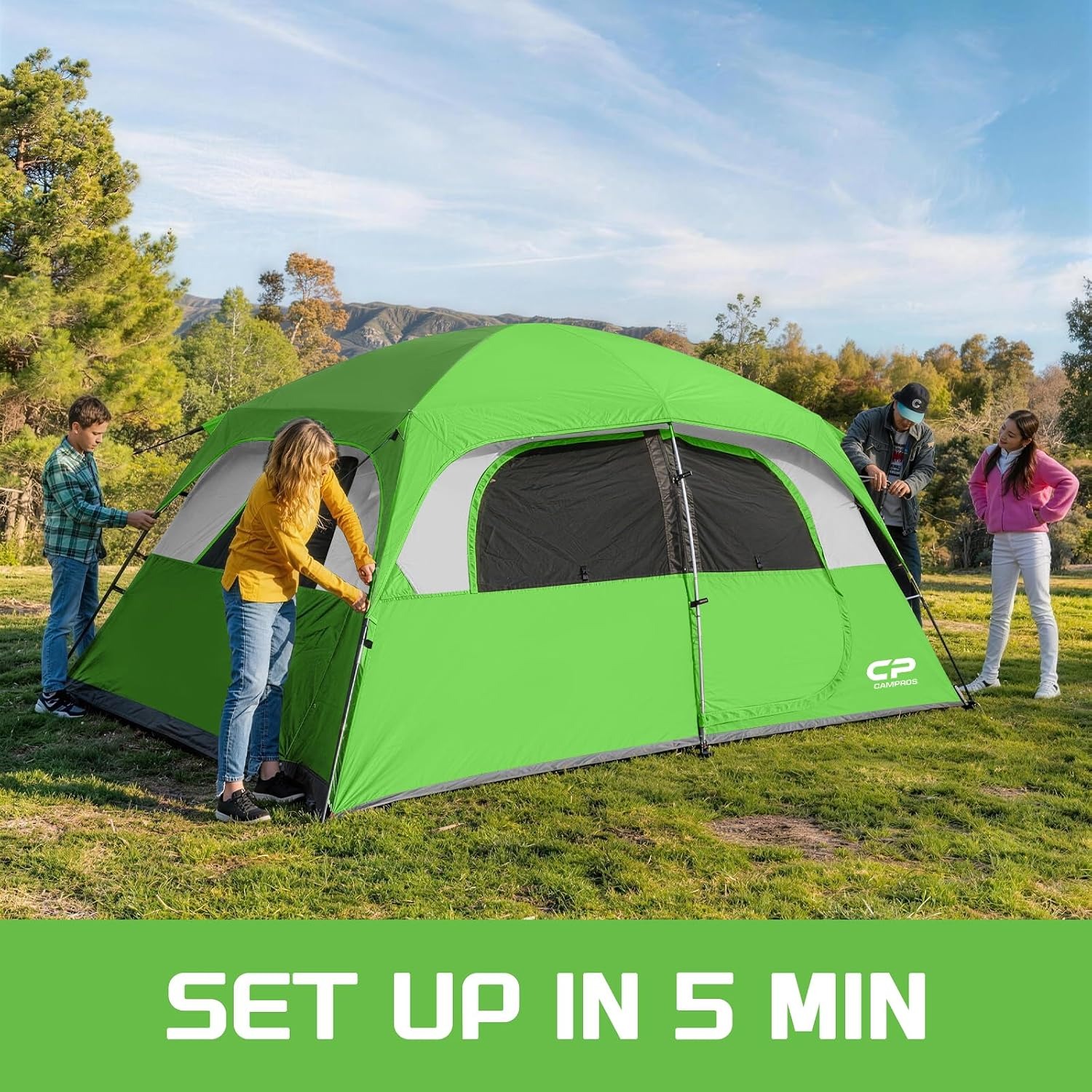
Assembly time is quoted at ten minutes, and the tent is freestanding. Freestanding is more useful than it sounds. It means the pole frame holds the shape on its own, so you can stand the tent up, realise you pitched it over a tree root, lift the whole thing and move it two metres. You cannot do that with a tent that needs to be pegged to stand.
A simple routine makes the first pitch painless. Lay the tent out flat with the door facing where you want it. Sort the poles into their groups before threading anything. Feed poles through all the sleeves before raising any of them. Raise the frame, peg the four corners, fit the rainfly, then do the guylines last with the tent already standing.
Do this once in your backyard before the trip. Finding out a pole section is missing at a campsite in fading light is a bad evening. Finding out at home on a Tuesday is a phone call.
Who this tent suits
This is a car camping tent. At 6.1 kilograms packed it carries easily from a car park to a pitch, but it is not something you hike with for hours. Think family holidays, long weekends at a campground, festival camping where you can park nearby, or a spare shelter for visitors in the garden.
It suits groups who want standing room more than they want minimal weight. It suits people who camp a few times a year and want one tent that handles most of it. It suits beginners, because the freestanding frame forgives mistakes.
It is less suited to backpackers, to winter alpine conditions, or to anyone who wants separate sleeping compartments. This is one open room with one door. If you need privacy between a couple and their teenagers, hang a divider or look at a tent with a partition.
Looking after it
Hand wash only. Sponge with cool water and mild soap, rinse, air dry. No washing machines, no dryers, no ironing. Those things destroy coatings and stitching.
The single most important rule is dry storage. Pack it wet if you must, because weather does not care about your schedule, but set it up at home within a day or two and let it dry completely before it goes in a cupboard. Mould is permanent and it smells.
Brush mud off after it dries rather than while it is wet, shake sand out of the bag, and check the zippers for grit after beach trips. Keep the poles dry and store them straight. Spare pegs are worth buying, since pegs bend and disappear more than any other part.
The short version
You are getting a cabin-style six person tent with a 3.35 by 2.13 metre floor, 1.83 metres of standing height, 185T polyester throughout, a removable rainfly rated at 1000mm, four mesh windows, four guylines and four stakes, all in a 6.1 kilogram package that pitches in about ten minutes.
It is best read as a comfortable four to five person tent with room to spare, or a genuine six if everyone travels light. Pitch it somewhere sheltered, use every guyline, keep a window open at night, and dry it before you store it. Do those four things and it will handle a lot of weekends.