
The complete guide
How to Choose a Cotton Flannel Sleeping Bag
The problem with most sleeping bags
Ask anyone who has given up on camping why they stopped, and the answer is rarely the tent. It is usually sleep. They spent a night inside something that felt like a shiny bin liner, sweated for two hours, then woke up at 4am cold, cramped and counting down to sunrise.
That experience has very little to do with how good the bag was on paper. It has everything to do with fabric against skin, room to move, and whether the bag could let moisture out.
A cotton flannel sleeping bag deals with those three things directly. The lining is the same sort of brushed cotton you probably already sleep on at home. It does not feel cold when you first climb in, it does not slide around, and it lets your body breathe instead of sealing it in.
How this bag is built
There are three layers doing the work here.
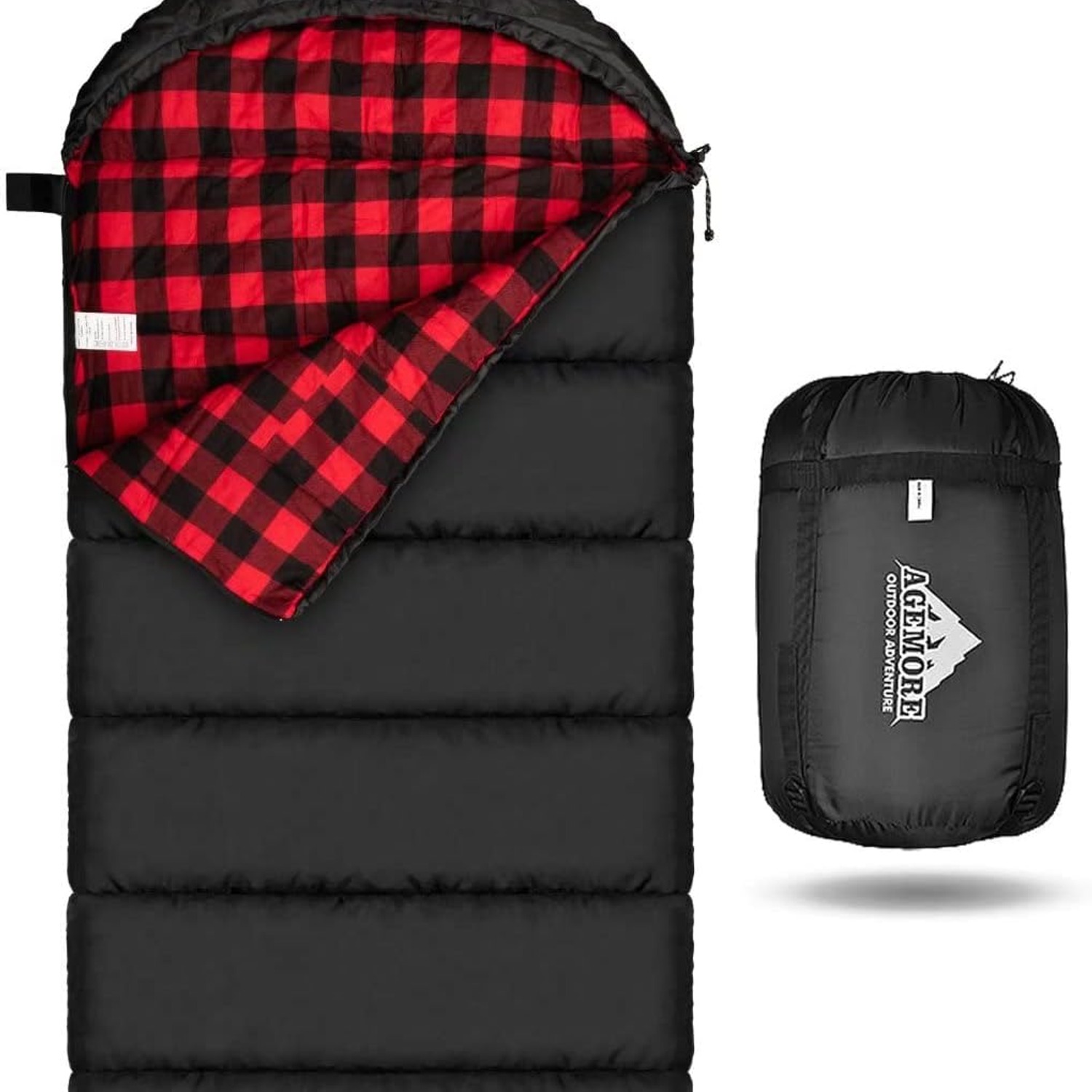
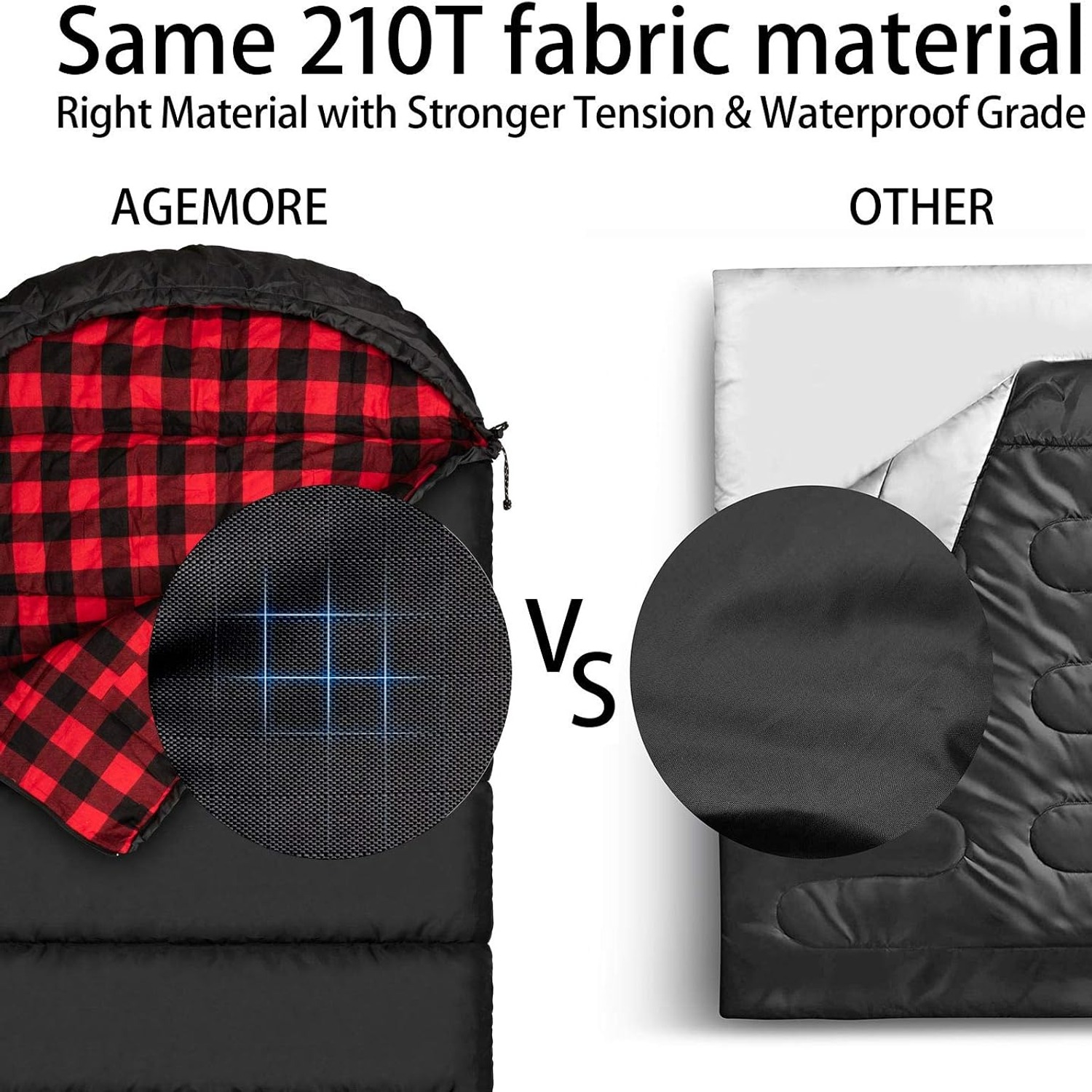
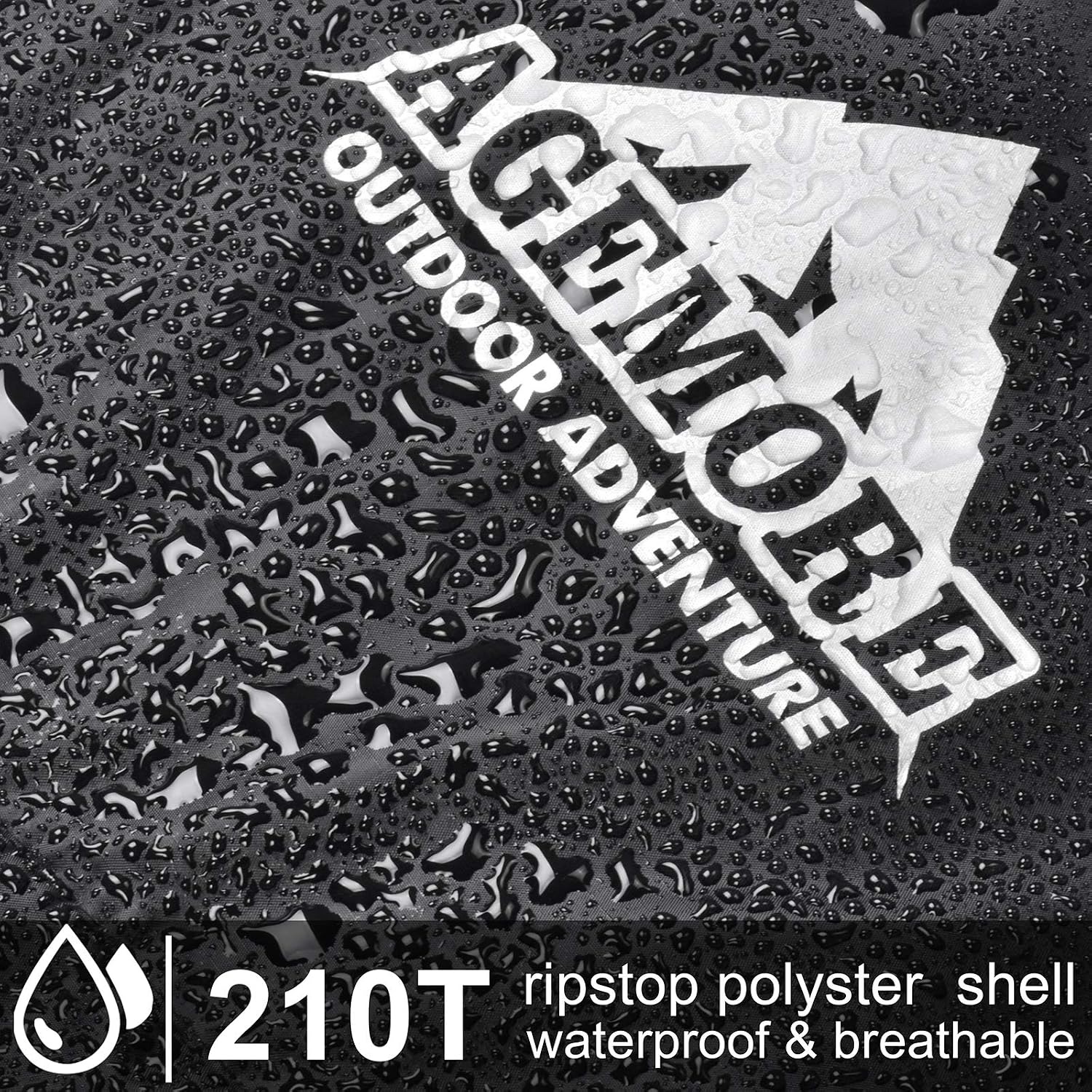
The outer shell is polyester. Its job is to take the abuse: tent floors, car boots, gravel, dust, the occasional spilled cup of tea. Polyester handles that far better than bare cotton and shrugs off light surface moisture.
The middle layer is cotton fill. Insulation works by trapping still air, and the fill is what creates those air pockets. Cotton fill holds warmth while still allowing water vapour to pass through, which is why it tends to feel less clammy than a sealed synthetic sandwich.
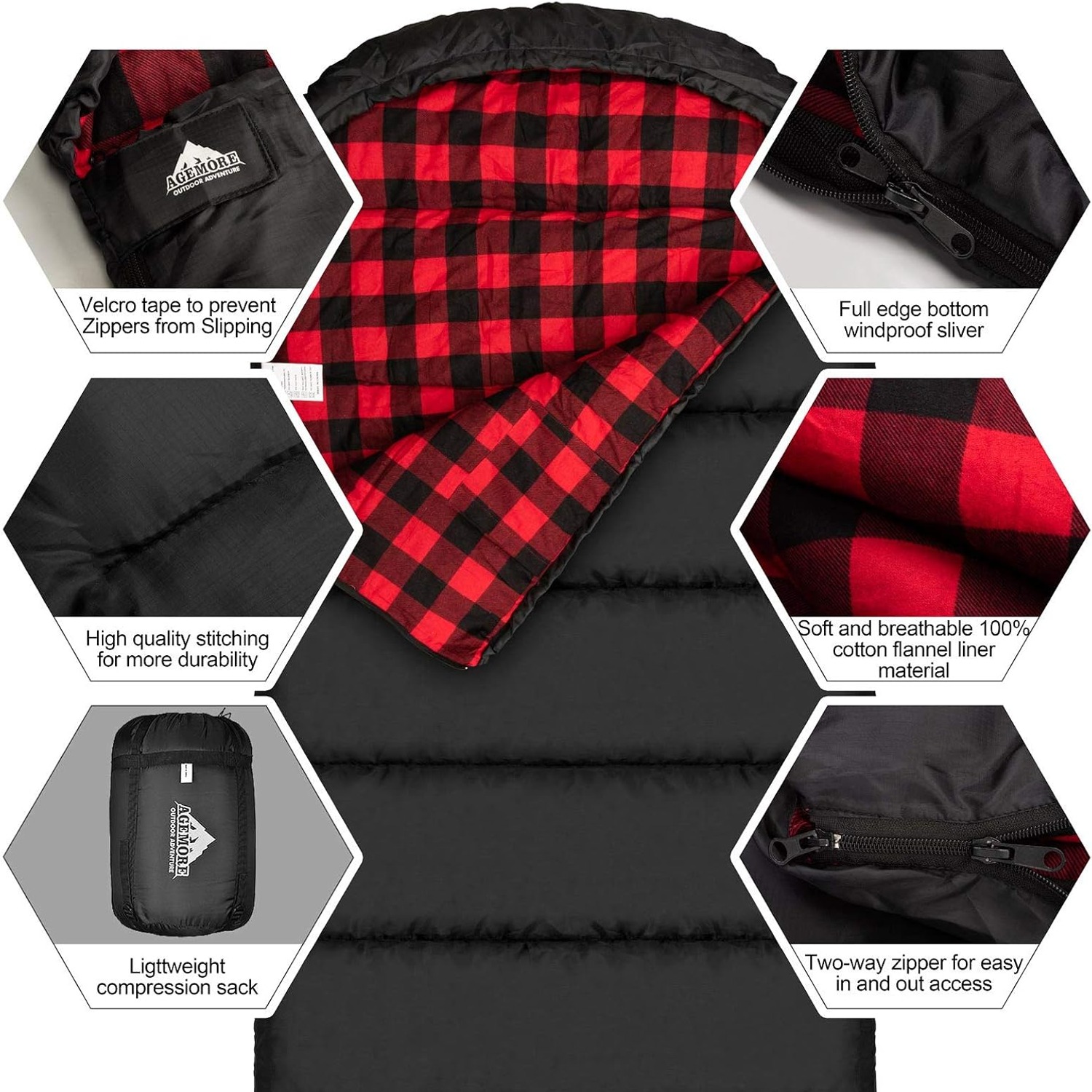
The inside layer is cotton flannel. This is the part you actually feel. Flannel is brushed so it has a soft nap, which traps a thin layer of warm air right against your skin and takes the chill off the first few minutes in the bag.
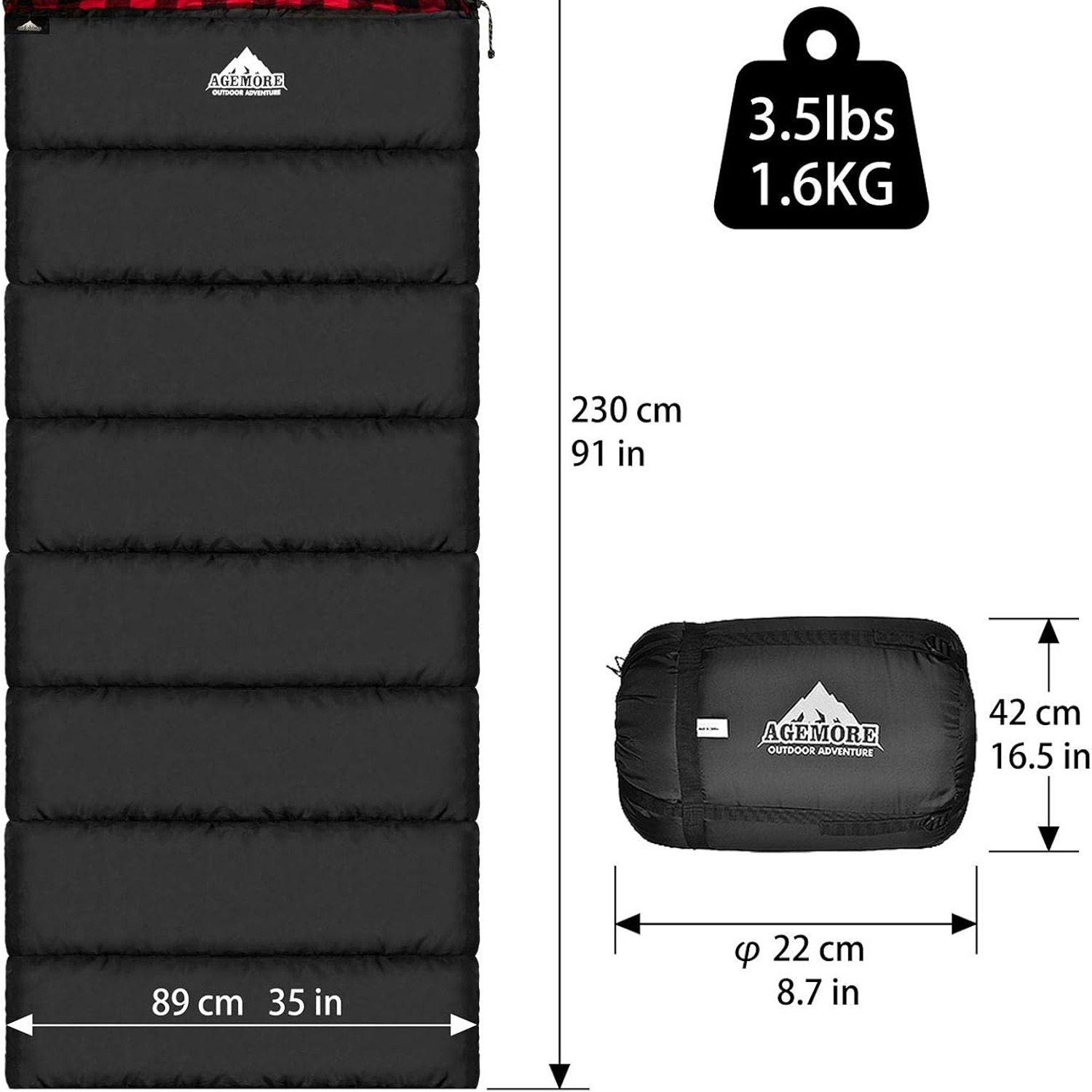
The listed weight is 1.59 kg. The listed item dimensions are 2.31 m long by 0.89 m wide, with a maximum recommended user height of 6 feet.
Shape matters more than people expect
This is a rectangular bag, not a mummy bag, and that choice affects almost everything about how it sleeps.
Mummy bags are narrow by design. Less space inside means less air to heat, which is why serious cold-weather bags are tapered. The trade-off is that you feel wrapped. If you sleep on your side, bend your knees, or like having an arm free, a mummy bag can feel like being zipped into a cocoon.
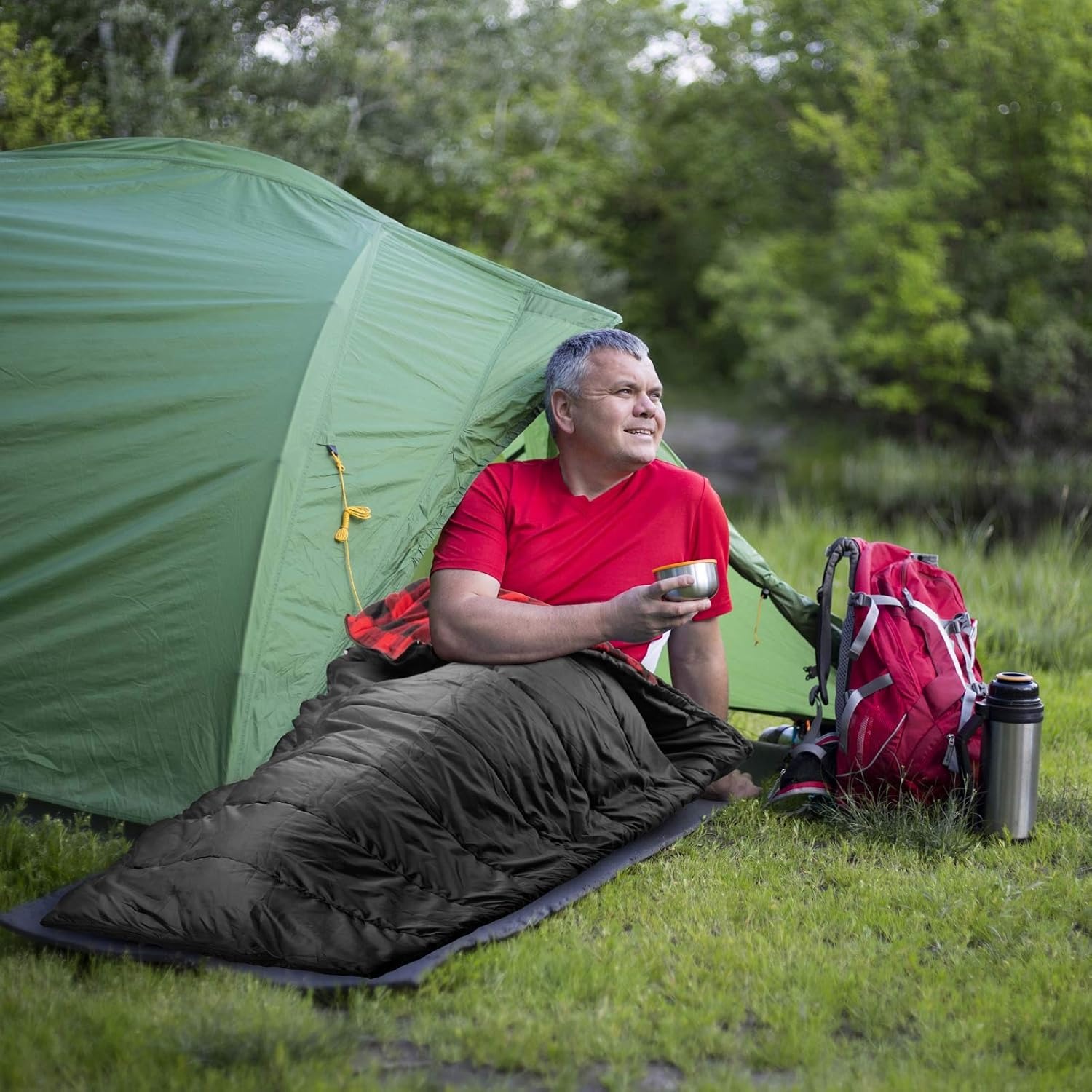
A rectangular bag gives you room. You can roll, stretch, and shift position without the whole bag turning with you. On a mild night you can unzip it and use it flat like a quilt. For car camping, caravans, huts and spare beds, this is usually the shape people actually want. If you are hunting for the best rectangular sleeping bag for general use, the extra room is the point.
Reading the temperature rating honestly
The listing gives a temperature rating described as "to 40 degrees" and describes the bag as all seasons, with 3-4 season use.
Here is the honest version of what any rating means. Sleeping bag temperature numbers are measured in controlled conditions with a standard test setup. They are a comparison tool, not a promise. Two people in identical bags on the same night can have completely different experiences, because warmth depends on your metabolism, what you ate, how tired you are, how dry your clothes are, and crucially what is underneath you.
Treat this as a bag for mild to cool conditions. Spring, summer, autumn and gentle early-winter nights in a tent or cabin. If you are planning frosty nights, add a liner, wear dry thermals, and get a properly insulated mat. People searching for the best 3 season sleeping bag are usually in exactly this range.
The details that decide your night
Two features here punch above their weight.
The hood. A surprising amount of heat leaves through your head, and in a rectangular bag without a hood you end up pulling the top edge over your face and breathing into the fabric, which makes the lining damp. A hood gives your head somewhere to sit while keeping your mouth clear.
The two-way zipper. This sounds minor until the night you run hot. Being able to open just the foot end lets heat escape without exposing your whole body, so you stay comfortable instead of fully unzipping and then getting cold an hour later. Closing from the inside is handy too, when you have already settled and realise the top is gaping.
Who this suits
This bag makes sense if you camp from a car, a caravan or a short walk-in. It makes sense for hut trips, festivals, family camping and sleepovers. It also quietly earns its place as a guest bed solution, because a flannel-lined bag feels like bedding rather than equipment.
It is less suited to long-distance backpacking where weight and packed size dominate every decision. At 1.59 kg it is not heavy, but a technical down bag will be lighter and smaller. It is also not a deep winter bag, and no amount of layering turns a 3-4 season bag into an alpine one.
If you are tall, the 2.31 m length is a real advantage. A lot of standard bags leave taller sleepers pressing their feet into a seam all night, which makes the foot end feel cold and tight.
Looking after it
Sleeping bags do not usually die of wear. They die of neglect.
Air the bag out after every trip. Hang it in the shade or over a chair for a few hours before it goes anywhere near a cupboard. Packing a slightly damp bag away is how you get musty smells and, eventually, mildew.
Spot clean small marks with mild soap and cool water rather than washing the whole thing. When a full wash is needed, read the care label sewn into the bag and follow it, using a gentle cycle and a mild detergent. Make sure the bag is bone dry right through the fill before it goes back into storage.
Store it loose, not compressed. A big cotton bag, a spare duvet cover or a wardrobe hanger all work. Leaving fill crushed in a tight sack for months flattens it, and flat fill is cold fill.
A liner is worth considering. It takes the body oils and the grit, which means far fewer washes for the bag itself, and it adds a touch of warmth on cooler nights.
Things that are not in this listing
Being straight about gaps is more useful than guessing. Country of origin is not specified in this record. Packed dimensions for the storage sack are not given, so we cannot quote a compressed size. Whether this model zips together with a second bag is also not confirmed in the data we have. If any of those points will decide your purchase, ask us first and we will check before you order.
The short version
This is a comfortable, roomy, breathable sleeping bag for mild to cool conditions. The cotton flannel lining is the headline feature, and it is the reason people tend to actually enjoy sleeping in it rather than just surviving the night. The hood and two-way zip handle the temperature swings. The rectangular cut handles the fidgeting.
Pair it with a decent mat, air it after trips, store it loose, and it should look after you for a long run of weekends away.