Camping Company
Company
Shop By Category
T&Cs
Shop Online
  • Clear materials and product specifications
  • Free tracked Australia-wide delivery over $150
  • 14-day returns

3 Person Dome Tent | Waterproof Camping Tent | Backpacking Tent

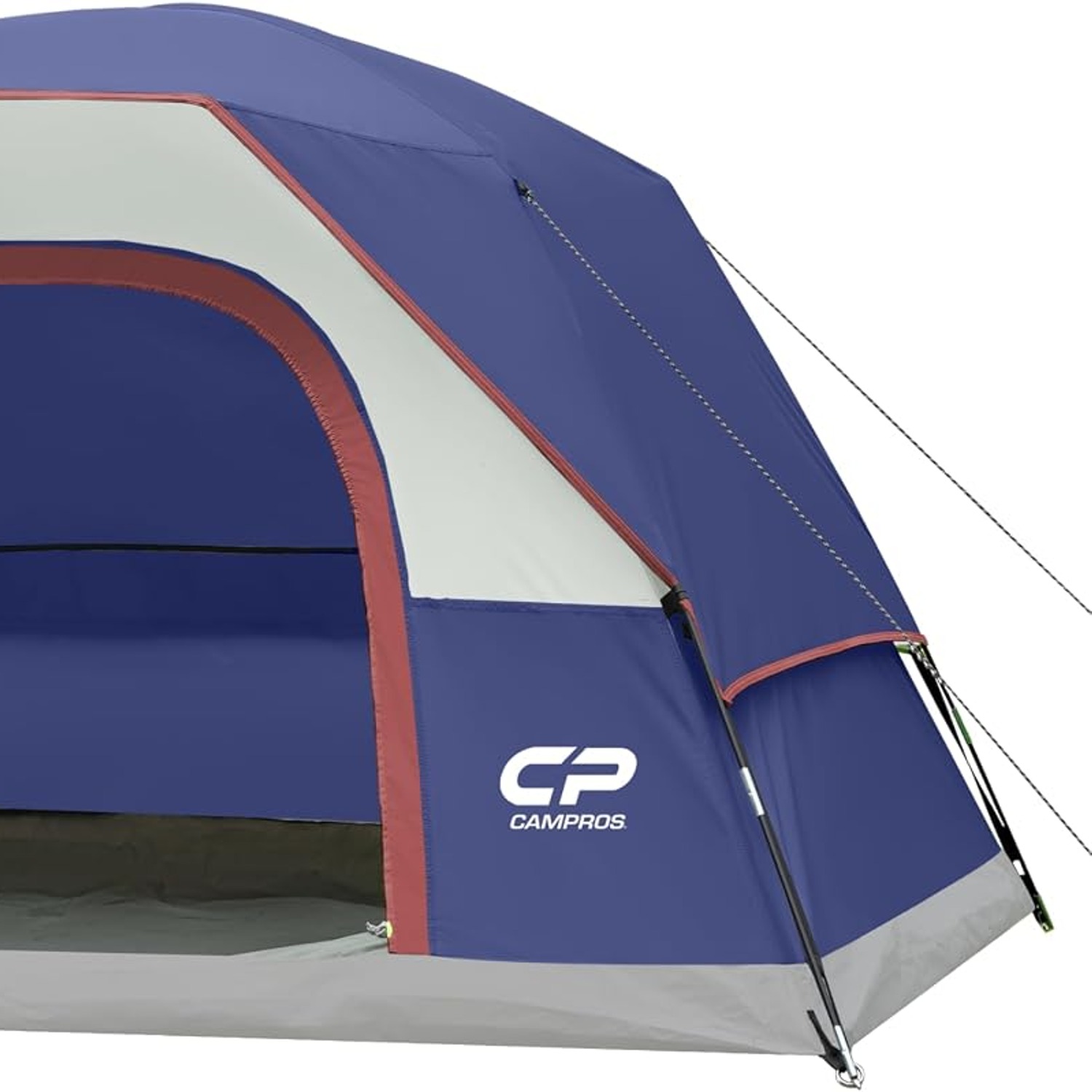
CAMPROS CP Dome Camping Tent

$329.99 $395.99 Save $66
  • Five Minute Setup
  • PU 1500mm Coating
  • 3.5 kg Packed
  • Mesh Ventilation

Price: $329.99 $395.99

  • Free tracked Australia-wide delivery on orders $150+, otherwise a flat $15
  • Pay by card or PayPal, handled by the payment provider
  • 14 days to change your mind, plus your statutory rights
Product specifications
ShapeDome
Occupancy4 person
Season Rating3 season
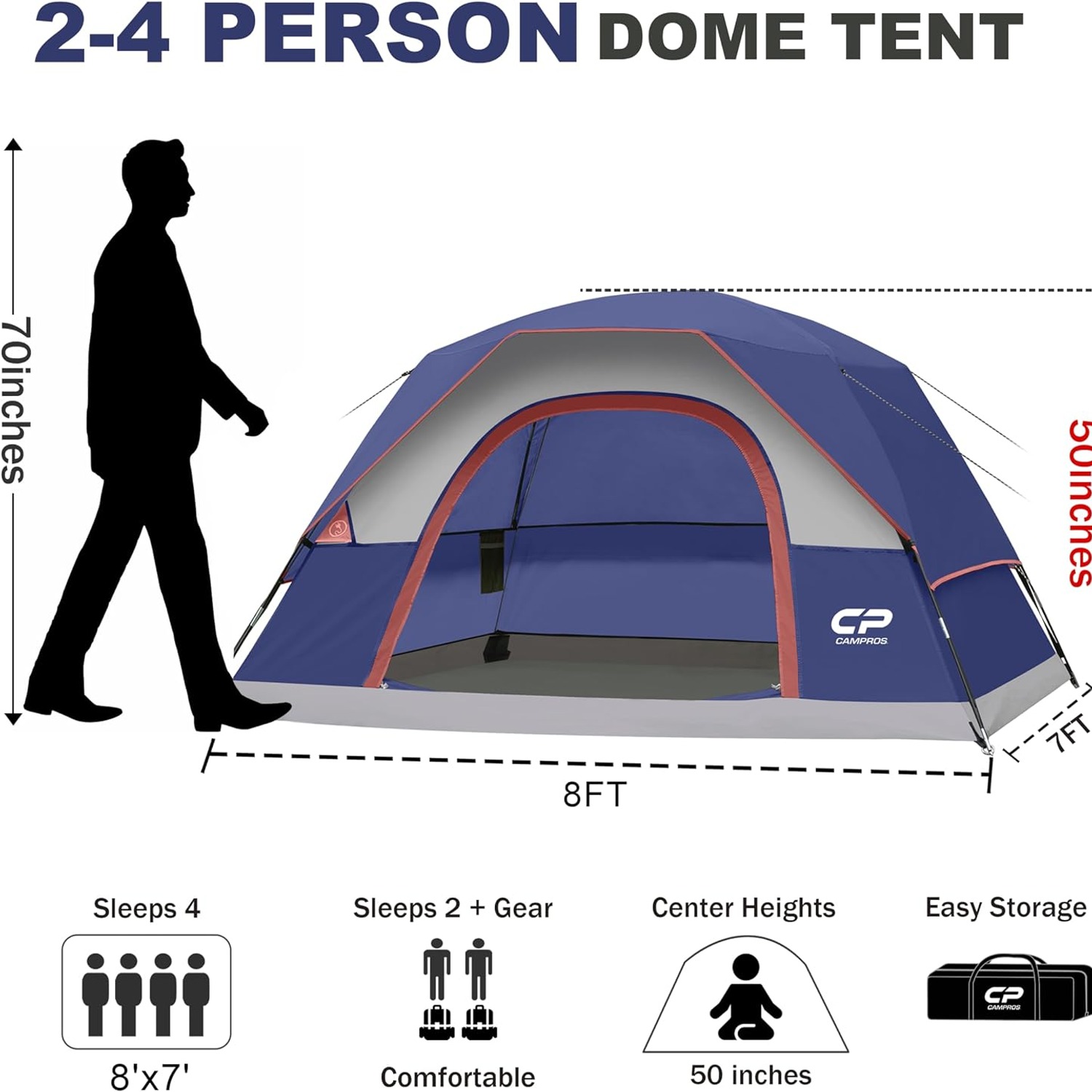
Pitched Dimensions2.44 m L x 2.13 m W x 1.27 m H
Floor Area56 square feet (8 ft x 7 ft)
Maximum Height50 inches
Packed Weight3.5 kg
WaterproofingPU 1500mm waterproof coating
FabricPolyester
Floor MaterialPolyethylene
Rainfly MaterialPolyester
Pole MaterialAluminium
Number Of Poles4
Pole AttachmentClip
Installation TypeFree standing
Assembly RequiredYes
Assembly TimeAbout 5 minutes
Doors1
Windows1
Vestibules1
Rooms1
Interior Pockets2
Closure TypeZipper
ColourNavy blue
Included ComponentsTent body, rainfly, poles, stakes, carry bag
Extra FeaturesQuick setup, rainproof, UV protection, windproof
Recommended UseCamping, hiking, backpacking, festivals, fishing
Age RangeAdult
BrandCAMPROS CP
ModelCP-8750
CareHand wash
Weight3.5 kg
Shipping & returns

Tracked delivery anywhere in Australia. It is free on orders of $150 or more, and a flat $15 below that.

If it is not right for you, send it back within 14 days of delivery in resaleable condition and we refund the price you paid, including standard delivery. That is a voluntary policy we offer on top of your legal rights. You cover the cost of returning it unless the item is faulty.

If it arrives faulty, damaged or not as described, we put it right at no cost to you under the Australian Consumer Law and the Competition and Consumer Act 2010, return postage included.

Shipping details · Refunds and returns

Five Minute SetupClip-on poles mean two people can have it standing fast.
PU 1500mm CoatingWaterproof shell and removable rainfly for wet weather.
3.5 kg PackedLight enough to carry to a site or on a short walk in.
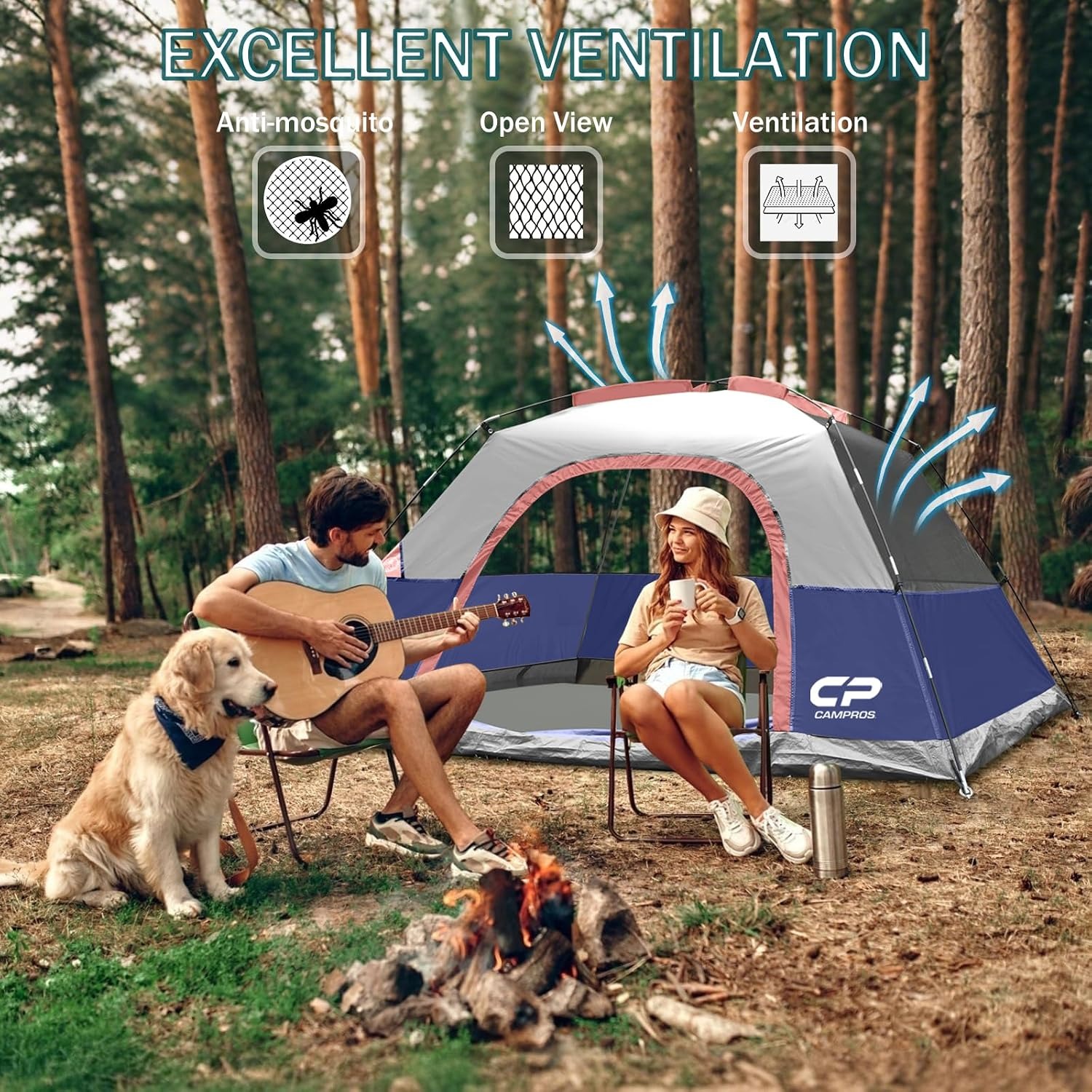
Mesh VentilationA mesh window and door help air move and bugs stay out.

A waterproof camping tent that goes up in about five minutes, so you can stop wrestling with poles and start enjoying the site.

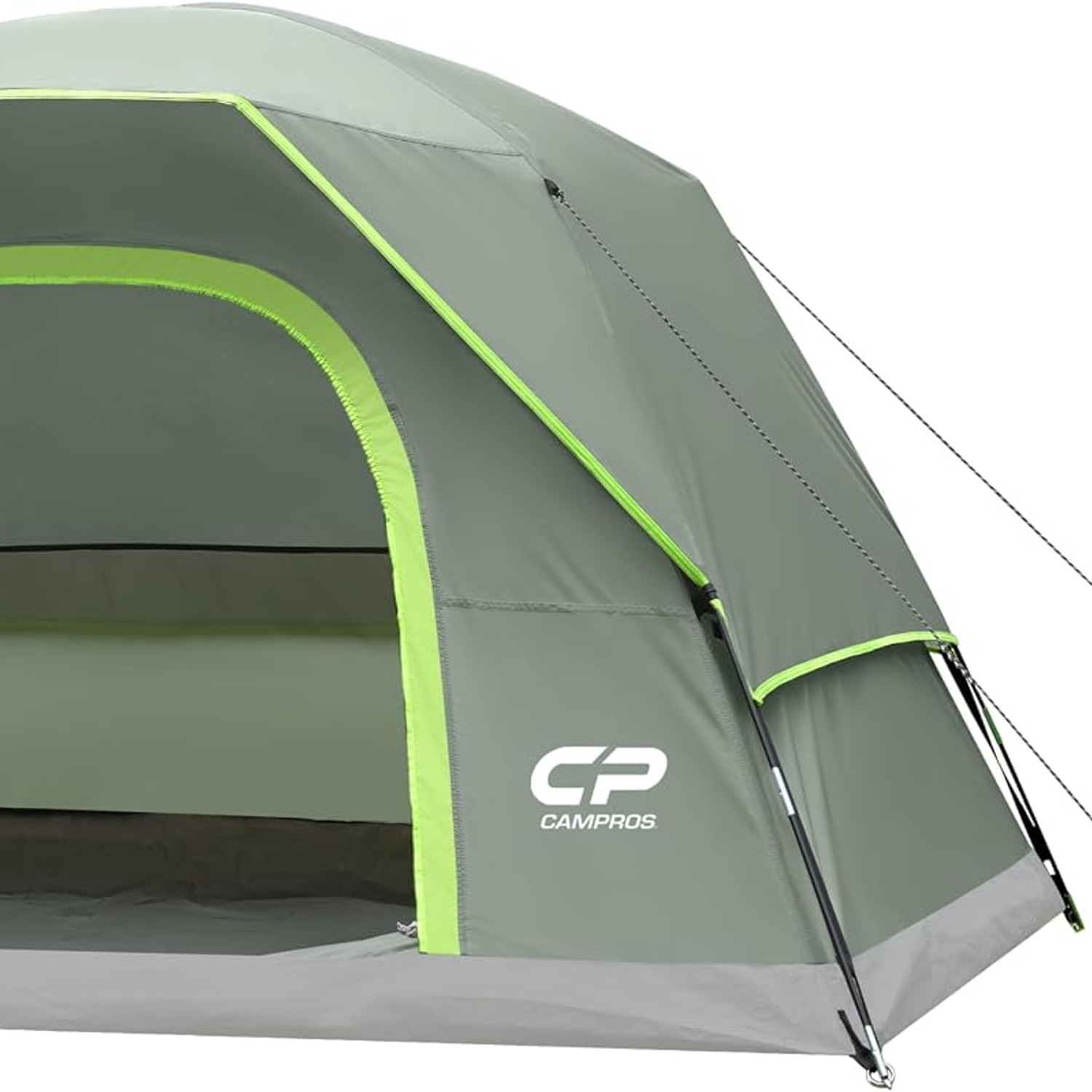
Freestanding dome build with aluminium poles, a PU 1500mm waterproof coating, a removable rainfly, mesh window ventilation and two interior pockets, all packing down to 3.5 kg.

This freestanding dome tent uses four aluminium poles and clip attachments, so assembly takes about five minutes with a second pair of hands.

A PU 1500mm waterproof coating on the polyester shell, plus a removable polyester rainfly, keeps rain off while you sleep.

The polyethylene floor is tough underfoot and helps stop ground moisture creeping into your sleeping gear.

One zippered door, one mesh window and a single vestibule give you airflow, a view and somewhere to leave muddy boots.

At 3.5 kg packed, with two interior pockets for small items, it suits weekend camping, festivals, fishing trips and road trips.

CAMPROS CP Dome Camping Tent

Most people give up on camping for one reason, and it is rarely the weather. It is the twenty minutes of swearing at a pile of poles while everyone else is unpacking the esky. This dome tent is built around that problem. Four aluminium poles slide through, the canopy clips on instead of threading through long sleeves, and the whole thing stands on its own without needing to be pegged first. Two people can have it up in roughly five minutes. One person can manage it too, it just takes a little longer.

CAMPROS CP Dome Camping Tent

The shell is polyester with a PU 1500mm waterproof coating, and a separate polyester rainfly drops over the top for wet nights. That combination handles the rain most campers actually meet, the overnight shower that stops by morning rather than a week of sideways storms. Underneath, a polyethylene floor takes the abuse from sticks, gravel and the damp ground, which is usually where cheap tents fail first. Zips run along the single door, and a vestibule out front gives you somewhere to leave wet boots and a pack.

CAMPROS CP Dome Camping Tent

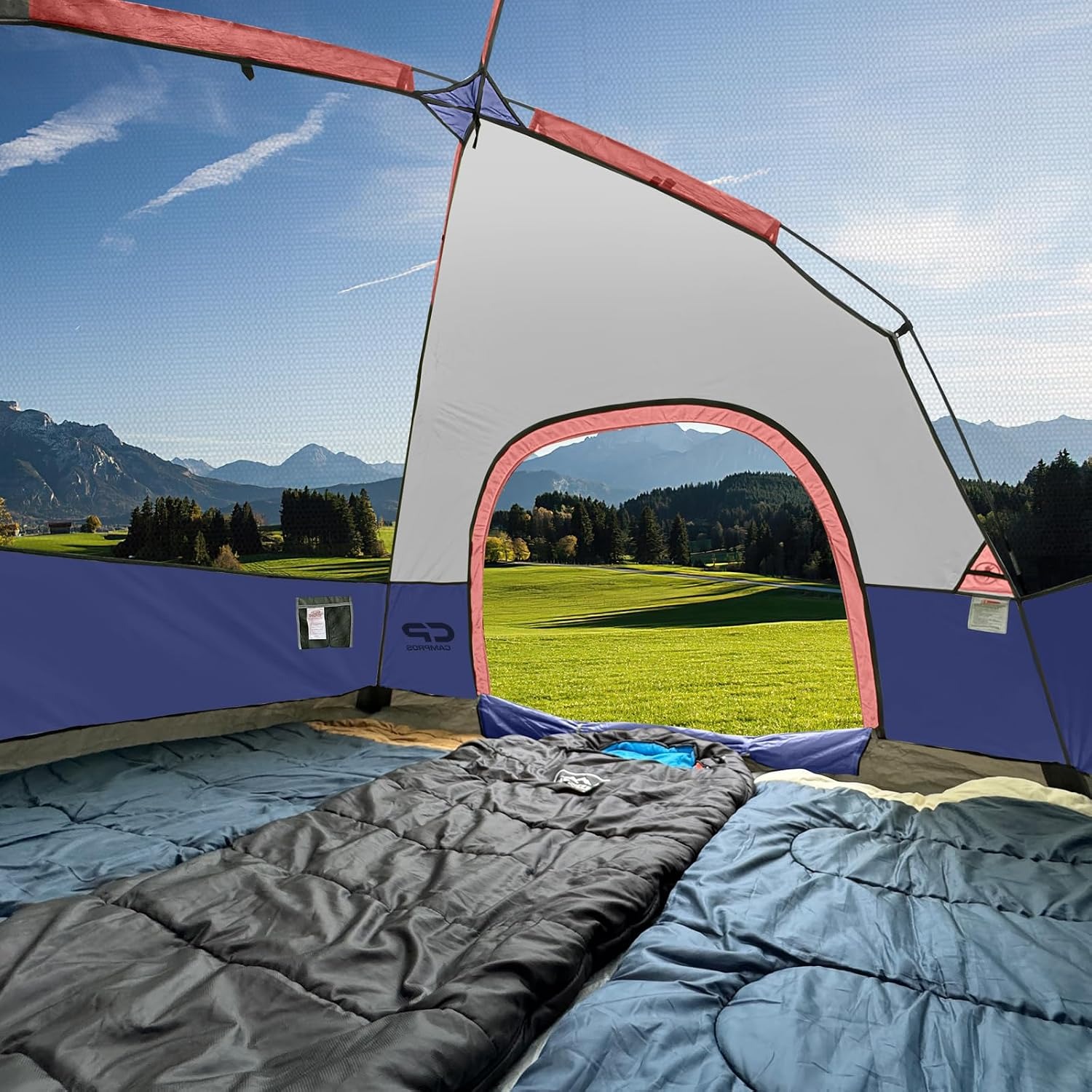
Airflow matters more than people expect. Condensation builds overnight from breathing alone, and a sealed tent turns damp by morning. This one uses a mesh window and a mesh door panel so air can move through while insects stay outside. On warm, dry nights you can leave the rainfly off entirely and look at the sky through the mesh. When the weather turns, the fly goes back on and you keep the vent paths working underneath it.

CAMPROS CP Dome Camping Tent

The listed capacity is four, with a floor of eight feet by seven feet and a centre height of 50 inches. In practice, four adults with gear is tight, which is true of almost every tent sold at this capacity. Two or three people with packs, bedding and a bit of room to sit up is where it feels right. Fifty inches of headroom means you can kneel and change clothes comfortably, though you will not be standing up. Two interior pockets take phones, torches and keys so they do not disappear into a sleeping bag.

CAMPROS CP Dome Camping Tent

Packed, it weighs 3.5 kg and goes into its carry bag with the rainfly, four poles and stakes. That is light enough to carry from a car park to a site, or to split between two packs on a short walk in. For car camping, festivals, fishing weekends and road trips where you want shelter without a project, it does the job. Treat the fabric kindly, dry it fully before storing, and it should see you through plenty of seasons.

Not sure yet? That is fine.

Camping gear has to suit your trip and your climate, and you cannot always judge that from a photograph. If it is not right for you, send it back within 14 days of delivery in resaleable condition and we refund the price you paid, including standard delivery. That is a voluntary policy we offer on top of your legal rights.

If it turns up faulty, damaged or not as described, that is on us. The Australian Consumer Law and the Competition and Consumer Act 2010 covers you, and we pay the return postage. Read the full detail on our refunds and returns page, or ask us anything before you order.

Frequently Asked Questions

What is this tent, in plain terms?

It is a freestanding dome camping tent from CAMPROS CP, model CP-8750. It uses four aluminium poles and clip attachments, comes with a removable rainfly, and pitches to 2.44 m by 2.13 m with 50 inches of centre height. Packed weight is 3.5 kg.

How many people does it actually sleep?

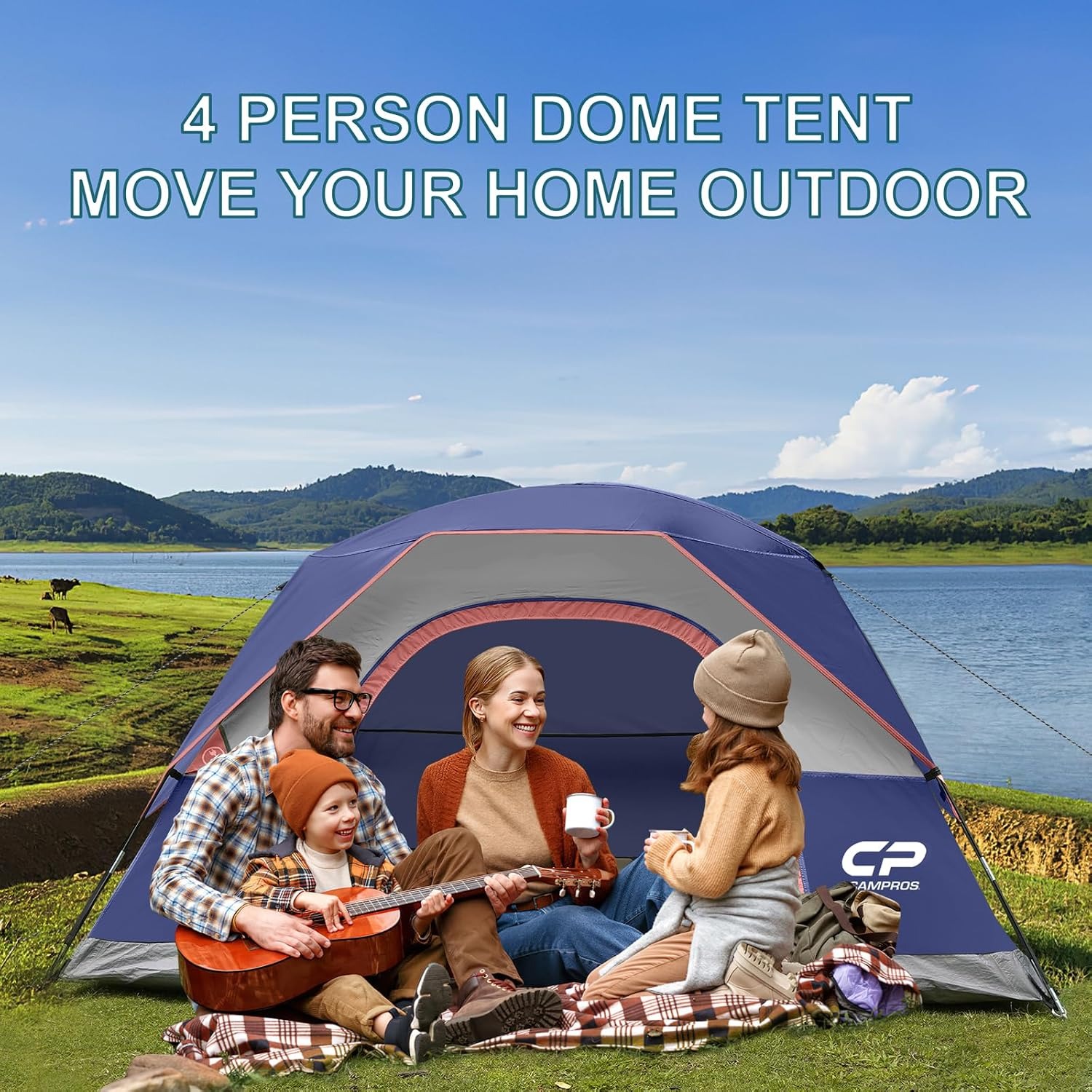
It is rated for four occupants with a 56 square foot floor. Four adults plus gear will be snug, so two or three people with packs and bedding is the more comfortable load. If you want space to sit up and spread out, treat it as a roomy two or three person tent.

Why is it listed as a 3 person dome tent and also a 4 person tent?

The manufacturer rates the floor for four sleepers lying side by side. We describe it as a best 3 person dome tent choice because that is the capacity where most people find it genuinely comfortable once gear is inside. Both figures refer to the same tent and the same 8 ft by 7 ft floor.

How long does setup really take?

The manufacturer states about five minutes, and that is realistic with two people who have pitched it once before. Your first attempt will likely take ten to fifteen minutes while you work out the pole order. Clips are much faster than sleeves, which is where the time saving comes from.

Can one person put it up alone?

Yes. Because it is freestanding, the frame holds its shape before you peg anything, which makes solo pitching far easier. Lay the body flat, slide the poles through, clip the canopy on, then add the fly and stakes. Expect a few extra minutes compared with two people.

Is it waterproof?

Yes. The polyester shell carries a PU 1500mm waterproof coating and the separate polyester rainfly adds another layer over the top. The floor is polyethylene, which resists ground moisture. This is a three season tent, so it is made for rain rather than heavy snow loading.

What does PU 1500mm mean?

It is a hydrostatic head rating, a measure of how much water pressure the fabric holds before it leaks. A 1500mm figure covers ordinary rain and is a common standard for a best waterproof camping tent in this class. Higher ratings exist but usually add weight and cost.

Do I need to seam seal it?

Many campers add seam sealer to any new tent as cheap insurance, particularly along the fly seams and floor edges. The record does not state whether seams are factory taped. A tube of seam sealer is inexpensive and takes about twenty minutes to apply.

Can I use it without the rainfly?

Yes, the rainfly is removable. On warm, clear nights, leaving it off exposes the mesh panels for maximum airflow and a view of the sky. Keep the fly within reach in case the weather changes overnight.

How is ventilation handled?

There is one mesh window and a mesh panel in the door. Air moves through these while insects stay out, which cuts down on the condensation that builds from breathing overnight. Leaving a small gap under the fly also helps moist air escape.

What are the poles made of?

Aluminium, with four poles in total. Aluminium is lighter than fibreglass and tends to flex rather than splinter under wind load. They attach to the canopy with clips rather than fabric sleeves.

What is the floor made of?

Polyethylene. It is a tough, water resistant material that copes with gravel, sticks and damp ground better than thin nylon. A separate groundsheet underneath will extend its life if you camp on rough sites often.

What is the packed weight and size?

Packed weight is 3.5 kg including tent, fly, poles and stakes. Packed dimensions are not specified in this record. At that weight it is easy to carry from a car to a site or split between two packs.

Is it suitable as a backpacking tent?

For short walk in trips and overnighters, yes. At 3.5 kg it is reasonable for one or two people to carry, especially if you split the poles and body between packs. For long multi day treks where every gram counts, a dedicated ultralight shelter is lighter but costs much more.

Will it handle wind?

The listing notes windproof construction and the dome shape sheds wind better than a tall cabin style tent. Peg every guy point, face the lowest profile side into the wind, and it will cope with the breezy nights you meet on most campsites. It is not designed for exposed alpine conditions.

Is it a good festival tent?

It fits that use well. It goes up fast when you arrive tired, packs small in a car boot, and the vestibule gives you somewhere to stash boots and bags. People looking for a best festival tent usually want exactly those three things.

How much headroom is there?

Maximum height is 50 inches, roughly 1.27 metres, at the centre of the dome. You can sit up straight and kneel to get changed, but you cannot stand. That is normal for a dome tent in this size range.

How many doors and pockets does it have?

One zippered door, one vestibule outside it, and two interior pockets. The pockets are handy for a phone, head torch and keys so they are not lost in bedding. One door means the person sleeping furthest in has to step over others at night.

Does it come with pegs and a carry bag?

Yes. The kit includes the tent body, rainfly, poles, stakes and a carry bag. Many campers buy a few spare heavy duty pegs for hard or sandy ground, since supplied stakes are usually generic.

Can I stand it on a hard surface like a deck or beach?

It is freestanding, so it will hold its shape without pegs. On hard or loose ground you can weigh the corners with sandbags, rocks or water containers instead of stakes. Always secure it somehow, since an unpegged tent can take off in a gust.

Is it UV protected?

The listing notes UV protection among its features. That said, all tent fabrics degrade with long sun exposure, so avoid leaving it pitched in direct sun for weeks on end. Pack it away between trips to keep the coating in good shape.

How do I clean it?

Hand wash only. Sponge the fabric with cool water and mild soap, rinse well, and let it air dry fully. Never put it in a washing machine or dryer, and do not bleach or iron it, as that will strip the waterproof coating.

How should I store it?

Make sure both the tent and the fly are completely dry before packing, since damp storage causes mildew and smell. Store the bag somewhere dry and out of direct sun. If you have space, keep it loosely folded rather than tightly compressed between trips.

What if I have to pack it away wet?

Pack it up and get going, then unpack and hang it to dry as soon as you are home, ideally within a day. Even a few days damp in a bag can start mildew on the coating. Drape it over a line or chairs in a shaded, airy spot.

Can I use a heater inside it?

No. Never use fuel burning heaters, stoves or lanterns inside any tent. The risk of fire and carbon monoxide is serious. A warmer sleeping bag and a sleeping mat with good insulation are the safe way to stay warm.

What should I put under the tent?

A footprint or tarp cut slightly smaller than the floor adds abrasion protection and another moisture barrier. Keep it tucked under the edges so rain does not pool between the sheet and the floor. Many people rate this the cheapest upgrade for any best beginner camping tent.

Is it suitable for kids or scouts?

The age range listed is adult, but it works perfectly well as a family tent for a parent and a couple of children. The quick setup is a help when kids are impatient. Supervise young children around poles, pegs and zips.

Does it make a good gift?

It works well for anyone starting out in camping, heading to festivals, or wanting a spare tent for the car. It arrives complete with fly, poles, stakes and bag, so there is nothing extra to buy before the first trip. The navy colour is easy to live with.

How quickly will it be delivered?

Delivery timing depends on your country storefront and the address you give at checkout. You will see the current estimate on the product page and in your order confirmation. Tracking is sent through once the parcel moves.

What if the tent is not right for me?

Get in touch with our team and we will sort it out. Keep the tent unpitched in its original packaging if you think you may send it back, since that makes the return straightforward. Tell us what did not work and we can usually point you to a better fit from the range.

How To Choose A Dome Tent That You Will Actually Use

6 min read Camping Company

The real reason people stop camping

Ask anyone who owns a tent they never use, and the story is usually the same. The first trip involved an hour of confusion in a car park, a missing pole, and rain starting before the fly went on. After that, the tent lived in the garage.

Almost none of that is about the weather. It is about how much work the shelter demands before you can relax. A tent that goes up fast, holds its own shape, and sheds a shower without drama removes the obstacle. You stop thinking about the tent and start thinking about dinner.

That is the job this dome tent is built for. Four aluminium poles, clip attachments instead of fabric sleeves, a freestanding frame, and a rainfly that drops over the top. The manufacturer quotes about five minutes with two people, and that holds up once you have pitched it once.

How a dome tent works

A dome gets its strength from crossed poles. Two or more poles arch from corner to corner, cross over the middle, and put the fabric under tension. That tension is what makes the structure stiff. It is also why a dome holds its shape without being pegged out, which is called freestanding.

Freestanding matters more than it sounds. You can build the whole thing on a flat patch of grass, then pick it up and move it a metre to the left when you realise there is a rock under where your hip will be. You can also pitch it on a deck, a gravel pad or sand where pegs will not bite, as long as you weigh the corners down with something heavy.

Clips instead of sleeves is the other time saver. With sleeves you have to thread a long pole through a fabric tunnel, which snags and takes two people. With clips you lay the poles over the top and snap the canopy up to them. That is most of the five minute setup claim right there.

The rainfly is a separate layer that sits over the inner tent. It does two jobs. It keeps rain off, and it creates a gap between two fabric layers so moisture from your breath can escape instead of dripping back on you. This is why leaving the fly off on dry nights is pleasant and leaving it on during rain is essential.

Reading the waterproof rating

You will see PU 1500mm on this tent. That number is a hydrostatic head rating. In testing, a column of water 1500 millimetres tall sits on the fabric before it starts to leak through. The PU part means polyurethane, the coating applied to the polyester to make it waterproof.

For context, 1000mm is usually considered the minimum to call something waterproof. Around 1500mm covers normal rain comfortably, which is what most campers meet. Expedition tents go to 3000mm and beyond, but they cost far more and weigh more too.

The floor is a different material, polyethylene, which is thicker and tougher than the shell. Floors take more abuse than any other part of a tent, since you kneel on them, drag bags across them, and press them into gravel. A polyethylene floor is a sensible choice at this price.

One honest note. Waterproof coatings do not last forever. They wear with UV exposure, abrasion and age. Pack the tent away between trips, dry it properly, and you will get years out of the coating. Leave it pitched in full sun all summer and it will fade and weaken much faster.

Who this tent suits

The listed capacity is four, with 56 square feet of floor. Here is the truth about capacity ratings across the whole industry. They describe how many adult bodies fit side by side with no gear, like sardines. Nobody camps that way.

Take the stated number and subtract one, and you get the comfortable number. So this is a good two or three person tent. Two adults get room for packs inside and space to sit up. Three is fine for a weekend. Four is possible if you are close friends and your gear lives in the vestibule.

Centre height is 50 inches, roughly 1.27 metres. You can sit upright, kneel, and change clothes without contorting. You cannot stand. For a dome in this size class, that is standard and perfectly liveable.

Packed weight is 3.5 kg. That is light for a tent of this floor area. It is easy to carry from a car park to a pitch, and it is workable for a short walk in if two people split the load. Those hunting a best lightweight dome tent for serious multi day trekking will find lighter options, but they cost several times more.

The use list covers camping, hiking, backpacking, festivals and fishing. That is a fair spread. Any trip where you arrive, want shelter up fast, and are not facing serious mountain weather fits this tent well.

Choosing between tents

When you compare options, a handful of details matter more than the rest.

Capacity against real use. Work out your actual group size plus gear, not the headline number.

Setup method. Clips beat sleeves for speed. Freestanding beats staked for flexibility on awkward ground.

Pole material. Aluminium flexes under wind load and springs back. Fibreglass is cheaper but can splinter, and once it does the repair is messy.

Waterproofing on both shell and floor. A great fly over a thin floor still leaves you damp.

Ventilation. A mesh window and a mesh door panel make a real difference to how the tent feels at 6am.

Packed weight, if you are carrying it any distance at all.

Against that list, this tent covers the basics properly. Aluminium poles, clips, freestanding, PU 1500mm, polyethylene floor, mesh ventilation and 3.5 kg packed. It is not trying to be an expedition shelter and does not charge like one.

Pitching it well

A good pitch makes a bigger difference than most gear upgrades. Find ground that is flat and slightly raised, never a hollow, since hollows collect water. Clear sticks and stones before you lay the tent down, because they go straight through any floor given eight hours of body weight.

Point the door away from the prevailing wind. A dome sheds wind well, but a door catching a gust is a sail. Peg every loop the tent gives you, even in calm conditions, because conditions change at 2am.

Pitch the fly with a little tension so it does not touch the inner tent. Where the two layers touch, water wicks across and you get a damp patch inside. A hand's width of gap is plenty.

If the ground is hard or sandy, swap the supplied stakes for longer or wider ones. Spare pegs are cheap and solve more problems than almost any other accessory.

Looking after it

Care is simple and mostly about drying. Hand wash only. Sponge with cool water and a mild soap, rinse, and air dry. Machine washing and tumble drying will wreck the waterproof coating, and so will bleach or an iron.

The single most important habit is never storing it damp. A tent packed wet for a week comes out smelling of mildew, and mildew eats coatings. If you have to pack up in rain, that is fine, just hang everything out as soon as you get home.

Shake grit out of the floor and keep sand away from zips, since grit in a zip is the usual cause of a tent dying before its fabric does. Store it loosely in a dry place rather than crushed into the smallest possible bundle for months.

The short version

This is a freestanding dome tent with aluminium poles, clip attachment, a PU 1500mm waterproof coating, a polyethylene floor and a removable polyester rainfly. It pitches to 2.44 m by 2.13 m with 50 inches of headroom, packs down to 3.5 kg, and includes poles, stakes, fly and a carry bag.

Rated for four, comfortable for two or three. Quick to put up, easy to carry, and built for ordinary weather rather than mountain storms. If you want shelter that does not turn arriving at camp into a chore, this one earns its place in the boot.

Browse the shop

Not sure if this tent suits your trips?

Tell us where you camp and how many people travel with you, and we will tell you honestly whether this is the right size.

Ask us a question

Page summary

The CAMPROS CP CP-8750 is a freestanding three season dome camping tent rated for four occupants. Pitched size is 2.44 m long by 2.13 m wide by 1.27 m high, with a floor area of 56 square feet and 50 inches of maximum headroom. The body and rainfly are polyester with a PU 1500mm waterproof coating, the floor is polyethylene, and four aluminium poles attach by clips for an approximate five minute setup. It has one zippered door, one mesh window, one vestibule, one room and two interior pockets. Packed weight is 3.5 kg and the kit includes tent body, rainfly, poles, stakes and a carry bag. Care is hand wash. Colour is navy blue. Country of origin and packed dimensions are not specified in this record.