
The complete guide
How To Choose A Camping Cookware Set That Actually Gets Used
The problem with camp cooking
Most people's first camping kitchen is whatever was spare in the kitchen drawer. An old saucepan, a chipped frypan, a couple of mugs, two forks and a plastic plate that cracked last summer. It works, sort of. Then you pack the car and realise the saucepan takes up a quarter of a crate, the frypan handle will not come off, and nothing stacks with anything else.
The food suffers too. A thin pan over a camp burner develops a hot spot right over the flame, and eggs weld themselves to it in about ninety seconds. Washing up then becomes the worst job of the day, done in cold water with no scrubber, usually in the dark.
A purpose-built camping cookware set fixes all of that at once. The pieces nest. The handles fold. The surfaces release food. And it all lives in one bag, so packing takes thirty seconds instead of a hunt through the house.
How a nesting camp cook set works
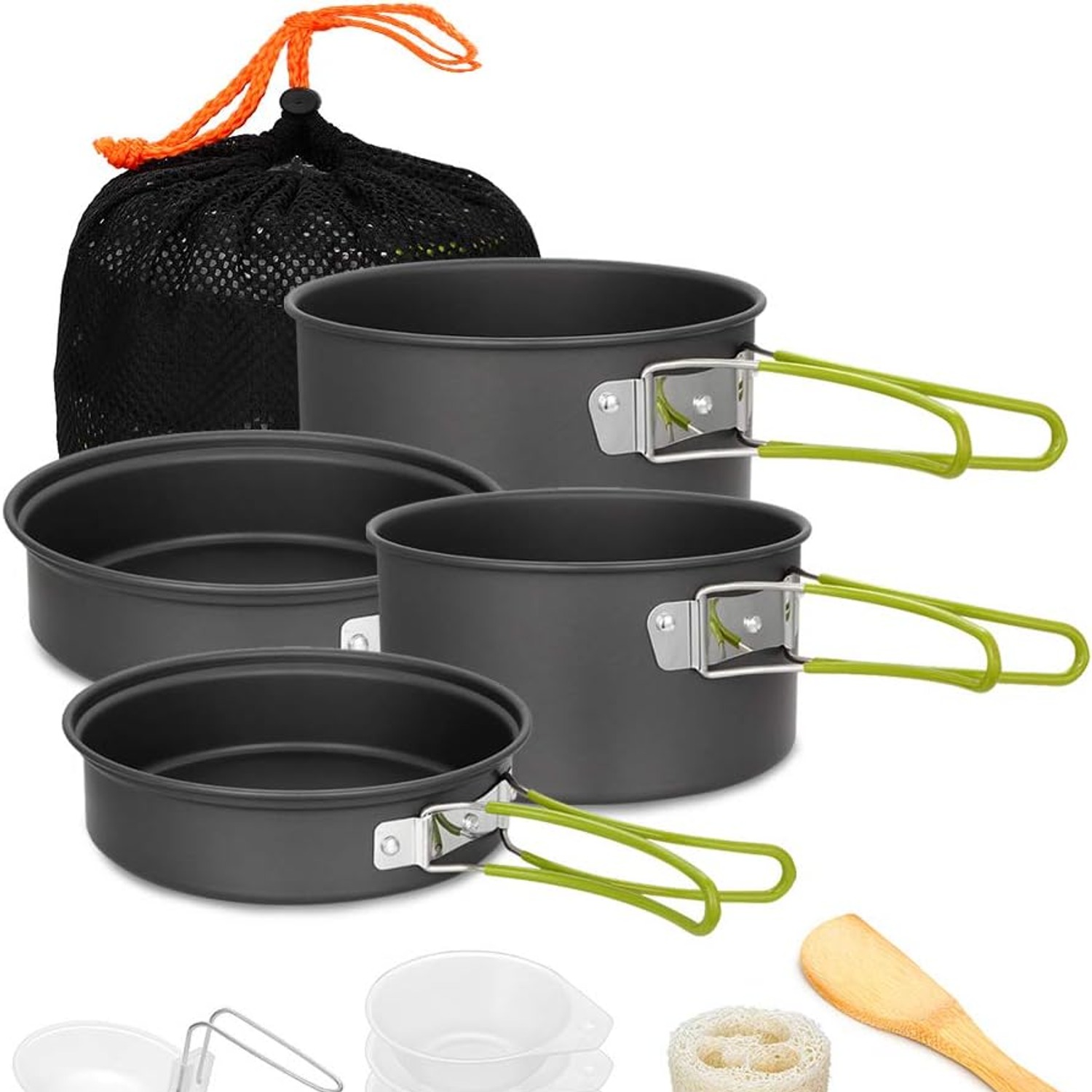
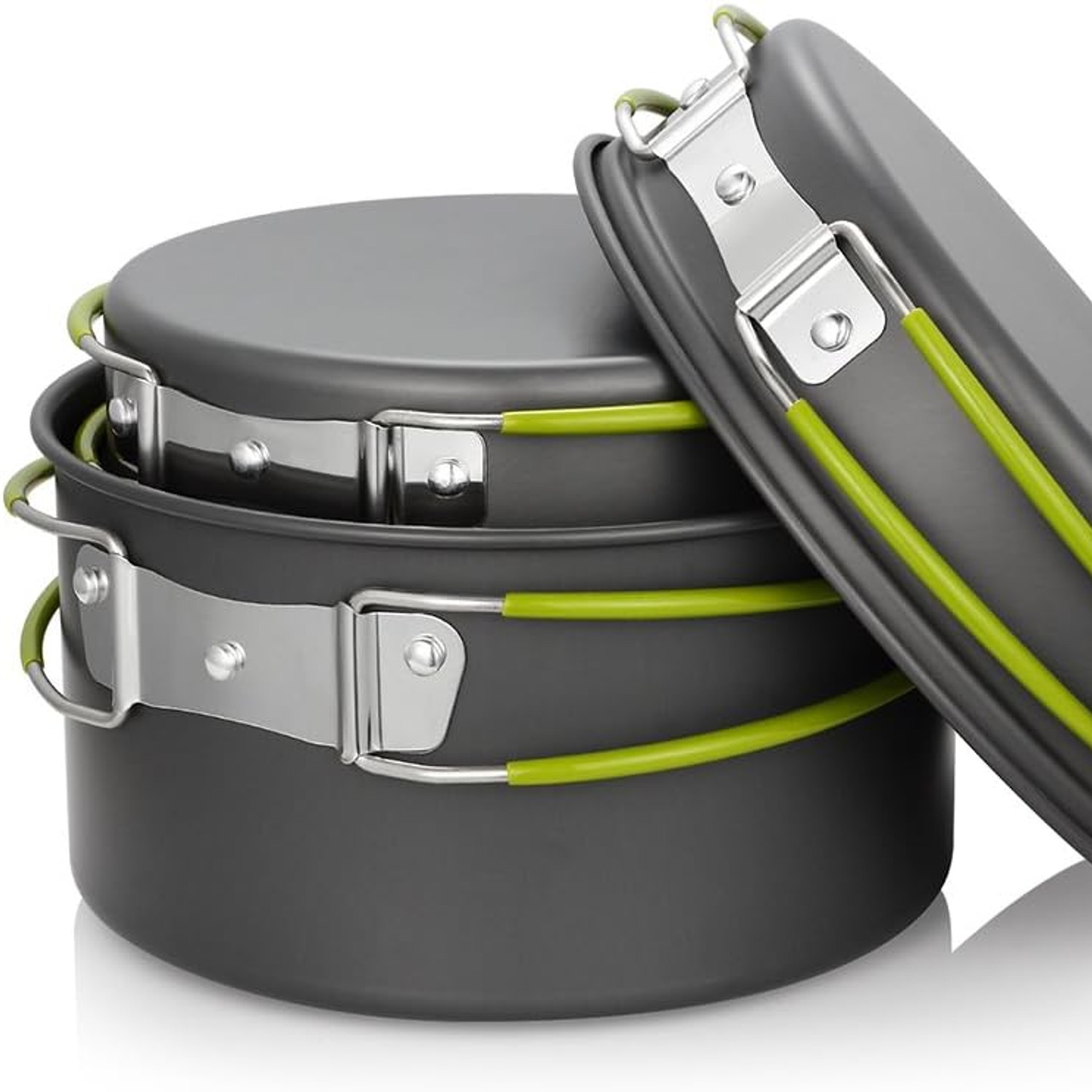
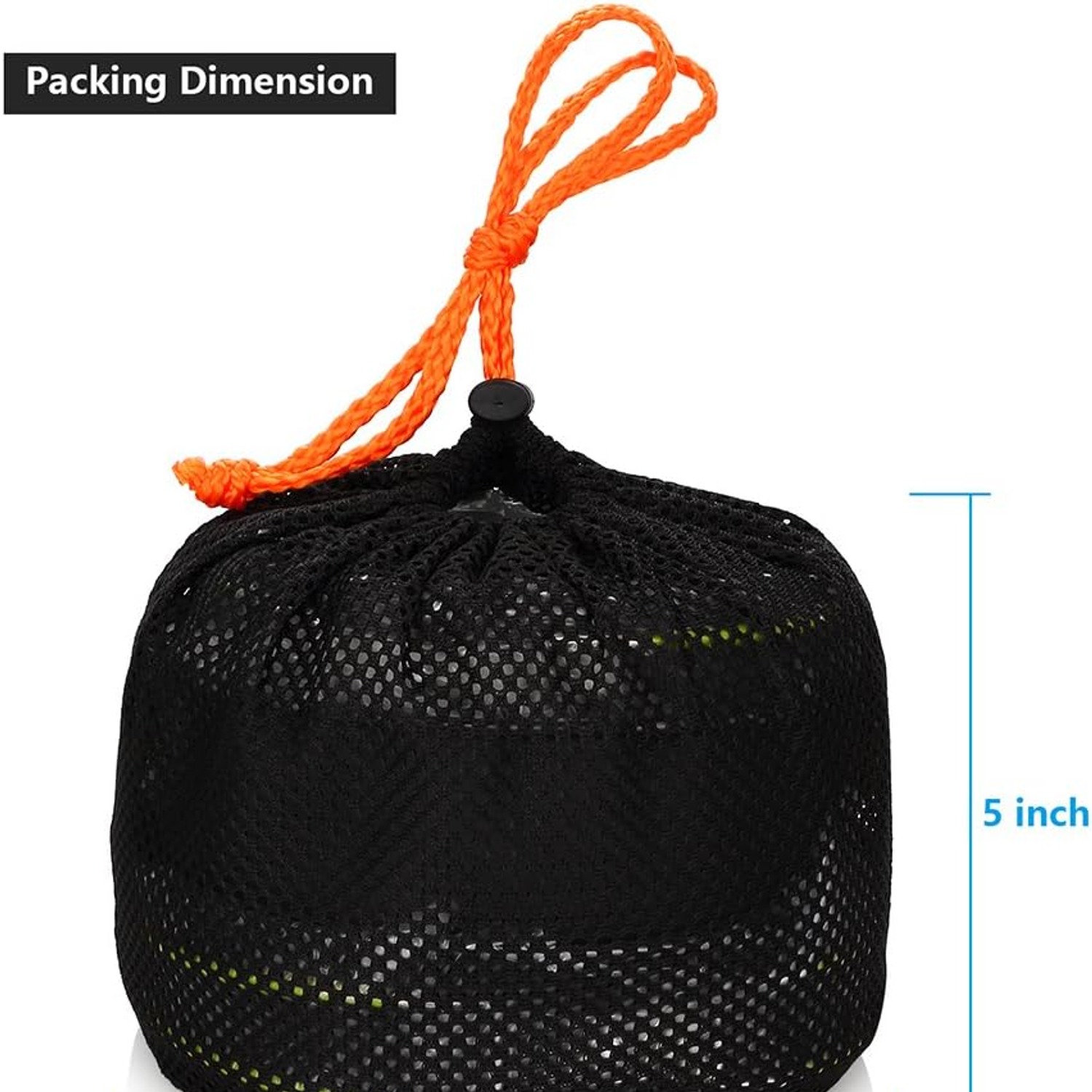
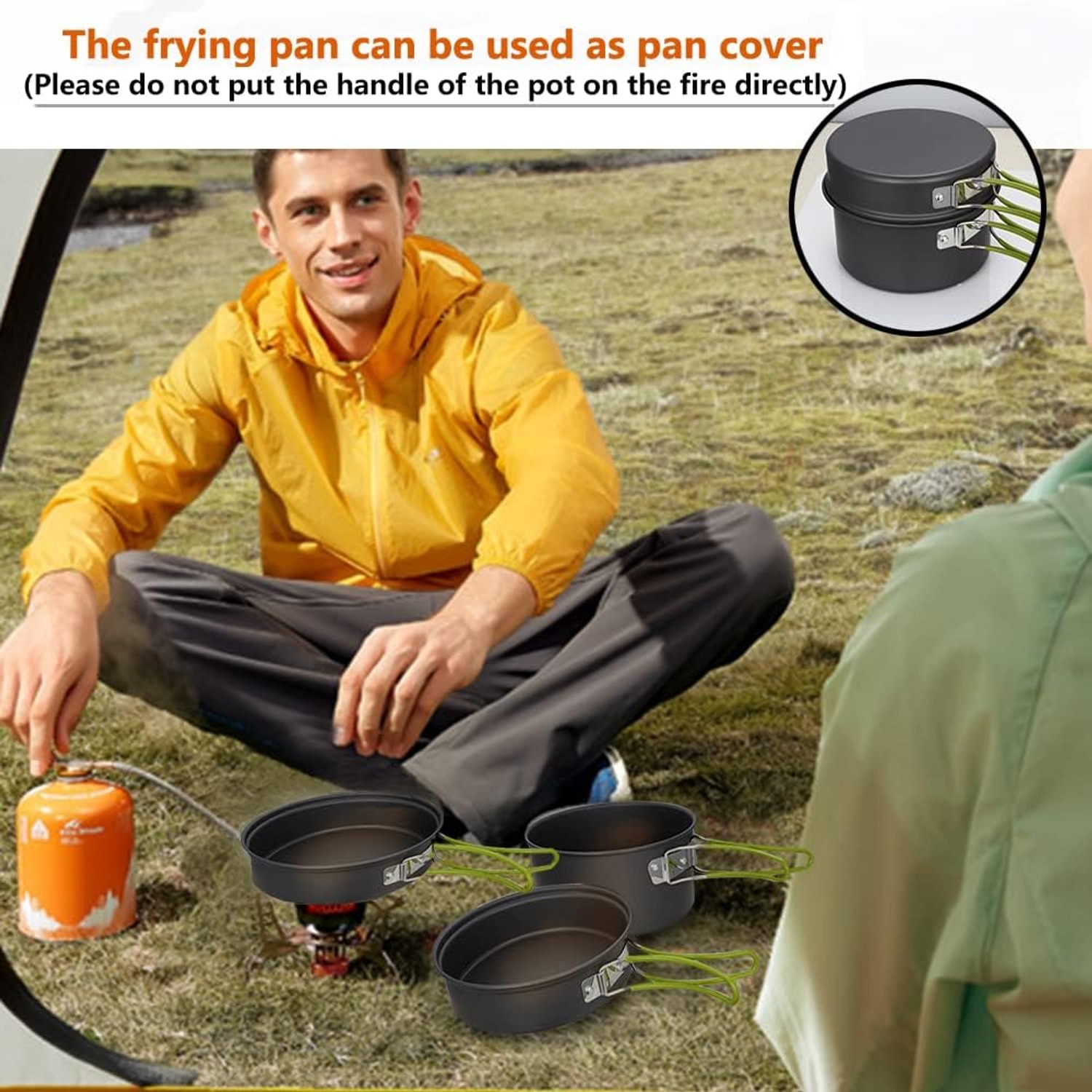
The whole idea is Russian dolls. The largest pot sits on the outside. The smaller pot drops inside it. The pans sit on top of the pots and act as lids, so you are not carrying separate lids that only do one job. Bowls, the soup spoon, the bamboo spoon and the cleaning sponge all tuck into the spare space in the middle. Then the nylon bag goes around the lot.
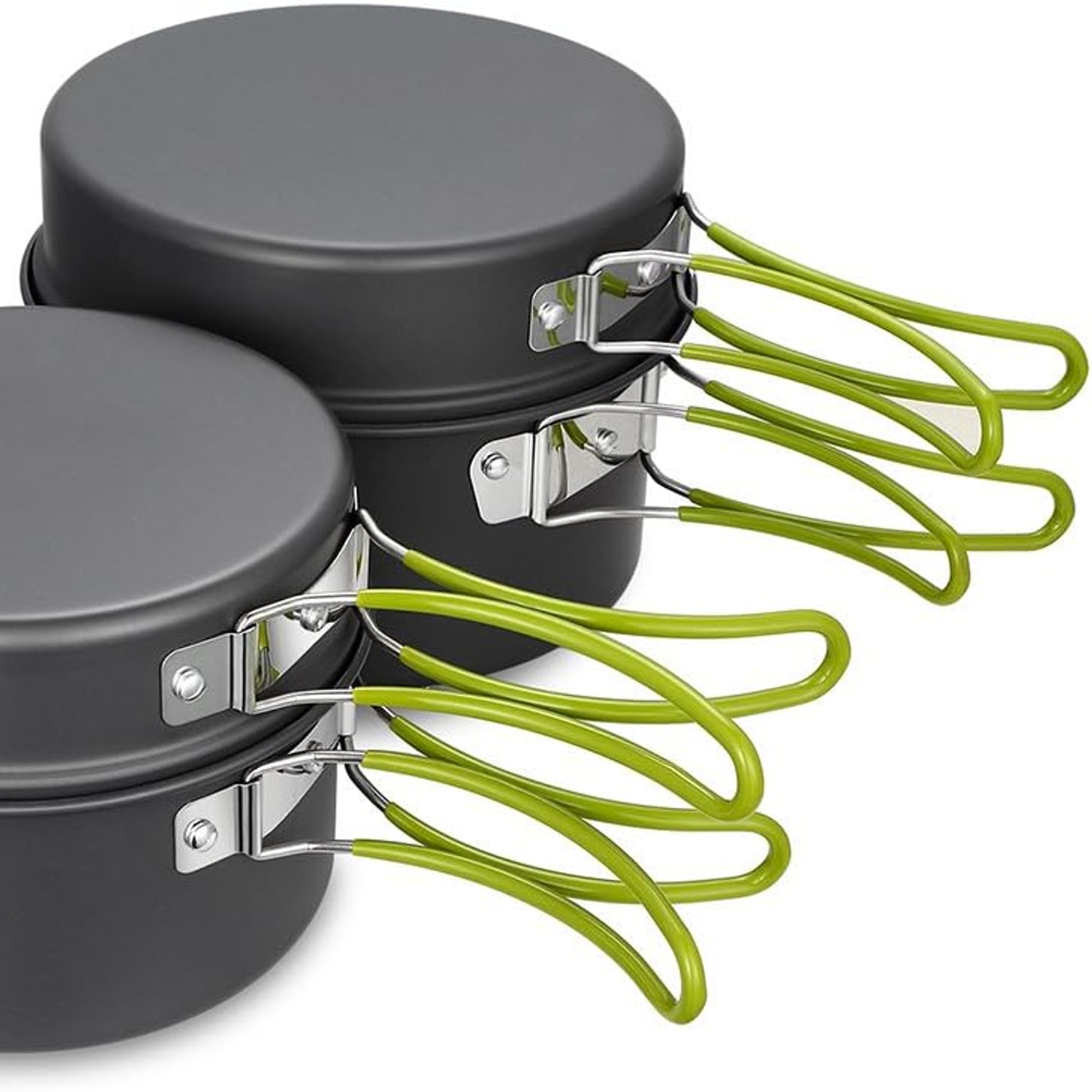
Folding handles are what make it possible. If the handles stuck out, nothing would stack flat. These fold in against the pot body and have silicone covers so you are not grabbing bare metal. Fold them out to cook, fold them back to pack.
The material matters as much as the shape. This set is aluminium, which does two useful things. It is light, so a full 11-piece kit still only weighs about a kilogram. And it conducts heat fast, which means water boils sooner and you burn less fuel. On a trip where you are carrying your gas in, that difference adds up.
The cooking surfaces are non-stick. On a camp stove the heat is never perfectly even, and you often cannot stand over the pan watching it. Non stick camping pots give you some forgiveness. Food lifts instead of catching, and the wash-up is a sponge rather than a scraper.
Who this suits
Couples and pairs. The set is sized for two. Three bowls means there is one spare for mixing, for a side, or for the person who drops theirs in the dirt.
Backpackers and hikers. A kilogram is reasonable for a shared load between two people. One carries the cook set, the other carries the stove and fuel. If you want to shave weight, leave a bowl and the spare pan behind.
Car campers and van travellers. Space in a van is the real currency. A nesting set that lives in one bag beats five loose pans rolling around a cupboard. Grab the bag, cook, wash, repack.
Emergency kits. A compact cook set stored with a portable burner and a fuel canister gives you a working stove during a power outage. It is a cheap bit of preparation that sits in a cupboard until the day you need it.
Anyone who travels light. It also suits a rented holiday house with a bad kitchen, a weekend at a festival, or a fishing trip where you want to cook what you caught.
How to choose
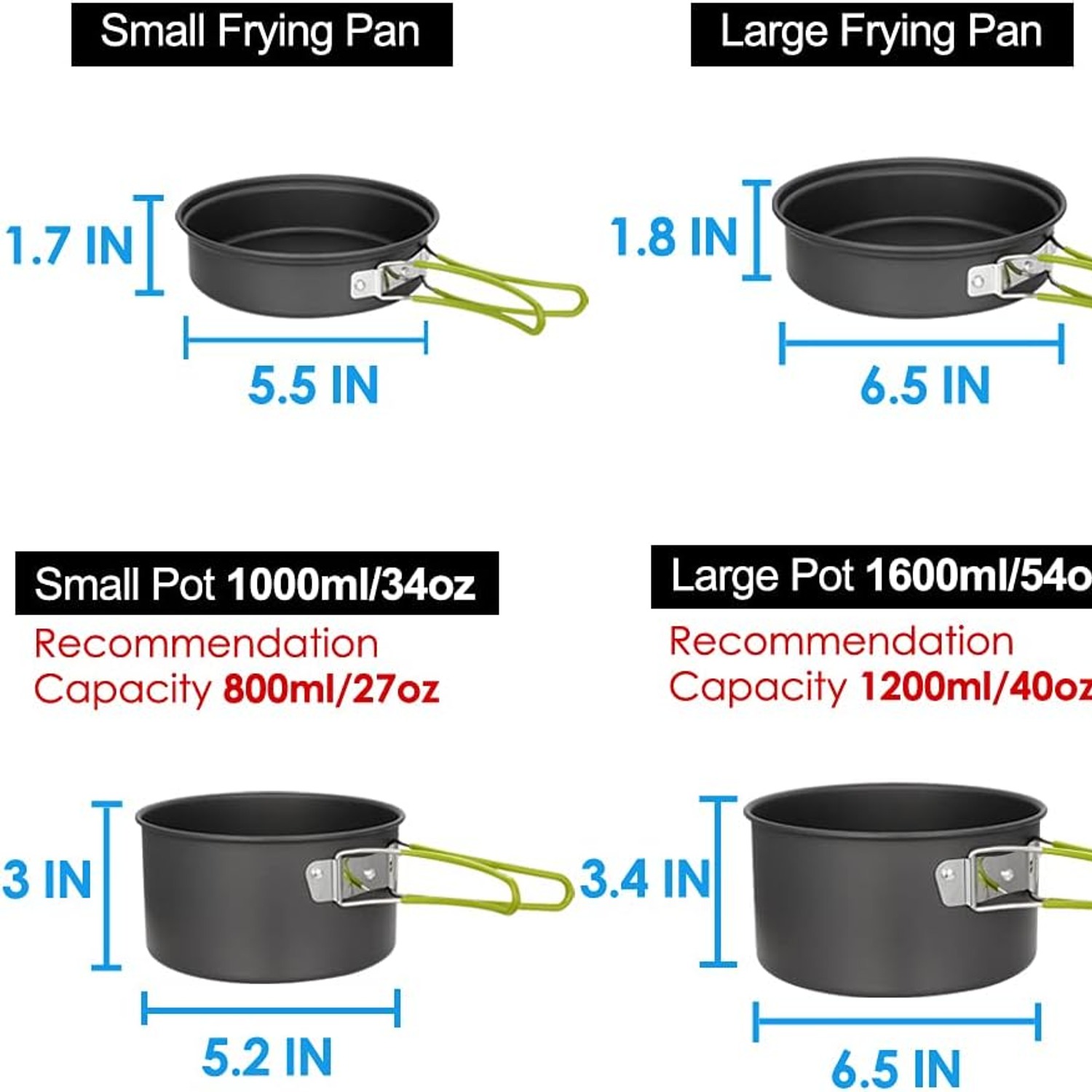
Start with the number of people. A two person camp cook set like this one handles meals for two comfortably. Four people means either two sets or a larger kit with bigger pots. Trying to cook for four in a 1.8 litre pot means serving in shifts, and nobody enjoys that.
Then think about weight and pack size. If you are walking in, every gram counts and nesting is not a nice-to-have, it is the whole point. If you are driving in, weight matters less but a tidy pack still makes life easier.
Check how the set handles lids. Pans that double as lids are a good sign. Separate lids are dead weight unless they are doing double duty.
Look at the handles. Folding handles with a grip cover are the practical choice. Fixed handles mean the set will never pack flat, and bare metal handles mean you are hunting for a tea towel every time you lift a pot.
Think about what you actually cook. If your camp menu is noodles, pasta and reheated stew, a pot and a bowl will do. If you want eggs, bacon, pancakes or fish, you need a decent pan with a non-stick surface, and this set gives you two pan sizes.
Finally, match it to your stove. Small canister stoves have narrow pot supports. Make sure the smaller pieces will sit steady rather than wobble. If you cook over a fire, plan to keep the flame under the base and off the handles.
Getting it ready and keeping it good
Give the non-stick pans a hand wash before the first trip. Dry them, then rub a thin film of cooking oil across the surface. It conditions the coating and gives it a better start than going straight from box to flame.
After that, the rules are simple. Keep the heat low to moderate. High heat is the fastest way to ruin any non-stick coating, and aluminium conducts so well that you rarely need a big flame anyway. Never heat an empty pan and walk away.
Use soft utensils. Wood, plastic with smooth edges, or heat-resistant silicone. The bamboo spoon is in the set for exactly this reason. Metal spatulas and forks score the surface and once that happens, food starts catching in the scratches.
Wash with warm water, a mild detergent and a soft sponge. The included sponge handles most jobs. Steel wool and gritty cleaning powders will strip the coating. If something has baked on, soak it in warm water for ten minutes rather than attacking it.
Dry everything completely before you nest it. Moisture trapped inside a stacked set inside a closed bag is how you end up with a musty kit and marks on the metal. Give it a few minutes in the air.
Keep the handles away from direct flame. They are built to handle heat, but a long, sustained flame on a handle will eventually cause damage. Centre the pot over the burner and you will never have the problem.
Small habits that make camp cooking better
Pack the sponge in a small bag of its own so a damp sponge is not sitting against the bowls. Keep a tiny bottle of detergent with the set. Carry a scrap of cloth as a pot grab and a dish towel. These cost nothing and change the experience.
Plan meals that use one pot and one pan. It halves the washing up. Boil water first for a drink, then cook in the same pot, then wash once.
Store the set packed and ready between trips. The next time someone suggests a last-minute overnighter, the kitchen is already done.
The short version
An aluminium camping cookware set that nests into one bag solves the two biggest annoyances of cooking outdoors, which are space and clean-up. This one is 11 pieces, around a kilogram packed, with non-stick pots and pans, folding handles, three bowls, a soup spoon, a bamboo spoon, a cleaning sponge and a carry bag.
It suits two people on a hike, in a van, at a campsite or in a power cut. Treat the non-stick surfaces gently, keep the heat moderate, use soft utensils and dry everything before packing, and it will keep feeding you trip after trip.