
The complete guide
How to Choose an Ultralight Solid Fuel Stove for Hiking and Emergency Kits
The problem with carrying a stove you barely use
Most people who hike more than a couple of times a year end up with a stove that is too much stove. A canister burner, a stand, a lighter, a canister that is half full and rattles, maybe a windscreen. It all works. It is also a few hundred grams and a fair chunk of pack space for what is often one boil of water in the morning and one at night.
That mismatch gets worse the faster and lighter you travel. On an overnight run, a fastpacking weekend or a bikepacking loop where you are already counting grams on your toothbrush, a full cook kit starts to look absurd. Plenty of people solve it by going cold, eating bars and soaked oats, and skipping hot food entirely. That works until it is raining, you are cold, and a hot drink would fix most of your mood.
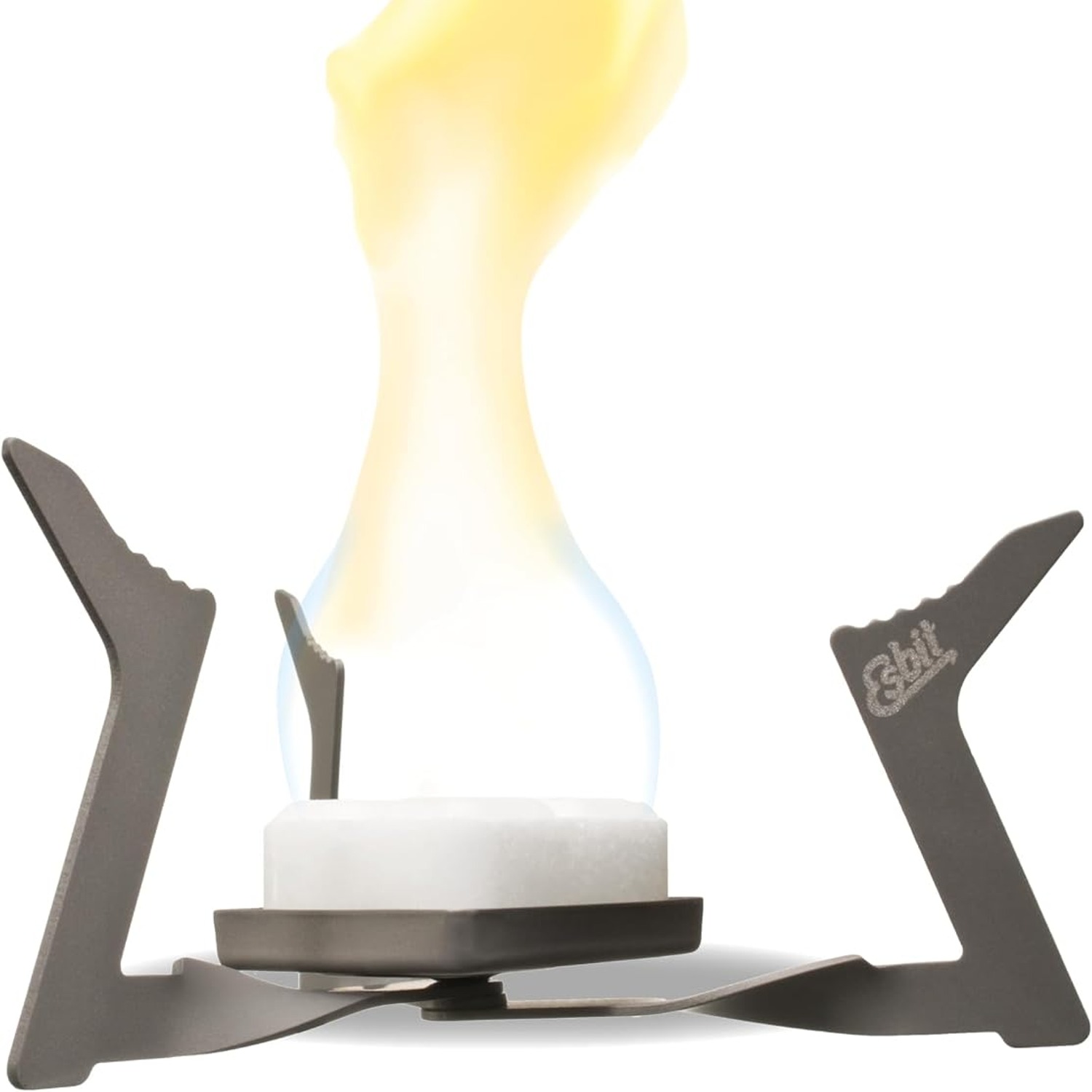
A solid fuel stove sits in the gap. It is a small piece of folded metal that holds a fuel tablet steady under your pot. There is no pump, no valve, no fuel bottle and nothing that can leak. That is the whole appeal.
How a solid fuel stove actually works
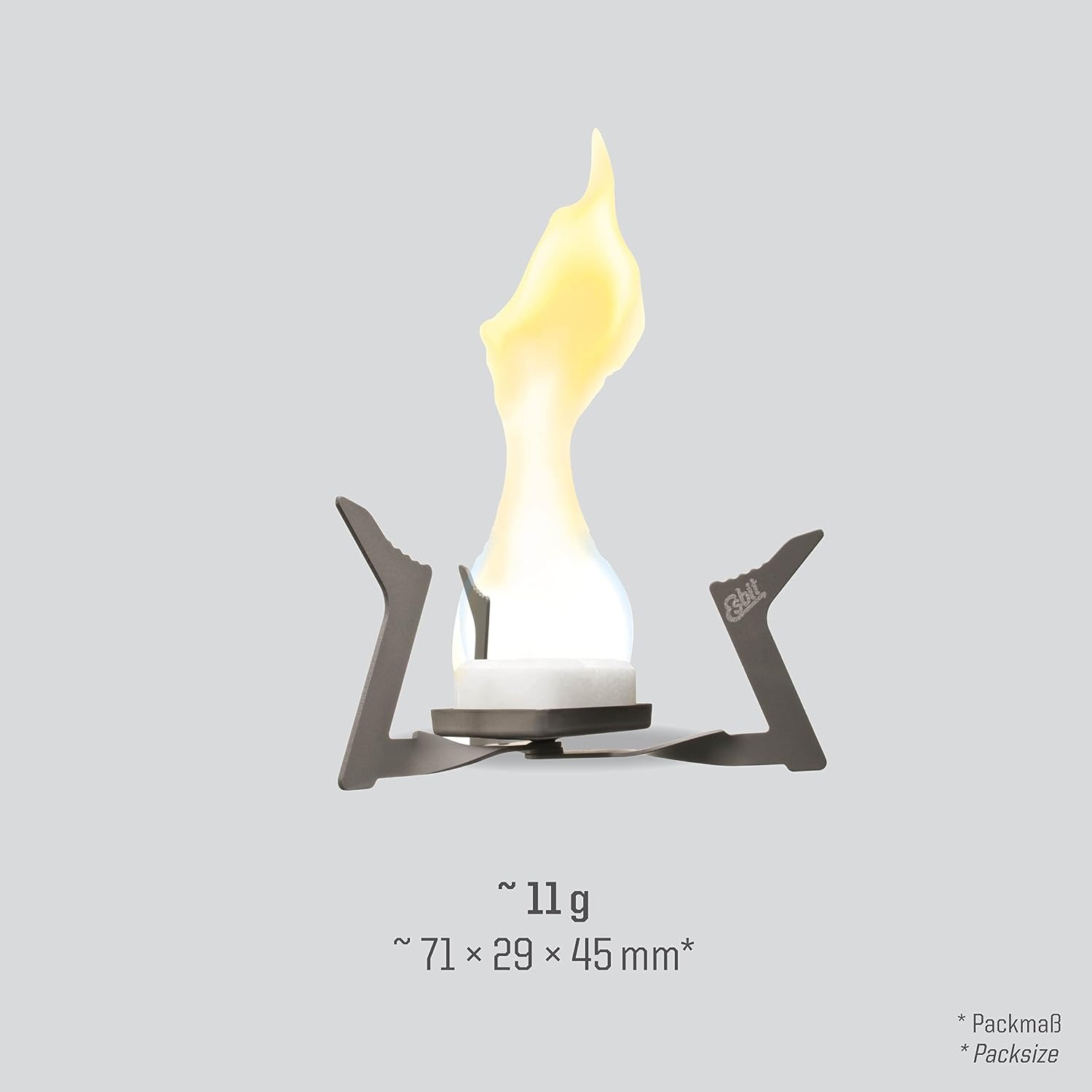
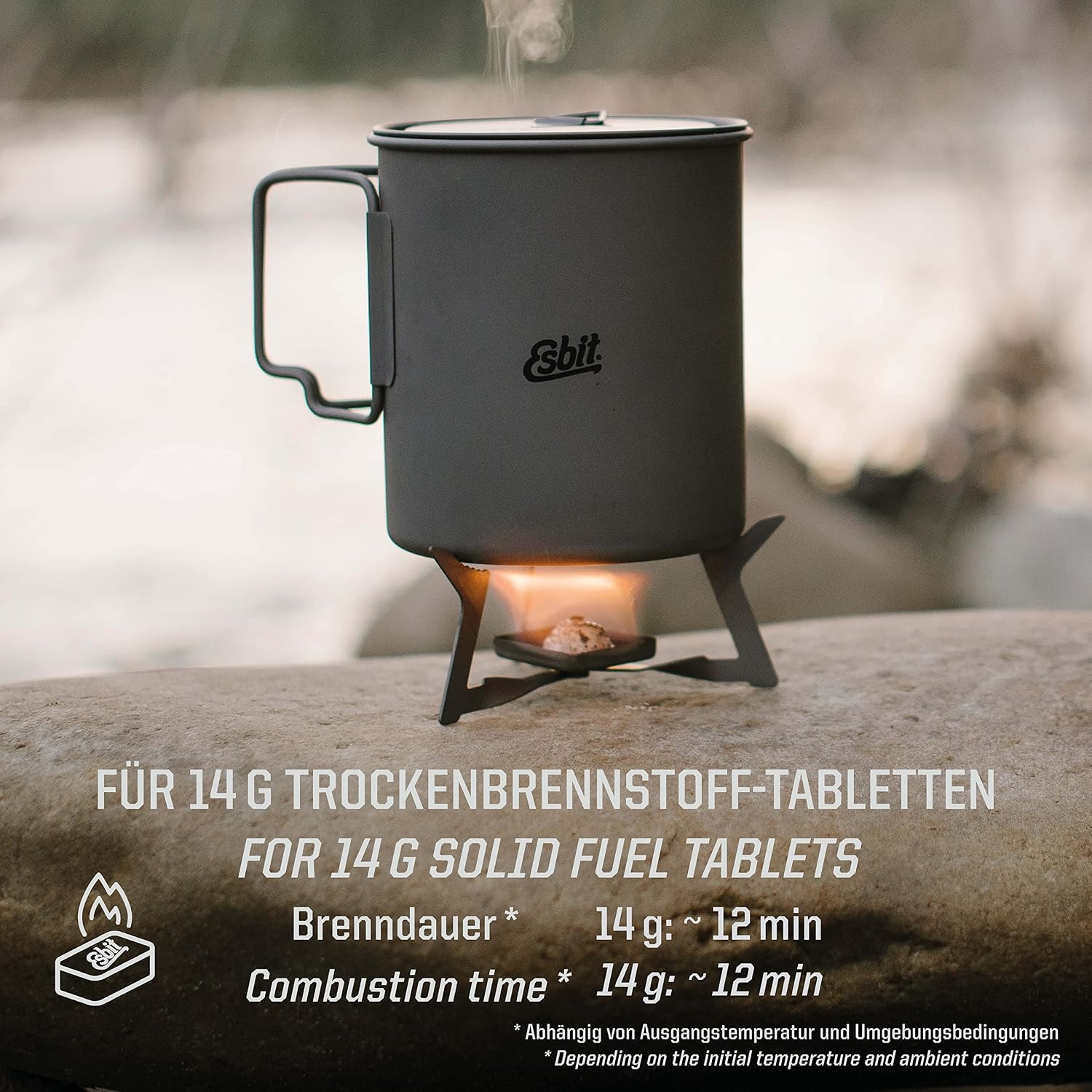
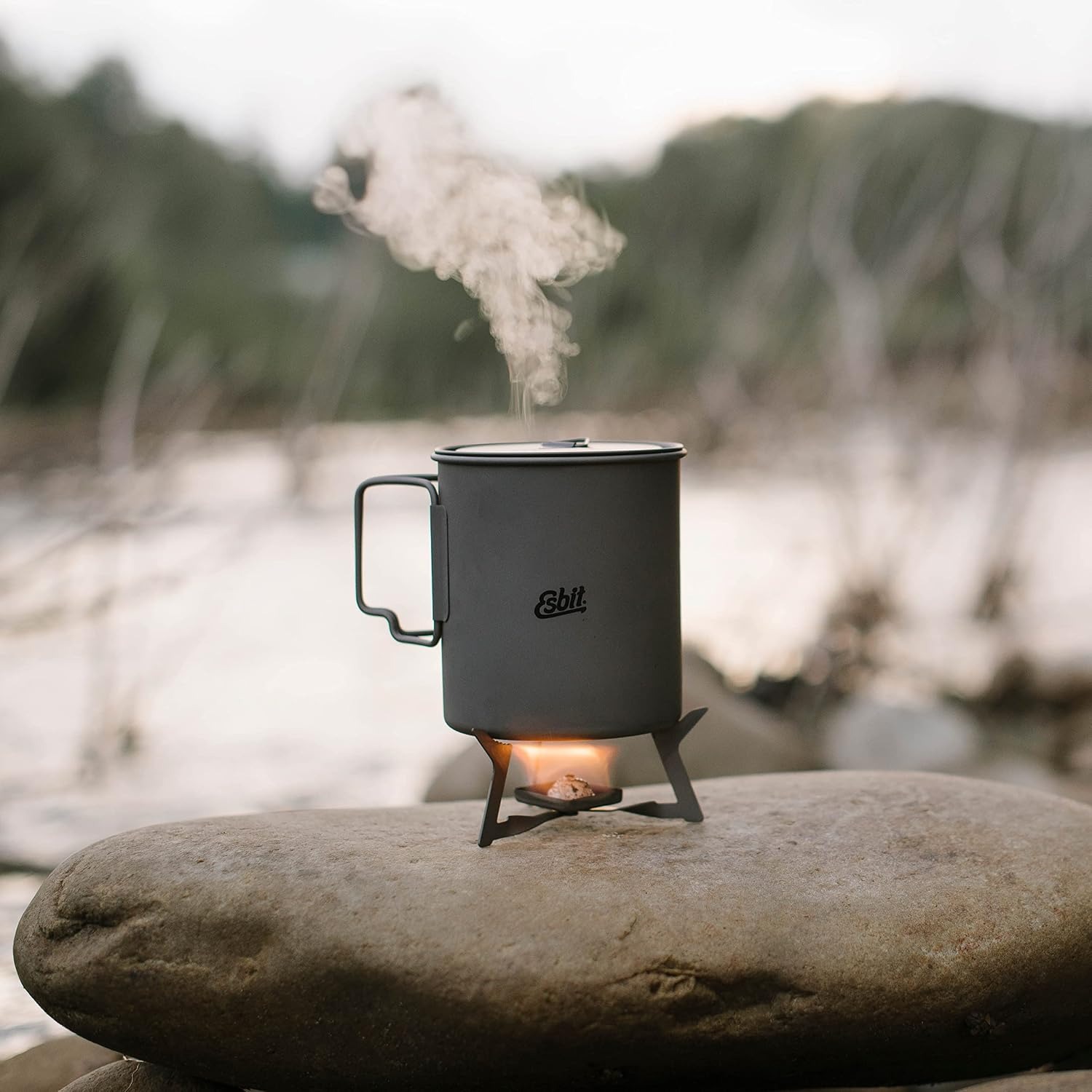
The mechanism is about as simple as cooking gets. You unfold the legs so the stove stands on its own. You set a solid fuel tablet in the centre. You light the tablet with a match, a lighter or a spark, and you put your pot on the legs above the flame.
The tablet burns down over several minutes and the heat goes into the base of the pot. When the tablet is spent, the flame goes out. If you need more heat, you add another tablet. If you have boiled enough water early, you can snuff the tablet and put the remainder back in your fuel bag for the next meal.
There is no flame control dial. You get the heat the tablet gives you. That sounds like a limitation, and for some cooking it is, but it also means there is nothing to adjust, nothing to get wrong, and nothing mechanical that can fail at 7am on a cold morning.
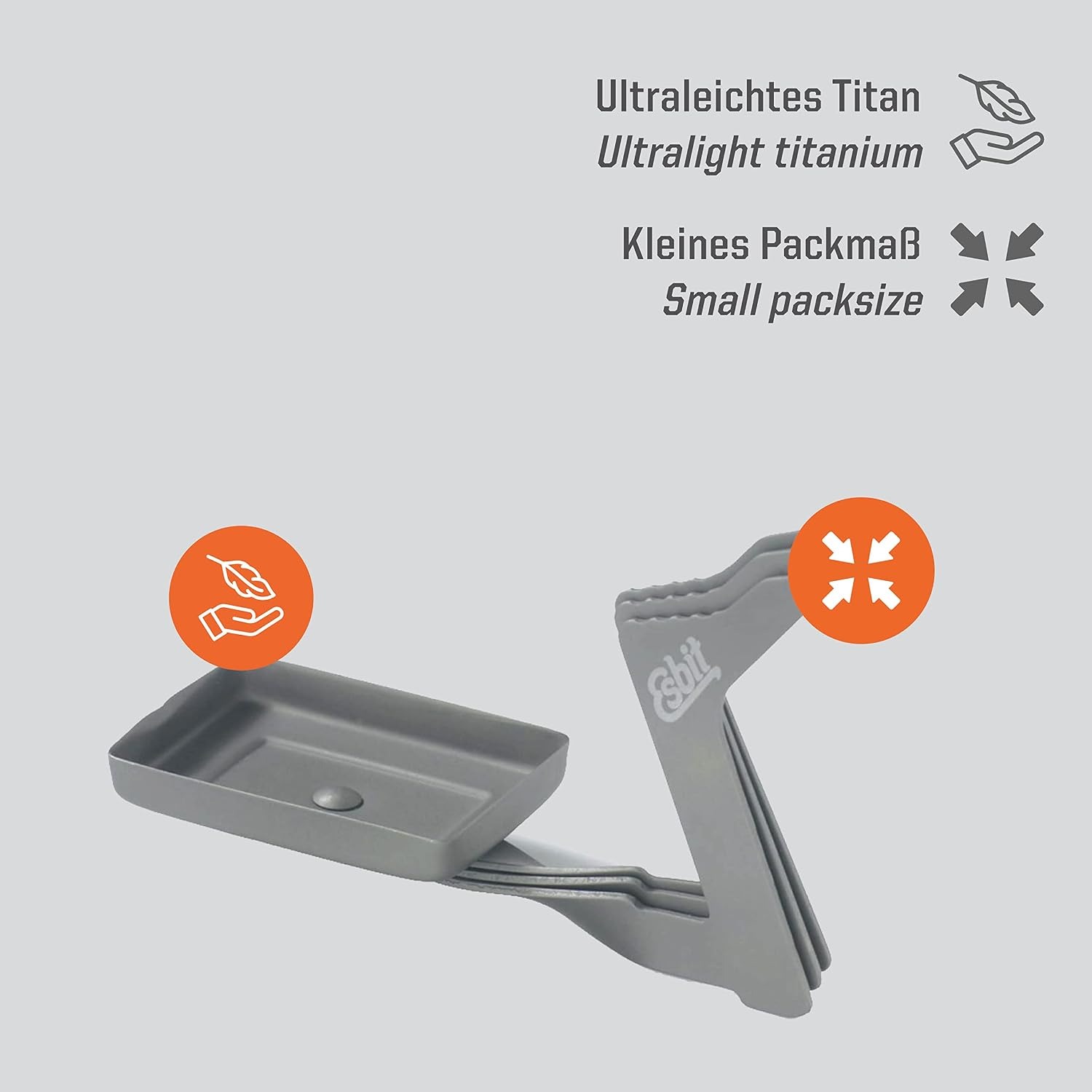
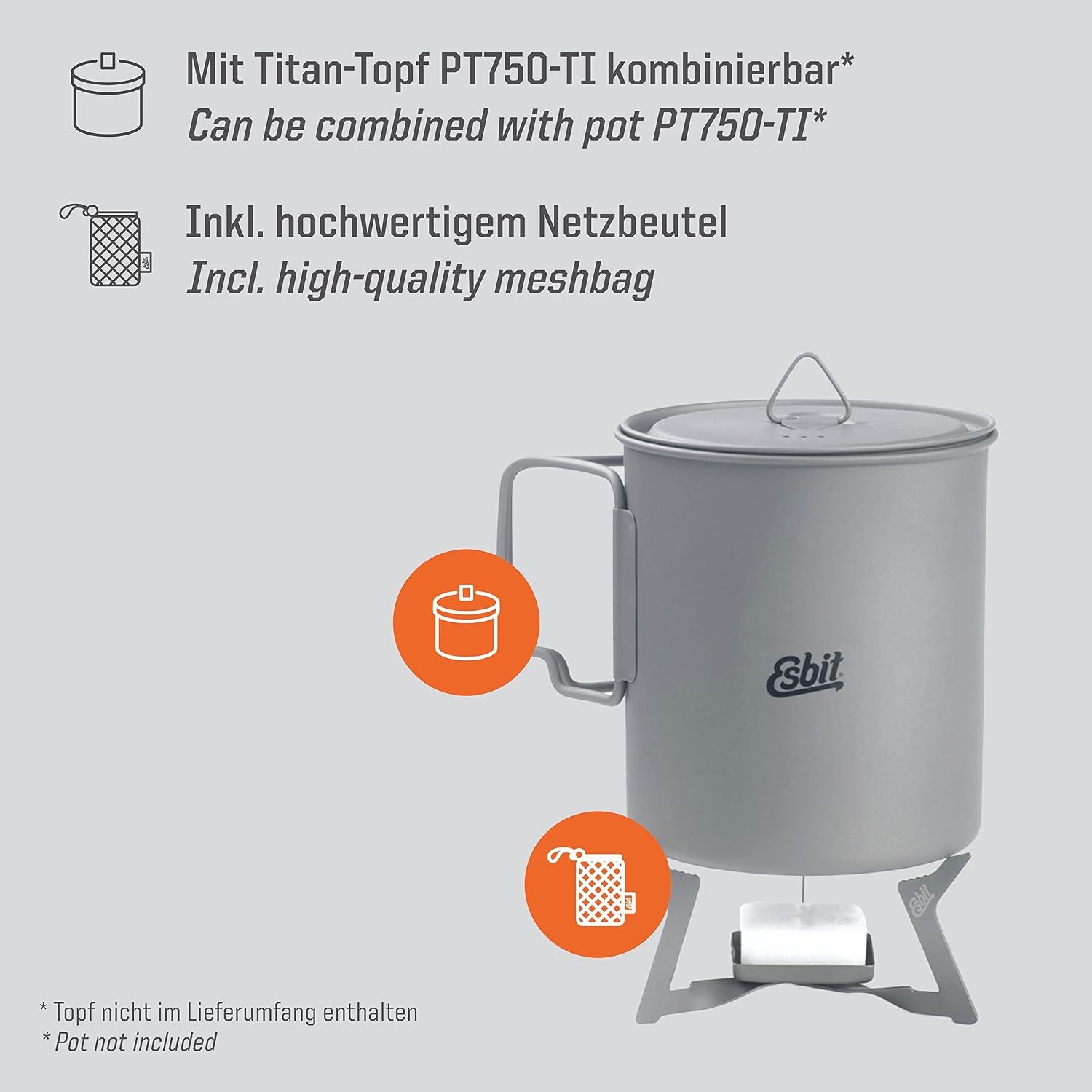
This particular stove is made from titanium and the whole unit is listed at 0.02 kg. Folded, it measures 28 x 28 x 84 mm. That is small enough that most people store it inside their pot along with a lighter and a few tablets, so the entire cook system is one object in the pack. It comes with a mesh bag, which is more useful than it sounds, since solid fuel leaves residue and pots pick up soot.
Who this kind of stove suits
It suits solo travellers who mainly boil water. Dehydrated meals, instant noodles, coffee, tea and soup all come down to getting roughly 500 ml of water hot. A pocket stove does that job without much ceremony.
It suits people doing short, fast trips. Overnight adventure races, one night out on the bike, a summit push where you want something warm at the top. For those, the weight saving against a canister setup is real and the limited cooking range does not matter.
It suits backup and emergency use particularly well. Anyone building the best emergency cooking stove into a kit runs into the same issue with gas: canisters age, partially used ones are hard to judge, and valves can stick. Dry fuel tablets and a folded piece of titanium can live in a glovebox or a go bag for a long time and still work.
It does not suit group cooking. If you are feeding three people pasta, you want more heat and more control than a tablet gives you. It also does not suit anyone who really enjoys cooking outdoors, frying eggs and simmering sauces. That is a different tool.
What to look at when comparing stoves
Weight versus what you actually cook. Be honest about your meals. If you boil water twice a day, a minimalist stove wins easily. If you cook properly, the weight saving is not worth the frustration.
Packed size and whether it nests. A stove that fits inside your pot effectively takes up no extra room. Measure the inside of your pot or mug against the 28 x 28 x 84 mm figure before you buy. This is the single biggest practical difference between a stove that feels light and one that feels fiddly.
Fuel availability where you travel. Solid fuel tablets are widely sold but not in every corner shop. Gas canisters are common in trail towns but come in different fittings. Work out which is easier to restock on your routes.
Stability under your pot. Three folding legs make this stove self-standing, but any small stove needs flat, firm ground. If you usually cook on soft sand or lumpy forest floor, carry a small flat base or a piece of foil to sit it on.
Wind exposure. Open flame stoves lose a lot of efficiency in wind. If your trips are coastal or alpine, plan on carrying a simple windscreen or always setting up behind shelter. It makes a bigger difference to fuel use than almost anything else.
Getting the best out of it in the field
Start with a lid on your pot. It sounds obvious and it is the cheapest boil time saving available. A lid can cut several minutes off a boil and save you half a tablet.
Shelter the flame. Rocks, your pack, a dug hollow, a foil windscreen, anything that keeps moving air off the flame. On a still morning the stove performs well. In a steady breeze with no protection, you will burn fuel and get lukewarm water.
Use less water than you think. Most dehydrated meals need less than the packet says, and heating 400 ml instead of 600 ml is noticeably faster. If you want a hot drink too, boil once and split it.
Carry a few more tablets than your plan calls for. They are light, they do not go off in the way a gas canister can lose pressure, and the extra is cheap insurance for a cold night or a long day.
Protect the ground. Solid fuel burns hot right under the stove and can scorch grass, leaf litter and tabletops. Pick bare dirt or a flat rock. It takes ten seconds and keeps the site looking like nobody was there.
Care and storage
Let it cool fully before touching it or packing it away. Titanium holds heat and the legs will be hot for longer than you expect.
Wipe off soot and fuel residue with a dry cloth, or a little warm water if it needs more than that. Avoid abrasive scourers that scratch the surface. Dry the stove completely before it goes back into the mesh bag, and store the bag somewhere dry so no grit works into the leg hinges.
Discolouration is normal. Titanium commonly changes shade where it gets hot and the fuel will leave dark marks. Neither affects how it works. If the legs ever feel stiff, a careful clean around the hinge points is usually all it needs.
Store fuel tablets separately in a sealed bag or their original packaging. They keep well when dry, and keeping them away from the sooty stove keeps your food bag clean.
The short version
If you travel light and mostly boil water, this is one of the simplest ways to get hot food on a trip. Titanium build, 0.02 kg, three folding legs, packed down to 28 x 28 x 84 mm, and a mesh bag to keep the soot off everything else. It runs on solid fuel tablets, which are dry, stable and easy to carry in whatever quantity your trip needs.
It will not replace a proper cook setup for group meals or for anyone who likes to actually cook outdoors. That is not the point of it. The point is that you can carry a working stove and barely notice it, which means you take hot food with you on the trips where you would otherwise have gone without.
If you want one job done with no moving parts, this does that job.