
The complete guide
How To Choose A Folding Camping Chair That Is Actually Worth Carrying
The problem with most camp chairs
You know the chair. The heavy folding one with the mesh cup holder that lives permanently in the boot, eating space you need for an esky. It is comfortable enough, but it weighs five or six kilos and it only ever travels the ten metres from the car to the campsite. The moment you want to walk to a lookout, a river bank or a festival field, it stays behind.
Then there is the other extreme. The tiny stool that packs small, costs very little, and sags alarmingly the first time you lean back with a drink in your hand. You spend the evening sitting upright and slightly tense, which is not the point of sitting down.
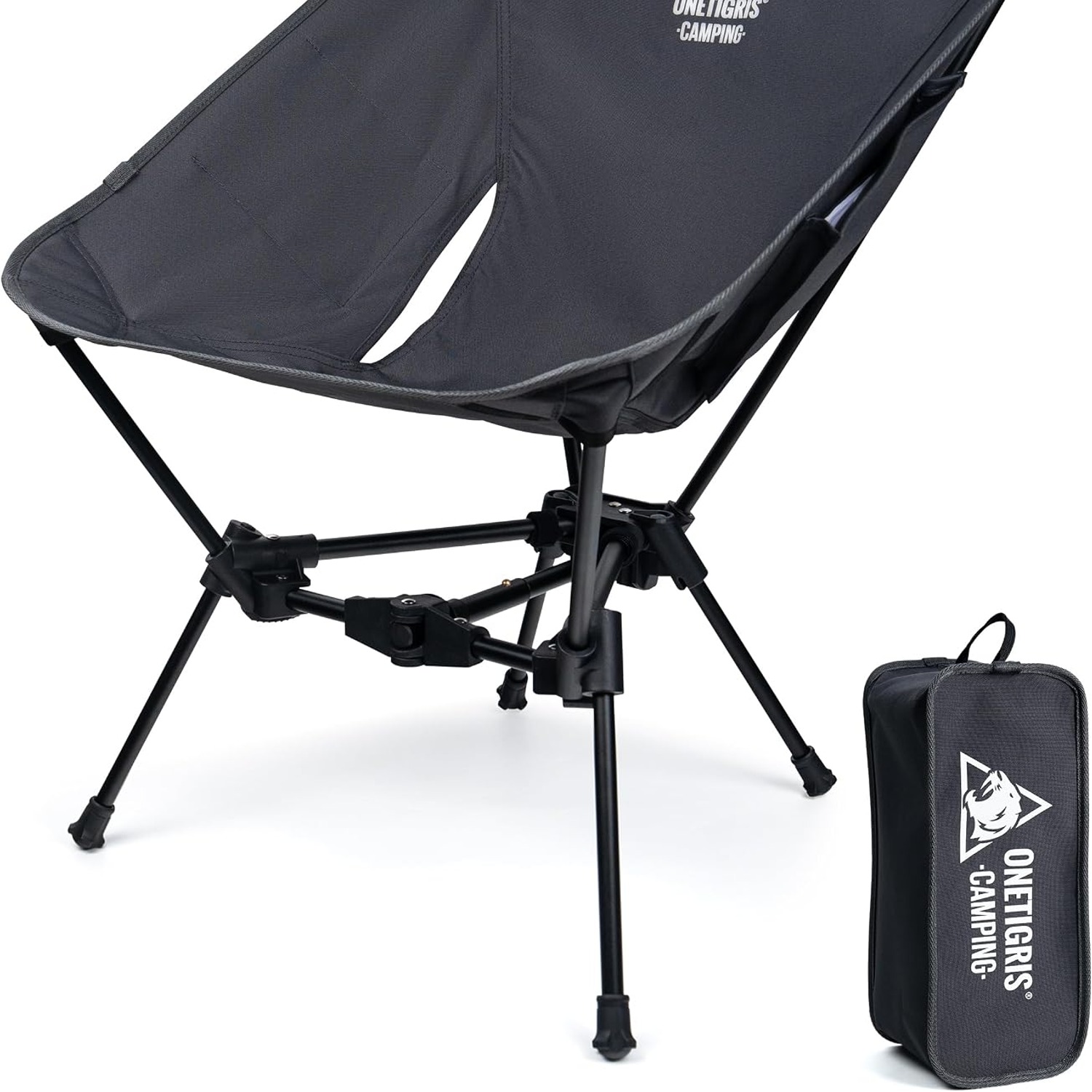
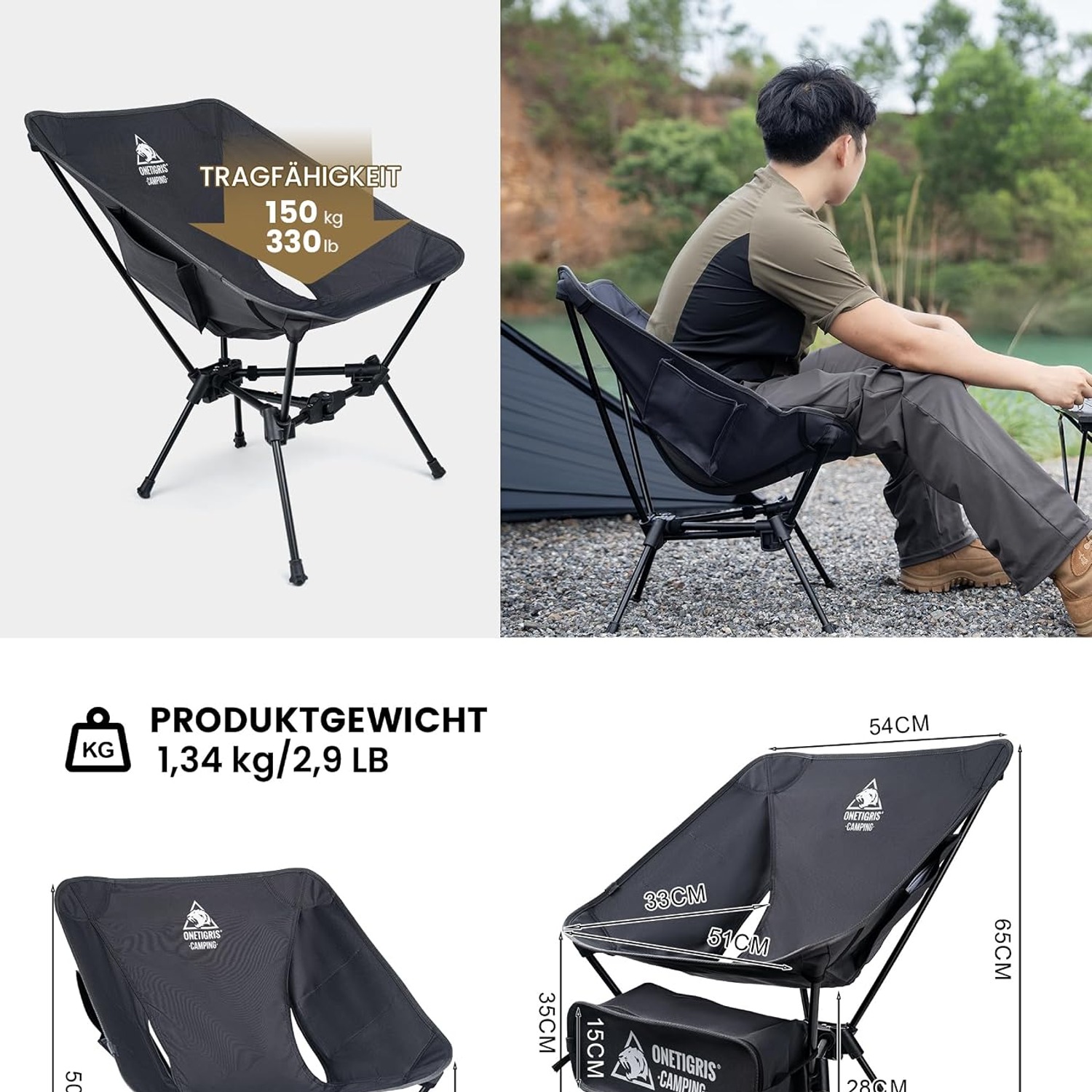
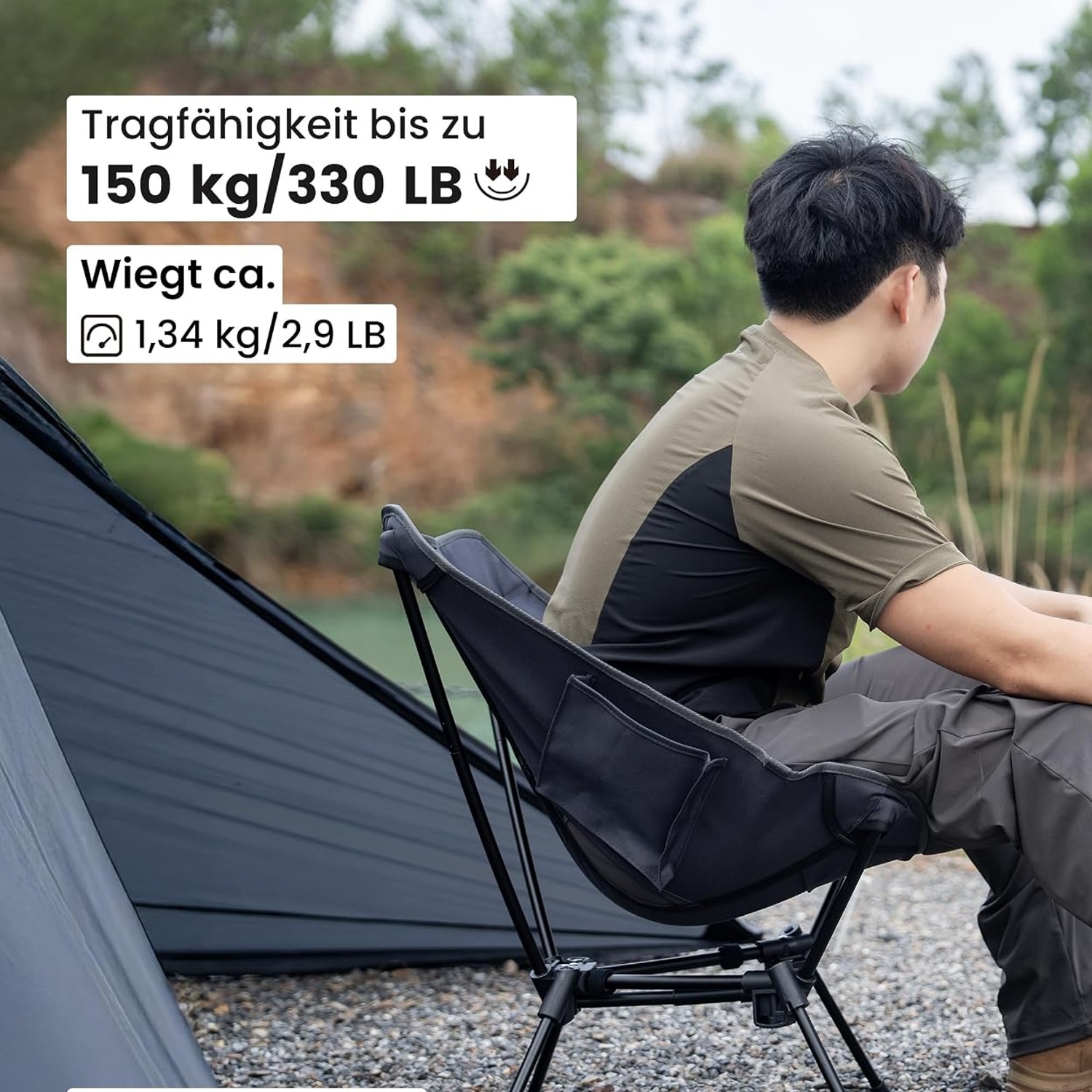
A good folding camping chair solves both problems. It is light enough that carrying it never becomes a decision, and strong enough that you forget you are sitting on something that folds into a bag. This OneTigris model is built for that middle ground, with an aluminium frame, a polyester seat and a 1.4 kg total weight against a 150 kg maximum weight recommendation.
How a light chair holds a heavy person
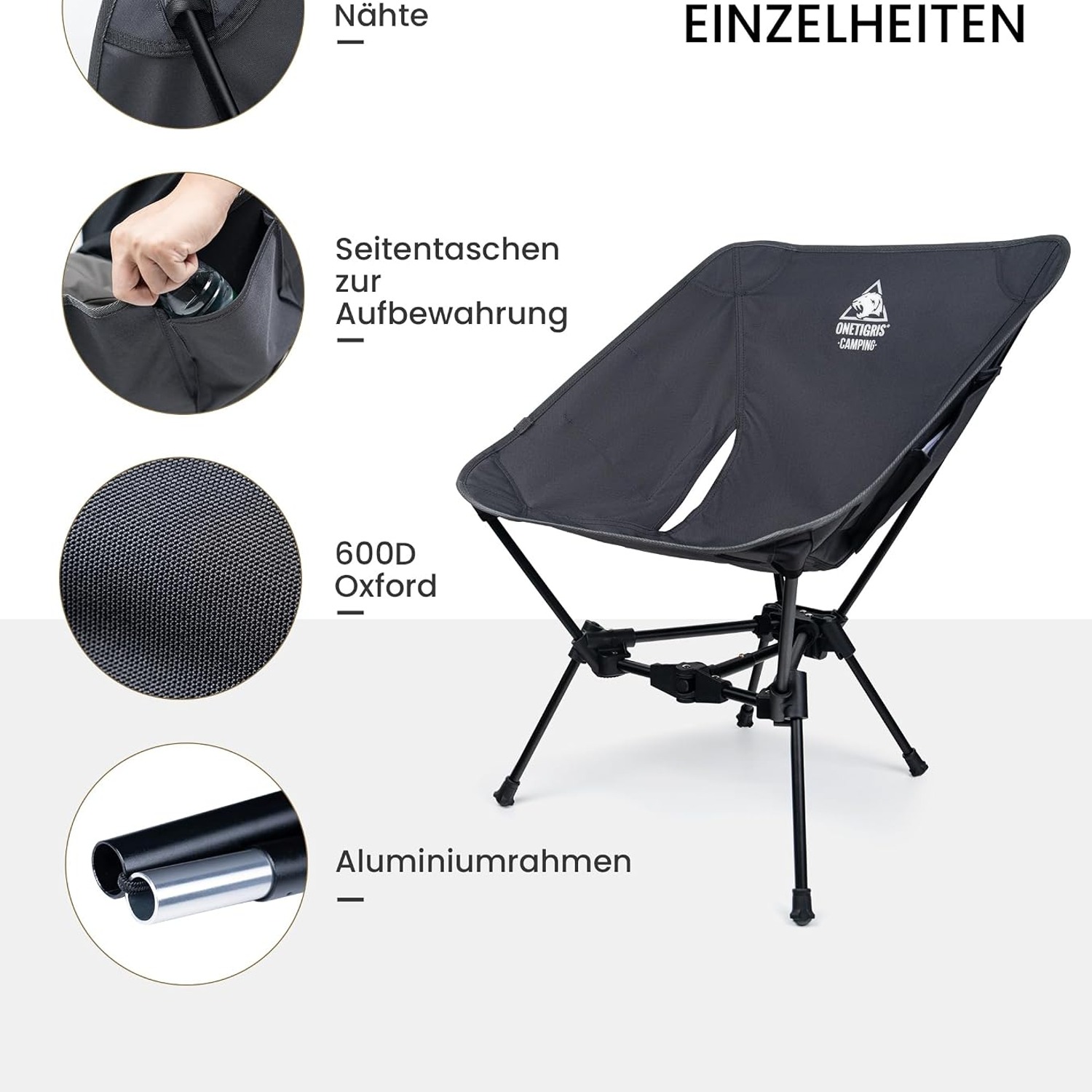
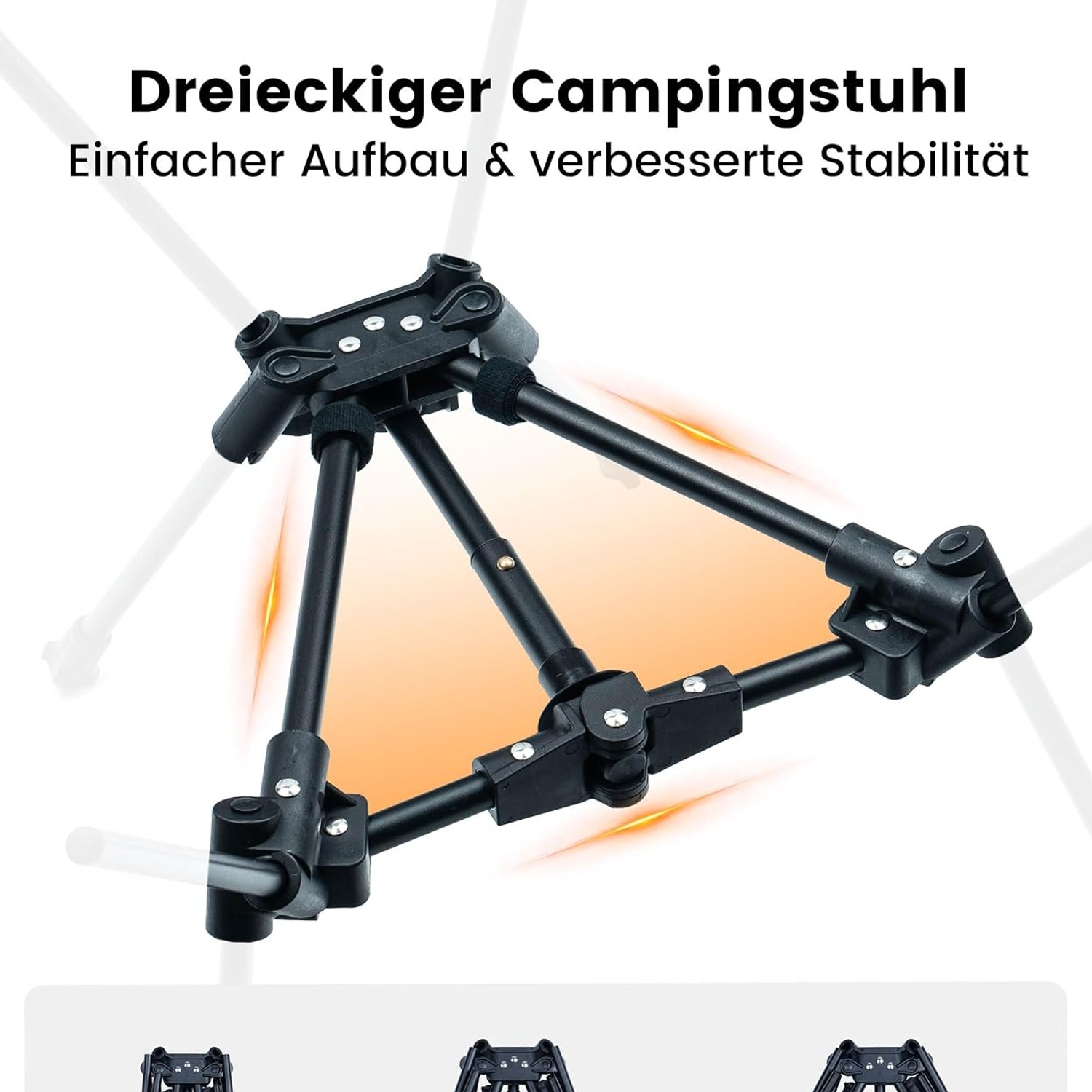
The trick is geometry, not thickness. A central connecting rod ties the legs together so the base forms triangles rather than a rectangle. Rectangles flex and rack under load. Triangles do not, which is why bridges, roof trusses and tent frames all use them.
That means the aluminium poles can stay thin. Load from your body spreads across the whole frame instead of concentrating on one hinge, and the chair can carry up to 150 kg while the whole thing still weighs 1.4 kg.
The legs are flattened rather than round. On hard ground that makes little difference, but on grass, sand or soft dirt a flatter foot has more surface area and sinks less. It is a small detail that shows up on your second or third trip, when you notice you are not constantly resetting a chair that has tipped sideways.
The seat, back and fill are all polyester. That is a sensible choice for a chair that lives outdoors. Polyester dries fast, handles sun better than many natural fibres, and does not hold water the way cotton canvas does. Wipe it, let it dry, pack it away.
Who this chair suits
Campers who move. If you drive to a site, set up, and never shift again, a big padded chair is fine. If you walk in, move between spots, or change campsites across a long weekend, the weight starts to matter every single time.
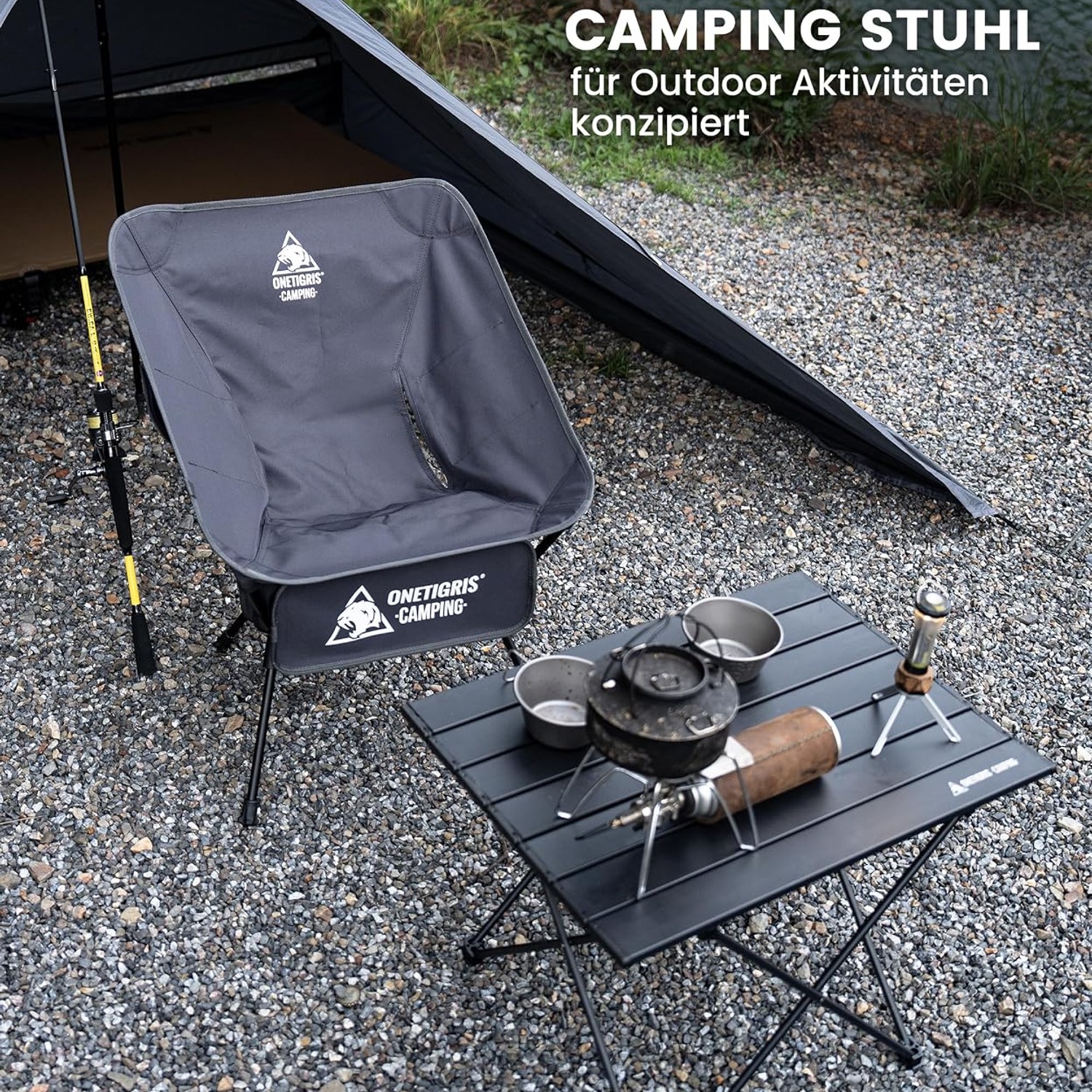
Anglers. The armless design is genuinely useful here. You can cast, net and handle tackle without catching your elbow on a frame, and the two side pockets keep a phone, pliers or a bait knife off the mud.
Festival and sideline sitters. A chair you can carry across a field with one hand, along with everything else, gets used. One that needs both arms usually stays in the car.
Anyone short on storage. At 1.4 kg in a bag, this lives on a shelf, in a cupboard or under a seat. It does not need a dedicated corner of the garage.
Who it suits less well: people who want armrests, a cup holder and multiple recline angles, and people who find low seats hard to rise from. This chair has one seating position and sits lower than a dining chair. That is a deliberate trade for pack size, not an oversight.
What to look at when comparing chairs
Weight against rating. These two numbers only mean something together. A 3 kg chair rated to 100 kg is worse value than a 1.4 kg chair rated to 150 kg, even though one sounds sturdier. Check both before you compare prices.
Frame material. Aluminium keeps weight down and will not rust like steel. Near the coast that matters. Steel frames are cheaper and often stronger per pole, but you pay in kilos and in corrosion over time.
Seat height. Compact chairs sit low. This one has an overall height of 65 cm including the back, so the seat itself is well below a normal chair. If you have stiff knees or hips, sit in something similar before committing.
Arms or no arms. Arms add comfort for reading and relaxing. They also add weight, pack size and fold time. The best lightweight camp chair for one person is the worst for another, purely on this question.
Pockets. Easy to dismiss until you are hunting for your phone in the dark with a torch. Two side pockets is a quietly useful feature.
Pack format. A chair that comes with a bag stays together. One without a bag loses a pole eventually. A storage bag is included here.
Setting it up without the swearing
Assembly is required, but it is hand assembly with no tools. The poles connect, the seat fabric hooks over the frame ends, and that is it. The first time usually takes a few minutes while you work out which corner goes where. After that it is well under a minute.
Two tips. First, do it once in the backyard in daylight before the trip. Nobody enjoys learning a new chair by head torch at eight at night. Second, when fitting the seat over the final corner, push the pole slightly toward the centre rather than pulling the fabric hard. The fabric is tensioned on purpose, and working with the frame instead of against it saves strain on the seams.
Taking it down is the same thing backwards. Lift the seat corners off, fold the poles, roll the fabric around them, bag it.
Keeping it going for years
Light gear lasts when you look after it, and fails fast when you do not. None of this is complicated.
Dry it before you pack it. Damp polyester in a closed bag smells terrible within a week and can grow mildew. If you break camp in rain, hang the chair at home before it goes into storage.
Get the grit out. Sand and small stones in pole joints grind at the aluminium every time you assemble the chair. A shake and a wipe handles it.
Rinse after the beach. Salt is harder on metal than water is. A quick freshwater rinse and a dry costs you nothing.
Do not drag it loaded. Lift the chair to move it. Dragging with weight in the seat puts sideways force on joints that are designed for vertical load.
Watch the shock cord. Elastic in folding poles slowly loses tension over years. If poles start flopping apart, the cord can usually be replaced rather than the whole chair.
Where it fits in your kit
This is a chair for people who want to sit properly without carrying a piece of furniture. It works at a campsite, on a river bank, in a garden, at a market, on a beach or on the sideline of a junior football match. The grey fabric hides dirt, the pockets keep small things findable, and the bag means it travels as one piece rather than three.
It is not a recliner and it does not pretend to be. One seating position, no arms, low to the ground. What you get in return is 1.4 kg, a 150 kg rating and a chair that actually leaves the house.
The short version
If your current camp chair is too heavy to carry anywhere interesting, or too flimsy to relax in, this sits between them. Aluminium frame, polyester seat, 1.4 kg, rated to 150 kg, two pockets, bag included, hand assembly, one position, low seat. Check the seat height suits you and check you can live without armrests. If both answers are yes, this is a straightforward choice that will spend far more time in use than in the cupboard.