
Camping Company
Company
Shop By Category
T&Cs
Shop Online
  • Clear materials and product specifications
  • Free tracked Australia-wide delivery over $150
  • 14-day returns

Heavy Duty Tent Pegs | Steel Tent Stakes | Camping Ground Pegs

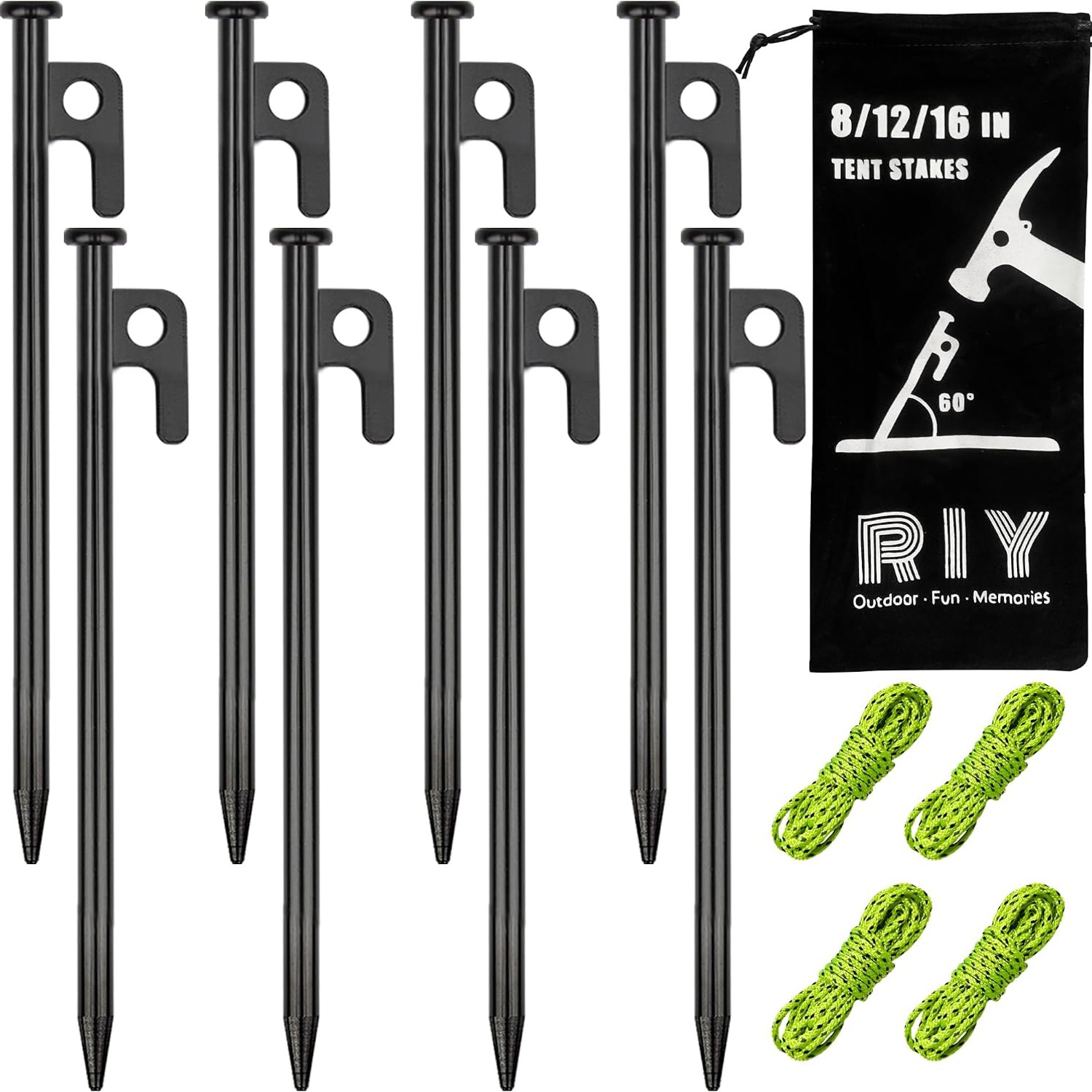
Heavy Duty Forged Steel Tent Pegs (8 Pack)

$73.99 $88.99 Save $15
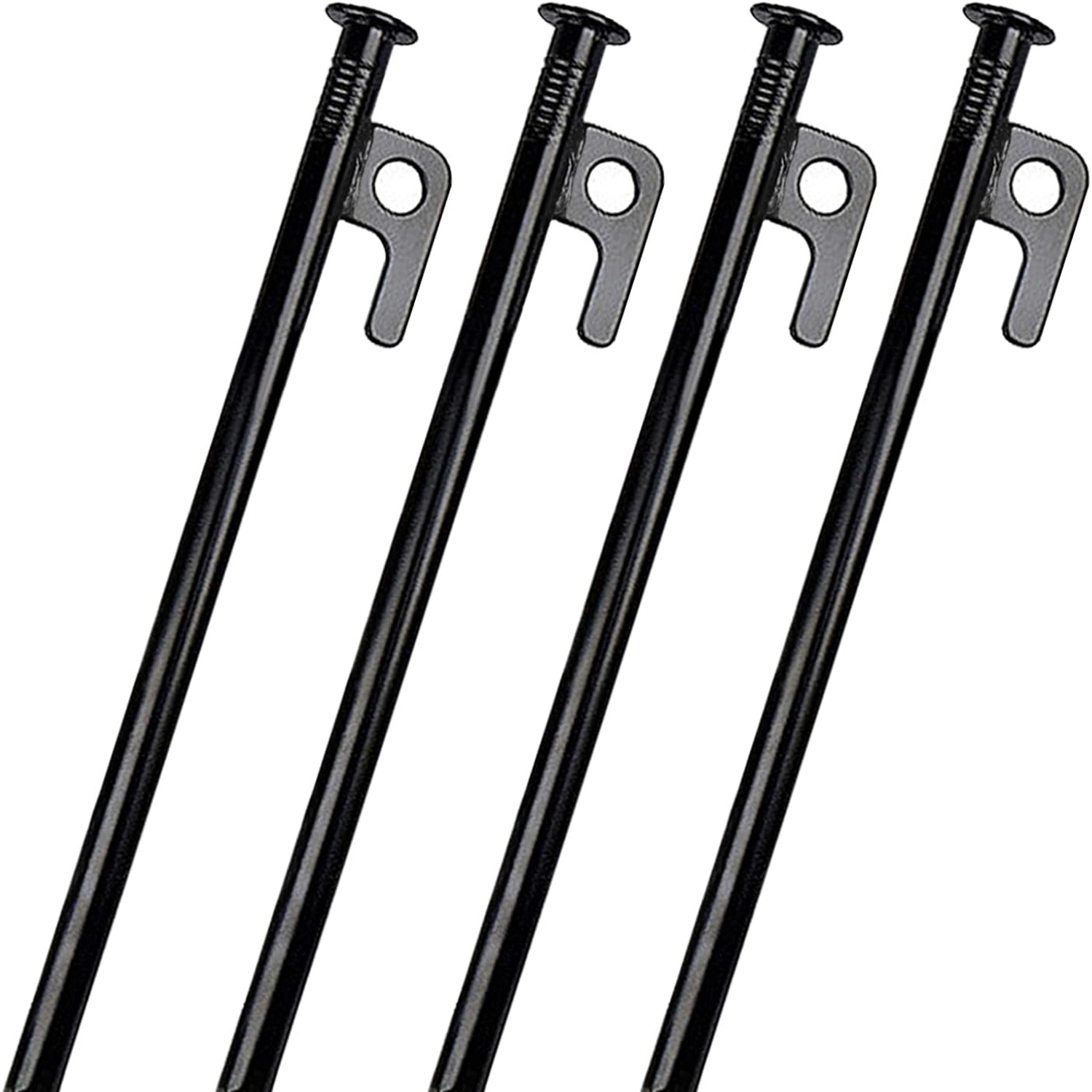
  • Forged Steel Build
  • Sharpened Tip
  • Eight Per Pack
  • 20.3cm Length

Price: $73.99 $88.99

  • Free tracked Australia-wide delivery on orders $150+, otherwise a flat $15
  • Pay by card or PayPal, handled by the payment provider
  • 14 days to change your mind, plus your statutory rights
Product specifications
BrandRIY
Model NumberRIY-20cm-DD16
Manufacturer Part NumberRIY-20cm-DD16
MaterialForged steel
ColourBlack
StyleTent Stake
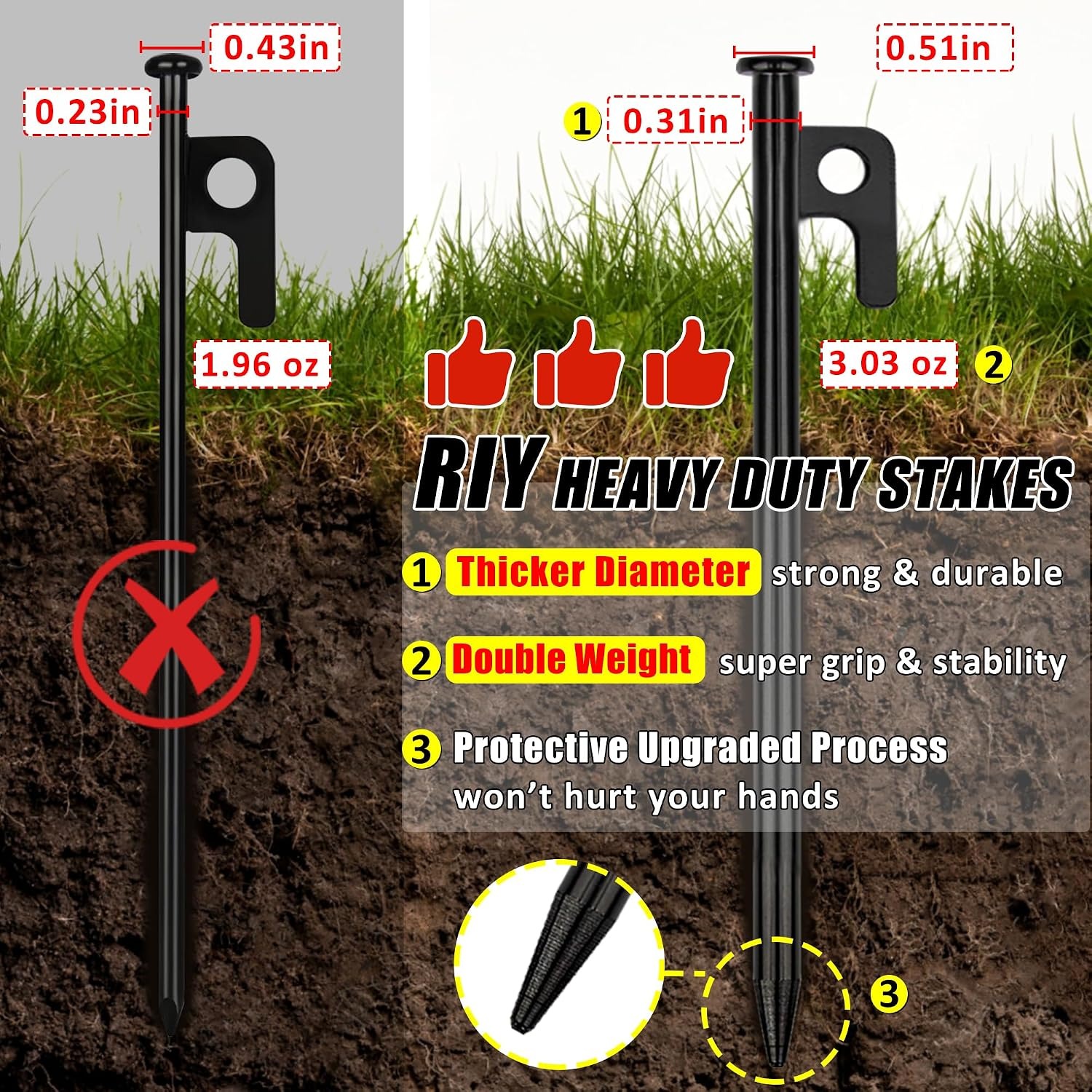
Length20.3 cm (8 inches)
Width1.5 cm
Number Of Pieces8
Unit Count8 count
Pack Weight762 g
Special FeaturesHeavy Duty
Recommended UsesTent stakes, landscape fabric, plant support
Weight762 g
Shipping & returns

Tracked delivery anywhere in Australia. It is free on orders of $150 or more, and a flat $15 below that.

If it is not right for you, send it back within 14 days of delivery in resaleable condition and we refund the price you paid, including standard delivery. That is a voluntary policy we offer on top of your legal rights. You cover the cost of returning it unless the item is faulty.

If it arrives faulty, damaged or not as described, we put it right at no cost to you under the Australian Consumer Law and the Competition and Consumer Act 2010, return postage included.

Shipping details · Refunds and returns

Forged Steel BuildMade from forged steel so the shaft resists bending under a mallet.
Sharpened TipA pointed end helps the peg start cleanly in hard or stony ground.
Eight Per PackEight pegs covers a small tent, a tarp corner set or a canopy leg run.
20.3cm LengthLong enough for real bite, short enough to pack without fuss.

Pitch with confidence on rocky, dry or stubborn ground with heavy duty tent pegs that drive straight and stay put.

Eight forged steel tent stakes, each 20.3cm long with a wide strike head and a sharpened tip, ready for tents, tarps, canopies and garden edging.

A set of eight forged steel tent pegs built for ground that chews through cheap wire stakes.

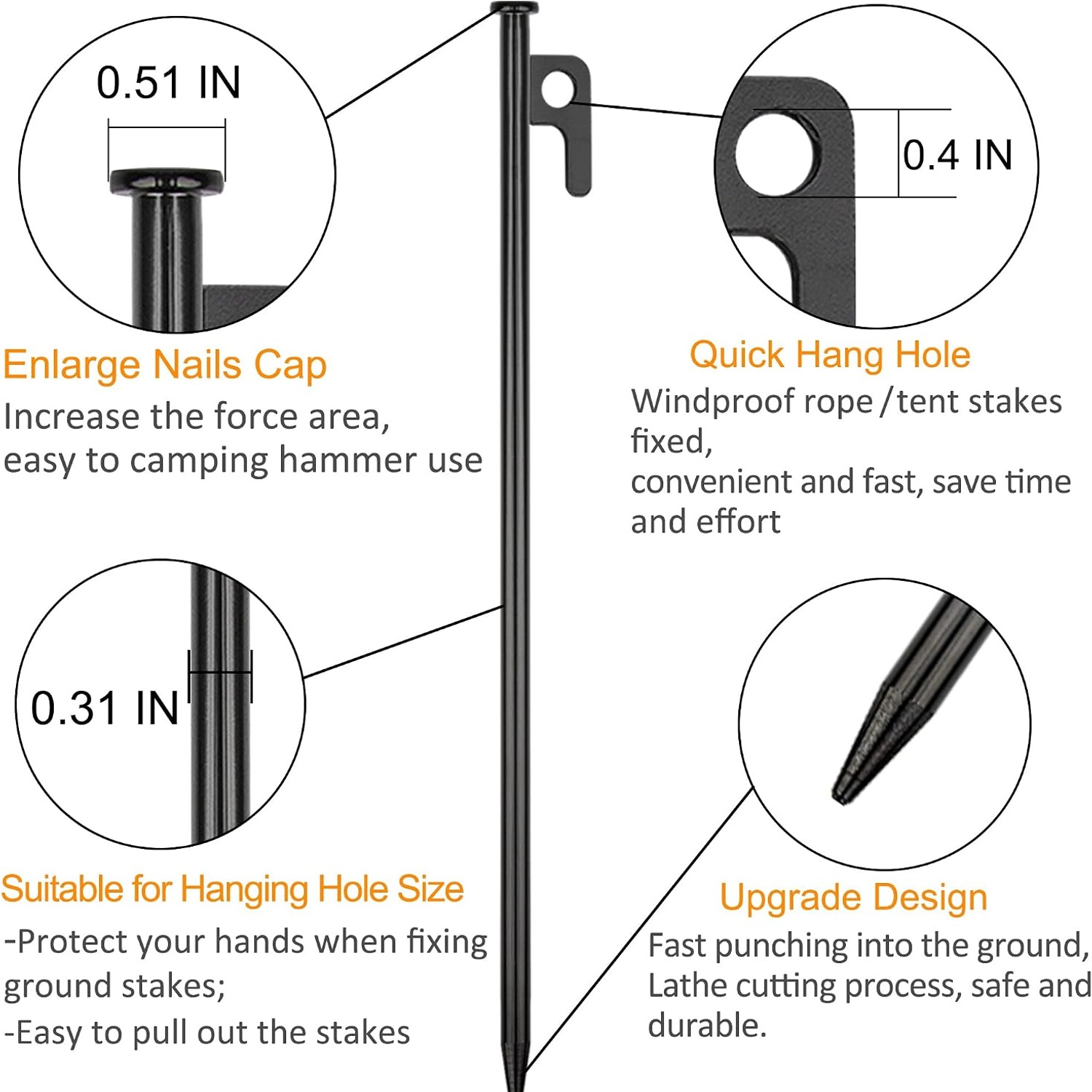
Each peg measures 20.3cm long by 1.5cm across the head, giving you a solid target for a mallet.

The sharpened tip helps the stake start straight instead of skating across gravel or baked clay.

Black finish, 762 grams for the full set of eight, so they add little to a car camping load.

Useful well beyond tents, including tarps, canopies, garden edging and landscape fabric.

Heavy Duty Forged Steel Tent Pegs (8 Pack)

Most tents ship with thin aluminium or wire pegs that work fine on soft turf and fold the first time they meet a buried stone. This eight pack replaces them with forged steel tent stakes that take a hammer blow without folding over. Each one is 20.3cm long and 1.5cm wide, with a pointed end that bites rather than skates when the ground is hard.

Heavy Duty Forged Steel Tent Pegs (8 Pack)

The length matters more than people expect. A 20cm peg buried at an angle puts a decent amount of steel below the surface, and that buried length is what resists the pull of a guy line when the wind picks up. Shorter pegs lever out of the ground much more easily, which is usually why a tent corner lifts in the small hours.

Heavy Duty Forged Steel Tent Pegs (8 Pack)

These are not just for tents. The same stakes hold down tarp corners, anchor gazebo and canopy legs, pin landscape fabric along a garden bed, and support young plants or trellis frames. If you camp a few weekends a year and also do your own yard work, one set tends to live in the shed and get used for both.

Heavy Duty Forged Steel Tent Pegs (8 Pack)

The full pack weighs 762 grams, which is a fair amount for backpackers but nothing at all for car camping, a ute tray, a caravan locker or a garage shelf. Eight pegs covers the four corners and four guy points of a small tent, or two sides of a tarp, with the option to buy a second set if you pitch something larger.

Heavy Duty Forged Steel Tent Pegs (8 Pack)

Black finish keeps them looking tidy, though realistically these are tools and they will pick up scratches. What matters is that after a season of being hammered into gravel they still go in straight, and that is where forged steel earns its keep over pressed or wire stock.

Not sure yet? That is fine.

Camping gear has to suit your trip and your climate, and you cannot always judge that from a photograph. If it is not right for you, send it back within 14 days of delivery in resaleable condition and we refund the price you paid, including standard delivery. That is a voluntary policy we offer on top of your legal rights.

If it turns up faulty, damaged or not as described, that is on us. The Australian Consumer Law and the Competition and Consumer Act 2010 covers you, and we pay the return postage. Read the full detail on our refunds and returns page, or ask us anything before you order.

Frequently Asked Questions

What exactly comes in the pack?

You get eight forged steel tent pegs, each 20.3cm long and 1.5cm wide. The total pack weight is 762 grams. There is no mallet or carry bag listed as part of this set.

How long is each peg?

Each peg measures 20.3 centimetres, which is 8 inches. That is a common mid length for general camping and tarp work, long enough to hold in loose soil but still easy to pack.

What are they made from?

Forged steel, finished in black. Forging means the steel is shaped under pressure rather than simply cut or pressed, which generally gives a stake better resistance to bending.

Will these work in rocky ground?

The pointed tip is designed to help the peg start in hard or stony ground rather than skating off the surface. If you hit a solid rock, no peg will go through it, so shift across a few centimetres and try again.

Are these good for sand or soft soil?

They will hold in firm soil and compacted sand, but very loose dry sand is difficult for any narrow stake. In deep sand most campers use a wider sand peg or bury a stake sideways as a deadman anchor.

Can I use them for a tarp as well as a tent?

Yes. They are a solid choice as tarp pegs and work the same way for tarps, shade sails and basic shelters. The wide head gives the guy line loop something to sit against.

Will they hold a gazebo or canopy?

They are suitable for anchoring canopy and gazebo legs on firm ground. For a large gazebo in windy conditions you may want more than eight anchor points, so consider two packs plus weights on the legs.

How many pegs does a typical tent need?

A small two person tent usually needs four to six for the floor plus two to four for guy lines. Eight pegs covers most compact tents. Larger family tents often need twelve or more.

Are they heavy for hiking?

At 762 grams for eight, they are on the heavy side for a lightweight hiking kit. These suit car camping, caravanning, festivals and backyard use. Hikers counting grams usually choose titanium or thin alloy instead.

What is the best way to drive them in?

Use a rubber or steel camping mallet and strike the head squarely. Angle the peg at roughly 45 degrees away from the tent so the pull of the guy line tightens it into the soil instead of lifting it out.

Can I hammer them with a rock?

You can in a pinch, but a rock tends to glance off and can burr the head or bruise your hand. A small mallet is cheap and makes setting up a lot quicker and safer.

How do I get them back out of hard ground?

Hook another peg or a peg puller through the head and lever upward, or twist the stake slightly to break the soil seal first. Pulling straight up on a buried stake by hand in dry clay is a good way to scrape your fingers.

Do they rust?

Steel pegs can develop surface rust if they are packed away wet and left in a damp bag for months. Wiping them dry before storage is the simplest way to keep them clean. No specific corrosion treatment is stated in this record.

What colour are they?

Black. Dark pegs blend into the ground, so it helps to tie a short length of bright cord or tape to a couple of them if you often pack up at dusk.

Can I use these for landscape fabric?

Yes, they are listed for landscape fabric and work as landscape fabric staples in a pinch. Drive them through the fabric edge and they will hold it against wind lift while the mulch goes on.

Will they work for plant support?

They are listed for plant support. They are short, so they suit low plants, edging and holding netting rather than tall staking for tomatoes or climbers.

Are these stronger than the pegs that came with my tent?

Almost certainly, if your tent shipped with thin wire or hollow alloy pins. Those are built to keep pack weight low rather than to survive gravel. Forged steel tent stakes are the usual upgrade when the originals start bending.

Can I bend them back if one does bend?

A slight bend can often be straightened in a vice or against a hard edge. Repeated bending and straightening weakens any steel, so if a peg has been reshaped a few times, retire it to garden duty.

Do they come with a carry bag?

No carry bag is listed as part of this set. A small canvas pouch or an old sock keeps the sharp tips from snagging your tent fabric in the bag.

What size tent does one pack suit?

One pack suits a one to three person tent, a small tarp setup or a two leg canopy. For family tents, swags and big shade structures, buy two or three packs so you can anchor every point properly.

Are they safe around kids and pets?

The tips are sharpened, so treat them like tools. Keep the pack out of reach when it is not in use, and once pegged out, the heads sit close to the ground where they are easier to see with a cord or tape marker.

Can I leave them in the ground permanently?

For garden edging or fabric pinning, many people do. For camping, pull them out each trip so you do not lose them and so the ground is left as you found it.

How do I store them?

Clean off soil, let them dry, then keep all eight together in a pouch or small box. Loose pegs rattling in a pack tend to go missing and can scratch other gear.

Do the pegs have a hook or a hole for the guy line?

The design uses a wide head at the top for the line to sit under, with the guy line looping around the shaft. Hook the loop on before you finish driving the peg so it seats neatly.

What is the model number?

The model and manufacturer part number is RIY-20cm-DD16, from the brand RIY. Quote that if you need to match a second pack later.

Is there a stated weight limit or holding force?

No holding force rating is given in this record. In practice, holding power depends far more on soil type, peg angle and burial depth than on the stake itself.

How fast will my order arrive?

Dispatch times and delivery estimates are shown at checkout for your country. You will get tracking details by email once the pack leaves the warehouse.

Do you ship internationally?

Yes, we run country storefronts with local pricing, and delivery options for your region appear at checkout. Pricing is shown in your local currency.

Would these make a decent gift for a camper?

They make a practical gift, especially for someone who has just bought their first tent and is still using the flimsy pegs it came with. Pair them with a camping mallet and a peg pouch for a small, genuinely useful kit.

What if they are not right for me?

Contact our support team and we will walk you through the return process for your country. If you have already pitched with them, let us know what ground you were working with, since a different peg style such as a sand peg or a screw stake may suit your site better.

How to Choose Heavy Duty Tent Pegs That Actually Hold

6 min read Camping Company

The problem with the pegs in the bag

Open almost any new tent and you will find a small bundle of thin metal pins taped to the poles. They are there to keep the box weight and the retail price down. On a soft grass campsite in spring they do the job. Then you pitch on a gravel pad, hit a buried root, or try to peg out a guy line in sun-baked clay, and the first one folds like a paperclip.

That is the moment most people go looking for heavy duty tent pegs. It is not about wanting fancier gear. It is about not wanting to spend twenty minutes at dusk trying to persuade a bent pin into ground that does not want it.

This guide covers what makes a peg hold, how length and material change the result, and how to pick a set that fits the way you actually camp.

What makes a peg hold

A peg does not hold because it is strong. It holds because of the soil packed around the part of it that is underground, and the angle it sits at relative to the pull.

Think about what happens when wind loads a guy line. The line pulls up and out. If the peg is driven straight down, that pull tries to lift it directly out of its hole, and the only thing resisting is friction on the shaft. If the peg is leaning back away from the tent at around 45 degrees, the pull tries to rotate it deeper against a wedge of soil. That is a much harder thing to beat.

So the three things that matter most are buried length, soil quality and angle. A 20cm stake set properly at an angle in firm soil will out-hold a longer stake jammed in straight on a slope. Angle is free, so it is the first thing to get right.

Material comes in after that. Material decides whether the peg survives being driven in at all. On stony ground, a thin alloy pin bends before it reaches full depth, so you never get the buried length that would have held it. Forged steel tent stakes solve that problem by taking the hammer blow and keeping their shape, which means you can actually get them all the way in.

Where these pegs fit

This set is eight forged steel pegs, each 20.3cm long and 1.5cm across, finished in black. The whole pack is 762 grams, so a little under a hundred grams per peg.

That weight tells you who they suit. If you drive to a campsite, pull up at a caravan park, pitch a shade canopy at a sports ground, or set up a tarp in the backyard, 762 grams is nothing. It sits in a tub or a door pocket and you forget about it. If you are walking twenty kilometres with everything on your back, this is not your set, and nobody should pretend otherwise. Hikers trade holding power for grams and accept thin titanium instead.

Length-wise, 20cm is a sensible middle. Short 15cm pegs pack beautifully and pull out of anything loose. Long 30cm pegs hold brilliantly in sand and soft ground but are awkward and heavy. At 20cm you get a stake that works across most ordinary soil, which is why it is such a common size for general camping ground pegs.

Matching pegs to ground

Different ground needs different behaviour from a stake.

Firm soil and packed dirt is the easy case. Almost anything works, and these pegs will go in with three or four taps and hold well past what your tent fabric can take.

Rocky or gravel ground is where the sharpened tip earns its place. A blunt peg wanders sideways across stones. A point starts a hole and lets the force of the mallet push downward instead of across. You will still hit rocks you cannot pass. That is normal. Move a hand's width and try again rather than hammering harder and rolling over the tip.

Dry clay in summer behaves almost like soft rock. Getting in is the hard part and getting out can be worse. A little water poured around the peg five minutes before you pull it makes a surprising difference.

Loose dry sand defeats every narrow stake, no matter the material. The fix is not a stronger peg, it is a wider surface or a different technique. Either use dedicated wide sand pegs, or bury a stake horizontally with the guy line tied around its middle, which is the old deadman trick and works very well.

Snow is similar. Width and burial beat strength every time.

Picking the right quantity

Eight pegs is a sensible starting number but it is worth counting your actual needs before you order.

A compact two person tent typically wants four corner points and two to four guy lines, so eight is about right with nothing spare. A three or four person dome often has six floor points and four to six guys, which puts you over a single pack. A big family tunnel tent can want sixteen or more, and the manufacturer usually says so in the manual.

Tarps are simpler to count. Each corner you want pinned to the ground takes one, and each ridge line anchor takes one. A basic A-frame tarp pitch uses four to six.

Canopies and gazebos need one per leg at minimum, and in any wind you want two per leg running in different directions.

Then add two spares. Pegs get lost in long grass, left behind in the dark and occasionally sacrificed to a rock. Buying a second pack costs less than discovering at 9pm that you are two short.

Driving and pulling without drama

Use a mallet. A rubber camping mallet is kind to both the peg head and your wrist, and a small steel hammer works too if you strike squarely. Hitting a stake with a rock is a last resort that usually ends in a burred head.

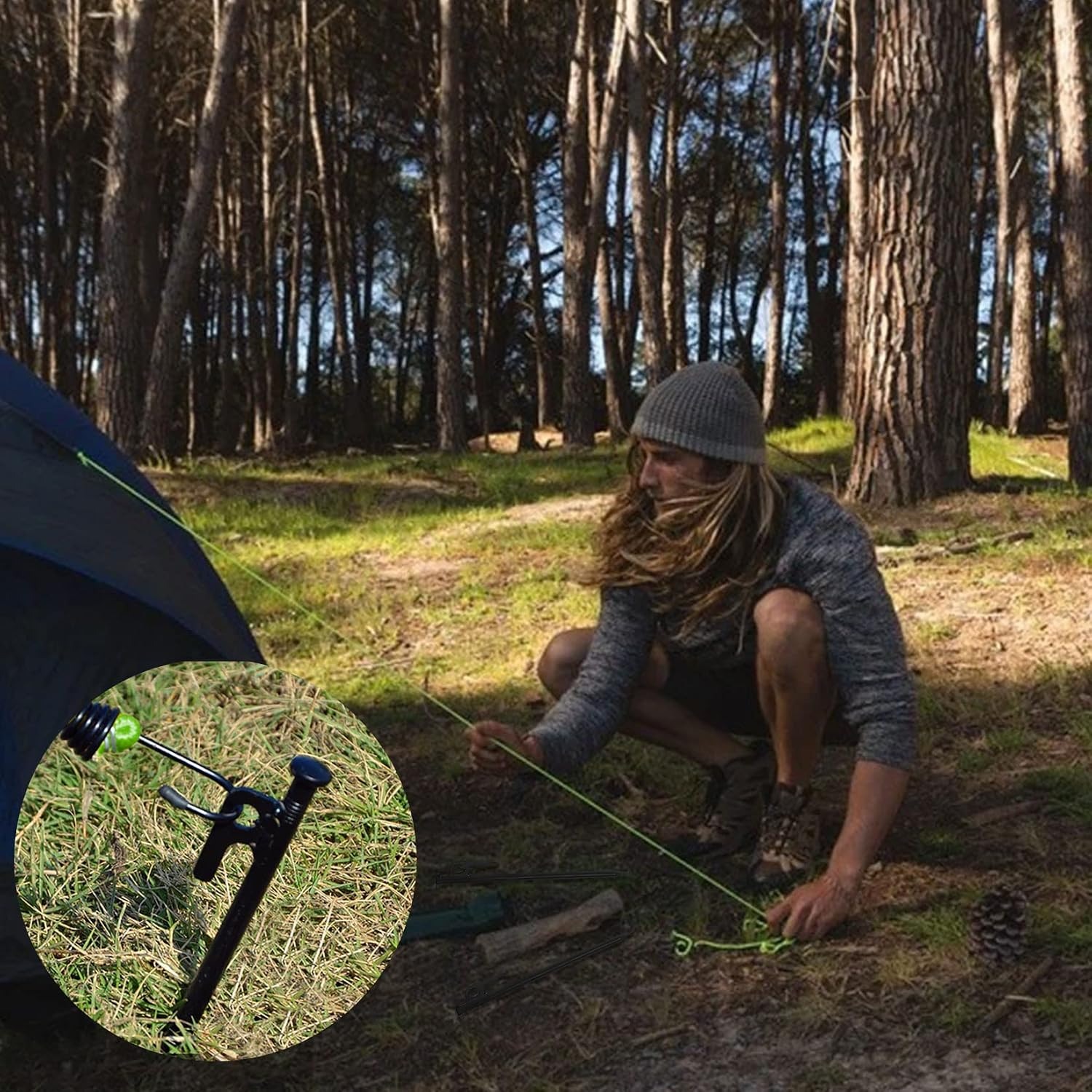
Set the angle before you start driving. Lean the top of the peg away from the tent, about 45 degrees, then tap gently until it stands on its own. Hook the guy line loop over the shaft near the head, then finish driving it down. Doing it in that order saves you fighting a tight line later.

Leave a little of the head proud of the ground so you have something to grip when you pull it.

For removal, hook a second peg through the head and lever up, or use a proper peg puller. A quarter turn to break the soil grip first makes the lift much easier. Never pull hard on the guy line itself to drag a peg out, because that strains the tent's attachment points.

Looking after them

Steel tools want three things: get the dirt off, get them dry, keep them together.

Wipe soil from each peg before packing. Wet mud left on steel in a sealed bag is how surface rust starts. Let them air dry if you packed up in rain, then store all eight in a pouch, an old sock or a small container so the tips do not snag your tent fabric or your hands.

If a tip rolls over from stony ground, a few strokes with a flat file brings the point back in about a minute. If a peg has been bent and straightened several times, move it to the garden where loads are lower.

Beyond camping

One of the quieter reasons to own a set like this is that they do not sit idle between trips. The same stakes pin landscape fabric along a garden bed before mulching, hold down the edge of a weed mat, anchor low netting over seedlings, and keep garden edging from creeping. They also work as temporary anchors for a dog run line, a washing line or a ground sheet in the backyard.

That dual purpose is why they tend to live in the shed rather than buried in a camping tub, and why a set gets used far more often than the four trips a year you planned on.

The short version

Buy pegs that survive going in, drive them at an angle, and buy a few more than you think you need. This pack gives you eight forged steel stakes at 20.3cm, a size that handles most ordinary ground without being awkward to carry or store. They are built for car camping, tarps, canopies and garden work rather than ultralight hiking.

Get the angle right and you will rarely think about your pegs again, which is exactly the point.

Browse the shop

Not sure how many pegs you need?

Tell us your tent or tarp size and the ground you camp on, and we will suggest the right number of packs.

Ask us a question

Page summary

This product is an eight pack of heavy duty tent pegs from RIY, model RIY-20cm-DD16. Each stake is made from forged steel in a black finish and measures 20.3cm long by 1.5cm wide (8 inches). The complete pack weighs 762 grams and contains 8 pieces. The pegs feature a pointed tip to help entry into hard or stony ground and are described by the manufacturer as heavy duty. Recommended uses include anchoring tents, tarps and canopies, pinning landscape fabric, and supporting plants. Country of origin, GTIN and a per peg load rating are not specified in this record. No certifications, corrosion treatment details or warranty terms are listed here. Condition is new and the item is in stock.