
The complete guide
Choosing a Head Torch That You Will Actually Wear
The problem with holding a torch
Everyone has done it. One hand on the tent pole, the other wrapped around a torch, and a third hand you do not have trying to thread the peg loop. Or you are under the kitchen sink with a flashlight gripped in your teeth, dribbling, while the spanner slips. Handheld light is fine when you are standing still and doing nothing. The moment you need to do something, it gets in the way.
A head torch solves this by putting the light where your eyes already point. You look at the job, the job is lit. Both hands are free. It sounds like a small change and it is not. Most people who buy their first decent headlamp end up using it for things they never planned on, from loft hunting to car repairs to walking the dog on a winter evening.
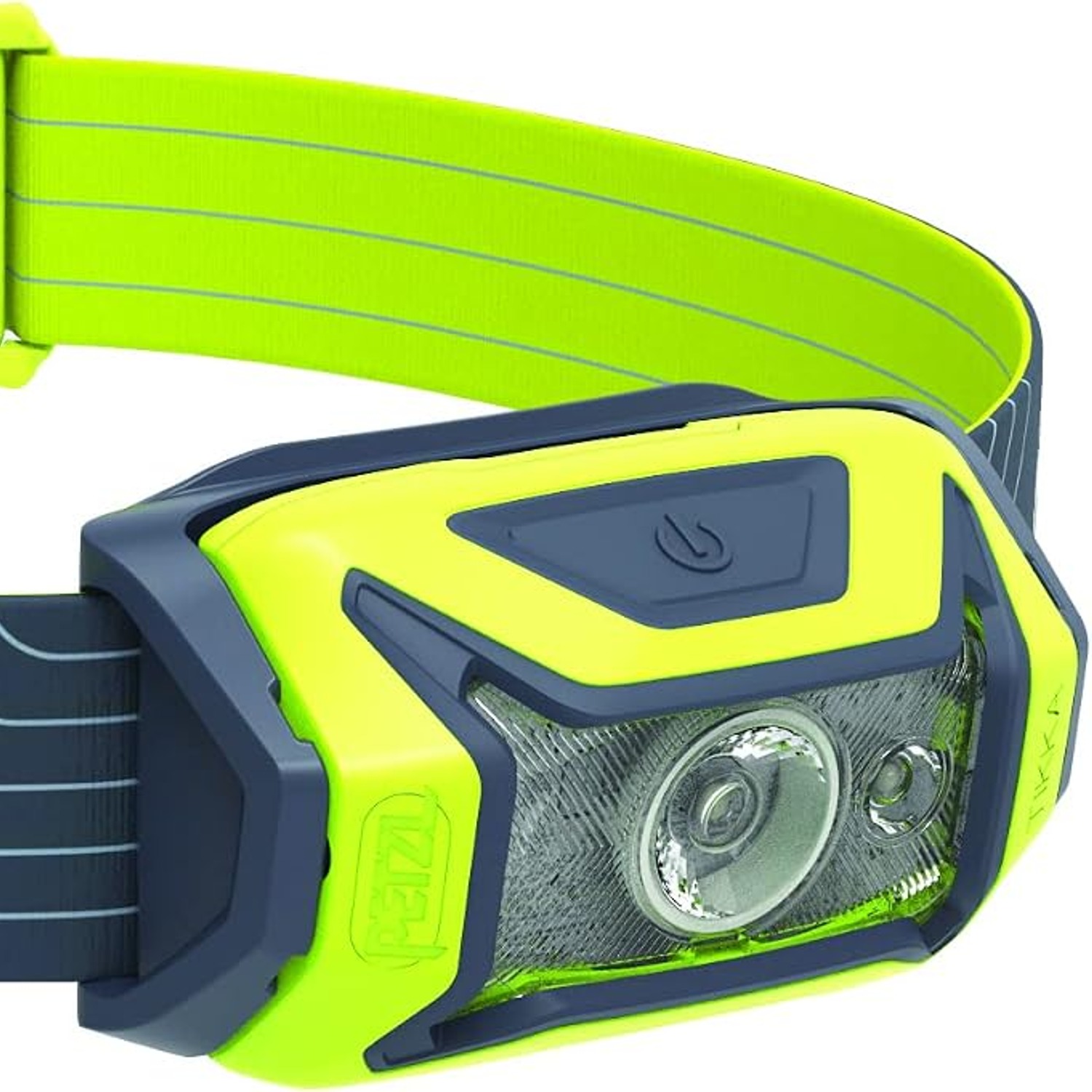
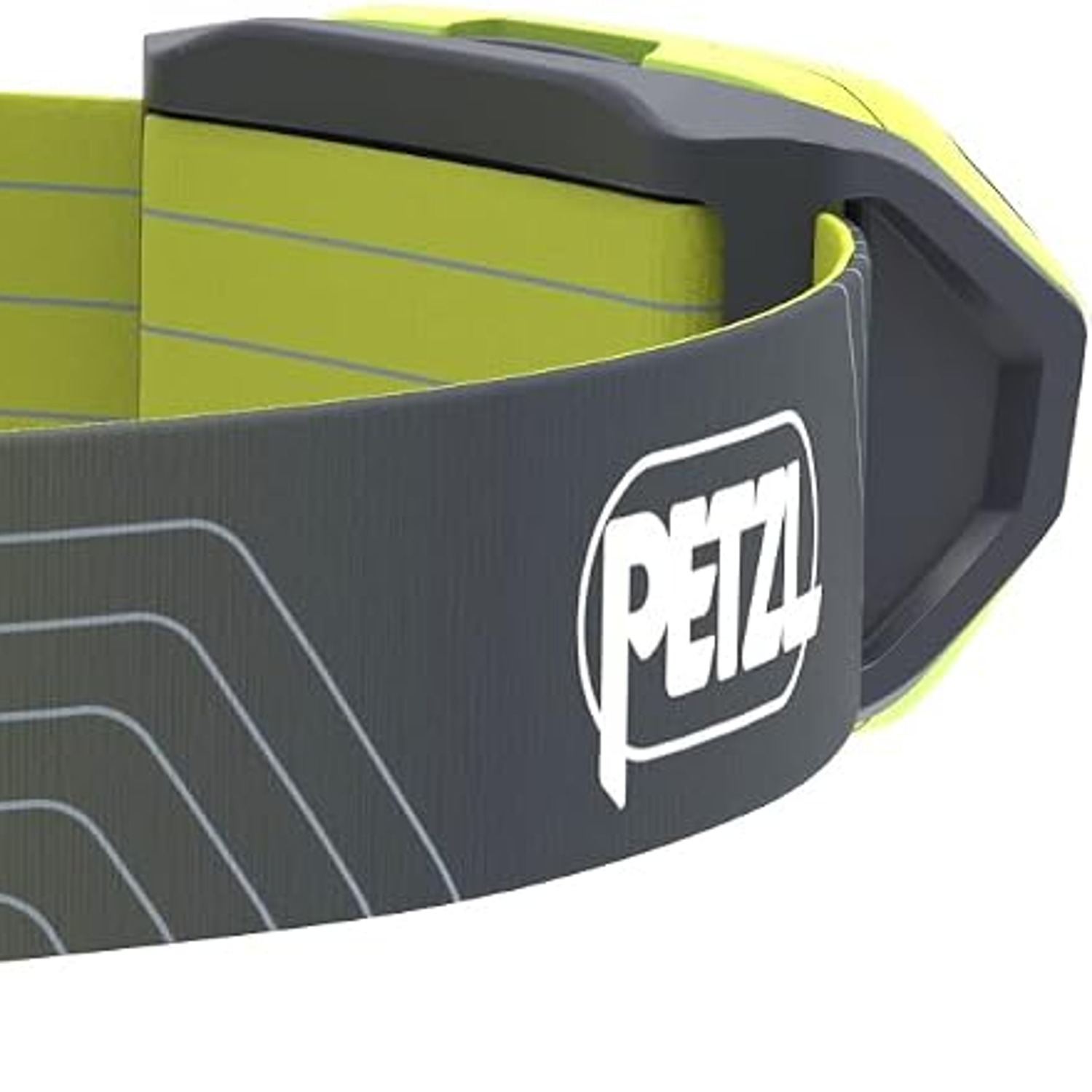
The Petzl TIKKA is one of the straightforward versions of this. It is small, it is light at 94 g, it puts out a listed 350 lumens of white light in a wide beam, and it runs on three AAA batteries that come in the box. There is no app, no fiddly menu, no learning curve. One button cycles through the modes and that is it.
How a head torch like this actually works
Inside the small housing on the front of the band sits a single LED, a reflector and a driver circuit. The driver is the part that decides how much current goes to the LED, and that is how you get different brightness levels from one light source. Dim the current, you get less light and much longer runtime. Push it hard, you get maximum output and a shorter burn.
The TIKKA gives you three white levels. The lowest is for maximum burn time, the kind of setting you leave running while pottering around camp. The middle setting balances brightness and battery life, which is where most people spend their time. The top setting is max power, useful when you want to see further down a track or check something at a distance. Listed beam distance is 45 metres, and the listed runtime is 6 hours.
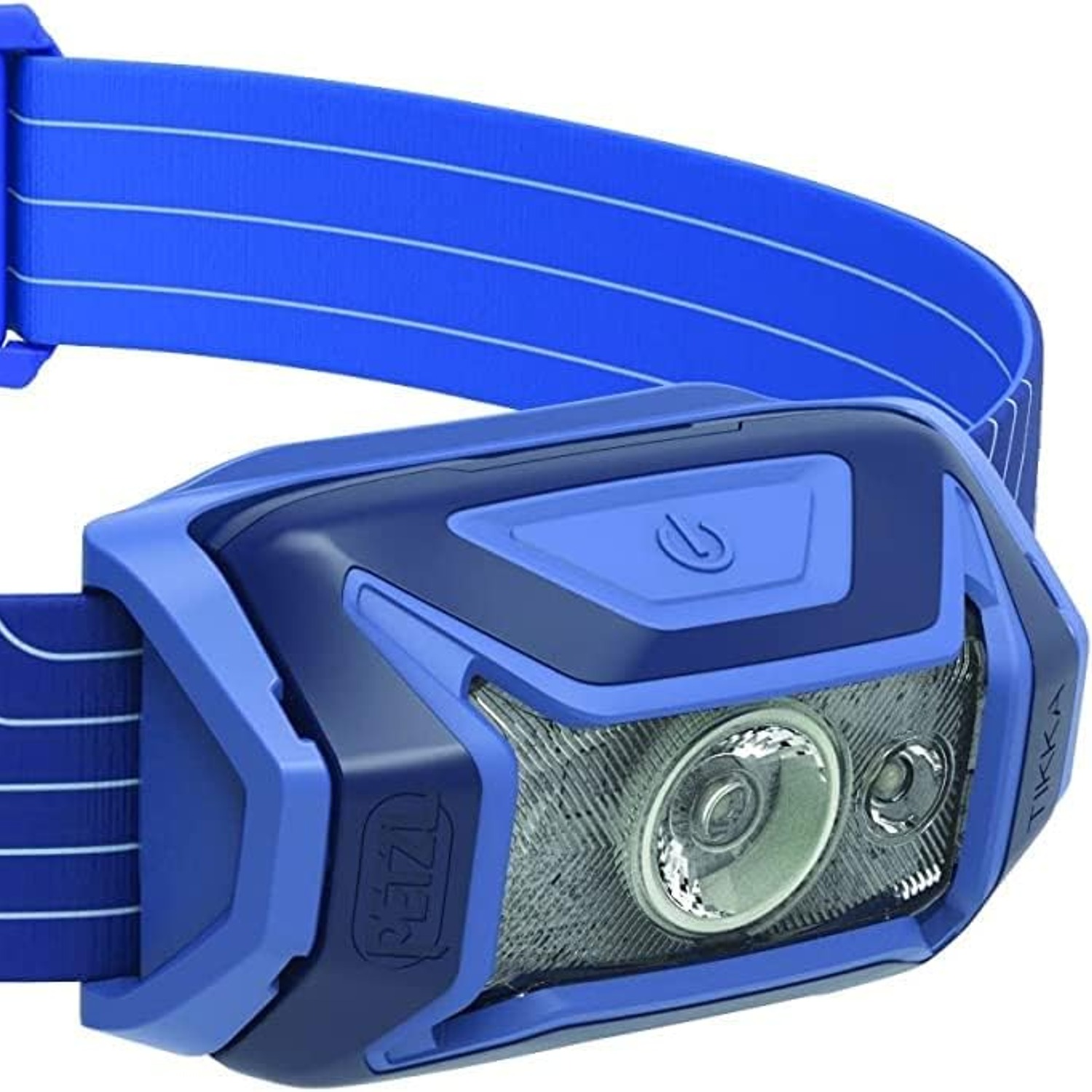
The reflector shape decides whether you get a tight spot or a wide wash. This one is built wide on purpose. A narrow spot looks impressive in a shop but it is tiring outdoors, because you have to keep swinging your head to see the edges of a scene. A wide beam lights everything in front of you at once, which is what you want when you are cooking, reading, packing a bag or watching your footing.
Then there is the red mode. Red light sits at a wavelength your eyes handle differently, so it does not reset your dark adaptation the way white light does. Step outside at night under white light and you are blind for a minute afterwards. Step out under red and your eyes stay tuned to the dark. It also stops you from blasting your tent mate in the face at 2 am. The red can run steady or flash, and the flash is there for signalling if you need to be seen.
Who this suits
Campers get the most obvious benefit. Setting up in the dark, cooking, finding gear in a pack, late trips to the toilet block. The red mode makes shared tents and crowded sites far more civil. If you are hunting for the best LED head torch for camping, weight and beam width matter more than headline lumens, and this one is sorted on both.
Hikers and walkers who occasionally finish after sunset are well served too. A 45 metre beam is plenty for a known track at a steady pace. It is not built for sprinting down technical descents in total darkness, and nobody should pretend otherwise. For evening walks, dog walks and getting back to the car after a long day, it does the job without weighing on your head.
Anglers, especially anyone rigging line at dusk, find hands-free light close to essential. So do people doing anything practical in low light, like car repairs, loft storage, plumbing or checking a fuse board during an outage. A lot of buyers think they are getting a camping item and then discover it lives in the kitchen drawer permanently.
It also travels well. At 94 g and 30 by 40 by 40 mm, it disappears into a bag. For anyone comparing options for the best compact head torch for travel, the fact that it uses common AAA cells is an advantage. You can buy replacements in almost any shop in the world.
How to choose between head torches
Start with weight, not lumens. A heavy lamp is a lamp you leave at home. Anything under about 100 g sits lightly enough that you forget it is there, and this one is 94 g with batteries. Big output numbers usually come with big battery packs and extra bulk, and most people never need that output.
Second, think about beam shape rather than raw brightness. Ask yourself how far you genuinely need to see. If the answer is "the ground in front of me and the inside of my tent", a wide proximity beam beats a long-throw spot every time. If you are doing search and rescue or night orienteering, that is a different tool.
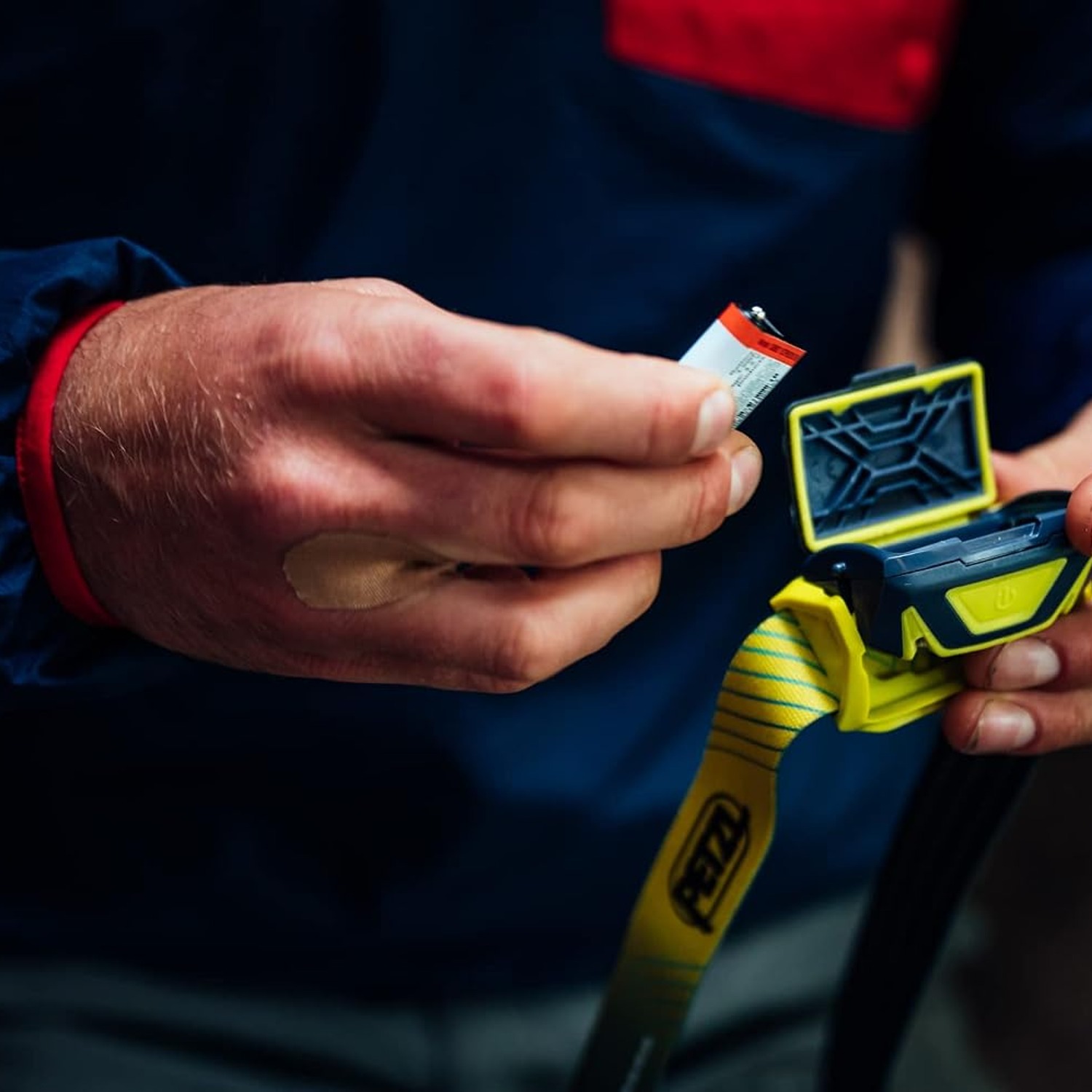
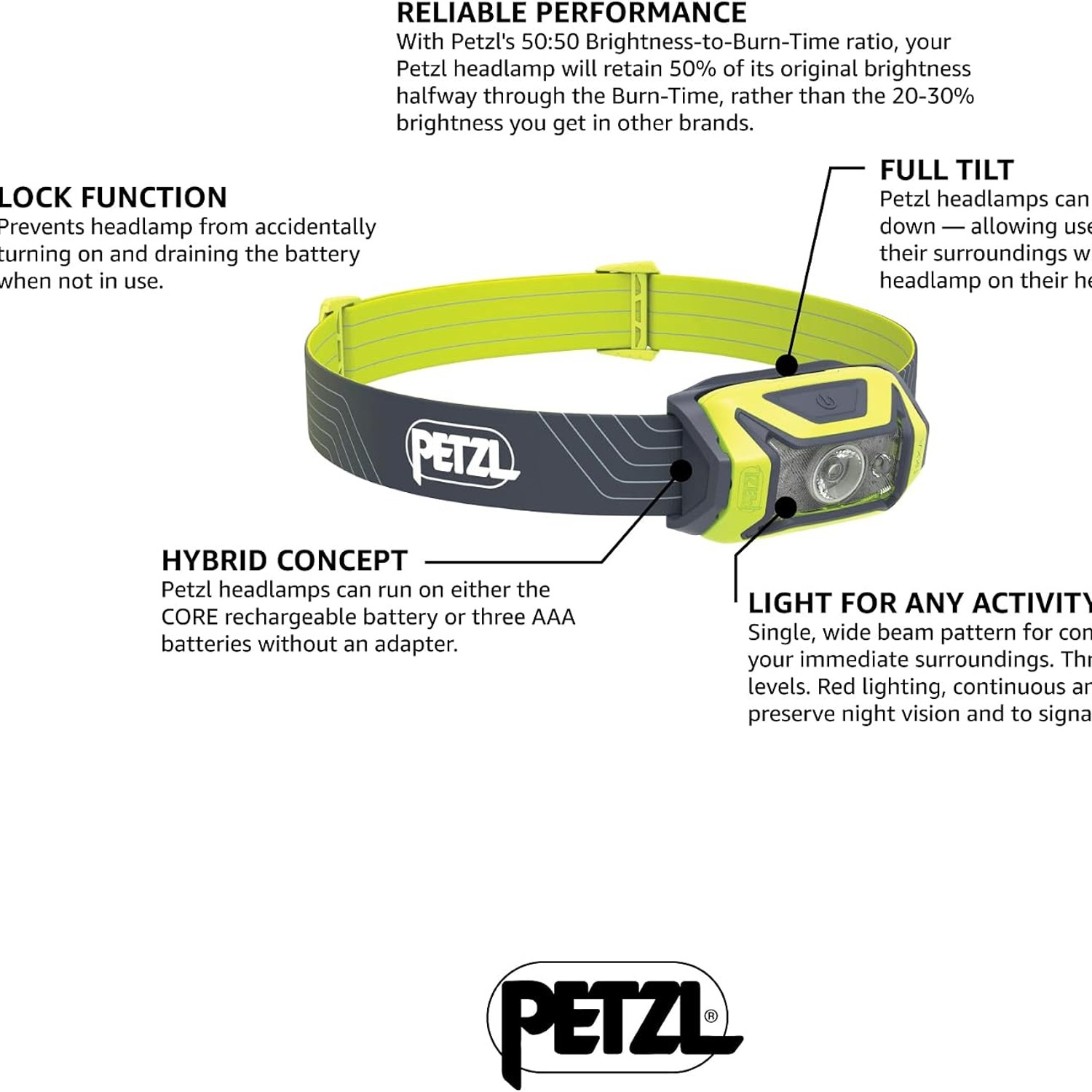
Third, consider power. Battery-powered lamps using AAA cells have one real advantage, which is that you can always find more. Rechargeable lamps are cheaper to run but useless when the charge is gone and there is no socket. The TIKKA sidesteps the argument by taking either, since it ships with three AAA batteries and also accepts the Petzl CORE rechargeable battery, sold separately. That hybrid setup is a good fit if you want the best emergency head torch for a car or house kit, because alkaline cells sit happily unused for a long time.
Fourth, check the small stuff. A tilting plate matters more than people expect, since a fixed-forward beam lights the horizon instead of your boots. A battery charge indicator saves you from guessing before a trip. A phosphorescent reflector that glows faintly means you can find the lamp in a dark tent instead of patting the groundsheet. The TIKKA has all three.
Finally, water resistance. IPX4 covers splashes and rain, which is what most people actually face. It is not a diving light. If you are regularly working in heavy downpours or around water, read the rating carefully rather than assuming any outdoor product is sealed.
Looking after it
Care is simple. Wipe the body with a soft damp cloth and dry it before putting it away. Keep the lens clean, because a film of dust or grease scatters the beam and makes it look dimmer than it is. Avoid solvents and strong cleaners on the plastic.
The elastic headband comes off and can be hand washed in lukewarm water. Air dry it rather than putting it on a radiator, since heat degrades elastic over time. If the band has gone slack after a couple of seasons, that is normal wear and a replacement band is a cheap fix.
The one habit worth building is removing the batteries if the lamp is going into long storage. Alkaline cells can leak, and leaked electrolyte on the contacts is the most common way a perfectly good head torch dies. Pull them out, drop them in a bag with the lamp, and you avoid the problem entirely.
Before any trip, switch the lamp on and check the charge indicator. Ten seconds of checking beats discovering a flat set at the trailhead.
The short version
The Petzl TIKKA is a small, light, uncomplicated head torch that does the common jobs well. You get 350 lumens of listed white brightness in a wide beam, three white levels, a red mode with steady and flashing options, a tilting plate, a charge indicator and a glow-in-the-dark reflector. It weighs 94 g, is rated IPX4, and comes with three AAA batteries so it works the moment you open it.
It is not a long-throw searchlight and it is not trying to be. It is the lamp you wear for camping, walking, fishing, fixing things and getting through a power cut, and the sort of thing that quietly becomes part of your kit. If you want something lighter on the head and simpler to use than most, this is a sensible place to start.