
The complete guide
How to Choose a Camping Kettle That Earns Its Place in Your Pack
The problem with boiling water outdoors
Everyone underestimates this part. You pack the tent, the sleeping mat, the food, the stove, and then at six in the morning on a cold hillside you realise the only thing you have to boil water in is a shallow saucepan with no spout. The wind steals the heat. The water takes forever. When it finally boils you try to pour it into a mug and half of it goes down the side of the pan onto your hand.
A kettle solves a problem that sounds trivial right up until it is yours. The narrow spout gives you control. The lid keeps heat in and ash out. The shape is tall rather than wide, which means less surface exposed to wind and faster boiling for the same amount of fuel.
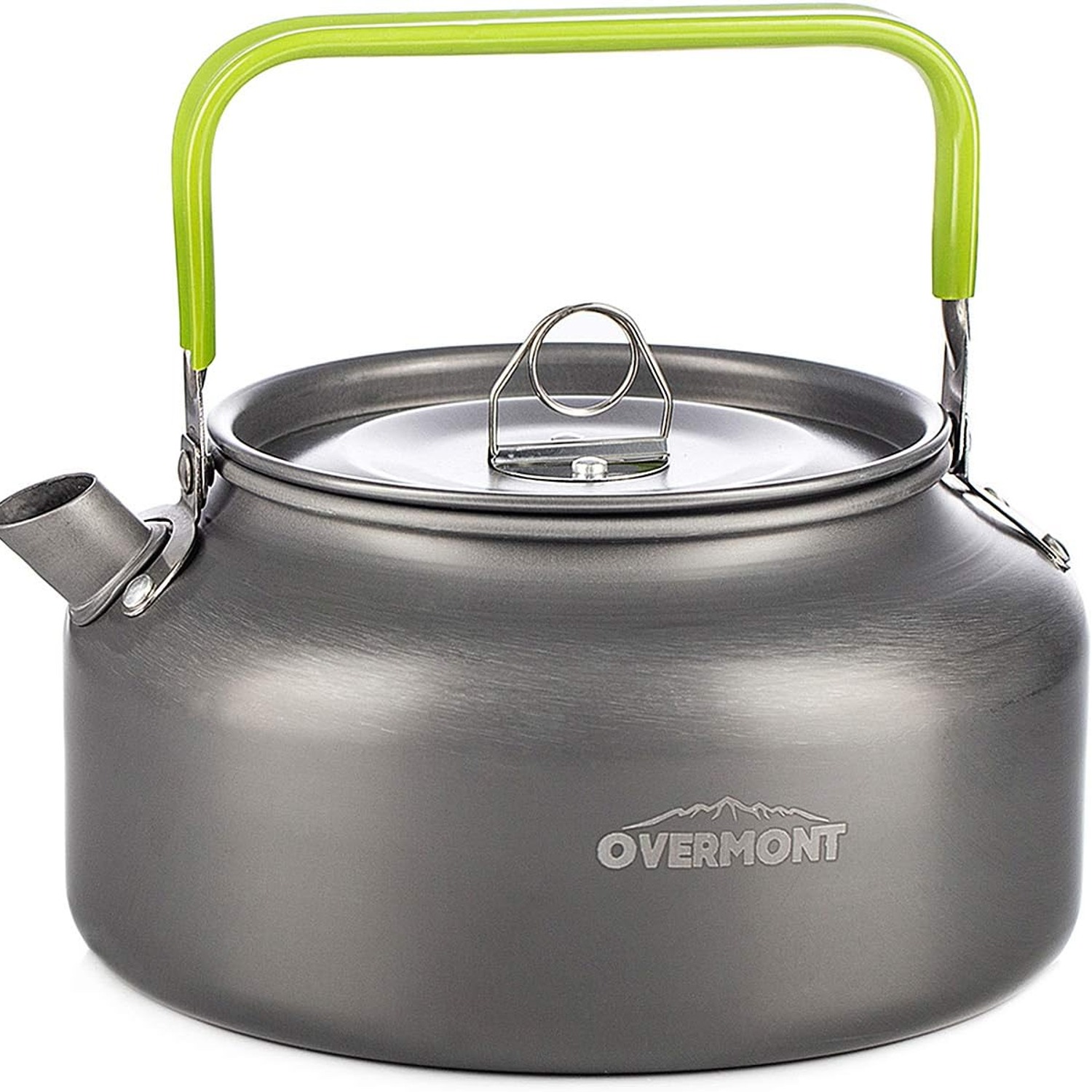
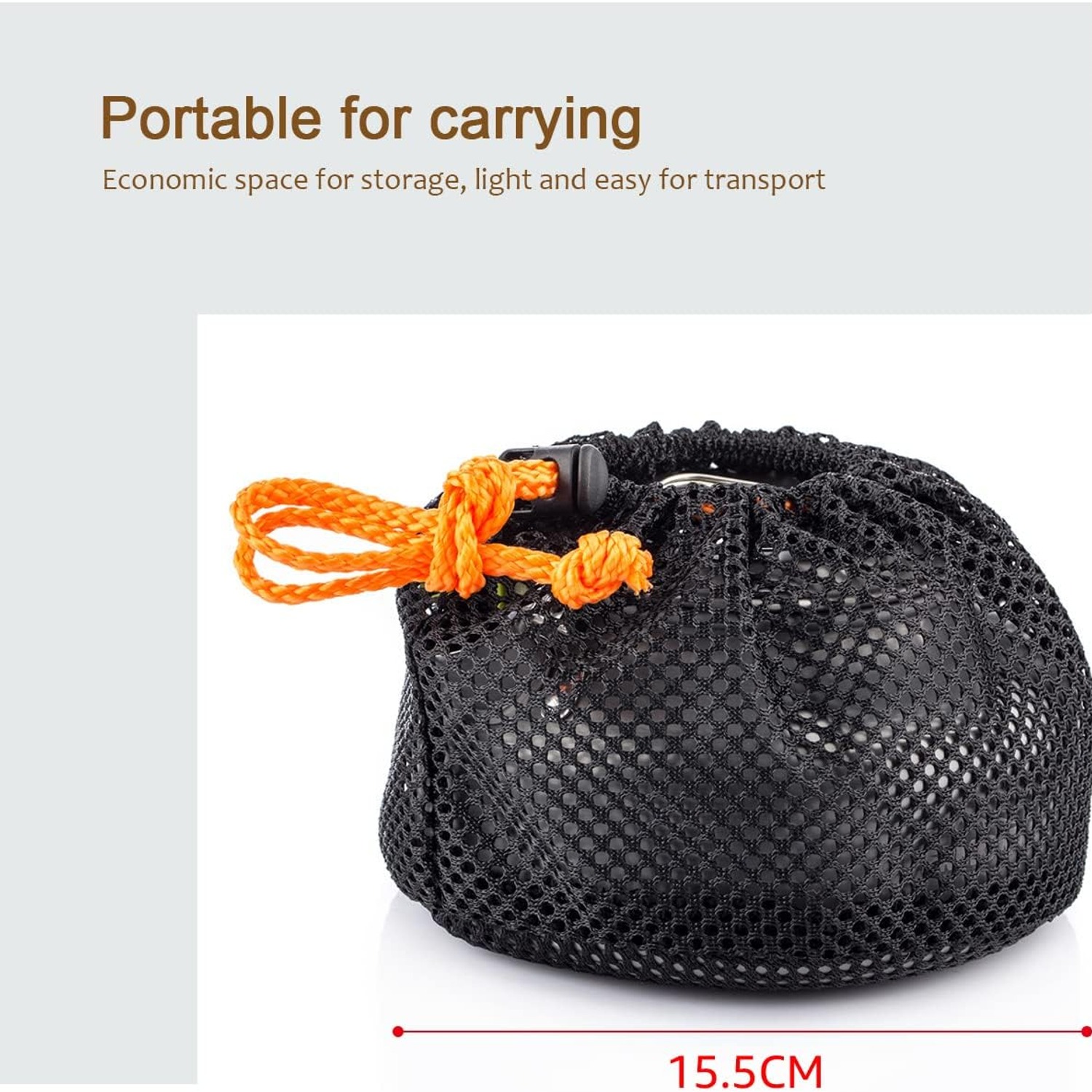
This Overmont kettle holds 1.2 litres, weighs 318 grams and measures 17 x 17 x 10 cm. Those three numbers tell you most of what you need to know about who it suits.
What the materials actually do
The body is aluminium. That is the reason it weighs what a small water bottle weighs. Aluminium is soft compared to steel, so it dents more easily, but it moves heat fast and it keeps the pack weight down. For camping gear that tradeoff usually makes sense. You are not going to heirloom this kettle. You are going to use it for years, knock it about, and eventually replace it.
The lid is stainless steel. Steel holds up well to repeated heat cycles and it is easy to wipe clean, which makes it a good match for the part that takes the most direct steam.
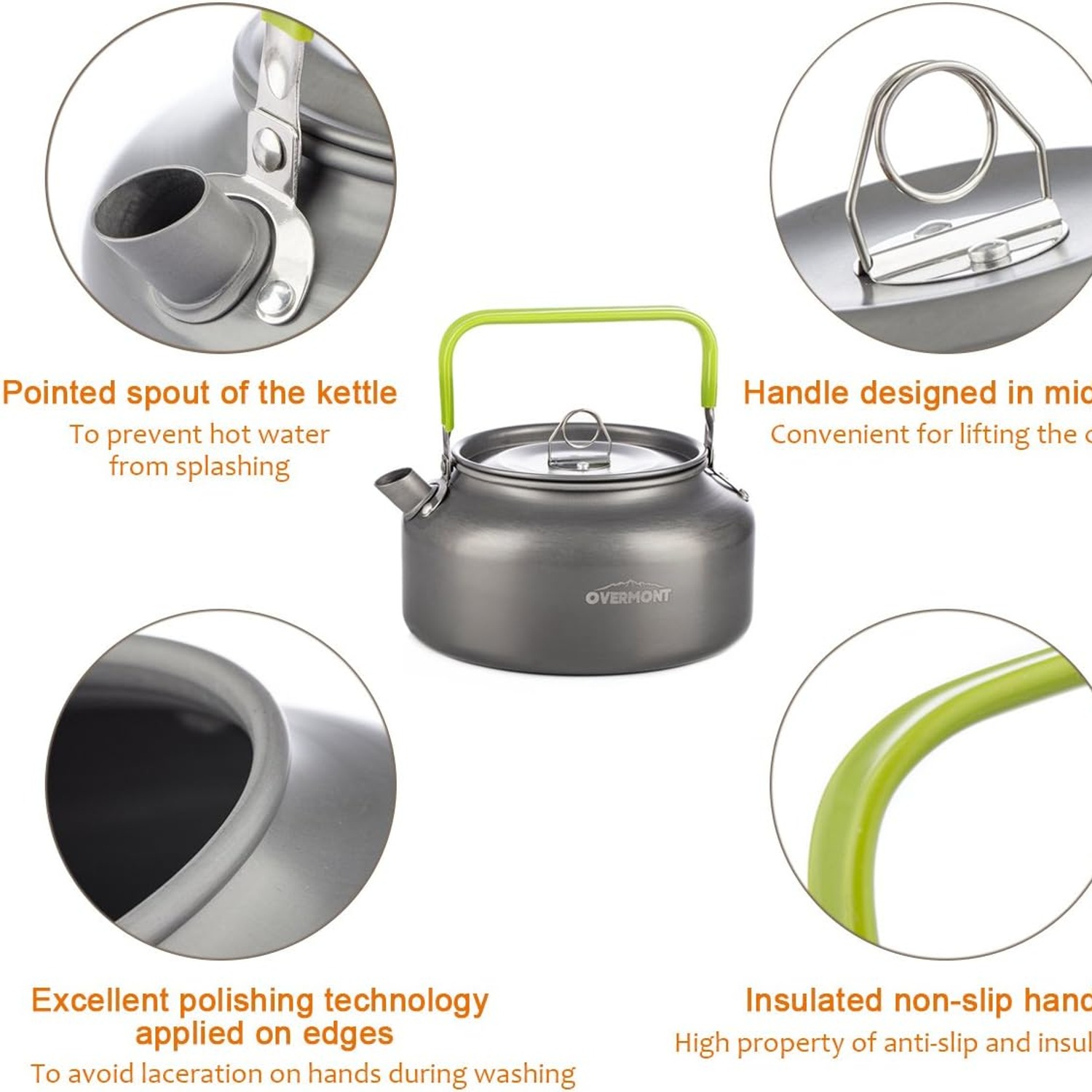
The handle is wrapped in silicone. Silicone does not pass heat along the way bare metal does, so the grip stays more manageable than it would otherwise. That said, no handle is magic. If you have the kettle sitting over a campfire with flames licking up the sides, heat will find its way around. Keep a cloth or a glove within reach and you will never have an issue.
The whistle matters more than you think
A whistling spout is one of those features that reads as old-fashioned on a spec sheet and then becomes the thing you rely on. Camp mornings are busy. You are rolling a sleeping bag, finding a sock, deciding whether the weather has turned. If you have to stand and watch a pot, you lose ten minutes you could have used.
With a whistle you set the kettle on, walk away, and come back when it calls you. It also stops the classic mistake of boiling a kettle dry because you got distracted by a map. Dry-boiling is hard on any pot and it is a waste of fuel you may not be able to replace until you are back at the car.
Working out the size you need
Capacity is the first decision, and it is mostly about headcount.
For a solo walker, around 0.8 litres is often enough. One mug of coffee, one freeze-dried meal, done. The upside is less weight and less fuel used per boil.
For two people, 1.2 litres is the sweet spot. You can fill two generous mugs and still have water left to rinse them or start a second round. That is exactly where this kettle sits.
For a group of four or more, you want to go bigger, or accept that you are doing two boils. Two boils is not the end of the world, but on a cold morning with four impatient people it feels longer than it is.
The other thing worth saying: a bigger kettle is not just heavier when empty, it is slower when full. If you routinely boil half a litre, carrying a three litre kettle costs you time on every single brew.
Weight, and whether it really counts
Three hundred and eighteen grams is light. To put it in context, it is less than a standard can of drink. For car camping, caravanning or a van, weight barely registers and you could reasonably buy a heavier steel kettle for the extra durability.
Where it does count is on your back. On a multi-day walk, every item gets audited. Three hundred grams here and four hundred there adds up to a kilo you have to carry up every hill for five days. Anyone shopping for the best backpacking kettle is really shopping for the best balance of capacity and grams, and aluminium is usually how that balance gets struck.
If you are somewhere in between, a weekend hiker who also car camps, a kettle this size covers both. That versatility is probably its strongest argument.
Matching the kettle to your heat source
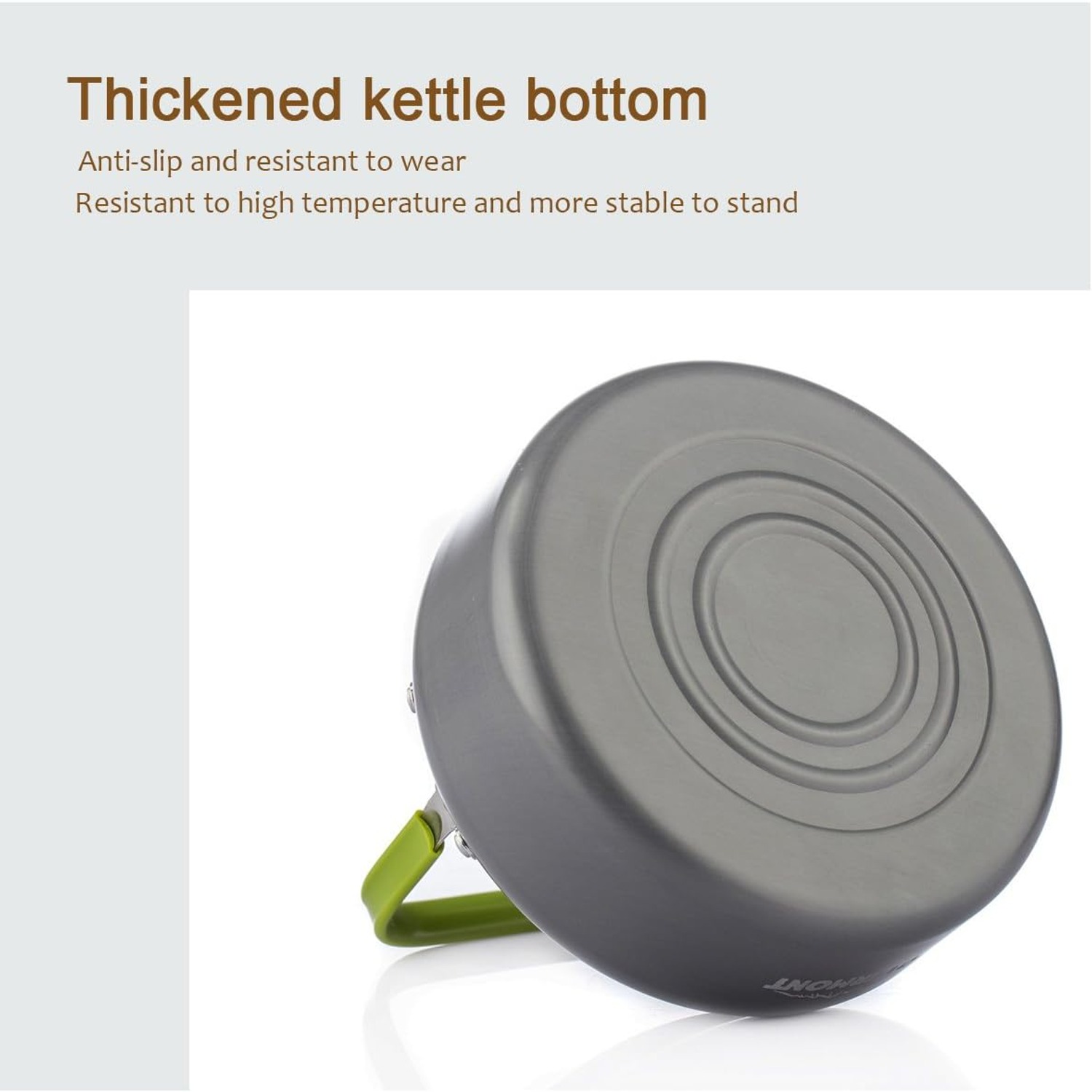
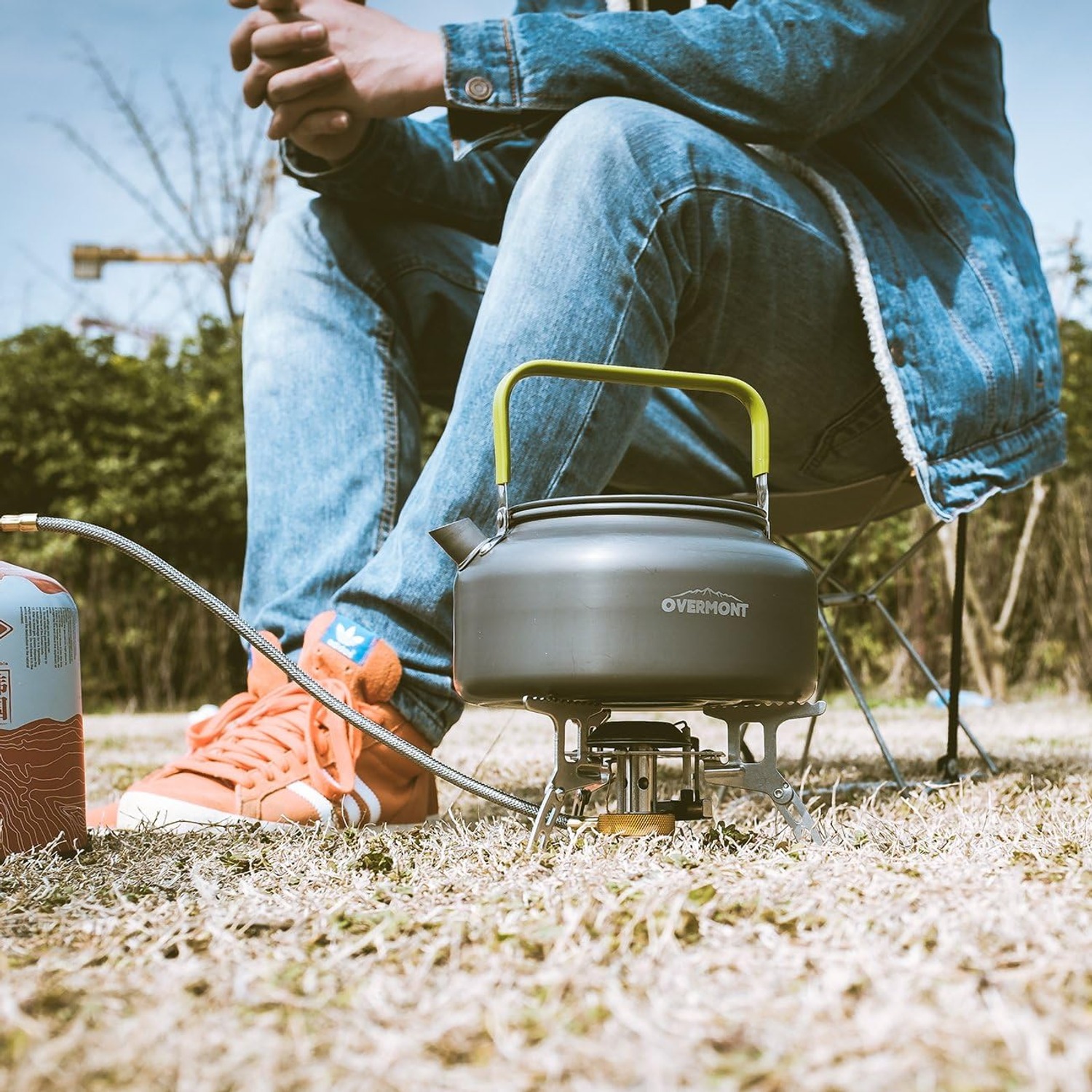
On a gas camp stove, this kind of kettle is straightforward. The flat base sits on standard supports and the whistle gives you a clear signal.
Over a campfire, it also works, with two things to expect. First, soot. The outside will blacken, and that is normal. Plenty of campers leave it, partly because scrubbing it every trip is a losing battle and partly because a dark surface absorbs heat. Second, uneven heat. Flames move, so rotate the kettle occasionally or use a grate for a steadier base.
On a wood-burning stove or a solid-fuel burner, the same rules apply.
One place it will not work is an induction cooktop at home. Aluminium is generally not magnetic, so induction hobs will not recognise it. If you want something that doubles as a kitchen kettle on induction, you need steel. For everything else, this is fine.
Living with it day to day
Cleaning is simple. Let it cool, then wash by hand with warm water, dish soap and a soft cloth. It is not dishwasher safe, so skip the machine. Avoid steel wool and scouring pads, because they scratch the anodised surface and that surface is doing a job.
If you boil hard water regularly, limescale builds up inside. The fix is a boil of water and white vinegar, then a thorough rinse. Do that once or twice a season and you will never have a problem.
Drying is the step people skip. Pack a kettle away damp and you come back to a musty smell next trip. Tip it, wipe it, and store it with the lid off so air can move through.
Who this kettle suits
It makes sense for weekend hikers who want hot drinks without a weight penalty, for couples sharing a camp kitchen, for van travellers who need compact gear, and for anyone building a first camp cook kit from scratch. It also suits festival camping, where you want something cheap enough not to worry about and useful enough to actually get used.
It makes less sense for a group of six, for anyone who needs induction compatibility, or for someone who wants a kettle that will survive being thrown in the back of a ute for a decade. Steel is tougher. It is also heavier, and that is the trade.
The short version
A 1.2 litre aluminium camping kettle at 318 grams is a practical, unfussy bit of kit. It boils quickly, it whistles so you do not have to babysit it, and the silicone-wrapped handle makes it easier to pick up near heat. The capacity suits one or two people comfortably, and the 17 x 17 x 10 cm shape packs down without hassle.
Hand wash it, dry it properly, and do not worry about the soot. If you want hot coffee on a cold morning without carrying a heavy pot, this is the kind of thing that quietly does the job trip after trip.