
The complete guide
How To Choose A Portable Camping Table That Actually Gets Used
The problem with eating off your lap
Anyone who has camped for more than a weekend knows the moment. Dinner is ready, the chairs are set out, and there is nowhere to put anything. The mug goes on the grass and tips. The plate balances on a knee until someone stands up. The stove sits on an esky lid that keeps sliding. It is a small annoyance, but it repeats about forty times a trip.
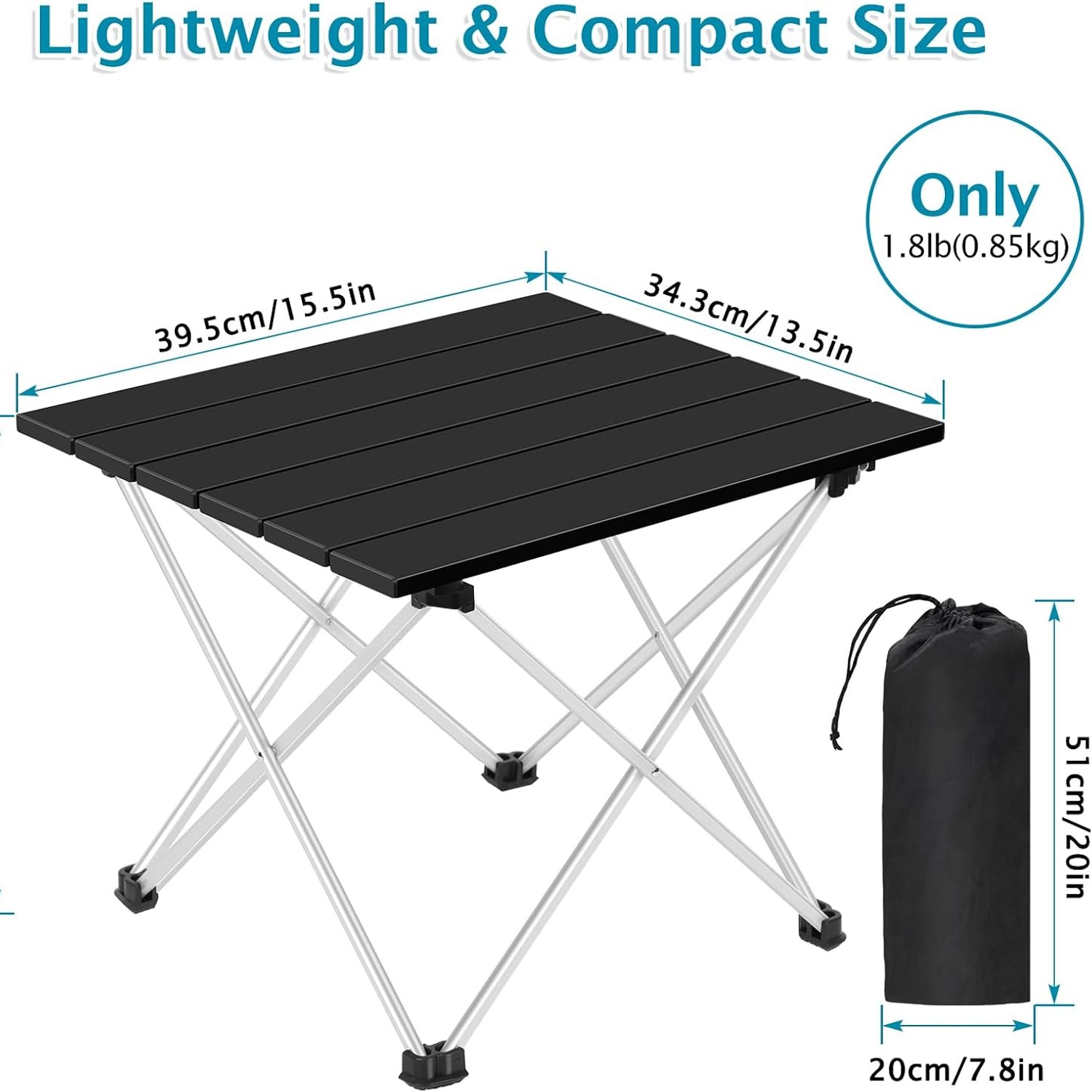
A compact folding table solves it for less money and less hassle than almost any other piece of camp gear. The catch is that tables are bulky, and bulk is the one thing you do not have spare in a loaded car. That is the tension this kind of table is built to resolve. It gives you a flat surface at 39.6 cm by 34.5 cm when you need it, and folds to a 440 mm bundle when you do not.
How a roll top folding table works
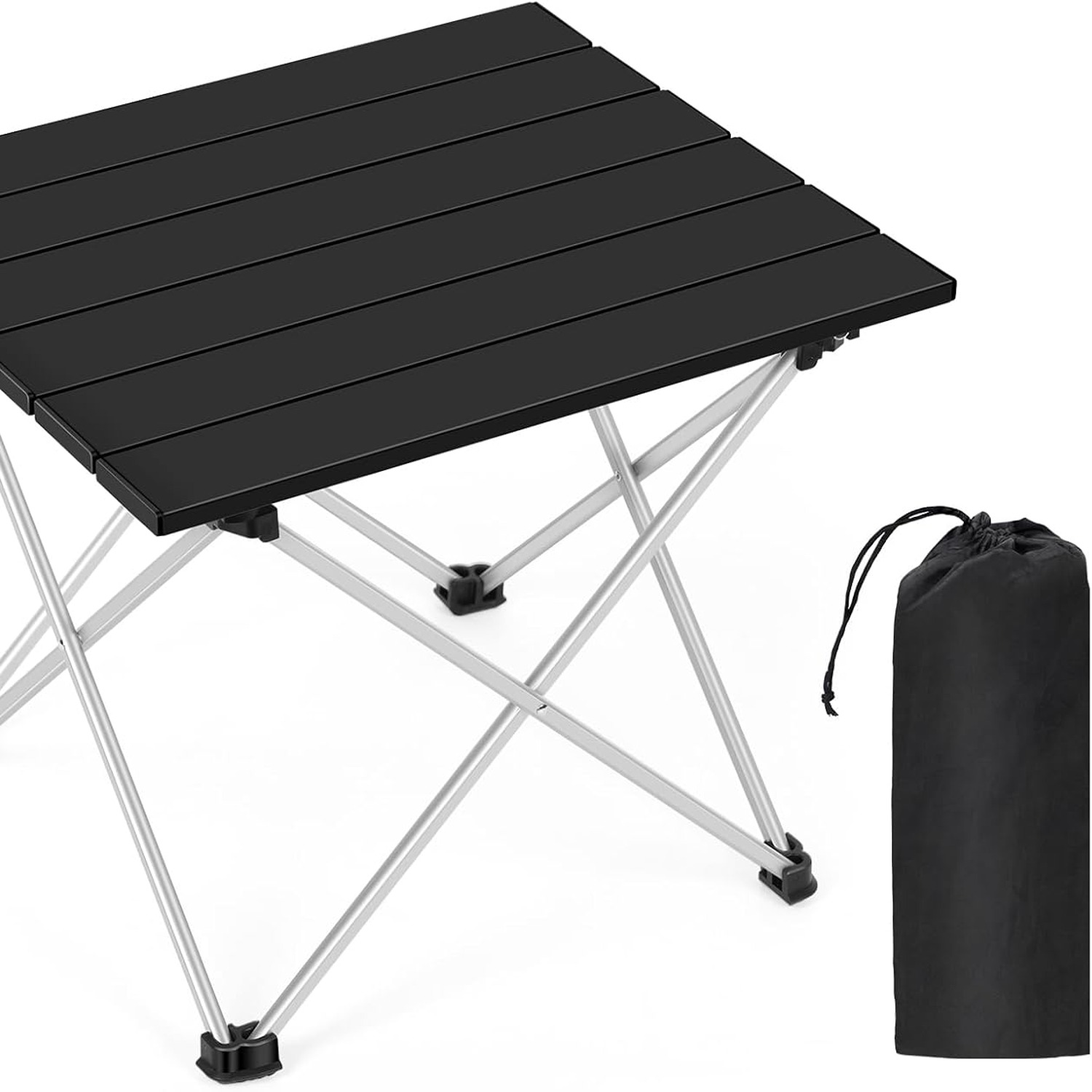
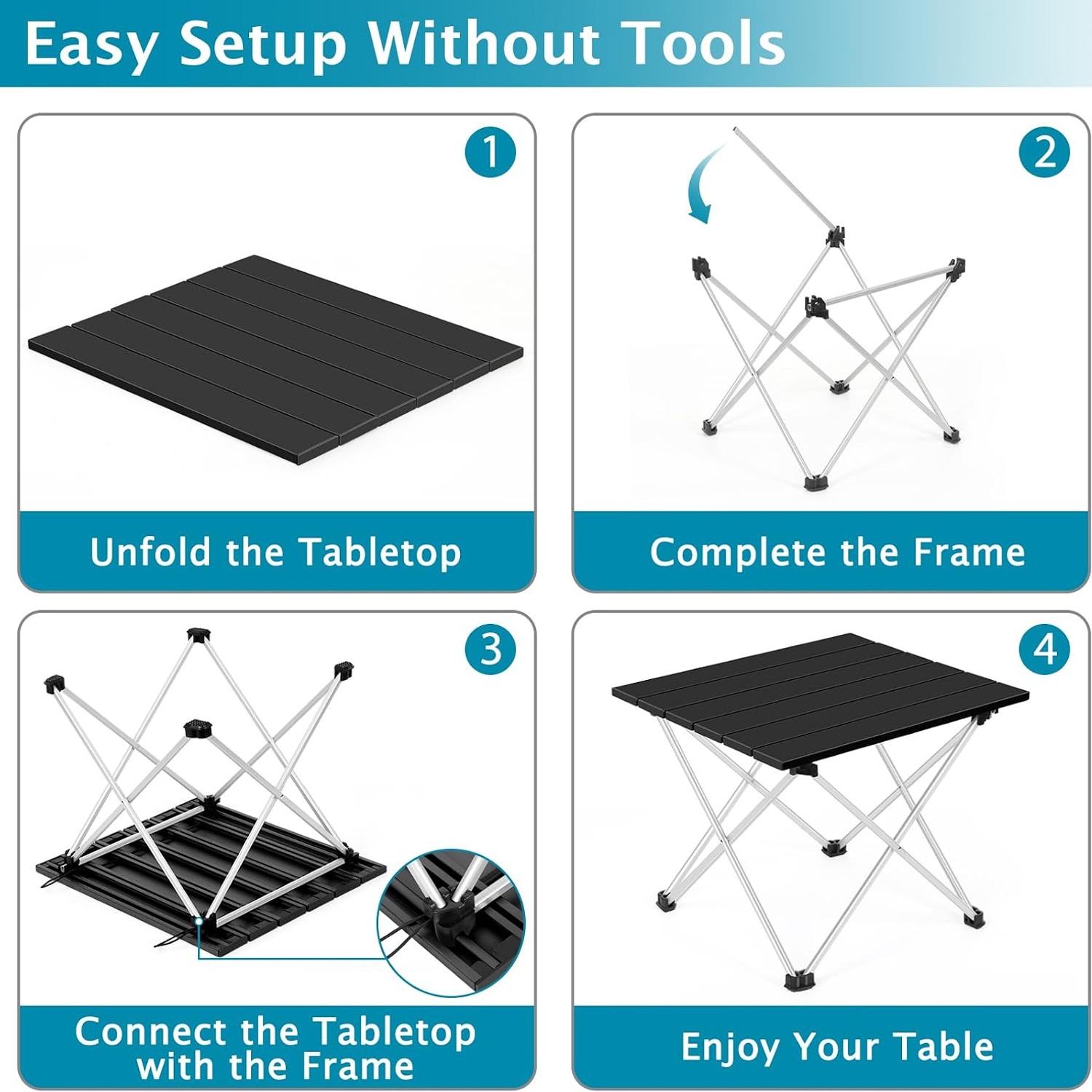
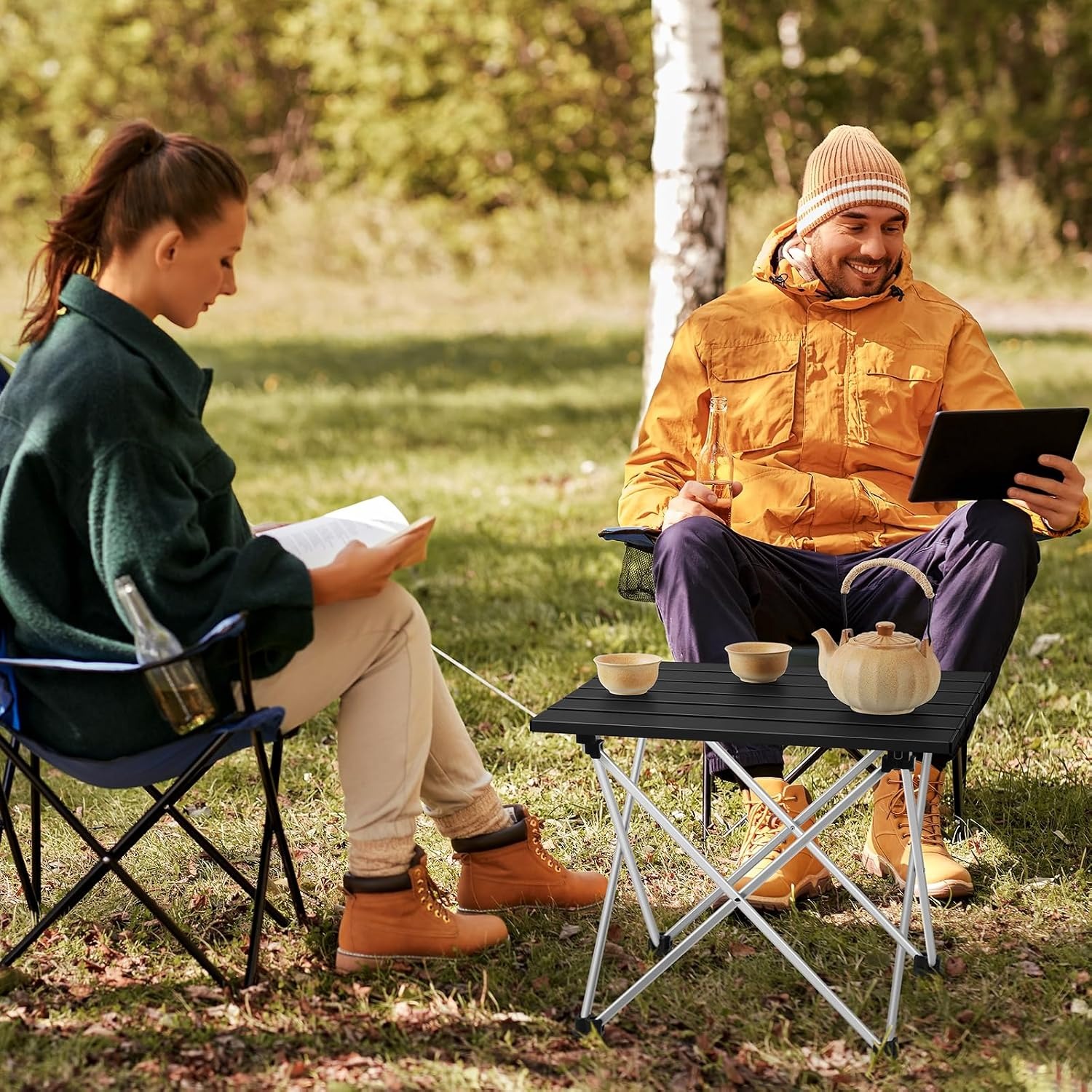
The design is simple once you have seen it. The tabletop is made of plastic slats joined side by side so they can roll up like a blind. The frame is aluminium tubing with hinged joints that fold flat. To set it up, you open the frame until the hinges lock, then unroll the top across the rails so it sits into place.
That hinge design is what makes the table rigid without any clips, pins or tools. There is nothing to lose in the grass and nothing that needs a spanner. Pack down works the same way in reverse, which matters more than you might expect on the morning you are trying to leave early.
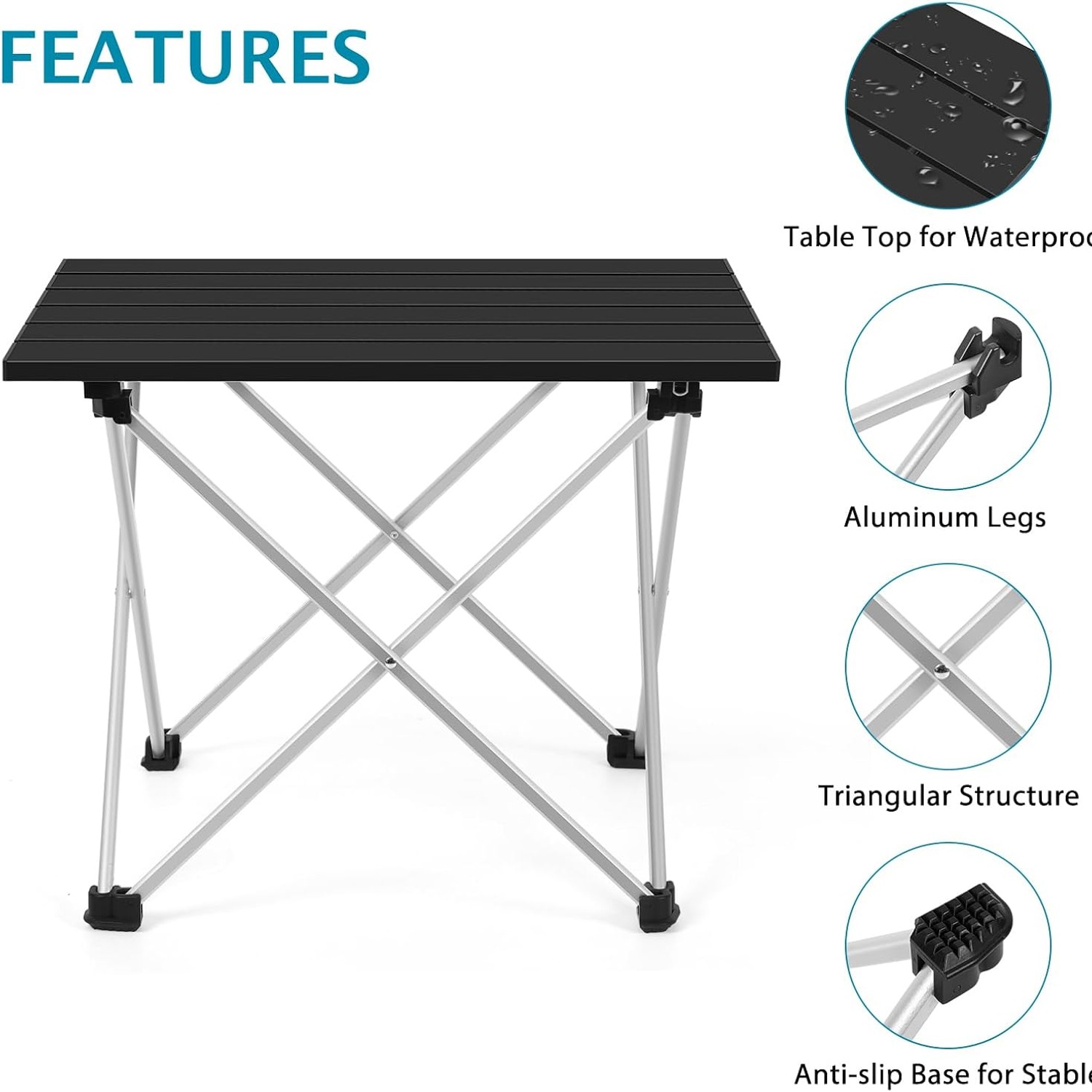
The aluminium frame and the cross style base carry the load, which is rated at 22.68 kg. That is generous for a table this light. A full pot on a stove, a chopping board, a few bottles and a couple of plates all sit comfortably inside that figure.
Why the tabletop material matters
There are basically two kinds of lightweight camp table. One uses a fabric top stretched over a frame. The other uses rigid slats. They feel similar in the shop and behave very differently in the field.
Fabric sags. Put a mug near the middle and it leans. Put something hot down and you risk melting a hole. Spill a sauce and it stays there for the rest of the table's life. Fabric also holds rain, so you wake up to a soggy top that takes an hour of sun to dry.
Slats stay flat. Water runs off them. Dirt wipes away with a damp cloth. The top on this table is plastic, listed as waterproof and stain resistant, which is what you want on a surface that is going to meet coffee, fish scales, sunscreen and campfire ash. One thing to remember: plastic is not heatproof. Use a mat or trivet under anything straight off a burner.
Who this size suits
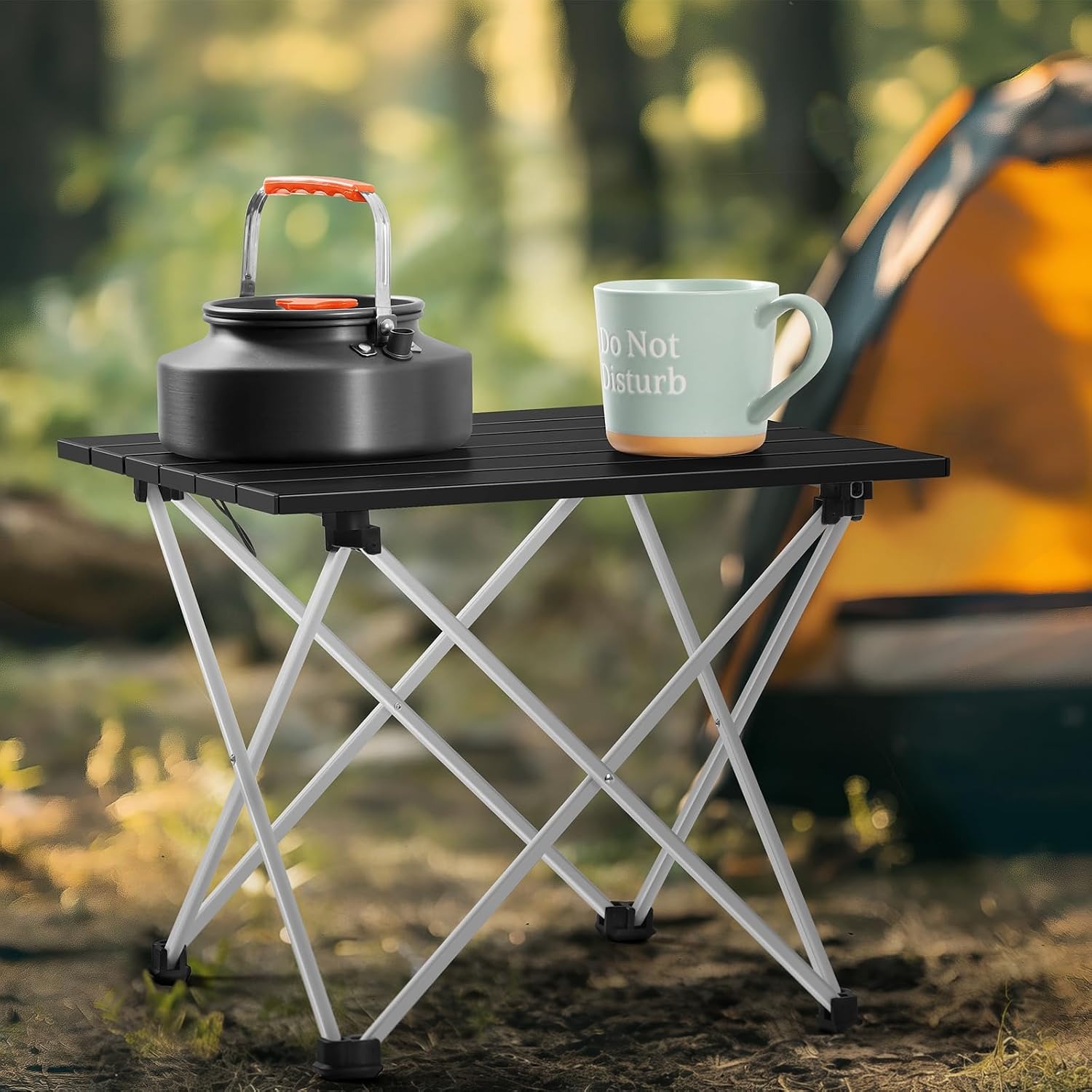
At 32.5 cm tall, this is a low table. It is not a dining table. It sits at roughly camp chair armrest height, which makes it ideal as a side table, a stove platform, a drinks station or a place to spread a map.
It works well for:
- Couples or small groups who want somewhere to put food and drinks rather than a formal dining setup.
- Beach days, where you want to keep a bag and some snacks off the sand.
- Fishing, where a wipeable top beats fabric every time.
- Tailgates, picnics and park days, where the real requirement is just a flat, clean surface.
If you are feeding a family of five a cooked meal every night, you will want a taller, wider table as well. Many people own both and use this one as the second table that goes everywhere.
Weight, pack size and why both count
Gear gets left at home when it is annoying to bring. A table that weighs 780 g and folds to 440 mm does not trigger that calculation. You throw it in because there is no reason not to.
Compare that to a rigid aluminium slat table with telescopic legs, which might weigh three or four kilos and take up a whole suitcase of boot space. Those tables are great when you have a trailer. For a hatchback with two adults, a dog and a weekend of gear, the small one wins.
The 780 g figure also opens up uses beyond camping. It is light enough to carry to a park, a sports field or a festival without thinking about it. Several buyers of a compact picnic table like this end up using it more at home than away.
Setting up and packing down without the fuss
The first time, read the assembly guide. It takes a minute. After that it is muscle memory.
A few habits that keep the table working well for years:
- Open the frame fully before unrolling the top. Half opened hinges put strain on the joints.
- Set it on reasonably flat ground. Ten seconds of looking for a level patch saves a spilled drink.
- Shake out the slats and hinges before folding, especially after a beach or a sandy riverbank.
- Let it dry before it goes in the bag.
That last one is the big one. Almost every piece of camp gear that fails early was packed away wet.
Care and storage
Cleaning is straightforward. Wipe the top and frame with a damp cloth. The top is stain resistant, so you rarely need more than that. Skip strong solvents on the powder coated aluminium, since they can dull the finish over time.
Aluminium does not rust like steel, but salt still deserves respect. After a beach trip, rinse the frame with fresh water and dry it off. The hinges are the only moving parts, so keeping grit out of them is most of the maintenance this table will ever need.
Store it in its bag somewhere dry rather than leaving it in a hot car all summer. Repeated heat cycles are harder on plastic than a few rainy weekends.
What to check before you buy
Think about three things.
Height. At 32.5 cm this is a low table. Measure the arm height of your camp chairs and picture reaching down to it. If that sounds wrong for how you camp, you want something taller.
Footprint. 39.6 cm by 34.5 cm is a square the size of a large serving tray. It comfortably holds a stove or a couple of plates, not a full spread. The listed seating capacity of three is honest for snacks and drinks.
Load. The 22.68 kg rating is plenty for food, a stove and gear. It is not a workbench. Do not sit on it.
If those three numbers suit your setup, this is one of the easiest pieces of camp furniture to own.
The short version
This is a 780 g folding table with an aluminium frame and a waterproof plastic slat top. It sets up to 39.6 by 34.5 cm at 32.5 cm tall, holds up to 22.68 kg, needs no tools and folds to a 440 mm bundle for the carry bag.
It is not trying to be the only table at your campsite. It is trying to be the one you always bring, because it costs you almost nothing in weight or space. For camping, picnics, fishing, barbecues and beach days, that is usually the table that gets used the most.