
The complete guide
How to Choose a Camping Stove That Boils Fast and Still Lets You Cook
The problem with most camp stoves
There is a moment on every trip where the stove either earns its place or annoys you. It is usually around 6pm, the light is going, the wind has picked up, and you are hungry. A cheap burner with a pot balanced on top will take an age to boil, blow out twice, and then scorch whatever you are trying to heat because the flame has two settings, off and roaring.
Then there is the other failure mode. Some stoves boil water brilliantly and do nothing else. They are built as kettles with a flame attached. That is fine if your entire menu is freeze dried meals and instant coffee, but it gets old fast when you want eggs, or a sauce, or anything that needs more than hot water poured into a bag.
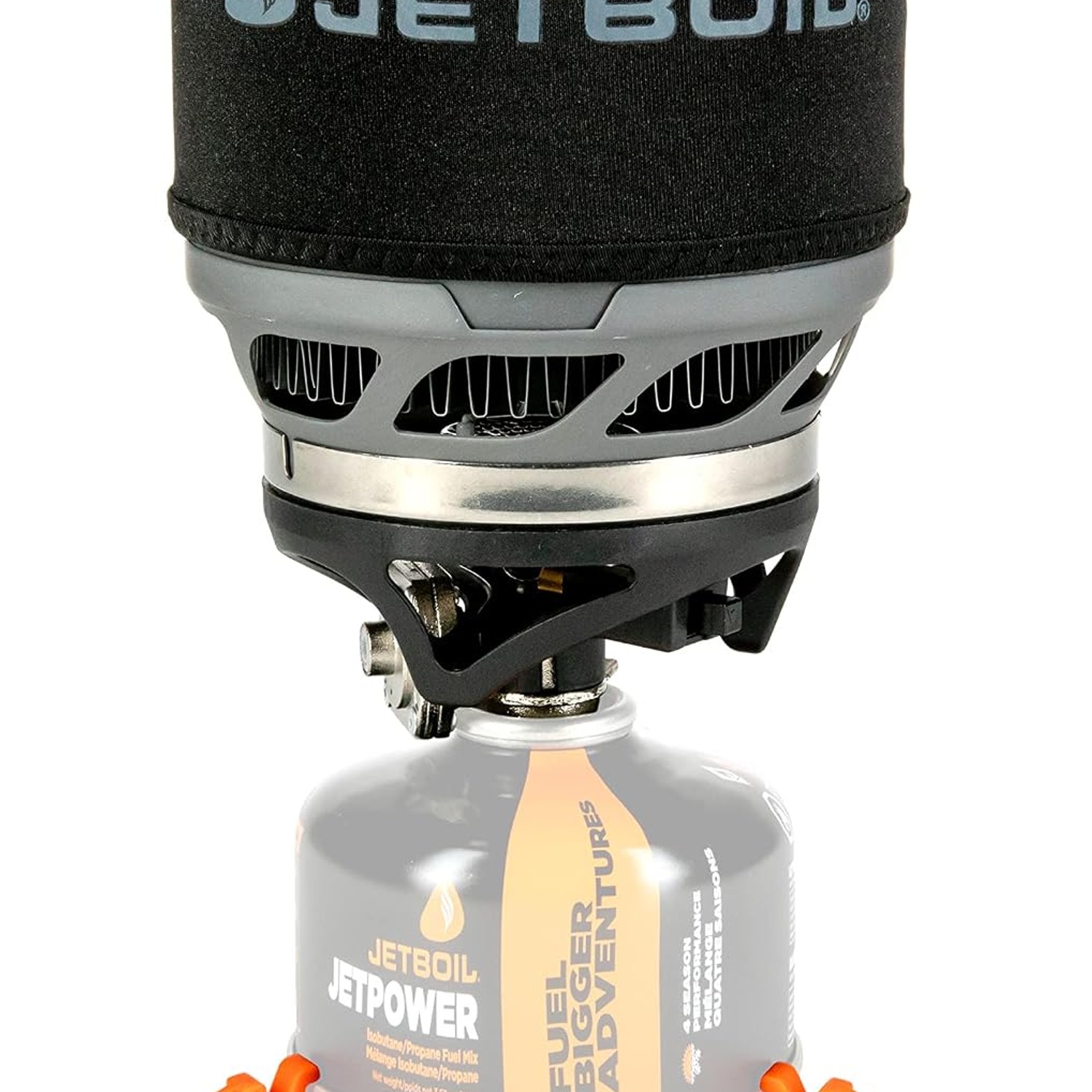
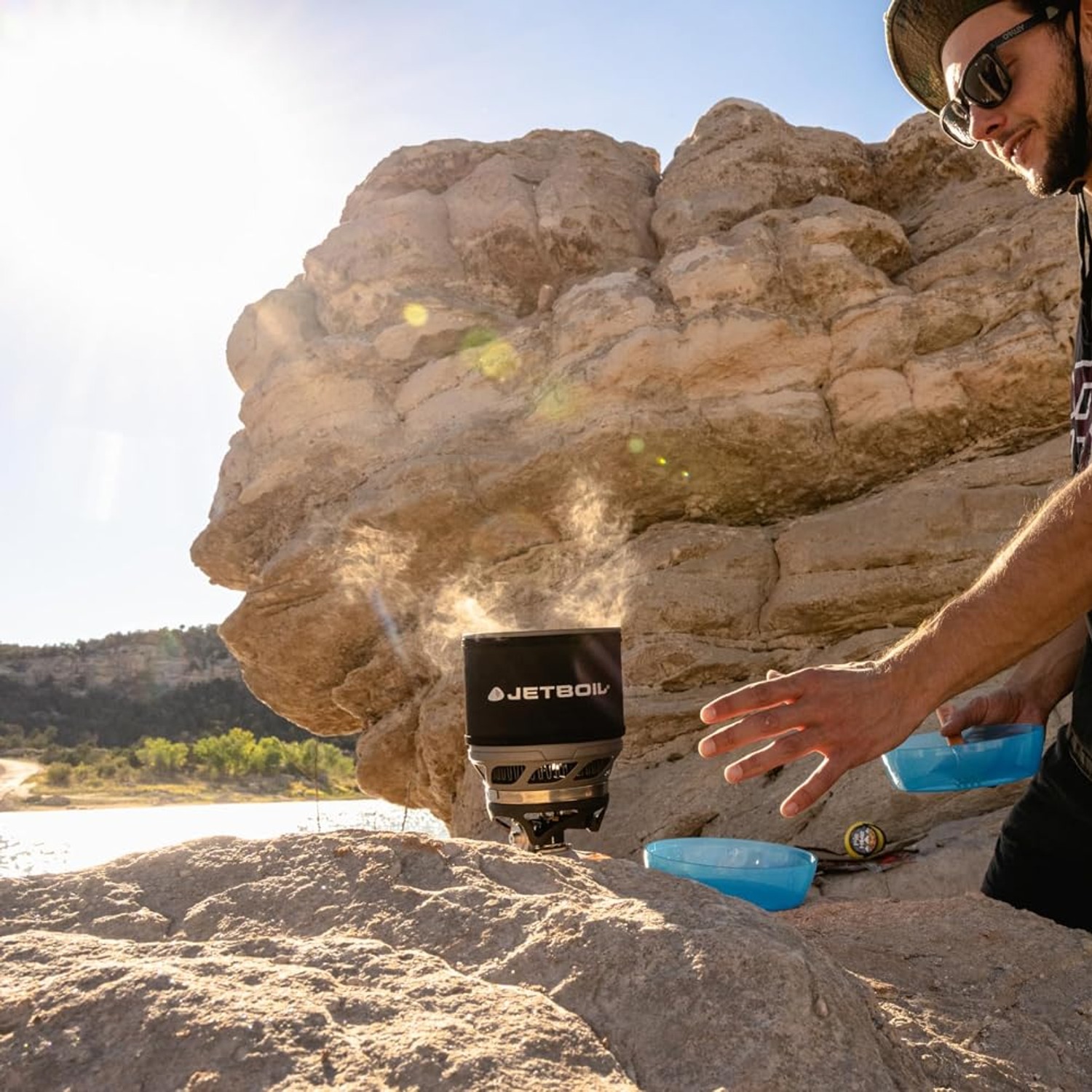
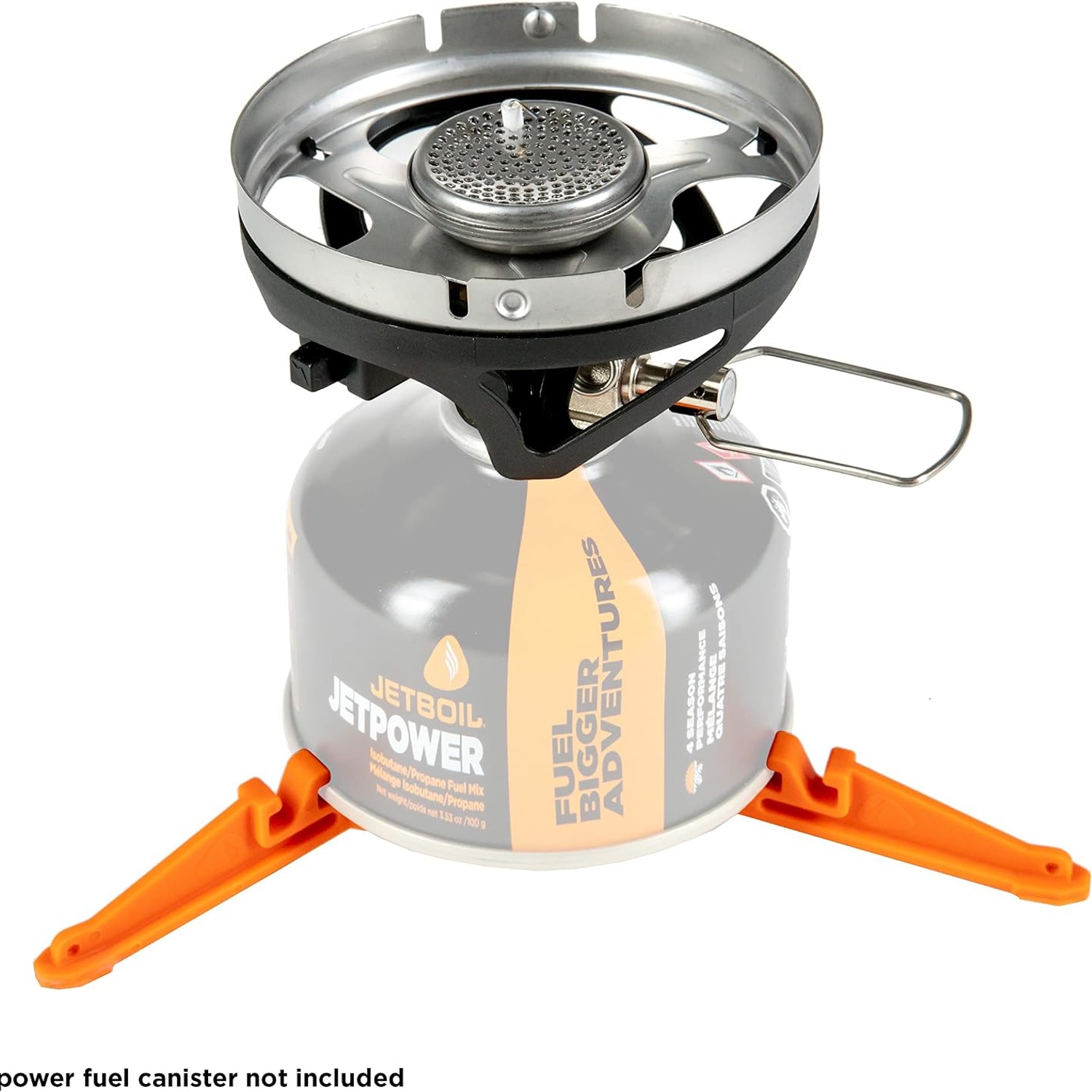
The Jetboil MiniMo sits between those two problems. It is an integrated system, so the burner and cup are built as a pair, and it has a regulated valve, so the flame actually turns down. That combination is why it stays in packs year after year.
How an integrated cooking system works
An integrated system means the pot is part of the stove, not an afterthought. On the MiniMo, the cooking cup locks onto the burner, and the base of that cup carries a FluxRing heat exchanger. Picture a ring of metal fins sitting right in the flame. Those fins add a lot of surface area, so heat moves into the water instead of curling up the sides and disappearing into the evening air.
Two things follow from that. First, your boil arrives faster. Jetboil quotes a rolling boil in a little over two minutes in good conditions. Second, and more useful over several days, you burn less gas for the same result. Fuel is weight, and weight is the thing you notice at the end of a long climb.
The burner is rated to a maximum of 2600 watts. That is more than enough for personal cooking. What matters more than peak output is control, which brings us to the regulator.
Why simmer control changes what you can eat
A plain canister stove feeds gas straight from the canister. As the canister empties and cools, pressure drops and the flame wanders. Turning the valve down often means the flame gutters out entirely.
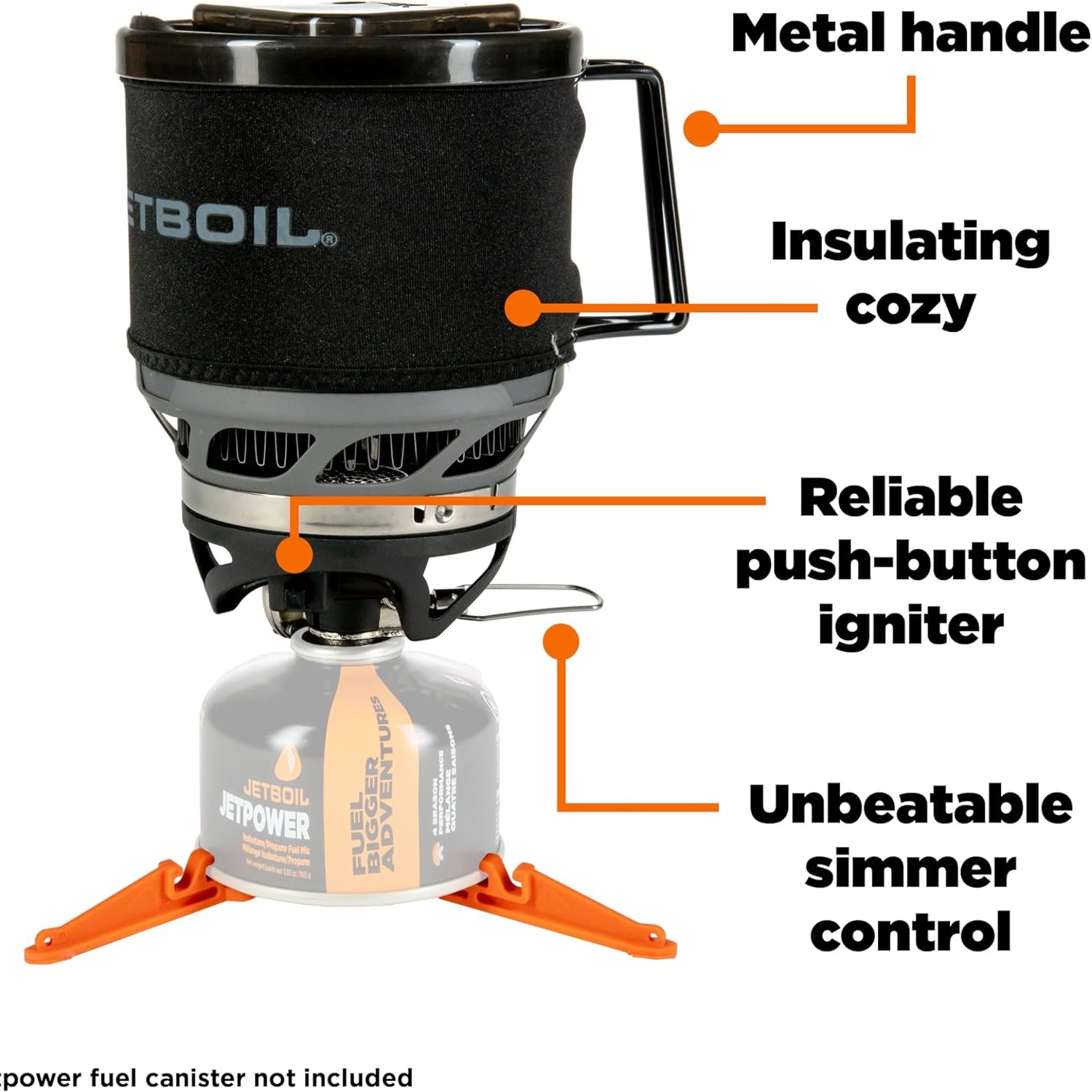
A regulated valve metres the gas, so you get smaller, more predictable steps between settings. On the MiniMo this means you can hold a genuinely low flame. Soften onions without burning them. Keep a pasta sauce ticking over. Reheat last night's leftovers without welding them to the base of the cup.
That is the difference between a boil-only kit and something you can cook with. If your idea of camp food involves more than hot water, this is the feature to care about.
The cup shape is not an accident
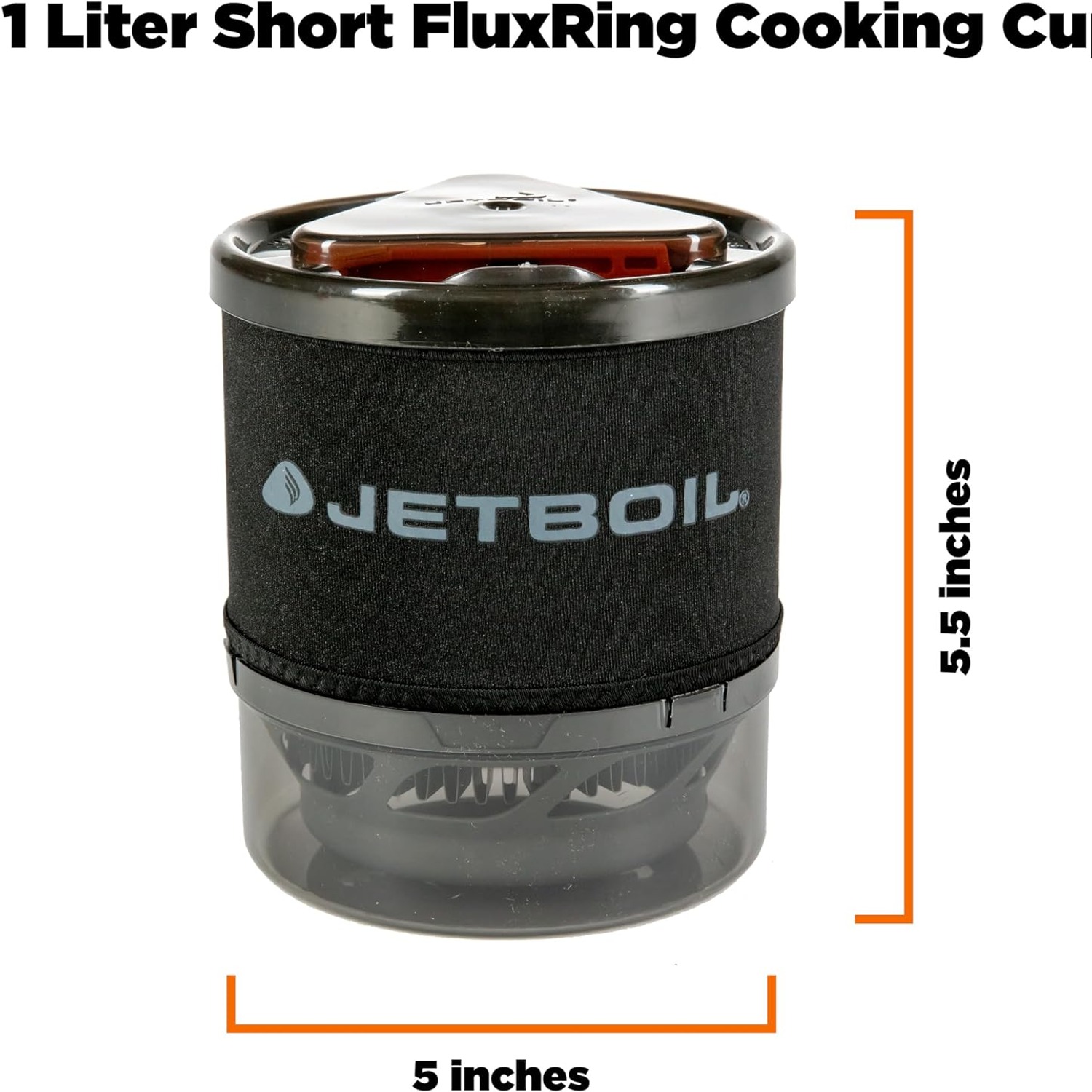
The MiniMo cup is short and wide rather than tall and narrow. Tall cups are slightly better at pure water boiling because the column of water sits deeper in the flame, but they are miserable to eat from. Your spoon goes in at a steep angle, your knuckles catch the rim, and you never quite get the last bite.
The wider shape fixes that. You eat straight from the cup with a normal spoon angle, and you can reach the bottom to scrape it clean. For solo trips that means one vessel to cook in, eat from and wash. Metal handles fold against the side and give you a solid grip when the thing is hot and full.
Lighting it and packing it
There is a pushbutton igniter built into the burner. Press it, hear the click, and the flame catches. That sounds minor until you are trying to strike a match in a crosswind with cold fingers. It is still worth carrying a spare lighter, because any igniter on any stove will eventually give up.
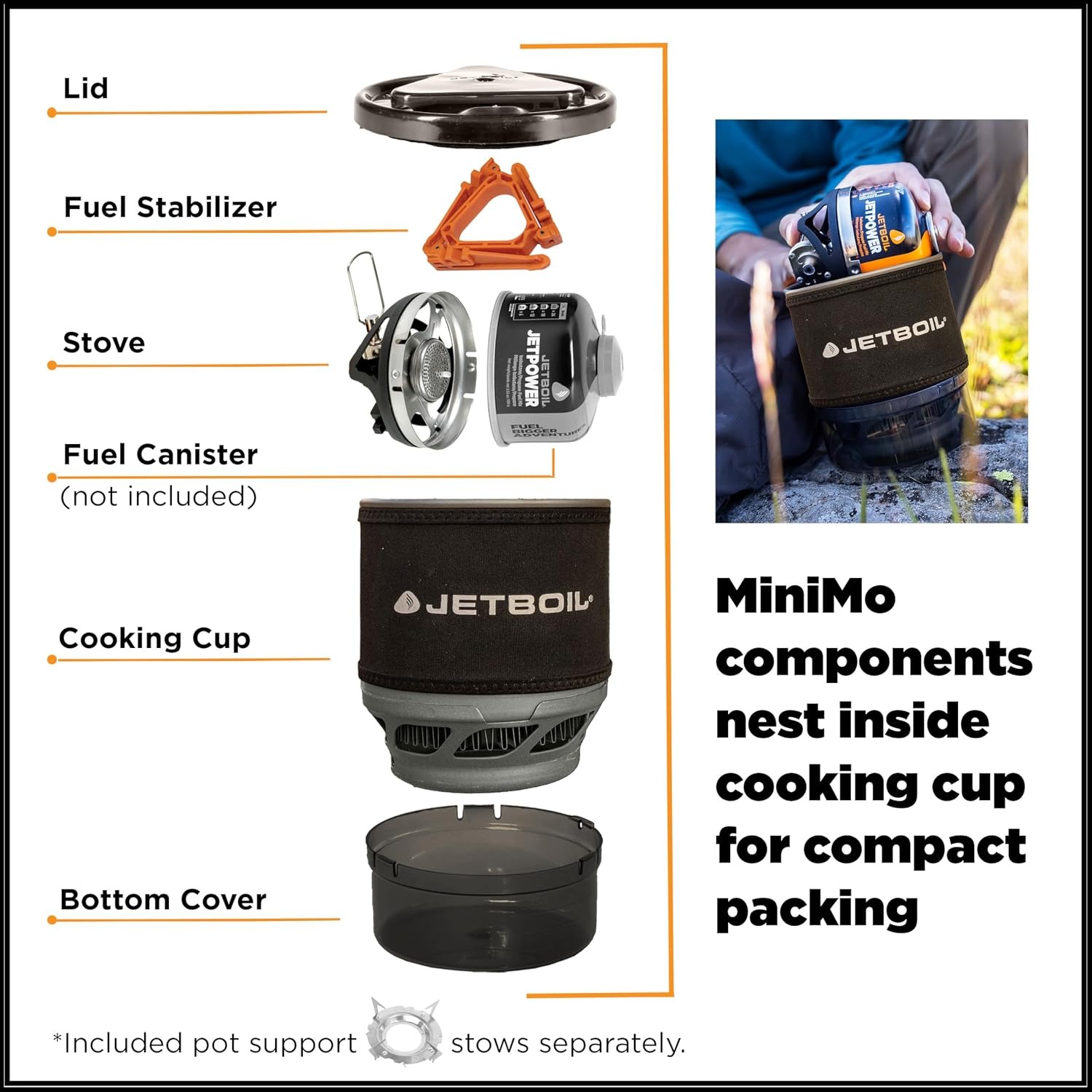
For packing, the burner stores sideways inside the cup. The bottom cover, canister stabiliser and pot support nest in with it. The whole thing finishes at 12.7 cm across and 14 cm tall, weighing 414 g. That is a tidy cylinder that lives in a pack pocket without rattling.
Who this suits, and who it does not
This is built for one person, or two people who do not mind cooking in rounds. Solo hikers, hunters, anglers, trail runners doing overnights, and anyone who wants a reliable stove in an emergency kit will get on well with it. If you camp from a vehicle and cook for four, a larger system or a two-burner setup will serve you better.
It is also a strong pick if you have been put off camp cooking by poor equipment. A good gas canister stove with real heat control makes the whole thing less of a chore, and you end up eating better food.
Fuel, safety and a few habits worth building
The MiniMo runs on threaded liquefied petroleum gas canisters, sold separately. Check the thread matches before you buy, and carry a spare on trips longer than a weekend. Cold weather and near-empty canisters both reduce output, so keep the canister somewhere warm before you cook on frosty mornings.
Cook outside, always. Gas stoves produce carbon monoxide and need open air. Set up on flat, firm ground and use the stabiliser. Let everything cool before you pack it, and disconnect the canister after each use rather than leaving it screwed on in storage.
Cleaning and looking after it
Wash the cup by hand with warm water and mild detergent. Skip the harsh scouring pads, since scratches in the interior give food something to cling to. Once it is dry, brush any soot or crumbs out of the FluxRing fins at the base. Those fins do the work, and a clogged exchanger is a slower exchanger.
Dry everything properly before it goes into storage. Damp metal in a sealed pack for a month is how good gear goes sour. The system comes with a two year manufacturer warranty, so keep your receipt somewhere you can find it.
The short version
If you want a camping stove that boils water in a couple of minutes, turns down low enough to cook real food, lights at the push of a button and packs into a space the size of a travel mug, the MiniMo is a sensible answer. It weighs 414 g, runs on standard gas canisters, and is built from stainless steel with a heat exchanger that saves you fuel on every meal.
It is not a group kitchen and it is not pretending to be. It is a personal cooking system that does its job well and keeps doing it for years. Add fuel, add food, and you are set.