
The complete guide
How To Choose A High Back Camping Chair That You Will Actually Keep
The problem with most camp chairs
Here is the moment almost everyone recognises. You have been sitting by the fire for two hours. The food is gone, the conversation is good, and your neck is killing you. The chair back stops somewhere around your shoulder blades, so your head has been propped up by nothing but your own muscles the whole time. You shift. You slouch. Eventually you give up and go to bed earlier than you wanted to.
That is not a camping problem. It is a chair problem. Low-back camp chairs were designed to pack small and sell cheap, and comfort was never really the point. They are fine for twenty minutes. They are miserable for an evening.
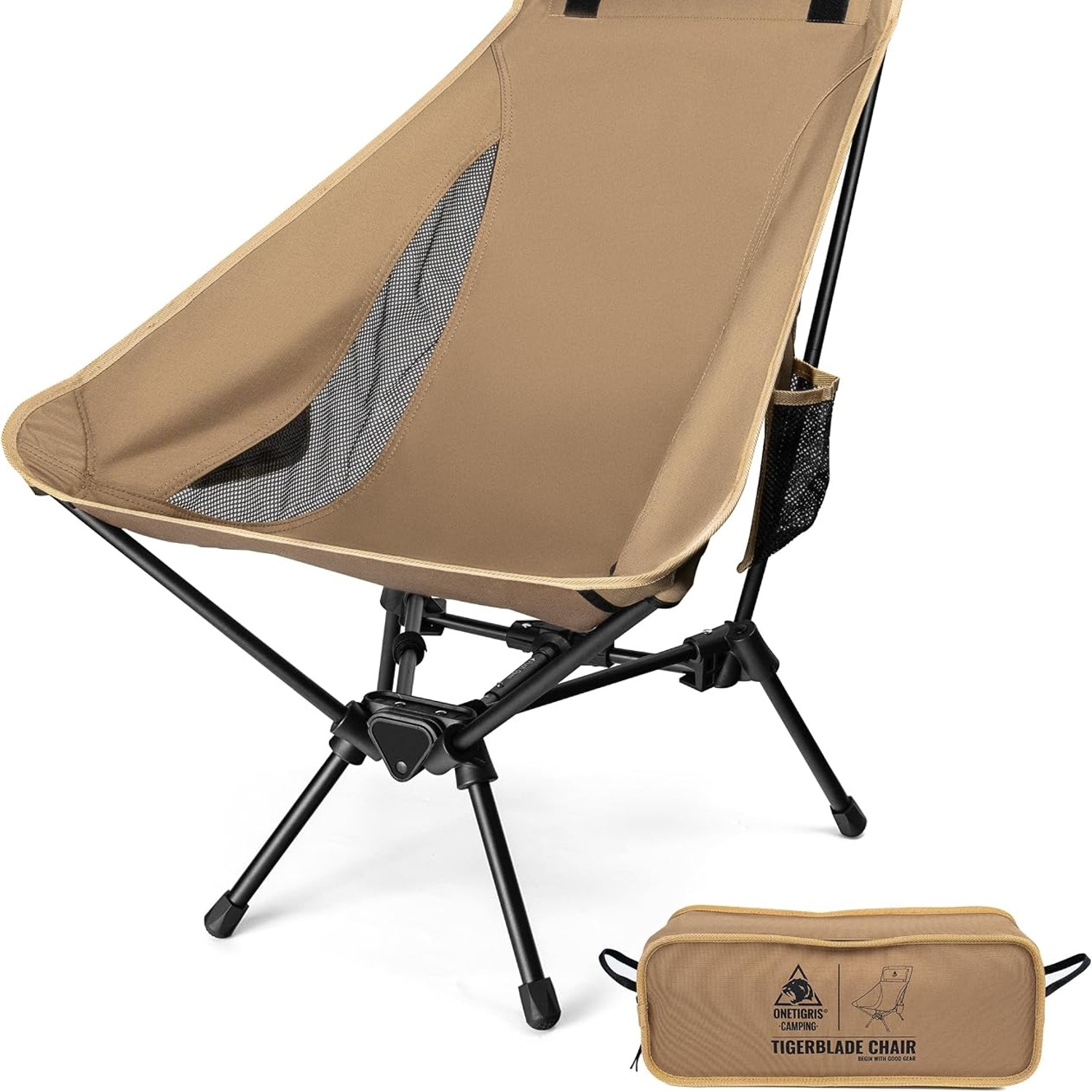
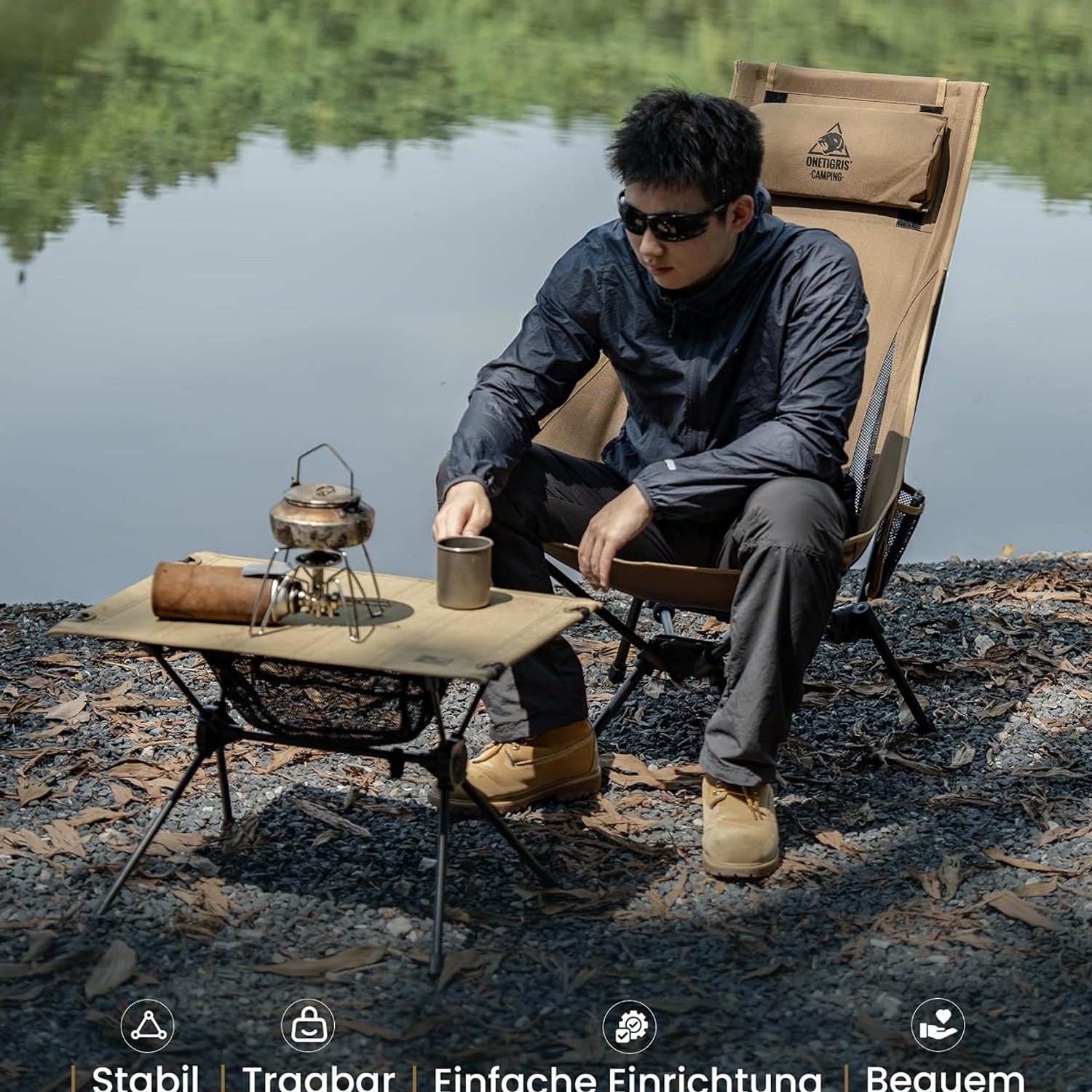
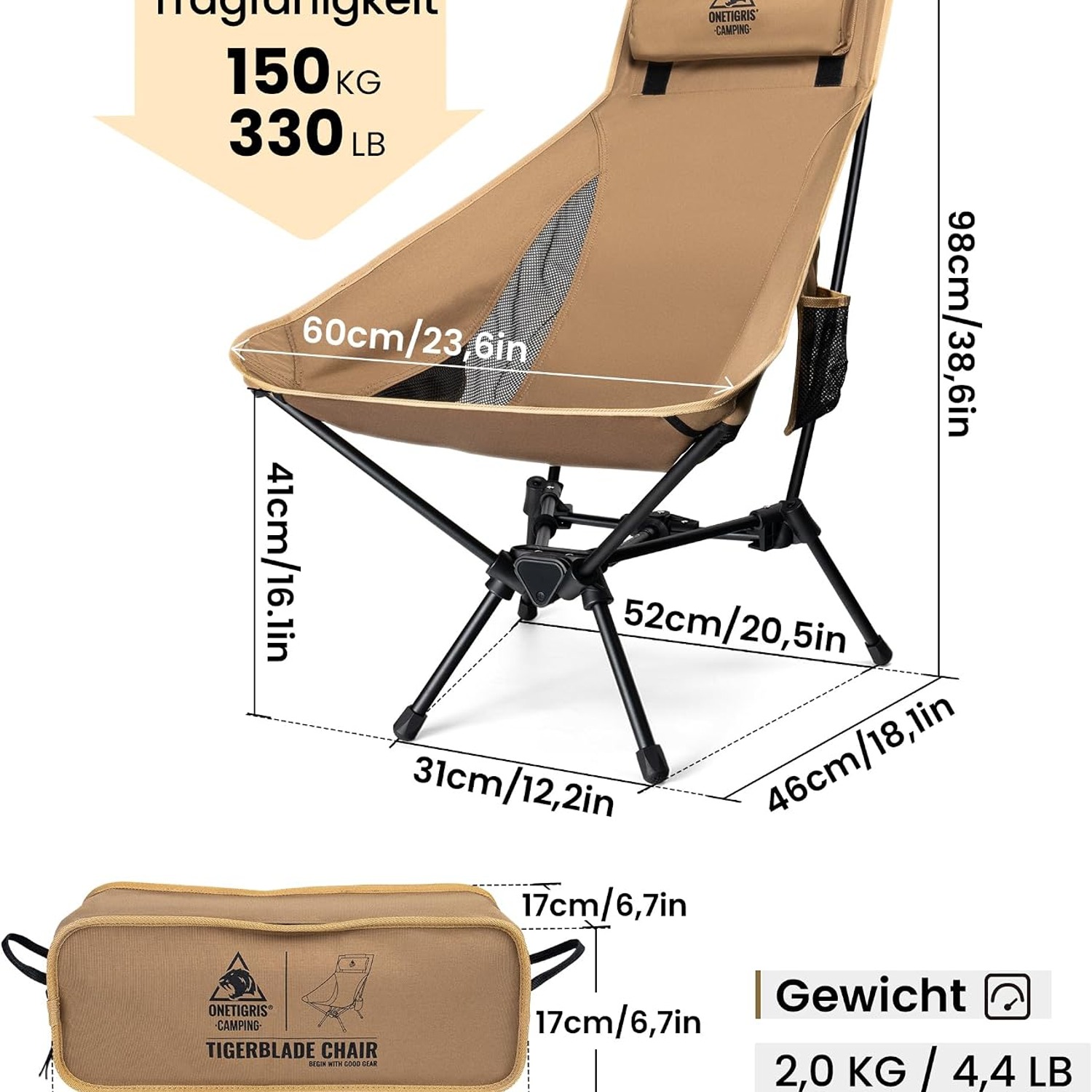
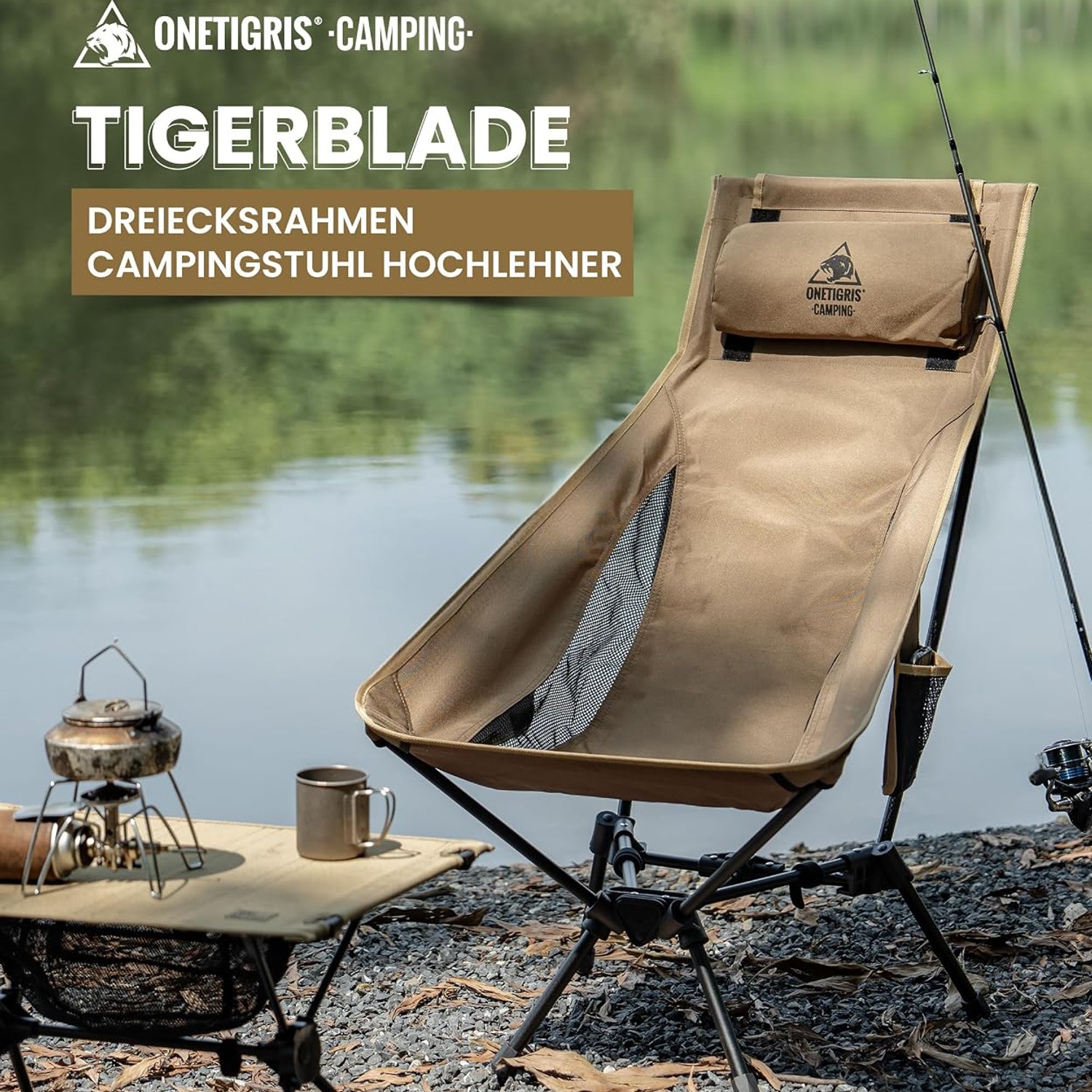
A high back camping chair fixes the obvious part of that. The backrest runs up to shoulder and head level, and on this one a removable headrest sits at the top for when you want to lean back properly. At 98 cm tall set up, there is actual structure behind your spine instead of a sagging band of fabric.
How this chair is put together
The frame is aluminium alloy. That matters for two reasons. First, weight. The complete chair, frame and fabric together, comes in at 1.96 kg. You can carry it in one hand across a field or hang it off a pack strap without feeling like you have brought a piece of furniture on a walk.
Second, corrosion. Camping gear lives a damp life. Steel tube chairs develop rust spots at the joints after a few wet weekends, and once the joints seize you are fighting the chair every time you open it. Aluminium does not have that habit.
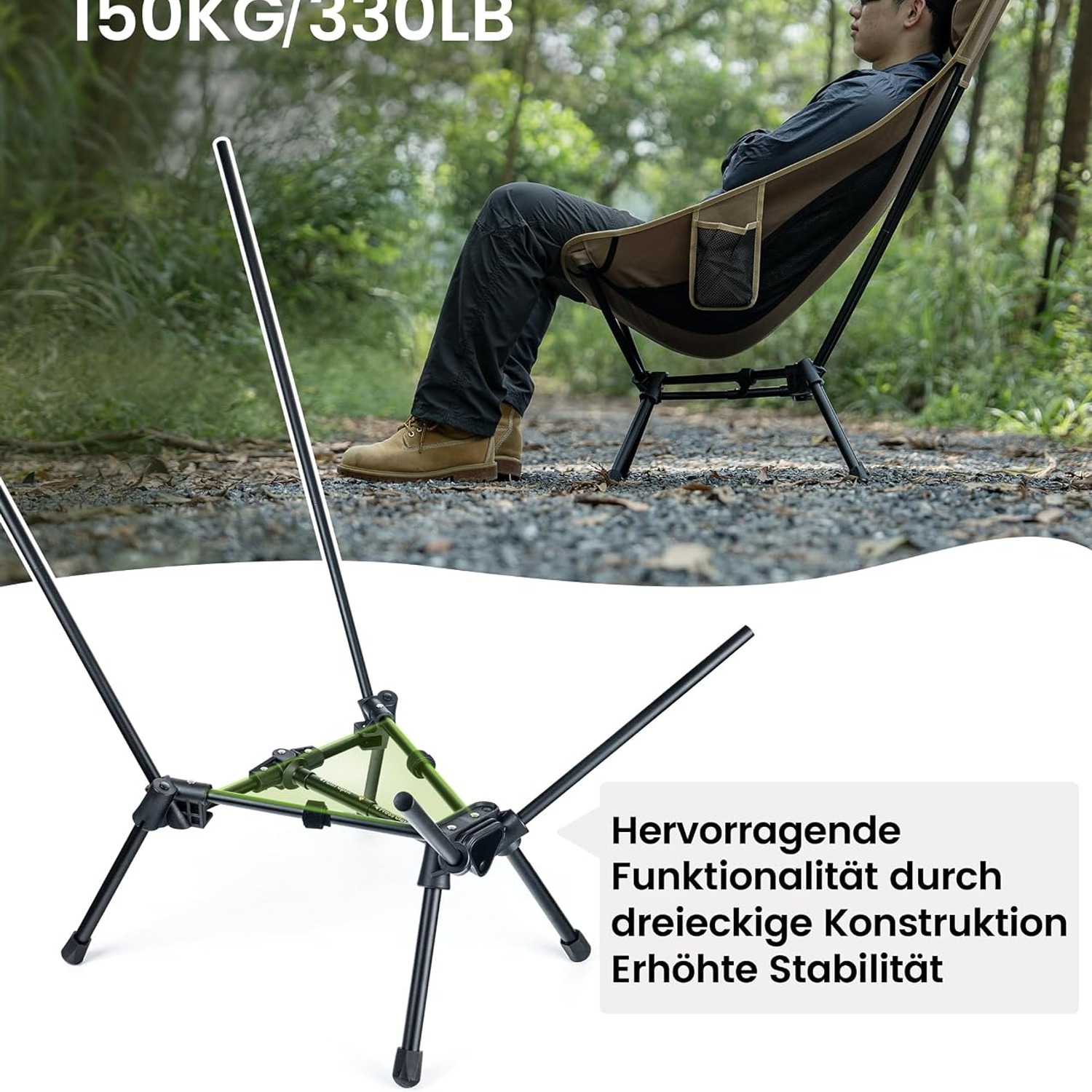
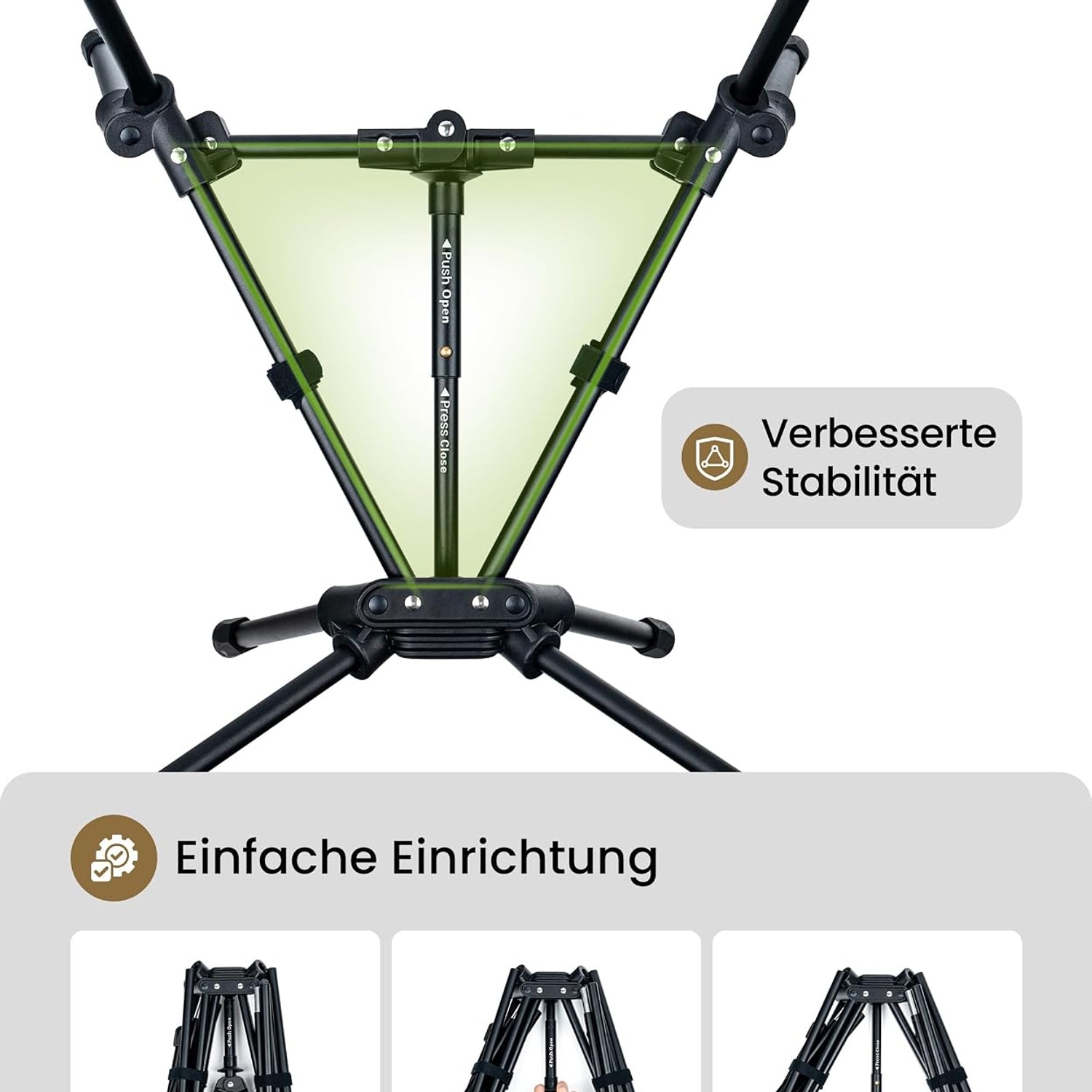
The poles connect through a central hub rather than a scissor mechanism. In practice that means the chair opens out in one main movement and collapses the same way. There is no hunting for which bar goes where, and no pinched knuckles. When it is down, it goes into the storage bag that comes in the box.
The seat and back are polyester, with breathable mesh at the sides. Polyester is the sensible choice here. It handles sun, damp grass and spilled drinks, it dries fast, and it wipes clean instead of needing a wash cycle. The mesh side panels make a noticeable difference on a hot afternoon, when a solid fabric chair turns into a sweat trap.
Two side pockets finish it off. They hold a phone, keys, a head torch, a bag of snacks. Small thing, but it is the difference between your phone being beside you and your phone being somewhere in the grass at midnight.
Two seat heights, and why it matters
This is the feature people overlook until they use it. The chair sets up at either of two seat heights.
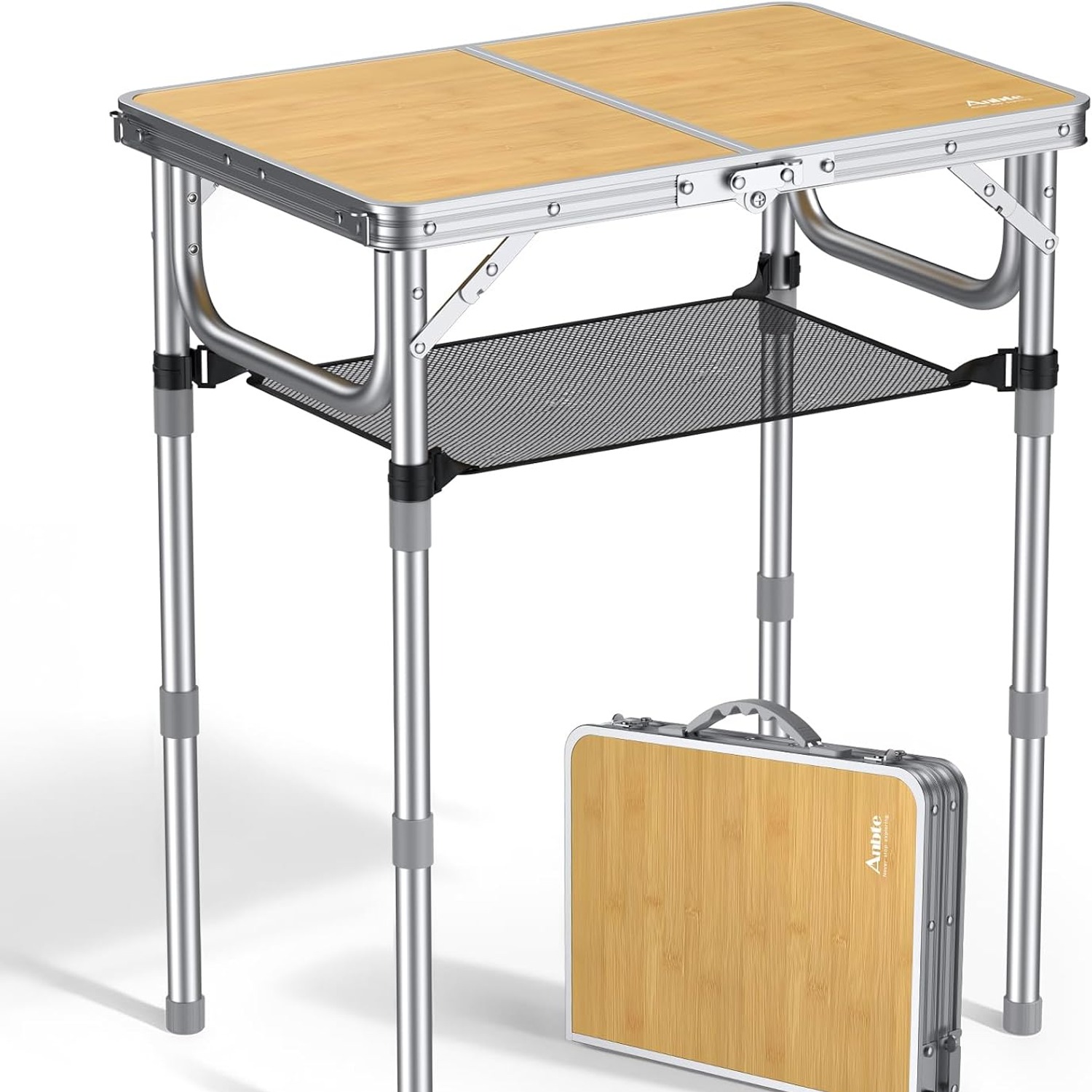
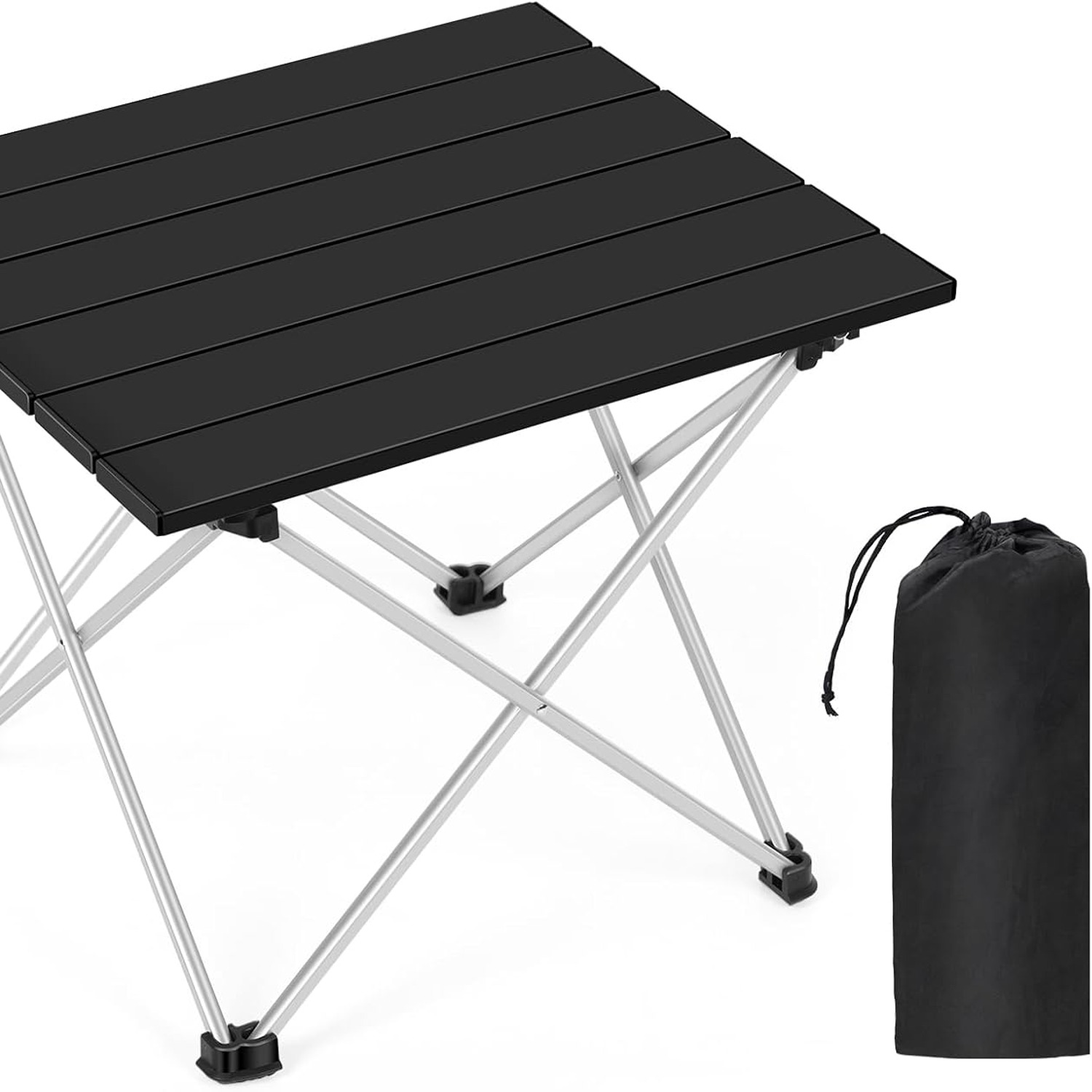
The low setting is the classic fire-circle position. You sit closer to the ground, closer to the warmth, and it feels relaxed. The higher setting lifts you to roughly camp table height, so you can eat a meal without folding yourself forward over your knees.
Most people end up owning two chairs to cover those two situations, or they pick one and put up with the compromise. Having both in a single chair means less gear in the boot and less faff at setup. Choose the height when you open it out, and change it next time if you want.
Who this suits
Car campers and caravanners. You have room for a comfortable chair, so you may as well have one. The pack size still slots into an awning locker or a boot corner easily.
Anglers. Long sessions on a bank are exactly where a tall back and a headrest pay off. The side pockets take small tackle, and the polyester cleans up after a messy landing.
Festival and event goers. Light to carry, folds into a bag, and the Brown Coyote colour does not show dust. If you spend four days sitting outside, your back notices the difference by day two.
Sideline parents. Saturday morning sport in a low chair with no neck support is its own kind of punishment. The higher seat setting also makes standing up easier when the game ends.
Anyone who wants a spare seat at home. It is rated for indoor use too. Folded in a hall cupboard, it becomes an extra chair when more people turn up than you have seats for.
How to choose between camp chairs generally
A few things are worth checking whenever you compare chairs, not just this one.
Start with back height. Measure from your seat to the top of your shoulder while sitting. If a chair's back is shorter than that, you will be holding your own head up. This one gives you 98 cm overall with a headrest on top.
Then look at weight honestly. Plenty of listings quote the frame weight and leave the fabric out. The 1.96 kg figure here is the item weight for the chair. If you are carrying any distance, every few hundred grams registers.
Check the frame material. Aluminium costs more than steel and is worth it if the chair lives outdoors. Check the fabric too. Polyester is the practical option for outdoor furniture, and mesh ventilation is a genuine comfort feature in warm climates.
Think about how it packs. A chair that folds into its own bag stays together between trips. A chair with loose poles loses a pole eventually. The storage bag is included here.
Finally, be realistic about what you need. If you want a chair that lies back like a sun lounger, this is not it, because it is listed as non-tilting. If you want solid upright support with a headrest and two height options, it fits.
Looking after it
Camp furniture lasts longer than people expect when it gets five minutes of care.
Brush sand and grit off the frame before you fold it. Grit in the joints is the main reason folding chairs get stiff. A quick sweep with your hand is usually enough.
Clean the fabric by spot cleaning with a damp cloth and mild soap. Skip the harsh chemicals, bleach and solvents. They can weaken polyester fibres and strip any finish.
Dry it fully before it goes in the bag. A chair packed damp will smell within a week. Open it out in a garage or under an awning and let the air do the work.
Store it out of direct sunlight. UV is what eventually fades and weakens outdoor fabric, and a chair stored in a sunny window suffers more in a year than one used outdoors on weekends.
The short version
This is a 1.96 kg folding chair with an aluminium frame, a polyester seat with mesh side panels, a tall 98 cm back, a removable headrest, two seat heights, two side pockets and a storage bag. It sets up at 43 by 60 by 98 cm, comes in Brown Coyote, and works indoors or out. Assembly is needed and the instructions are in the box.
If your current camp chair leaves your neck unsupported and your back sore by the second hour, this is the straightforward fix. Light enough to carry, tall enough to lean into, and simple enough that setting it up never becomes the annoying part of arriving.