
The complete guide
How to Anchor a Tent in Sand and Snow Without It Pulling Free
The problem with normal tent pegs
Most tent pegs are thin for a reason. On firm soil, a narrow pin slides in easily and the ground packs tight around it. Pull on the guy line and the soil pushes back along the whole length of the pin. That grip is what holds your tent down.
Now move to a beach. Dry sand does not pack around anything. It flows. A thin peg pressed into it has almost no resistance, and the first steady breeze lifts it out like a toothpick from a cake. Snow behaves the same way in the first hours after it falls, before it settles and bonds. People discover this the hard way, usually around the time the wind picks up and a corner of the tent starts snapping.
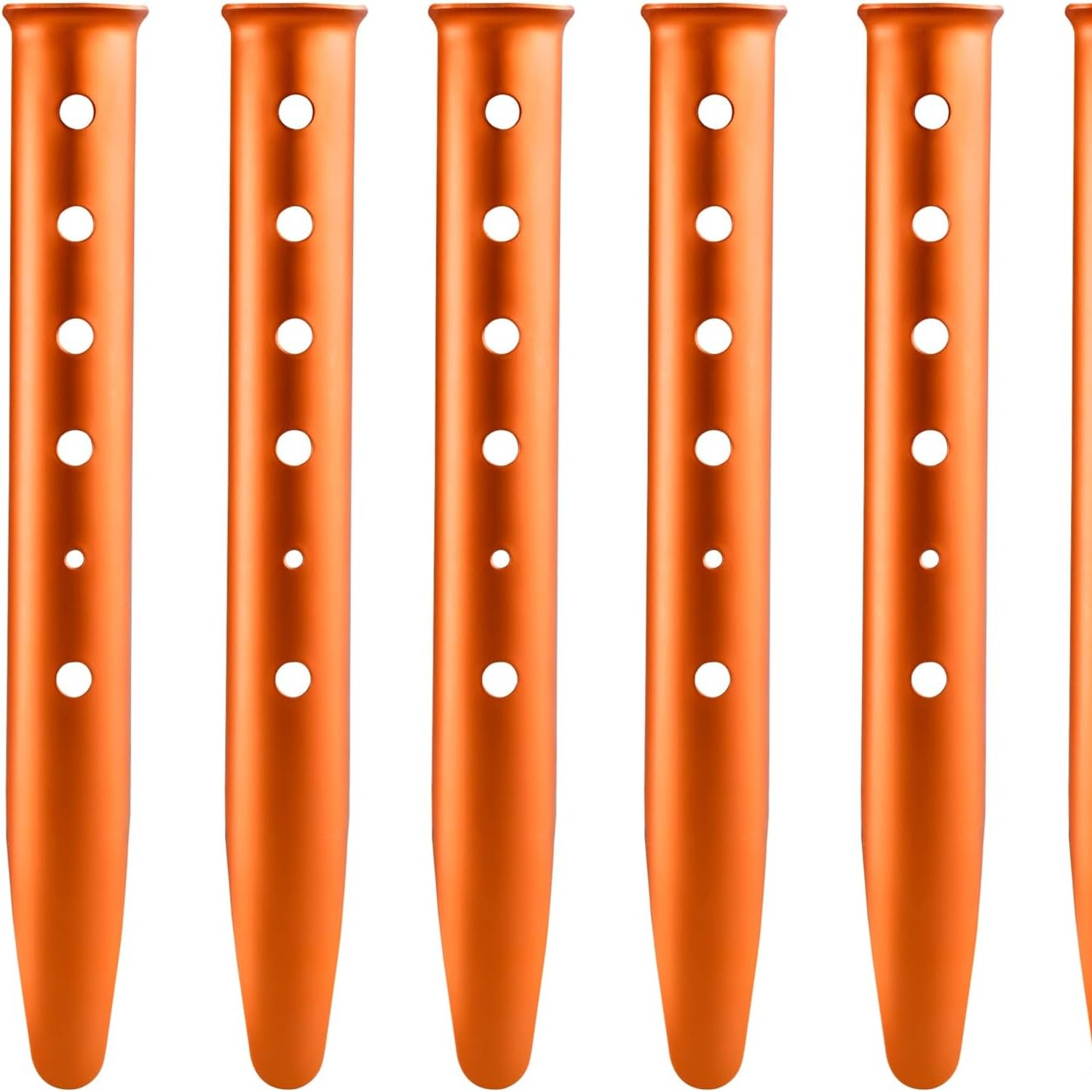
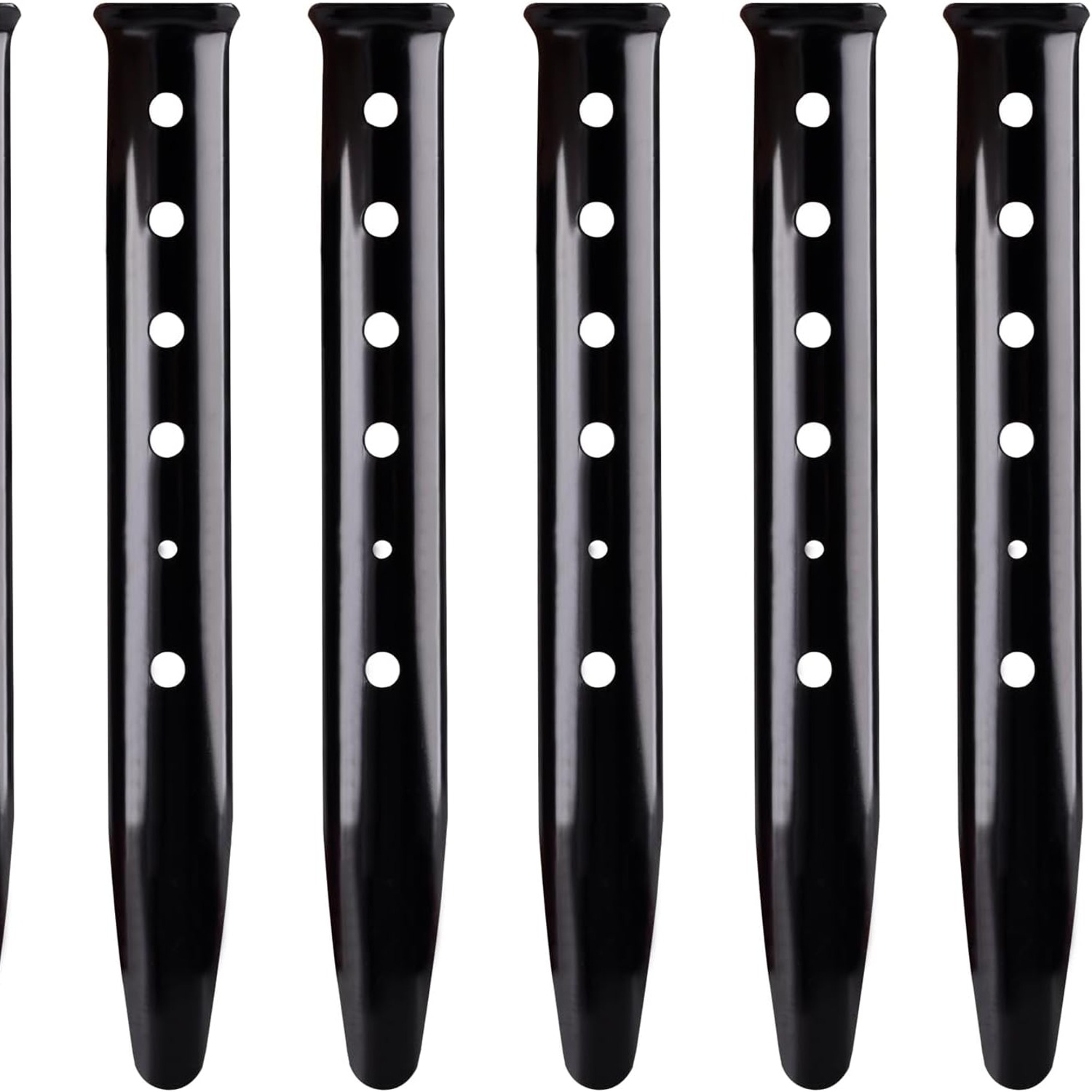
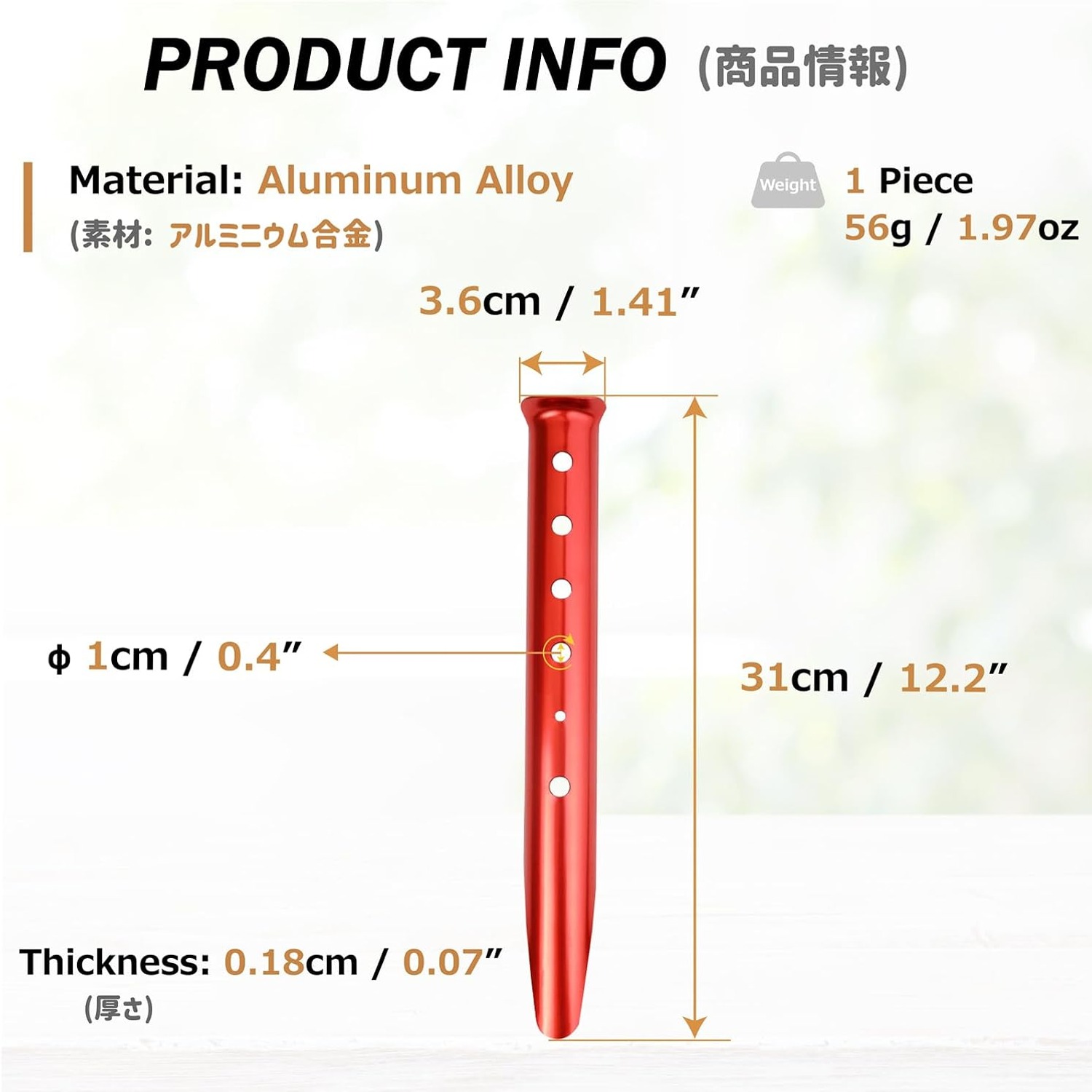
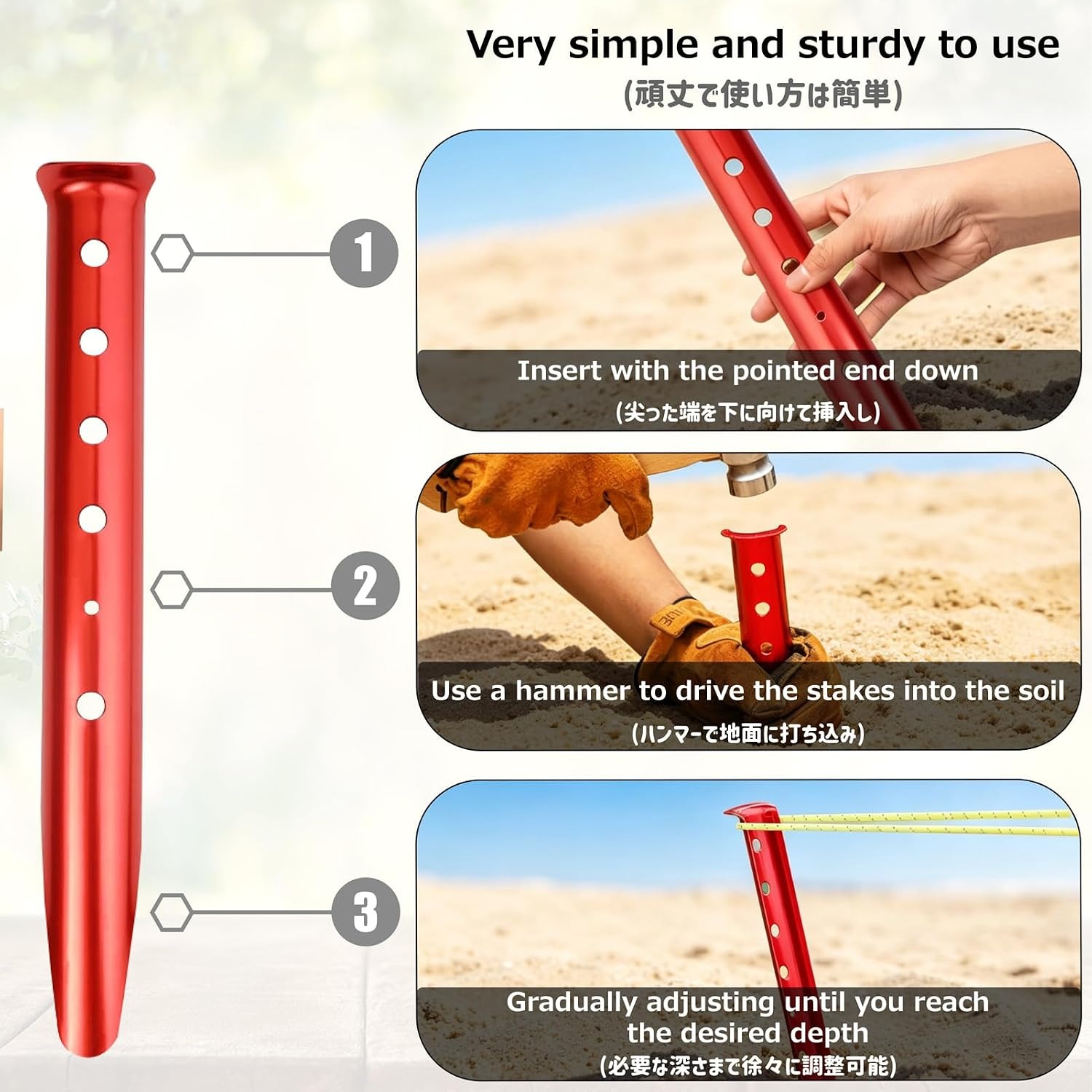
The fix is not a longer pin. It is a wider one. These stakes are 31cm long and 3.6cm across, so instead of a few square centimetres of contact you get a broad blade pressing against the material. That is the entire principle behind snow and sand tent stakes, and it is why a 52g piece of aluminium can hold a shelter where a steel pin cannot.
How a wide blade actually works
Think about the difference between standing on fresh snow in boots and standing on it in snowshoes. Same weight, same snow, very different result. Spreading the load over a wider area stops you sinking.
A sand stake does the same thing in reverse. When your guy line pulls, the blade has to drag a column of sand along with it. More blade means more sand to move, and in practice the stake stays put. Add a bit of depth and the sand above the blade also has to lift, which makes the whole thing harder to shift again.
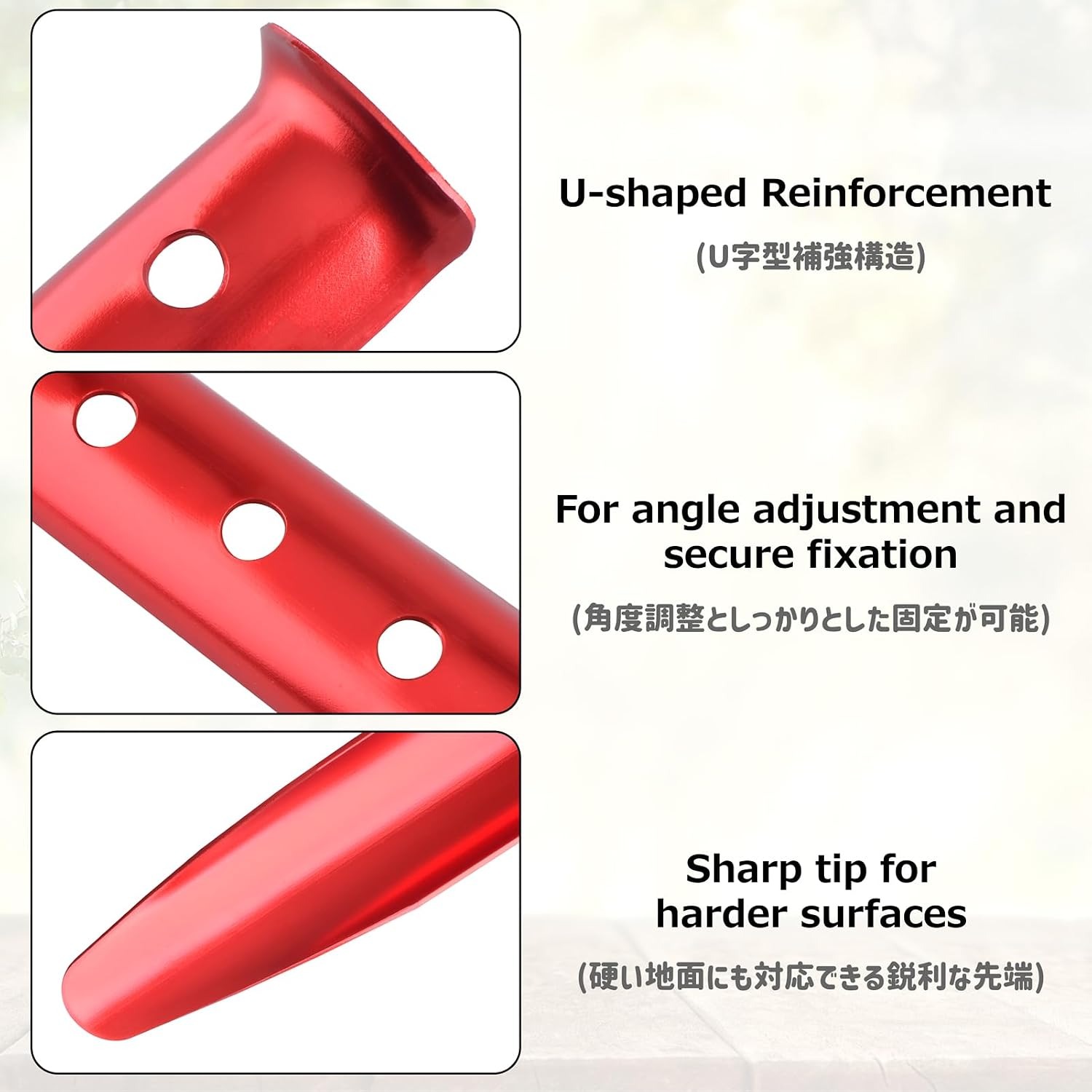
This is also why angle matters so much. Set the stake leaning away from the tent, roughly 45 degrees, so the line pulls the blade sideways and slightly downward rather than straight up. Straight up is the one direction where even a wide stake gives in fairly easily.
Getting them in properly
In dry sand, push the stake down by hand until it stops, then work it deeper with a bit of pressure from your boot. The top few centimetres of beach sand are loose and basically useless for holding anything, so you want the blade sitting below that in the damper, firmer layer.
Once it is in, scoop sand over the top and tread it down. That packed layer does real work. It adds weight above the stake and it stops the top of the blade from wobbling in its hole, which is where failures usually start.
In snow, the approach is similar but with one extra trick. Snow sets. Pack it firmly over the buried stake, then leave it ten minutes before loading the line hard. The crystals bond together as they compress and the anchor gets noticeably stronger than it was when you first stamped it down.
For really loose material, bury the stake horizontally instead. Dig a trench, lay the stake flat at the bottom with the guy line tied around its middle, run the line up through the sand or snow, and fill the trench back in. This is a deadman anchor and it is remarkably strong. It is slower to set and slower to remove, so most people use it only on the two most exposed corners.
Where these do not belong
Being honest about limits saves money. These stakes are for soft ground. Beaches, dunes, soft soil and snow are their territory. Hard-packed earth, gravel, clay in summer and anything with stones in it are not.
A wide aluminium blade cannot cut into firm ground the way a thin steel pin can. Try to hammer one in and it will bend at the shoulder before it goes anywhere. Keep your usual pegs in the bag for those sites and treat this set as the specialist tool it is.
There is one more compatibility note worth knowing. Tents that use small needle loops at the four corners do not pair well with a wide stake head, because the loop has nothing broad to sit against. If your tent uses webbing loops or proper guy lines, you are fine.
Weight, and why it matters less than you think
Each stake weighs 52g. Six of them come to just over 300g, which is about the same as a full drink bottle. For car camping that is nothing. For a long walk in, it is a real number but a small one.
The thing to weigh it against is what happens when your anchors fail. A tent that pulls loose at 2am in a dune field costs you a night of sleep at best, and a torn fly or a lost pole at worst. Carrying a set of proper lightweight tent stakes for the ground you will actually be on is a better trade than shaving 300g and hoping.
Many hikers carry a mixed kit. Four standard pegs for firm sections, four wide ones for the soft stuff. It is more flexible than committing to one style.
The orange is not just decoration
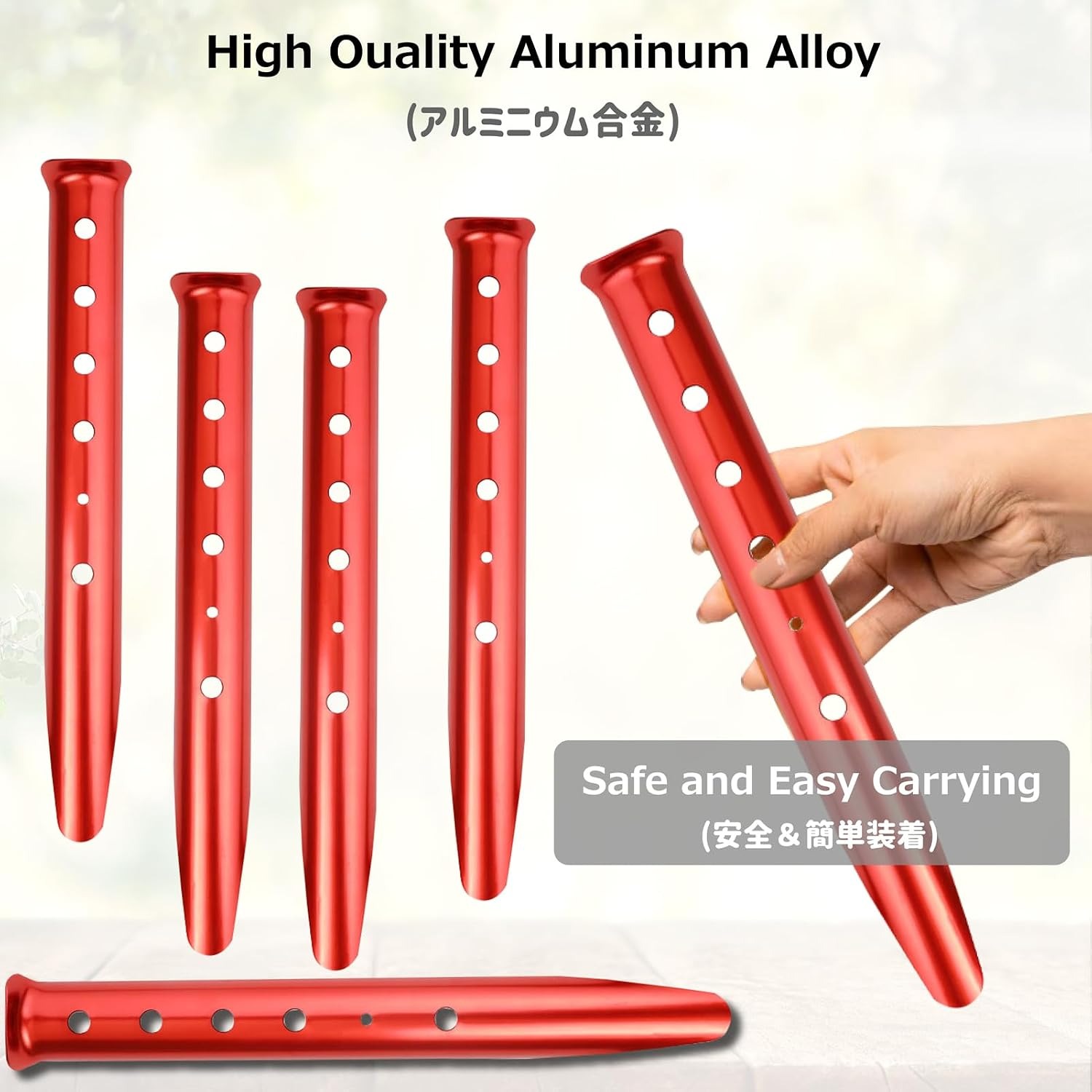
Anodising hardens the surface of aluminium and gives it a layer that resists scratching and damp better than bare metal. It also holds dye well, which is how these end up bright orange.
That colour earns its keep at pack-up time. A silver peg lying on pale sand disappears. A silver peg in snow disappears completely. Orange gives you a fighting chance of counting all six back into the bag before you drive off. Losing pegs one trip at a time is how a complete set quietly becomes four.
Looking after them
Care is simple and takes a minute. Rinse them in fresh water after beach use so salt and grit come off, then dry them before they go back in the bag. Damp gear packed away is bad news for everything stored alongside it.
Pull stakes straight up by the head rather than levering them out sideways. Levering is what bends them. If one does pick up a light bend, you can usually ease it back by hand, though repeated sharp bending at the same spot will weaken aluminium over time.
Keep the set in a small pouch. Loose pegs rattling around a pack have a habit of scuffing other gear and working their way into awkward corners.
Choosing the right number
Six stakes covers four corners and two guy lines. For a one or two person tent on a reasonably calm beach, that is enough.
If you are pitching something larger, running a full set of guys, or heading somewhere genuinely windy, two packs is the sensible call. Spare anchors also mean you can double up on the windward side, which is where most of the load goes anyway.
Shade canopies are worth a mention here too. They catch a lot of wind for their size, and the legs sit on the loosest sand of the day. People often under-peg them and then spend the afternoon holding a corner.
The short version
Narrow pegs need firm ground to grip. Sand and snow do not provide that, so you need width instead of a sharper point. These stakes give you a 3.6cm blade on a 31cm body at 52g each, in a pack of six, in a colour you can actually find afterwards.
Use them at an angle, bury them properly, pack material over the top, and keep them away from hard or stony ground. Do that and a very light piece of aluminium will hold your shelter down in conditions where your normal pegs would be lying on the sand ten metres downwind.