
The complete guide
How to Choose a Portable Camping Shower That Actually Gets You Clean
The problem with getting clean outdoors
Camping is great right up until the moment you are coated in sunscreen, sand and sweat, and the nearest shower block is a twenty minute drive away or has a queue of eleven people holding toiletry bags. Beach days end the same way. So do mountain bike rides, dog beach trips, surf sessions and anything involving a boat ramp.
Most people cope with this badly. They use a bottle of water and a face washer. They sit on a towel to protect the car seats and feel grim the whole way home. They skip the rinse entirely and discover three days later that the tent is full of sand.
A rechargeable camping shower fixes this with surprisingly little fuss. You need water in a container, a pump to move it and something to hold the head above your head. That is it. No plumbing, no gas, no connection to the vehicle's electrics.
How a battery camp shower works
The design is simple enough that it is worth understanding, because it tells you what the thing can and cannot do.
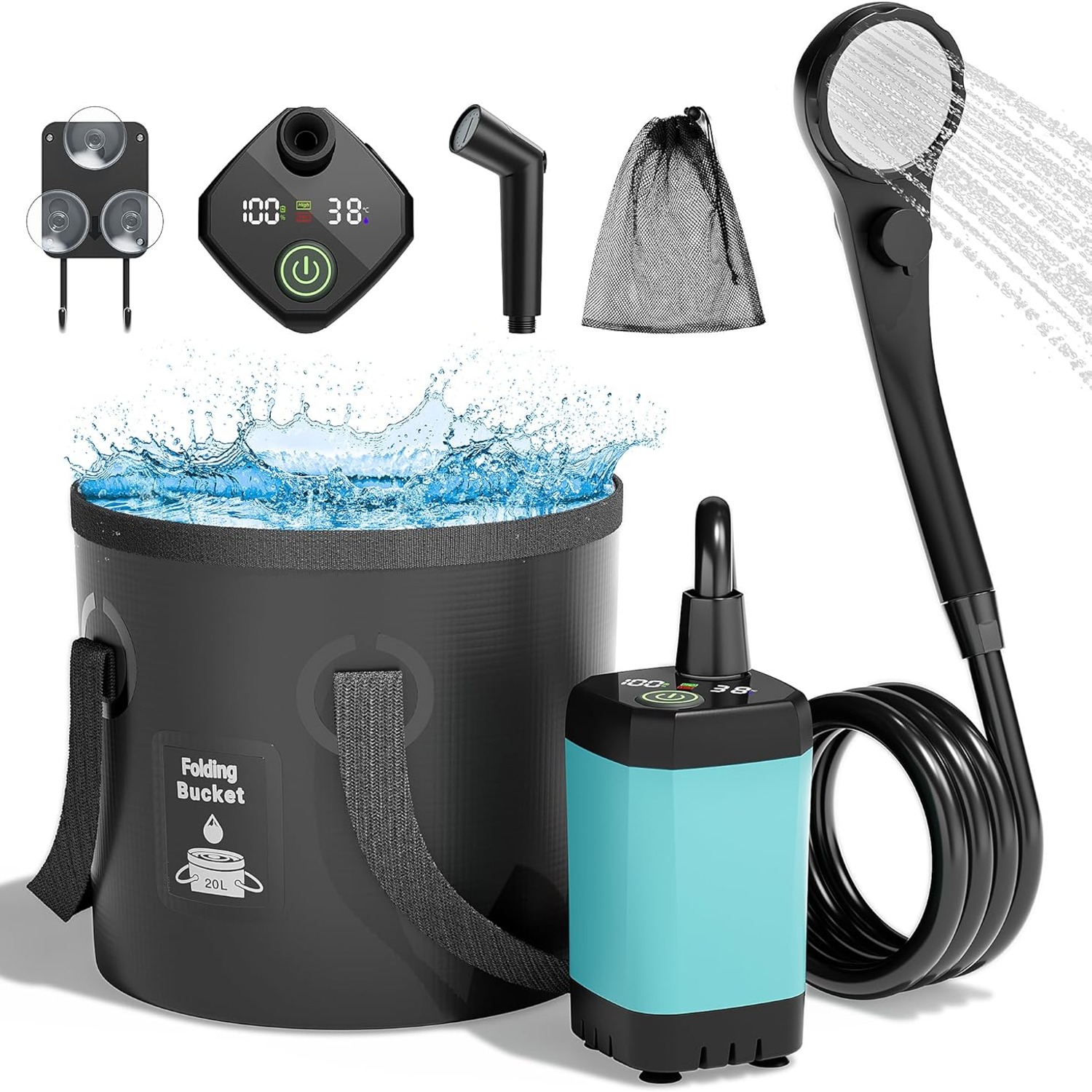
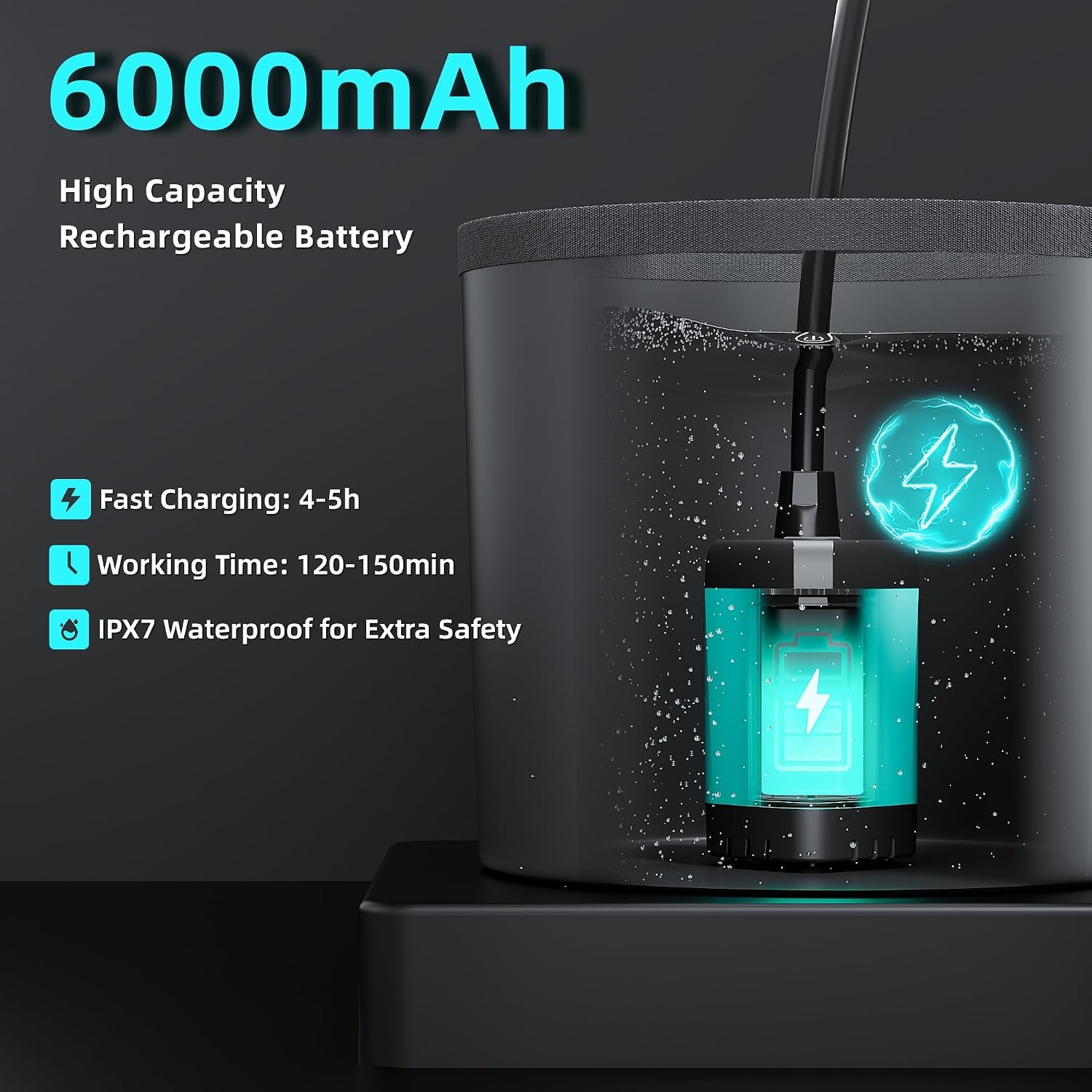
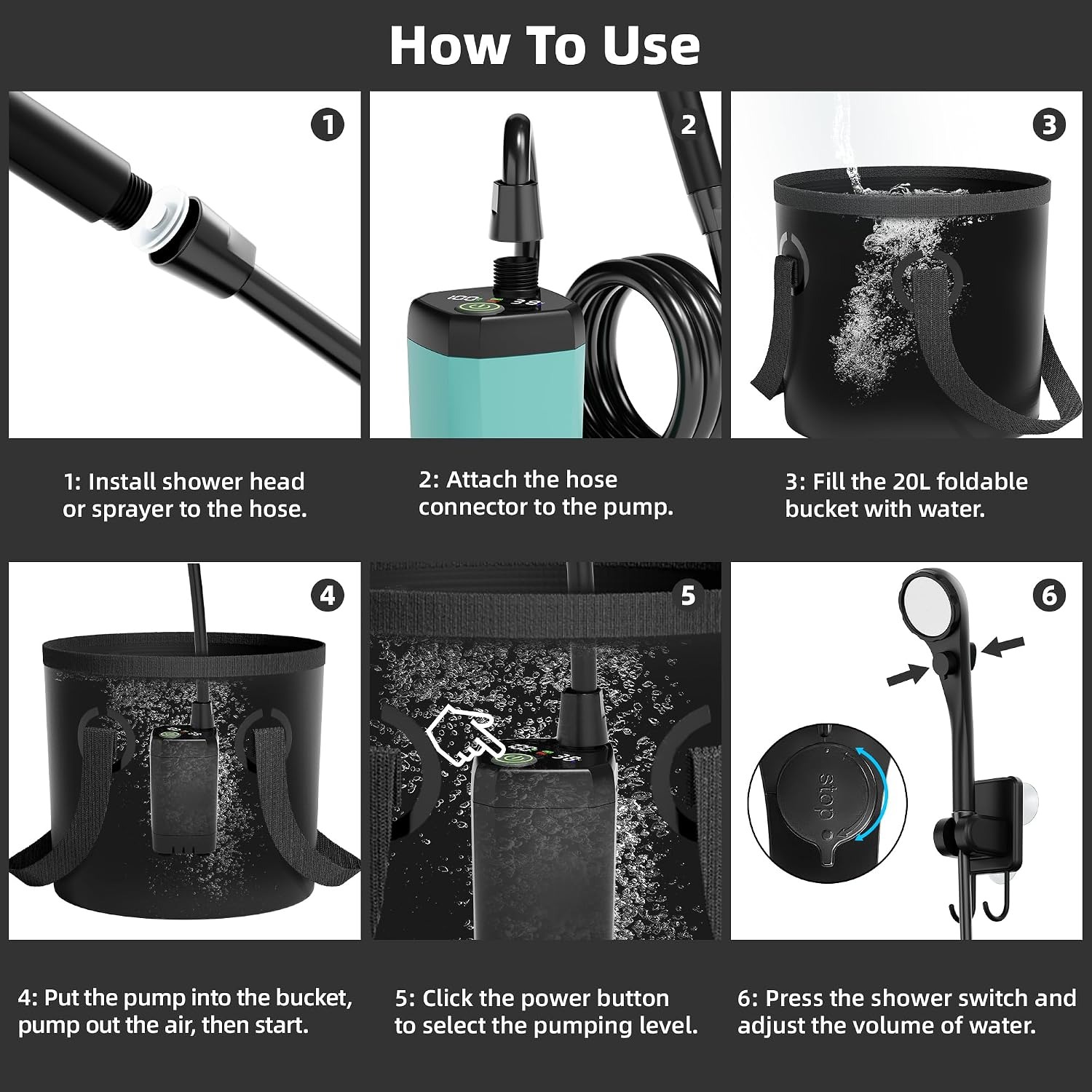
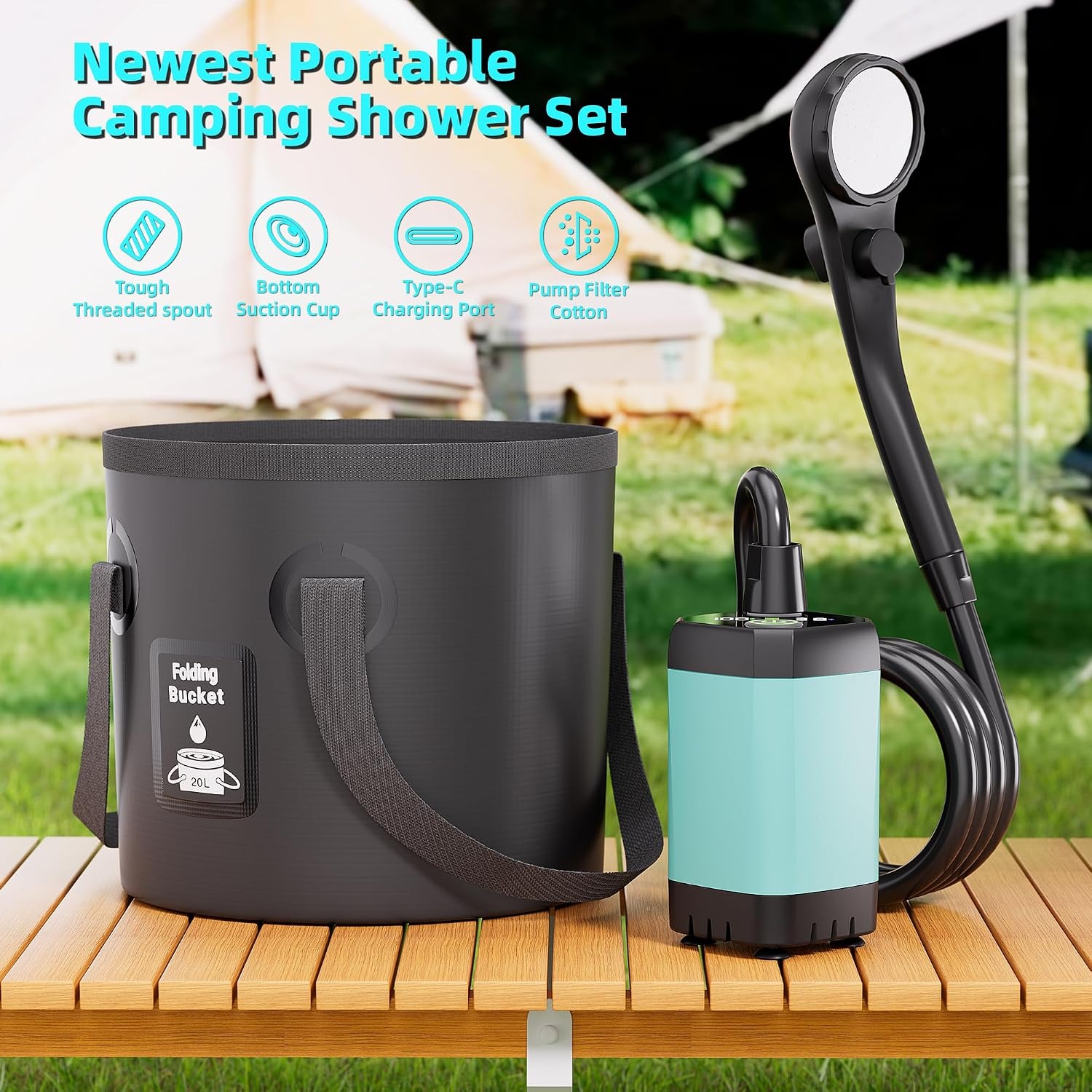
A small submersible pump sits in your water. It has suction feet on the base so it grips the bottom of a bucket instead of floating around and sucking air. Inside is a rechargeable battery and a motor. Press the button and the pump draws water up through a filter, pushes it along a hose and out of the shower head.
Flow here is rated up to 6 L per minute. For context, a domestic shower is often double that. In practice the lower figure is fine, and it is actually an advantage outdoors because it makes a bucket of water last. You are not trying to replicate a hotel bathroom. You are trying to get salt off your skin and soap out of your hair.
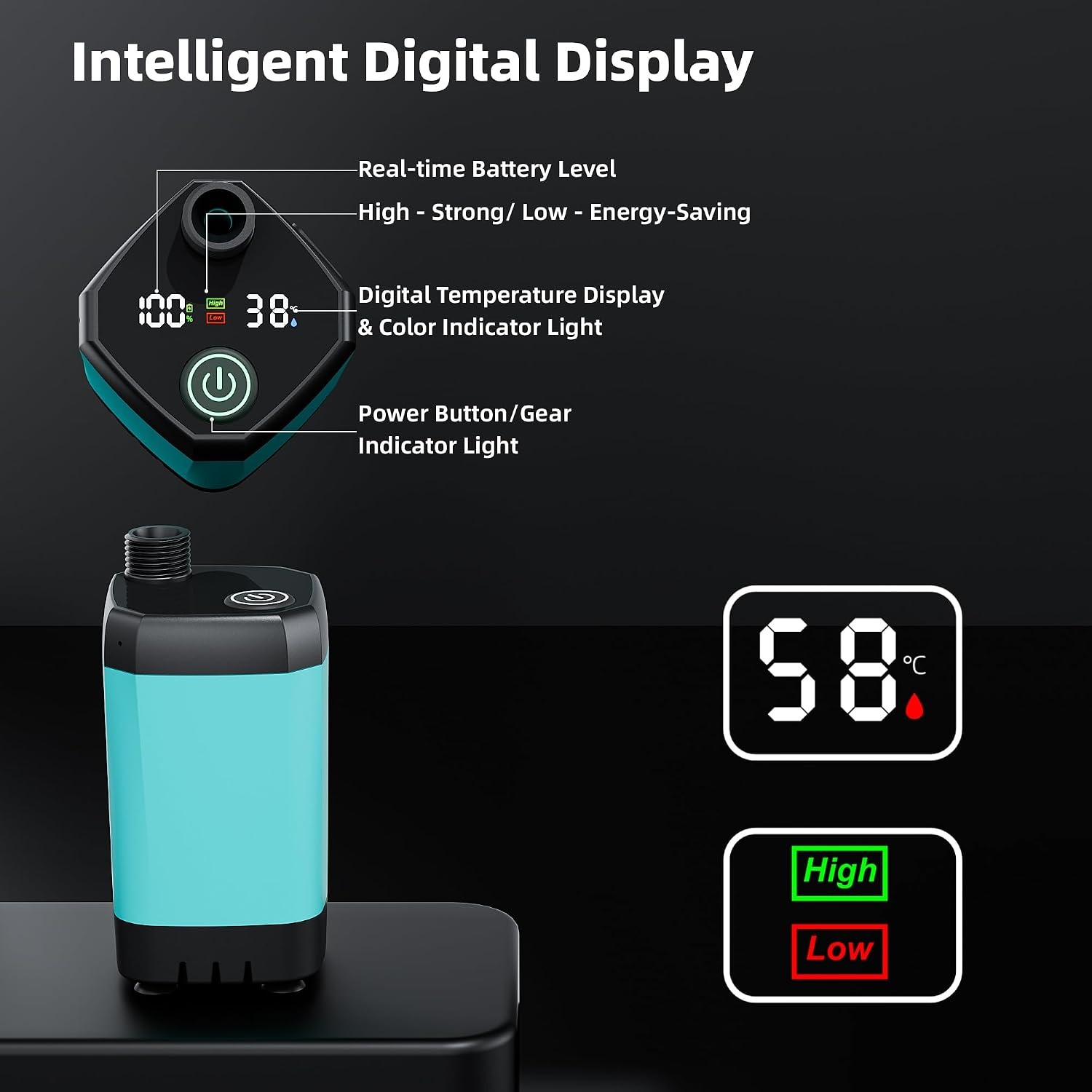
The LED display reports two things, the battery level and the water temperature, with colour indicators so you can read it from a distance. The temperature reading matters more than it sounds, because it stops you from standing under a bucket that has been sitting in shade all morning. Be clear on one point though. The display reads temperature, it does not change it. There is no heater in this unit.
Warming the water without a heater
Since there is no heating function, warmth comes from how you prepare the water. Two methods cover almost every situation.
The first is solar. Fill the bucket in the morning and leave it in full sun. By mid afternoon on a warm day it will be genuinely pleasant. A dark towel draped over the bucket helps it absorb more heat.
The second is mixing. Boil a kettle or heat water on a camp stove, then pour it into cold water in the bucket and stir. Watch the display as you go and stop when it looks right. Always test the flow with your hand before it hits your back, because a temperature reading at the pump is not a substitute for common sense.
Who this suits
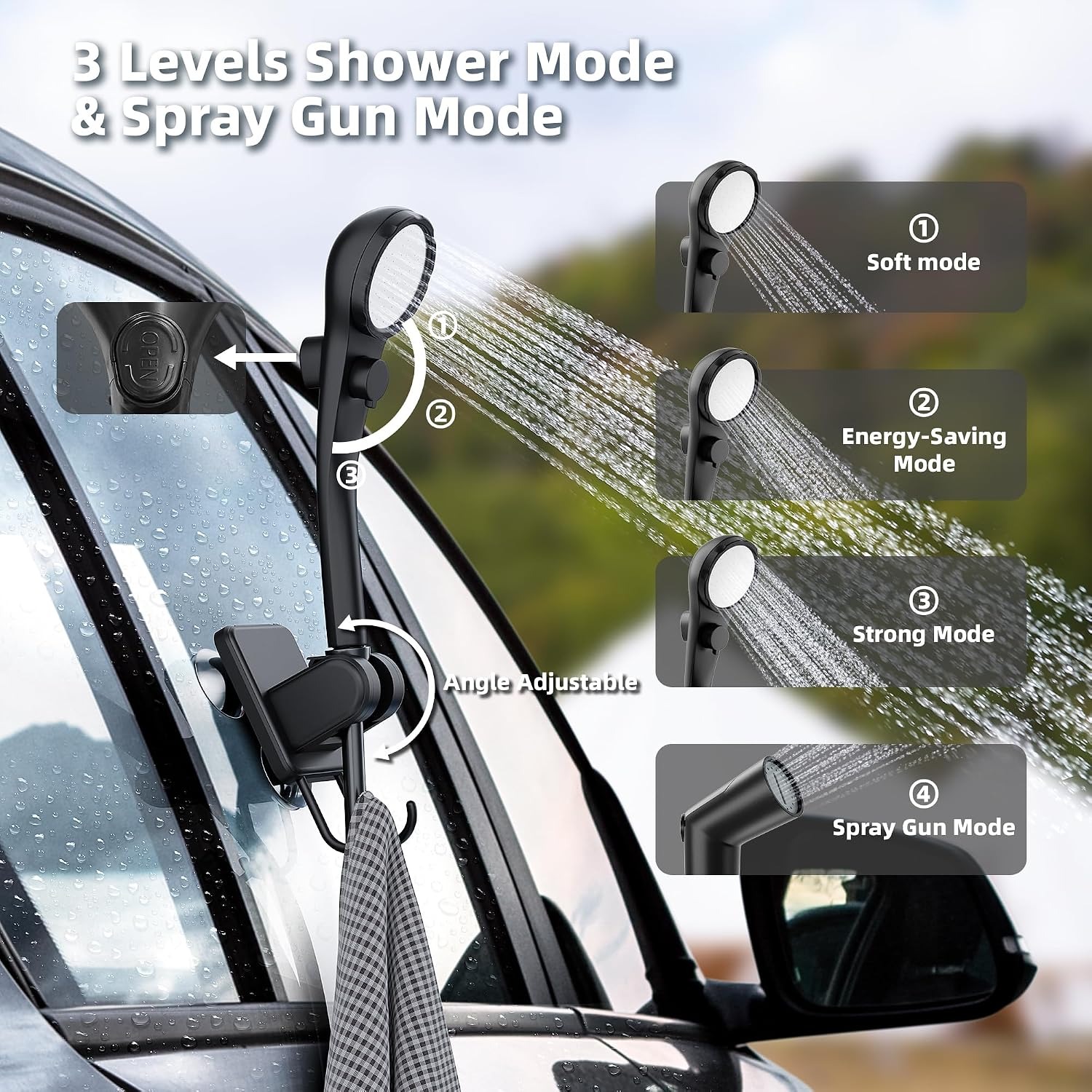
Campers and van travellers get the most from it, especially anyone without a built-in shower. You can set it up next to the vehicle, hang the head on a roof rack with the 3-in-1 hook, and have a proper standing shower in a minute.
Beach and surf people use it in car parks to get sand off feet, boards and wetsuits before the drive home. Dog owners use it more than almost anyone, because a gentle shower mode and a 2 m hose make washing a muddy dog far easier than wrestling one into a bathtub.
It also covers a long tail of smaller jobs. Rinsing fishing gear. Washing a bike after a wet ride. Hosing down a kayak. Cleaning muddy boots before they go in the boot. Watering plants where there is no tap. The spray gun head exists for exactly these tasks, and it swaps in for the shower head in seconds.
What to look at when you are comparing kits
Does it include a water container? A lot of pumps are sold on their own, which means you still need something to pump from. This kit includes a 5 gallon folding bucket with a PVC base, so it stands up on its own when full and packs flat when empty. That saves you buying one separately and solves the storage question at the same time.
How does it charge? Type-C is the format you want, because it uses the cable you already carry. Being able to top up from a phone adapter, power bank, laptop or car USB means you are never hunting for a proprietary charger in a drawer.
Is there a filter? Sediment is the enemy of small pumps and spray nozzles. A PP filter at the inlet catches dirt before it reaches the head, which keeps the spray pattern even and the pump happier over time.
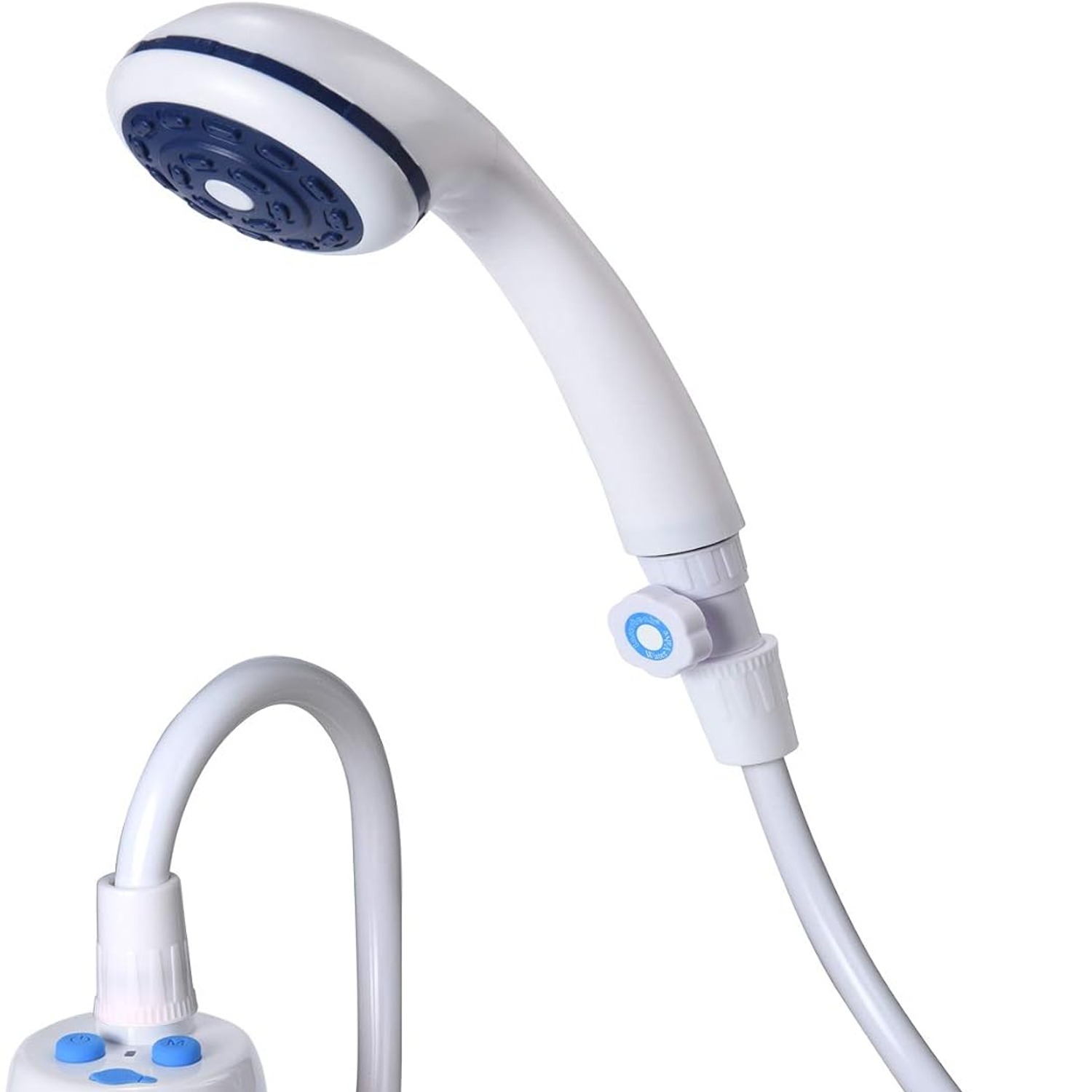
Does the head have real adjustment? Five settings sounds like marketing until you use them. Three shower patterns cover a soft rinse through to a stronger wash, the jet is for stubborn mud, and the flow control at the grip lets you dial everything back to stretch a bucket.
How does it mount? A shower you have to hold is only half a shower. The 3-in-1 hook gives you several ways to hang the head, and a suction option handles smooth surfaces like caravan panels.
How does it pack? The included mesh bag matters more than it should. Loose hoses and heads rolling around a boot get lost and damaged. Everything in one bag means everything arrives at the next campsite.
Getting the best out of it
Charge the pump fully before you leave home, and bring a power bank if you will be off-grid for more than a couple of days. Runtime depends almost entirely on the flow setting you choose, so running at a moderate setting rather than full tilt stretches both the battery and the water.
Shower in stages. Wet down, turn the pump off, soap up, turn it back on to rinse. This is the single biggest factor in how far 20 litres goes. Done properly, one bucket can cover two adults.
Set the bucket on level ground and make sure the pump is sitting flat on the base. If the pump tips or the water drops below the inlet it will start pulling air, and the flow will stutter.
Care, and the one thing people forget
Salt water is what kills outdoor pumps. Not sand, not rough handling, salt. After any beach or boat use, run a bucket of clean fresh water through the pump and hose until it runs clear. It takes a minute and it is the difference between a kit that lasts seasons and one that seizes up by the second summer.
Dry everything before packing. Water left in a coiled hose in a hot boot turns unpleasant fast. Shake the hose out, let the heads drain, wipe the pump and stand the bucket open until it is dry inside.
Check the inlet filter when flow starts to feel weak. Nine times out of ten that is the cause, and rinsing it under a tap fixes it.
Store the kit somewhere cool and away from direct sun. UV is hard on plastics and hose material over time. Top the battery up every few months during the off season rather than leaving it flat all winter.
The short version
If you spend time at beaches, campsites, trailheads or boat ramps and you want to arrive home clean, a portable shower kit is one of the better pieces of gear you can own. This one covers the whole setup in a single box, pump, hose, two heads, hook, mesh bag and a folding 5 gallon bucket.
The pump runs on a rechargeable battery with Type-C charging, pushes up to 6 L per minute and shows you battery level and water temperature on an LED display. Remember that the display reads temperature rather than creating it. Warm water comes from the sun or the kettle.
Pack it in the car, forget it is there, and you will be glad of it the first time you finish a long day covered in sand.