
The complete guide
How to Choose a Travel Sleeping Bag That You Will Actually Carry
The problem with other people's bedding
Travel throws you into a lot of beds that are not yours. Hostel bunks, a cousin's sofa, a guesthouse in a hill town, a sleeper train berth, a festival tent at two in the morning. Most of them are fine. Some of them make you lie very still and keep your socks on.
A travel sleeping bag fixes this without much drama. You unroll your own layer, get in, and the bed underneath becomes a mattress rather than a mystery. That is really the whole pitch. It is not about warmth so much as about having something familiar and clean between you and whatever is there.
The second problem it solves is bulk. A full camping sleeping bag is a serious object. It fills a backpack, it weighs a couple of kilos, and it is absurd for a week of hostels in July. What a lot of travellers actually need is something closer to bedding than to equipment. Light, soft, small, washable.
What this one is
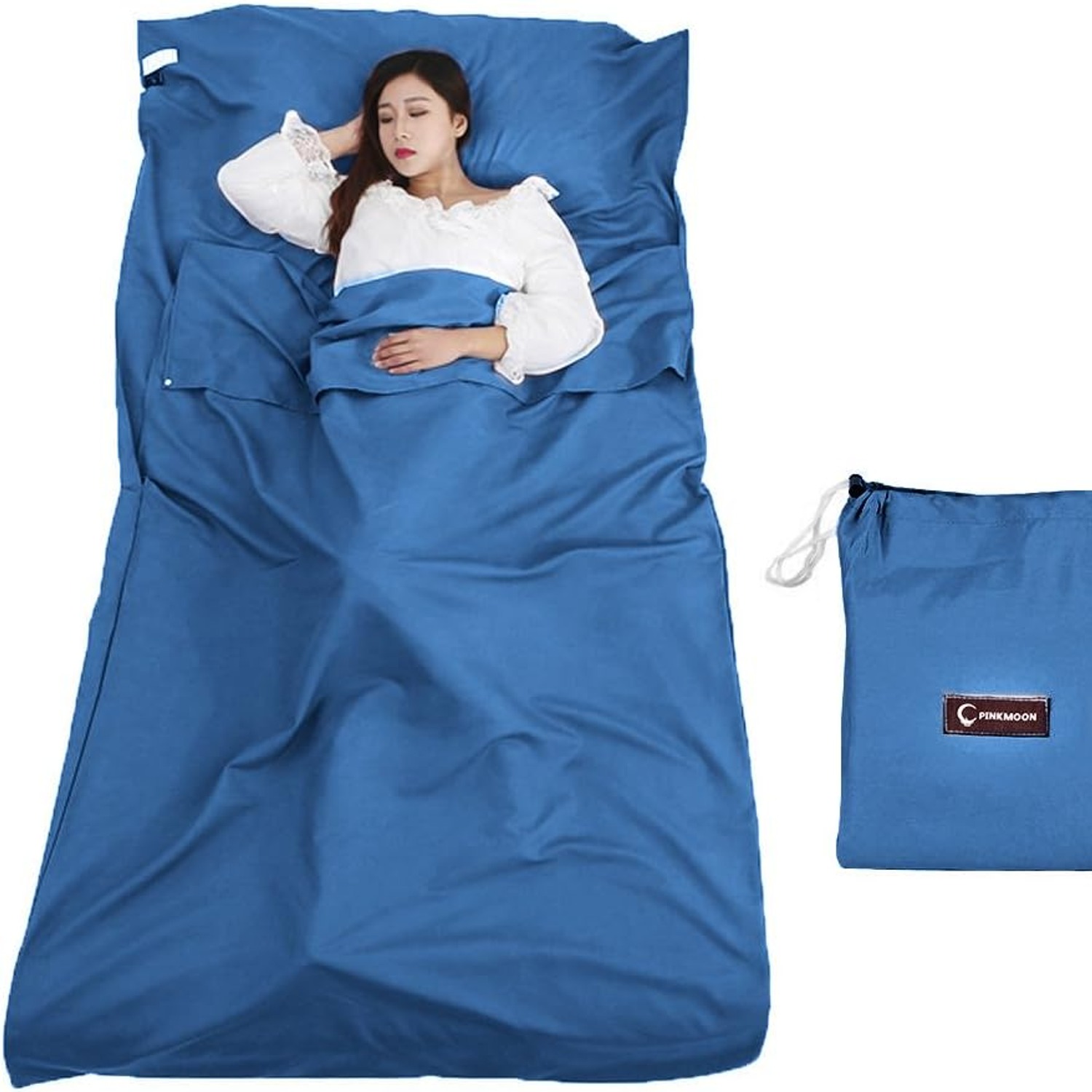
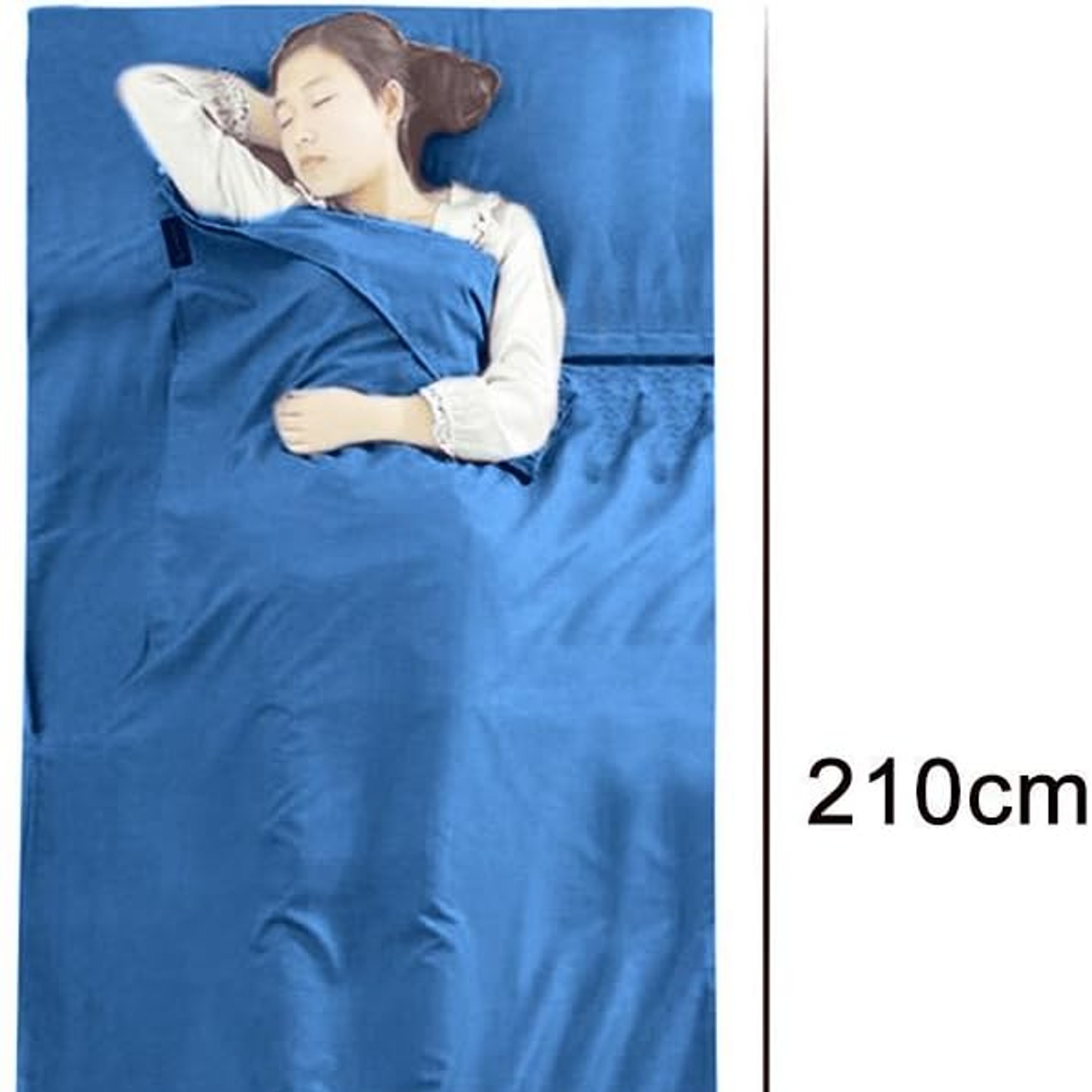
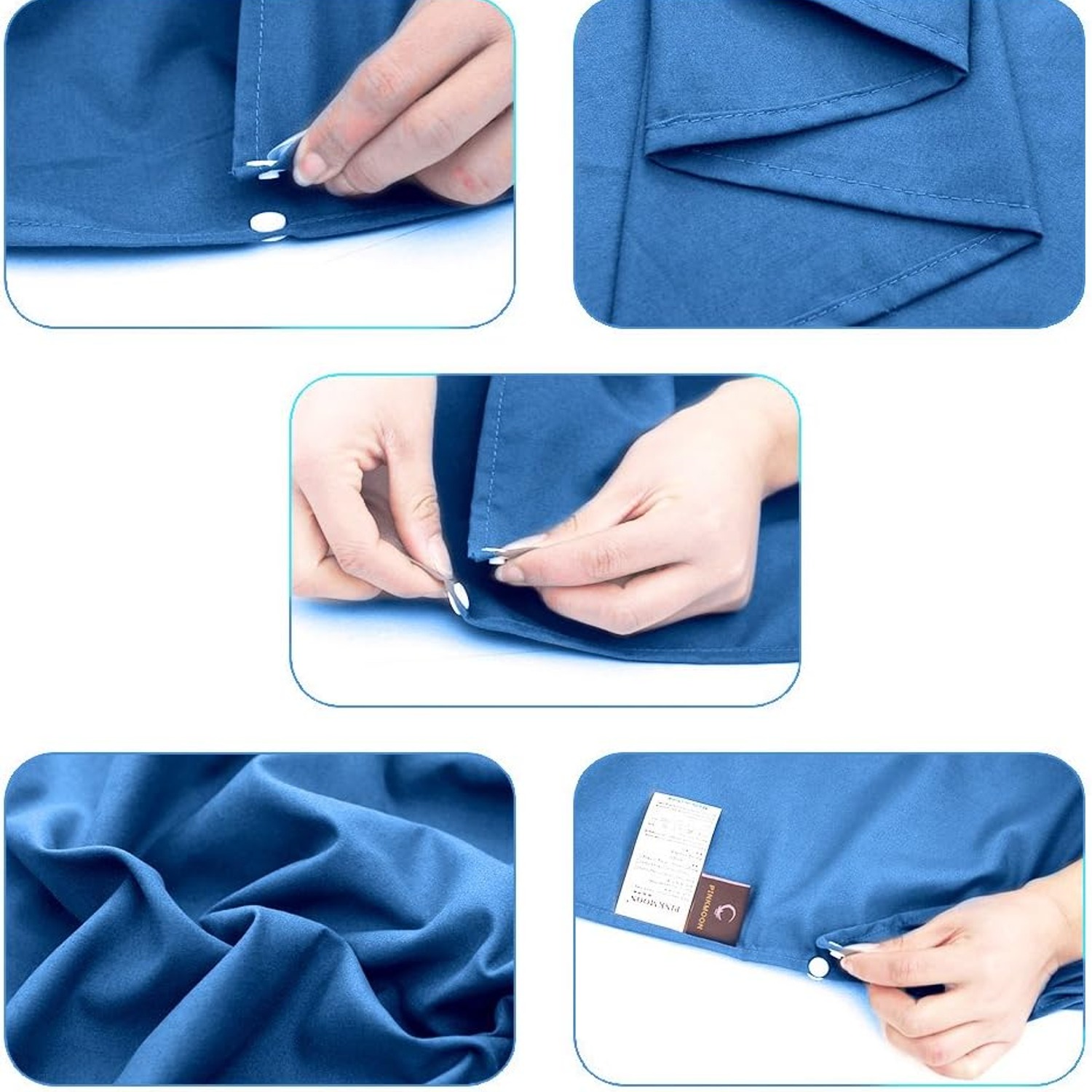
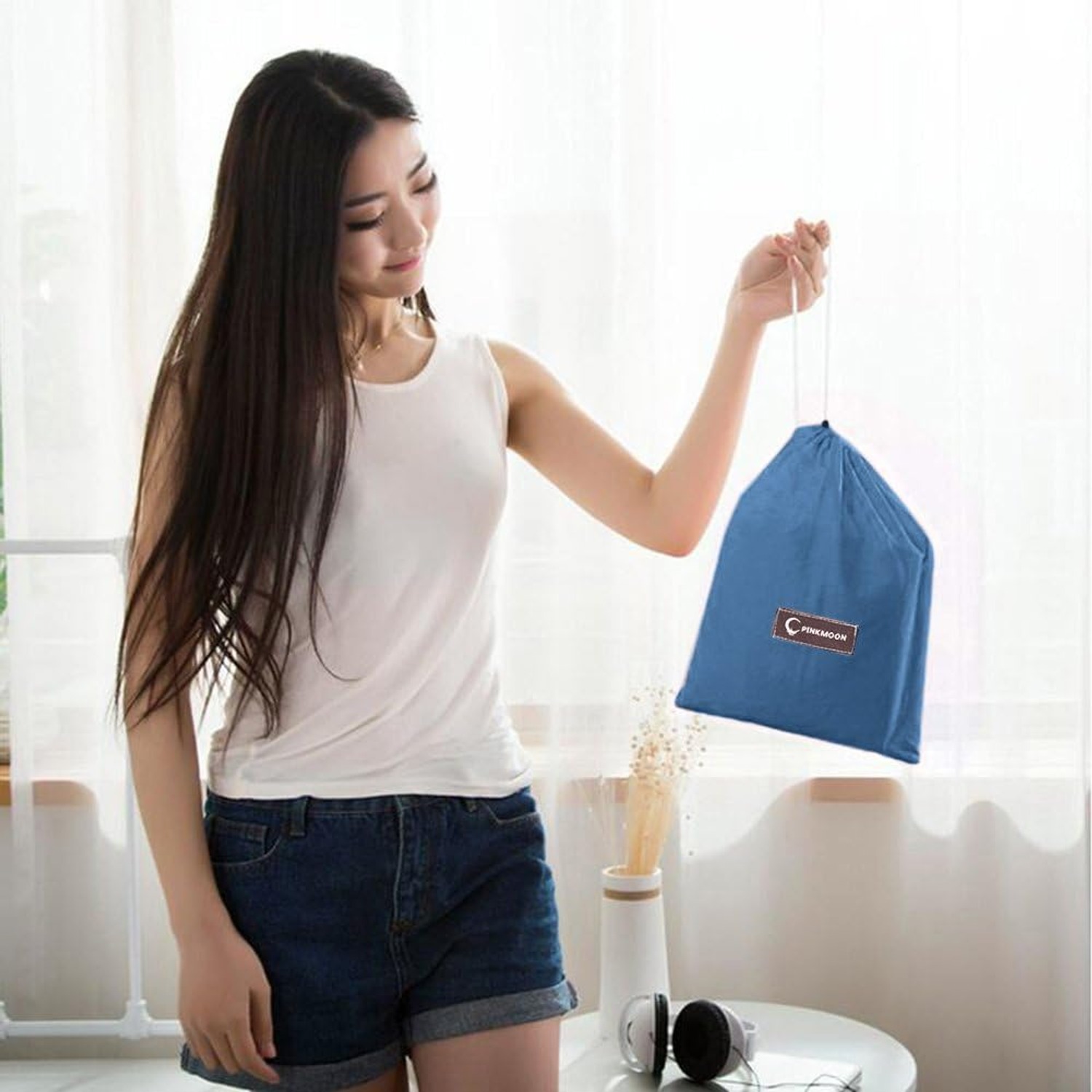
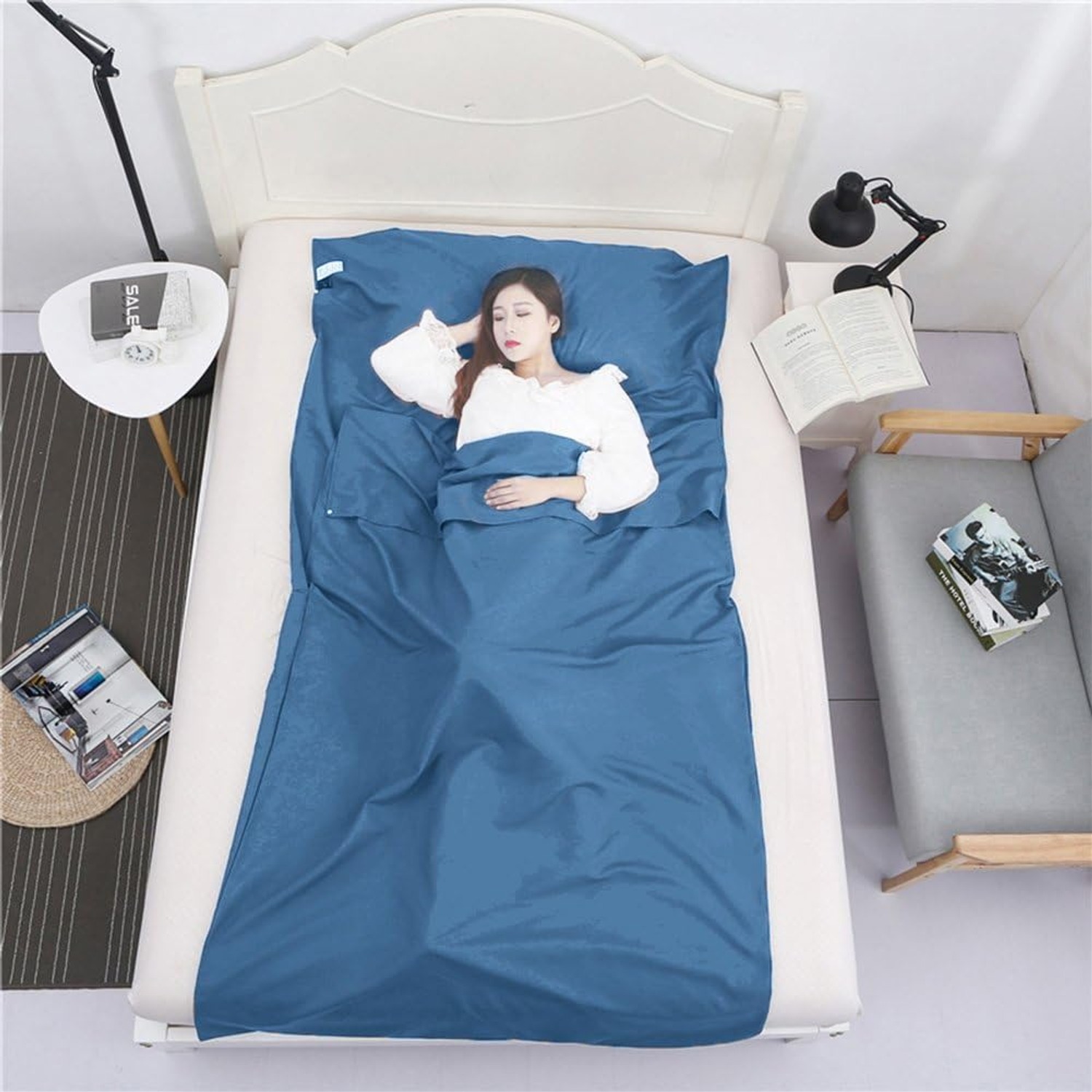
This is a 100% microfibre sleeping bag, 210 cm long and 115 cm wide, weighing 500 g. It comes with a carry bag that brings it down to roughly 20 x 20 cm. The closure is a zip, with a button detail at the top. The shape is rectangular rather than tapered. The colour is Mysterious Blue.
Microfibre is a finely woven synthetic. It feels smooth rather than papery, it dries much faster than cotton, and it does not hold onto much weight when damp. That combination is why it shows up so often in travel bedding. The supplier also lists polyester as the fill material type, and the product is described as thin, so think of it as a light bag rather than an insulated one.
The listing includes one spec row giving a temperature rating below minus five degrees Celsius. We are repeating it because it is in the source data, but we would not plan a cold trip around it. A 500 g microfibre bag is a mild-weather and indoor item. If you want a cold rating you can trust, buy something built and tested for that, and use this as a liner inside it.
How it works in practice
There are four or five ways people end up using a bag like this.
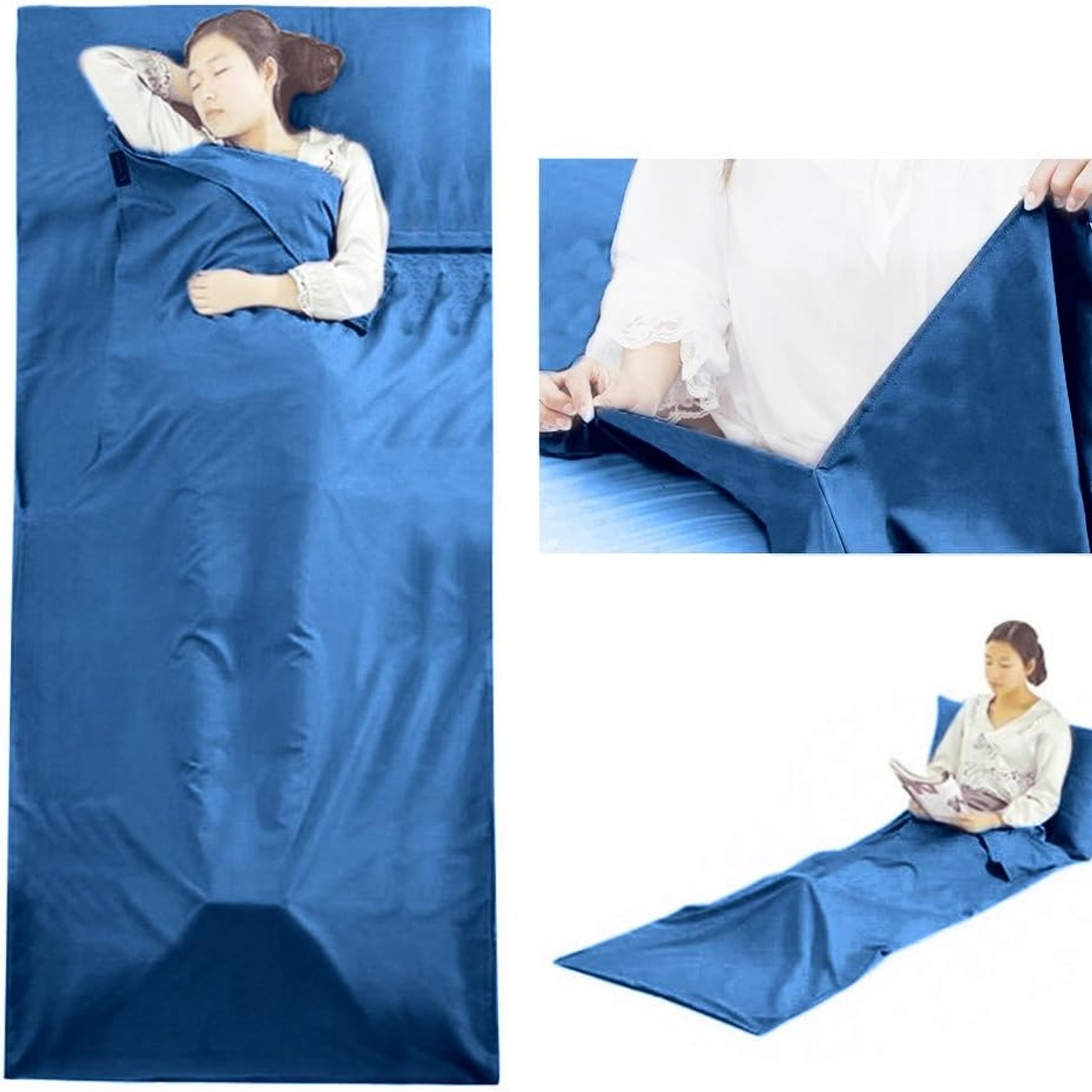
Zipped up as a sleeping bag, on a warm night, in a tent or a hut. Opened flat as a quilt over a provided bed when the room is stuffy. Used as a liner inside a heavier sleeping bag when nights get cold, which also keeps the outer bag cleaner between washes. Spread as a sheet on a questionable mattress. And, honestly, as a plane blanket, because airline blankets are not generous.
The full-length zip is what makes that flexibility possible. A bag that only opens part way locks you into one use. With a zip that runs the length, you can ventilate your feet, half-open the side, or unzip the lot and lay it out. The button at the closure holds things in place when you want it shut.
Who it suits
Backpackers and hostel travellers get the most out of it. If your trip involves a string of shared dorms, this is the single most useful 500 g you can carry.
Summer campers who do not want a full winter bag will like the room and the weight. At 115 cm wide it does not pin your arms, which is the main complaint people have about mummy bags.
Festival-goers, people who sleep on friends' floors, students moving between places, and anyone who travels by bus or train overnight all find a use for it. Parents sometimes buy one for a teenager heading off on a school trip or a first solo journey, since the youth age range in the listing fits that group well.
It suits less well if you are planning genuine cold-weather camping, if you are taller than about 180 cm and want full coverage, or if you specifically want natural fibres against your skin. Those are fair reasons to look elsewhere.
How to choose
Start with weight and packed size, because that decides whether you actually bring it. A bag that lives at home because it is too bulky has no value at all. Half a kilo and a 20 cm cube is the level where most people stop thinking about it and just pack it.
Then check the length against your height. The maximum height recommendation here is 180 cm. Sleeping bags always feel shorter than the number suggests, because you need slack at the shoulders and a bit of give at the feet. If you are close to the limit, size up rather than hoping.
Next, think about shape. Rectangular bags give you room to move and open flat. Tapered mummy bags hold heat better but feel restrictive. If you are a side sleeper who shifts around all night, the extra width is worth more to you than a few degrees of efficiency.
Then look at the fabric honestly. Microfibre is light, soft, quick drying and easy to wash. Cotton feels cooler and more breathable but is heavier and slower to dry. Silk is the lightest and most packable option and also the most expensive and most delicate. For most trips, the best lightweight sleeping bag choice is a synthetic, simply because you can wash it in a sink and have it dry by morning.
Finally, check the closure. A full-length zip is more useful than a partial one. If you are buying as a gift and cannot ask questions, a zipped rectangular bag is the safest bet, because it covers the most situations.
Looking after it
Wash it on a cool, gentle cycle with mild detergent and colours that match. Skip bleach, and skip fabric softener too, since softener coats fine synthetic fibres and takes away some of the smoothness you paid for.
Dry it in the shade on a line, or tumble dry on low if you are in a hurry. Microfibre does not like high heat, so keep the setting gentle.
The one habit worth building is this: never put the bag back in its carry sack damp. A folded damp bag in a dark pack is how a good piece of kit starts smelling bad. Air it out properly, even if it means hanging it over a hostel chair for a few hours.
At home, store it loose rather than squashed. Months of compression flattens fabric. A shelf or a pillowcase is enough. Compress it only when you are packing to leave.
If it picks up a stain on the road, spot clean with a little mild soap and cold water rather than scrubbing hard. Microfibre responds better to patience than pressure.
A note on expectations
It helps to be clear with yourself about what you are buying. This is travel bedding that happens to be shaped like a sleeping bag. It gives you a clean, soft, familiar layer wherever you land, and it does that for 500 g and very little space in your pack.
What it is not is a piece of cold-weather equipment. If your trip involves frost, buy a proper insulated bag and bring this as a liner. Used that way it does two jobs at once, adding a little comfort and keeping the expensive bag clean, which is a genuinely smart pairing for long trips.
The short version
A 500 g microfibre sleeping bag, 210 x 115 cm, with a zip closure, a button detail and a carry bag that packs it to about 20 x 20 cm. It is roomy, soft, quick to wash and light enough that you will not resent carrying it.
Best for hostels, summer camping, overnight travel, spare rooms and as a liner in colder bags. Not the right tool for winter nights on its own. If that lines up with the way you travel, it is a quiet, useful thing to own.