
The complete guide
How To Choose A Rechargeable Camping Lantern (Buyer's Guide)
The problem with relying on your phone
Most of us discover we need a lantern at the worst possible moment. The power goes out mid-dinner, or you get to the campsite later than planned and the sun has already dropped behind the trees. The instinct is to reach for a phone torch, and for about ninety seconds that works fine. Then you notice the problems. The beam is narrow, so you can see one small circle and nothing else. Anyone holding it blinds everyone they turn towards. And the battery you were saving for the morning drains away while you try to find the tent pegs.
A lantern fixes all of that by doing the opposite. Instead of throwing light forward, it throws light outward in every direction. You can set it down and both hands are free. Nobody gets dazzled. The whole area around it becomes usable, which is the difference between fumbling and just getting on with things.
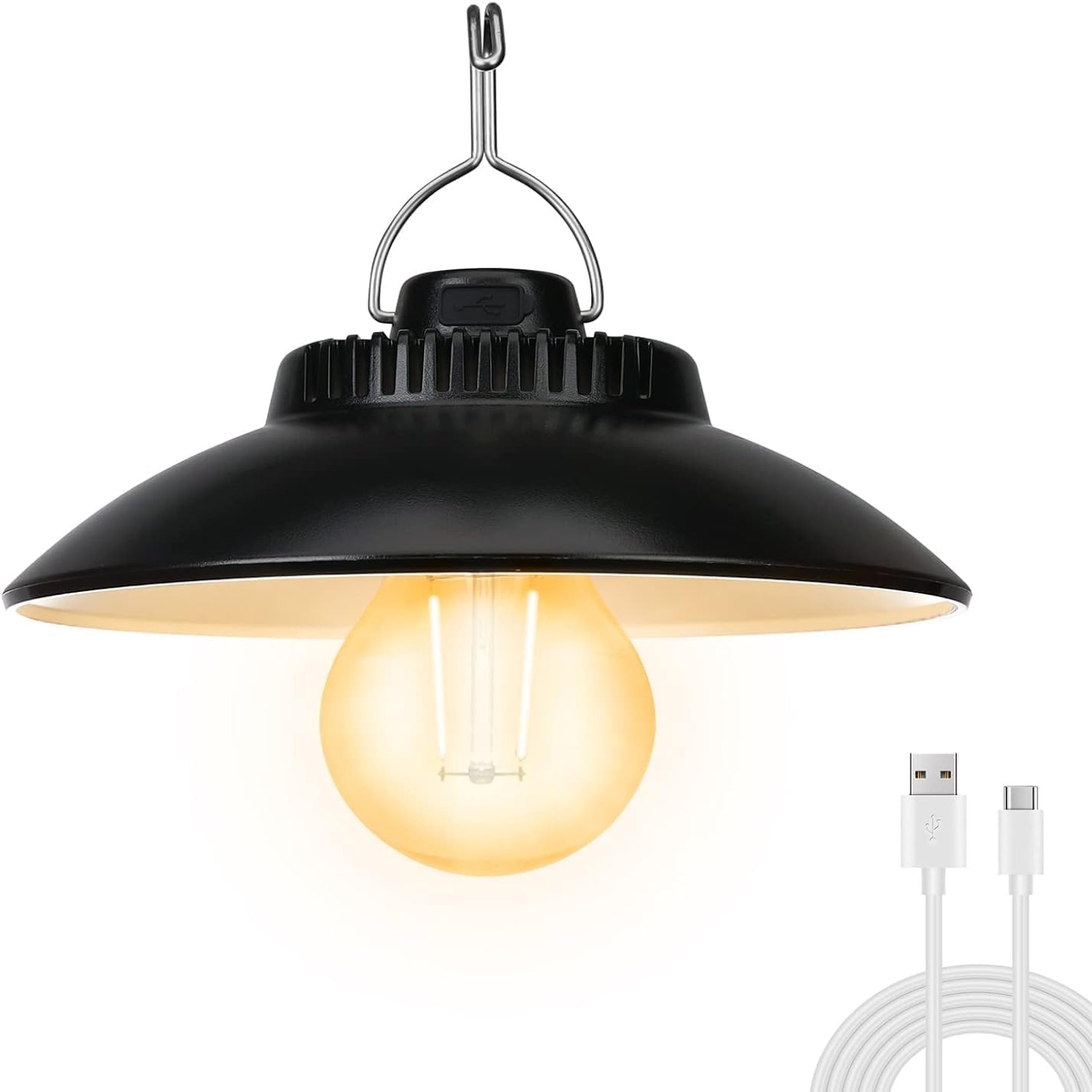
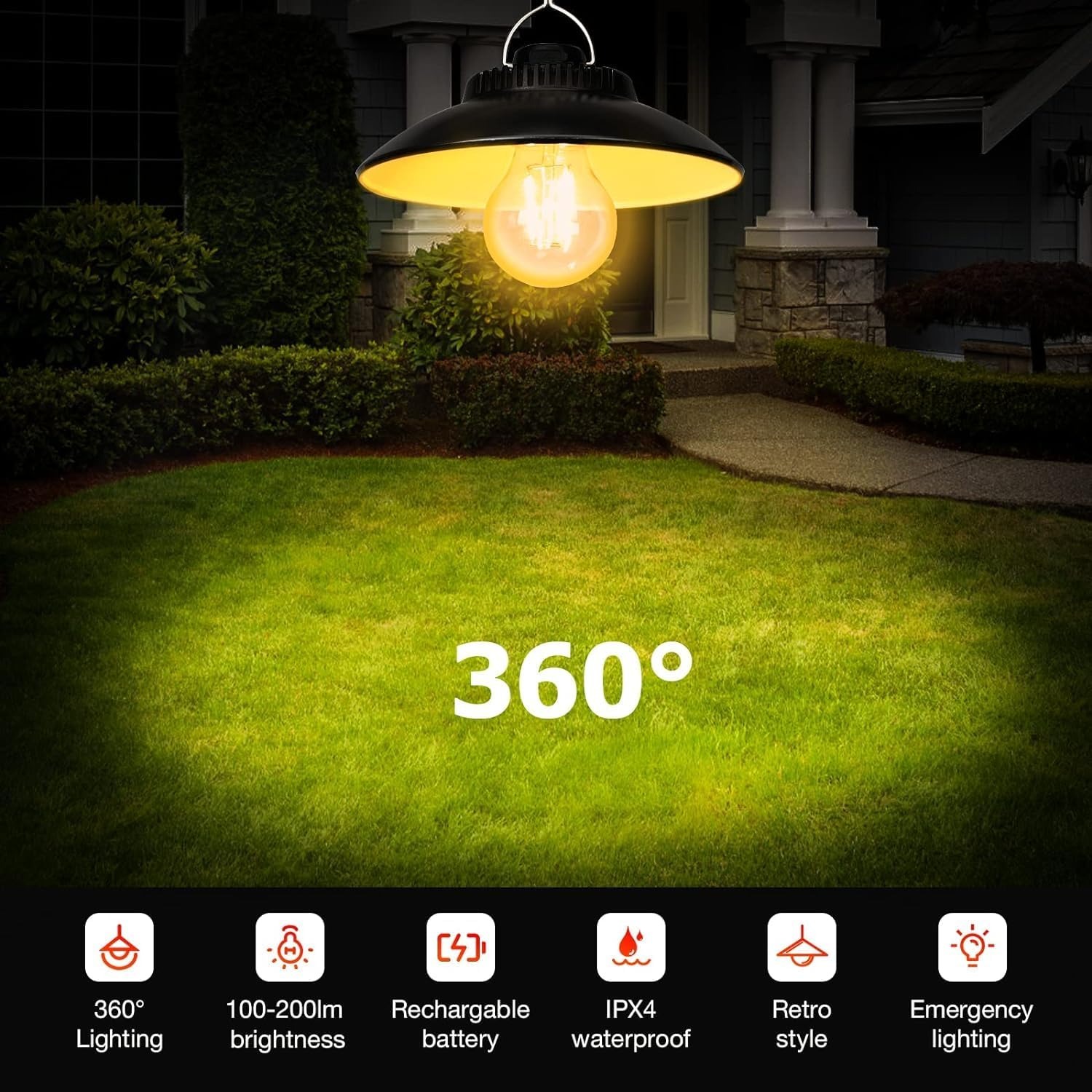
This particular lantern takes the shape of an old storm lamp and puts an LED inside it. The retro look is not just decoration. That shape, a body with a handle over the top, exists because it works. It hangs naturally, it stands flat, and the light sits at a height where it spreads well.
How a rechargeable lantern actually works
The important parts are the light source, the power source and the way you control the two.
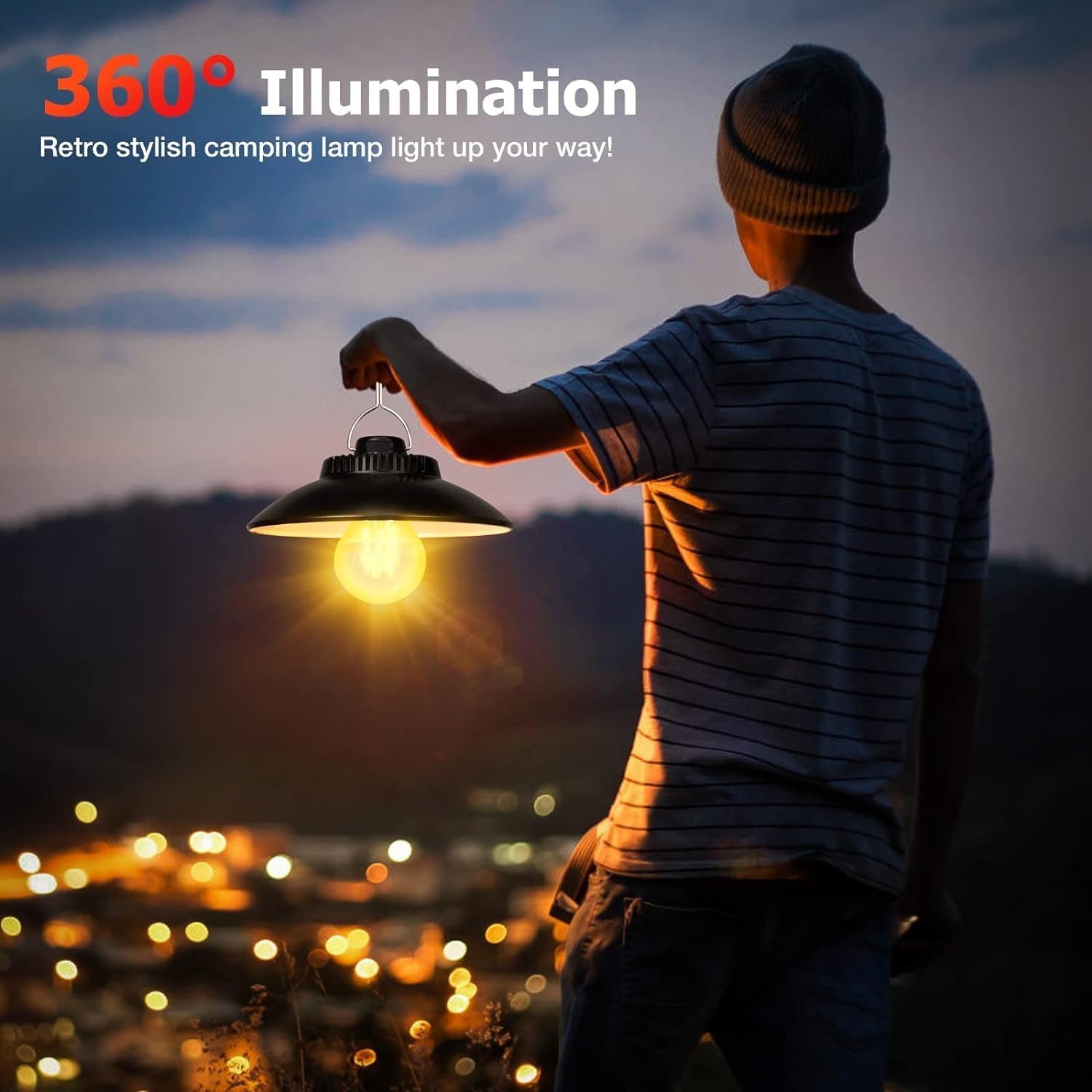
The light source here is a single LED rated at 5 W with a 360 degree beam angle. LEDs are the right choice for this job because they produce very little heat, they survive being knocked about, and they get a lot of light out of a small amount of power. There is no filament to break and no glass to shatter.
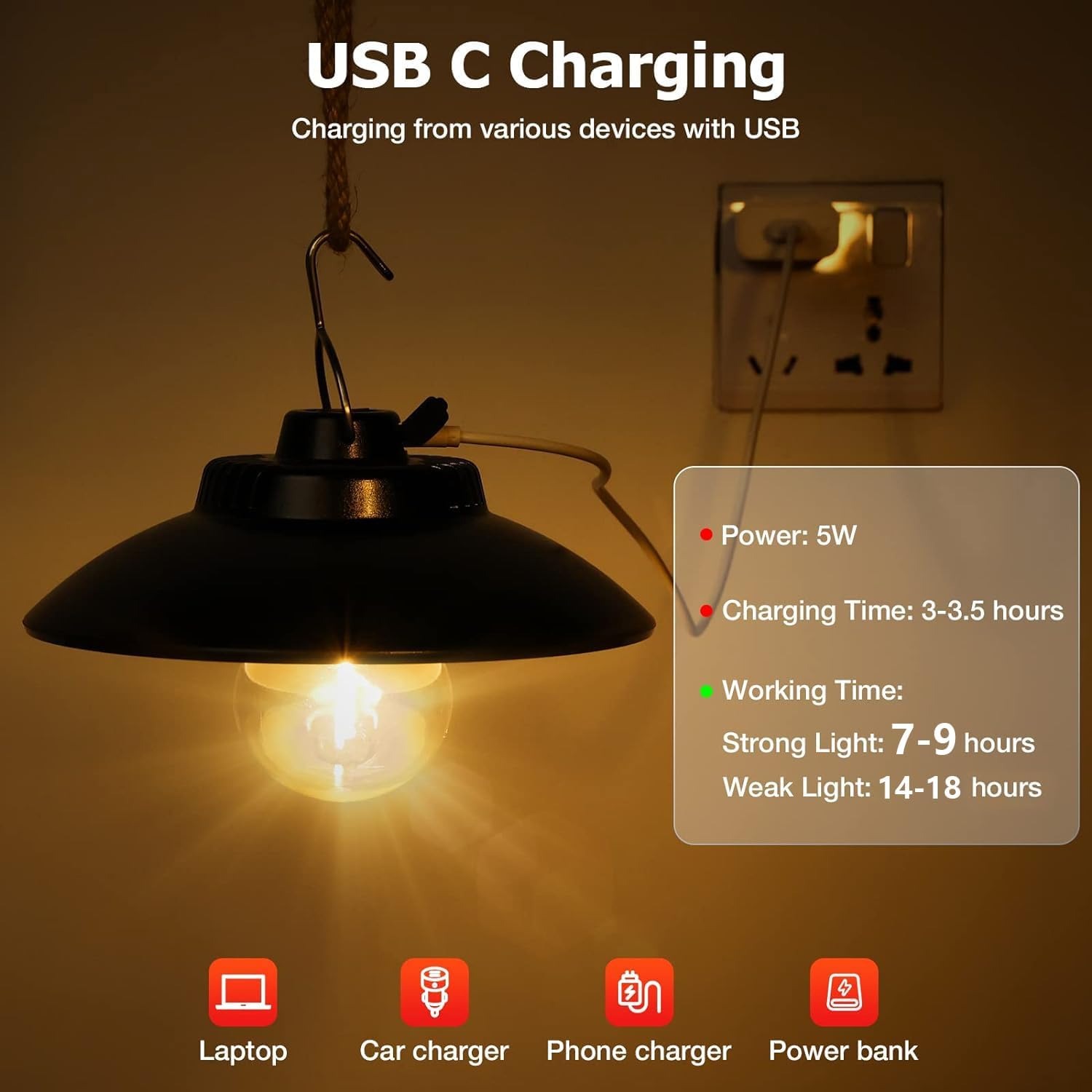
The power comes from a lithium battery built into the body. Because the cell is sealed in, you do not buy or fit batteries. You charge it instead, through a USB-C port rated at 5 V and 1 A. That matches the charger for almost every modern phone, tablet and pair of headphones, which means you are not carrying another odd cable. It also means a power bank or a car socket will do the job when there is no wall outlet anywhere nearby.
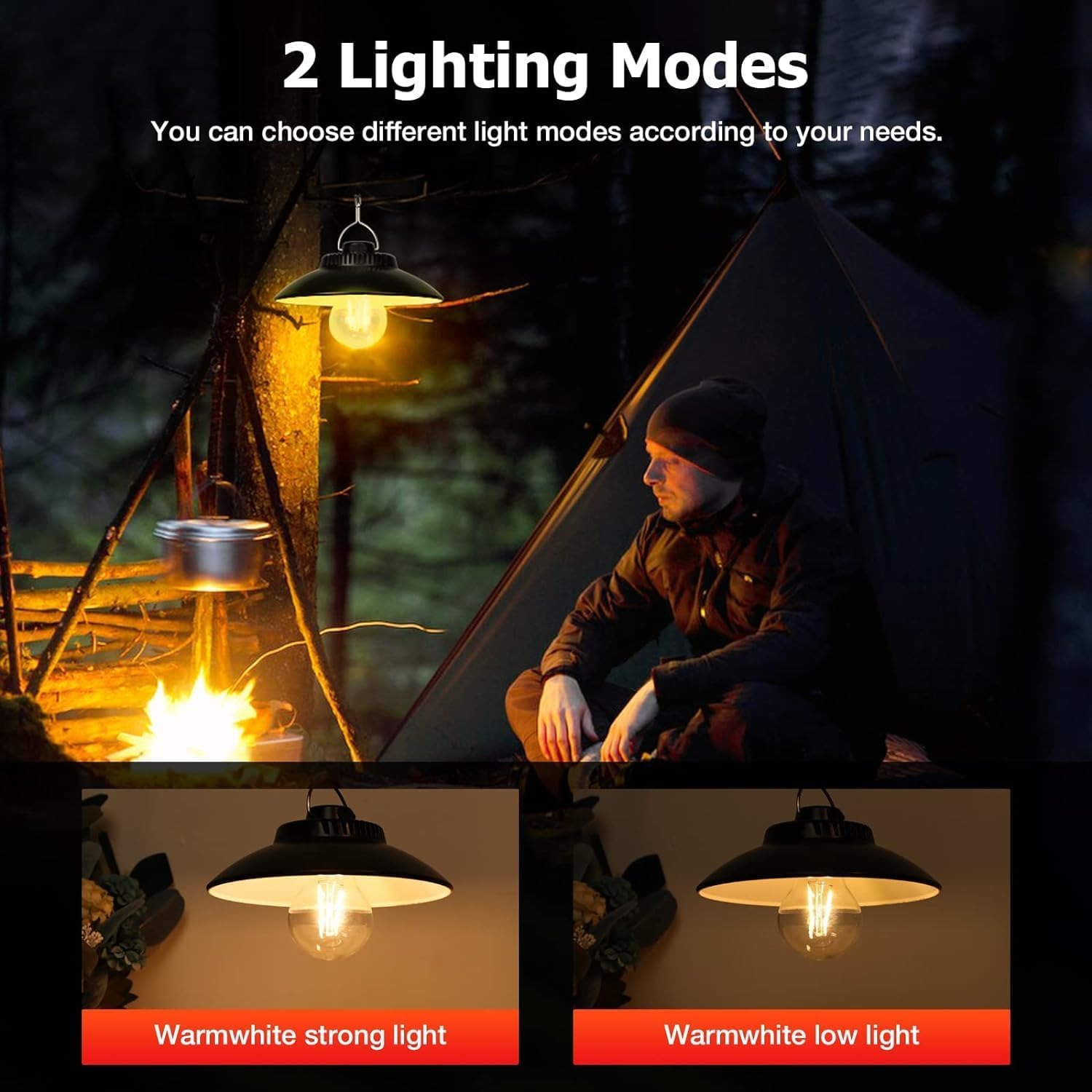
Control is simple. There are two brightness settings, full and reduced. You press to switch between them. There is no app, no menu and nothing to pair. For a light you reach for in the dark, that simplicity is a feature rather than a limitation.
The listed battery life is 7.75 hours. In practice, runtime always moves depending on how you use it. Run it flat out all evening and you will see something close to that figure. Keep it on the lower setting, which is plenty for sitting around a table or reading, and a single charge will stretch much further.
Who it suits
Campers and festival-goers. This is the obvious fit. It is small enough to pack without a second thought, it hangs from a tent loop, and it charges from the same battery pack you brought for your phone. For a two or three night trip you charge it before you leave and barely think about it again.
Caravan and van owners. Built-in van lighting is often harsh, poorly placed or wired to a switch at the wrong end of the vehicle. A portable lantern you can put exactly where you need it solves that. Hook it on a cupboard handle while you cook, then move it to the table when you eat.
Households that lose power. Storms, grid faults and planned outages all happen. A charged lantern in a kitchen drawer or hall cupboard turns a blackout from a scramble into a mild inconvenience. One in the main living space and one upstairs covers most homes.
Anyone who spends evenings outside. Balconies, patios, decking and garden tables rarely have good light. A warm-toned lantern on the table gives you enough to see by without the glare of a security floodlight, and you can carry it in when you are done.
Parents. Kids like lanterns. There is no flame, nothing gets hot, and the low setting makes a gentle night light for a garden tent or a bedroom during a power cut.
What to look at when comparing lanterns
Charging method. Rechargeable beats disposable for most people now. You avoid the cost and the waste, and you avoid the specific misery of discovering the spare AAs are flat. Check the port type. USB-C is the one worth having, because it is what everything else uses.
Brightness levels. More modes are not automatically better. What matters is having at least one bright setting for jobs and one soft setting for sitting around. Two well-chosen levels cover more real situations than six fiddly ones.
Beam spread. A 360 degree output is what makes a lantern a lantern. If a light only shines downward or in one direction, it is a torch in a different case. Check the beam angle before you buy.
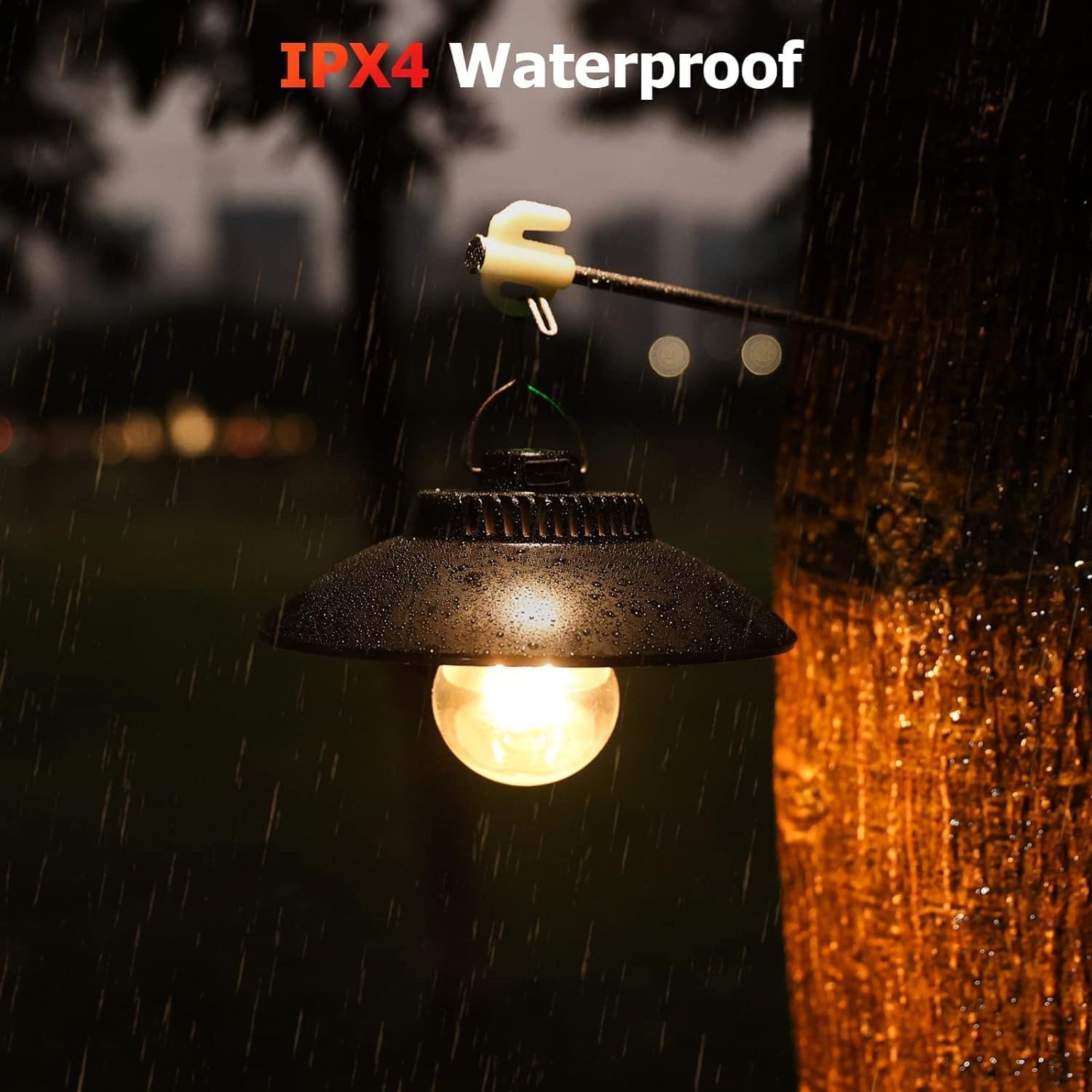
Build and weather rating. ABS plastic with a powder coated finish is a sensible combination for outdoor gear, since it shrugs off knocks and does not corrode. This lantern is listed as water resistant, which covers rain and splashes. If you need something you can drop in a river and fish out again, you want a sealed waterproof rating instead.
Hanging options. A hook sounds minor until you are standing in a tent with nowhere to put a light down. An integrated hook that folds away is far more useful than a loop of cord you have to rig yourself.
Size. Bigger lanterns put out more light but eat space in the car and the cupboard. At 14.5 x 11 x 18.5 cm, this one sits in the middle, large enough to light a table properly and small enough to live in a camping crate all year.
Looking after it
Lithium batteries are easy to keep healthy if you follow a couple of habits. Charge the lantern when the light starts to look weak rather than running it completely flat over and over. Store it with some charge in it, not empty, and give it a top-up every few months if it is sitting unused. Avoid extremes. A hot car boot in summer and a damp shed in winter are both hard on a battery.
Cleaning is quick. Wipe the body with a soft damp cloth and dry it before it goes away. Keep sand, grit and salt out of the charging port, since that is the one part that can be fussy. If you have been on a beach or in dusty conditions, a quick blow and a wipe around the port is worth the ten seconds.
One more habit that pays off. Pick a home for it and always put it back there. The best emergency light in the world is useless if nobody can find it when the lights go out.
The short version
A good rechargeable lantern does one job and does it without fuss. It spreads warm, even light in every direction, it runs for an evening on a charge, it hangs or stands wherever you need it, and it refills from the cable you already own.
This one covers that brief in a compact retro package. A built-in lithium battery, USB-C charging at 5 V and 1 A, two brightness settings, a 360 degree LED, a tough ABS body with a water resistant rating and a fold-out hook. It is the kind of thing that earns its place twice over, once in the camping box and once in the blackout drawer.
Charge it before your next trip, and keep it charged when you get home. That is really the whole trick.