
The complete guide
How to Choose a Soft Sided Cooler Bag That Actually Stays Cold
The problem with most cooler bags
You pack it in the morning. Ice on the bottom, cans on top, a sandwich wedged in the side. By lunchtime the cans are cool rather than cold, the sandwich has gone soft, and there is a thin puddle working its way out of a corner seam.
That is the normal experience with cheap cooler bags, and it comes down to three things. Thin insulation. Too many seams. A liner that is water resistant rather than genuinely leak-proof. Get those three right and a soft cooler stops being a slightly damp inconvenience and starts being the thing you grab without thinking.
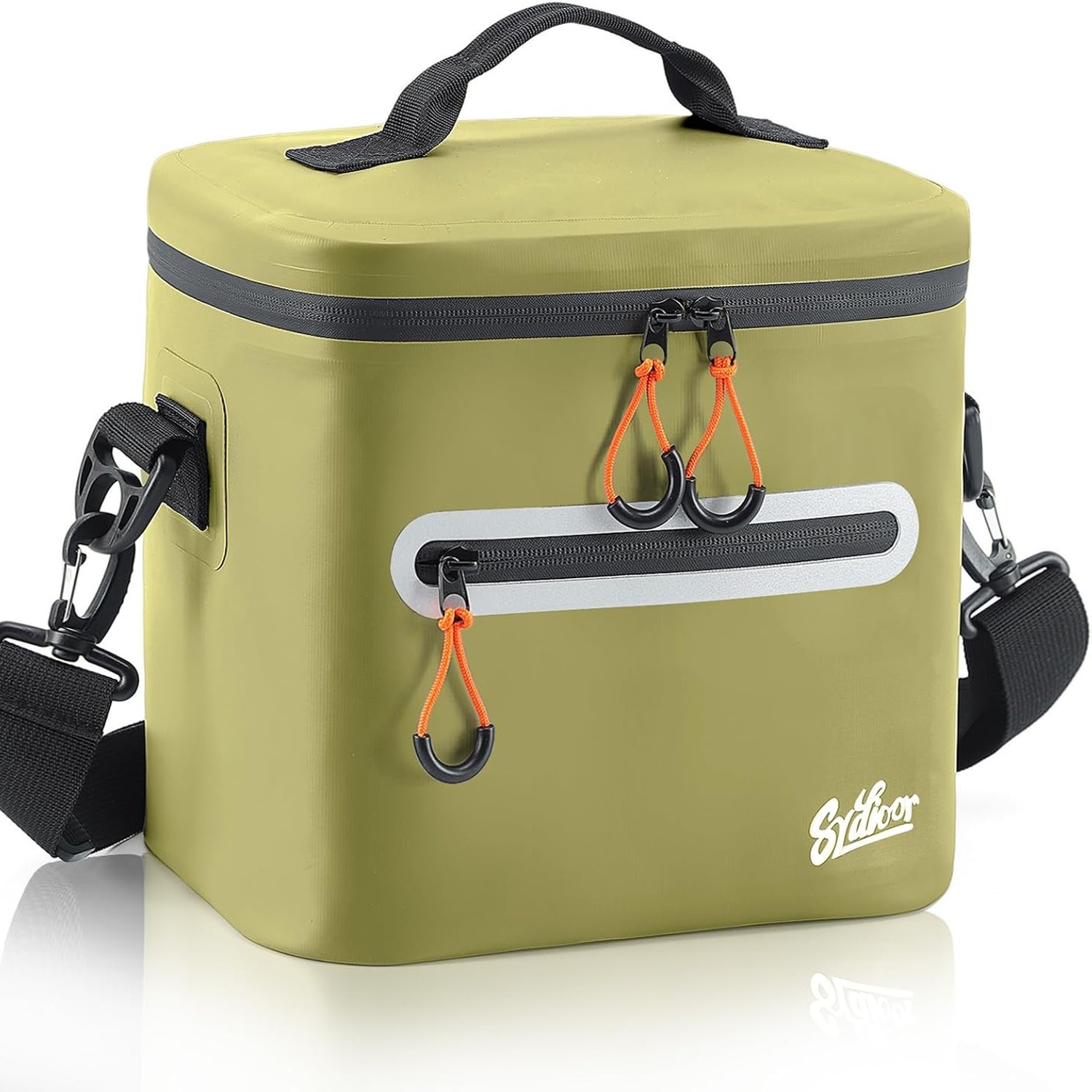
This guide covers what to look for, how the Sydioor soft cooler bag is built, who it suits, and how to get the most out of it. If you are shopping for the best soft cooler bag for day trips, the points below are the ones that matter.
How a soft cooler actually keeps things cold
Insulation does not make things cold. It slows down how fast warmth gets in. That sounds like a technicality, but it changes how you pack.
The cold has to come from somewhere, which means ice or frozen packs. The bag's job is to hold that cold in for as long as possible. Every seam, zip and pocket is a small gap in the barrier, and heat finds gaps.
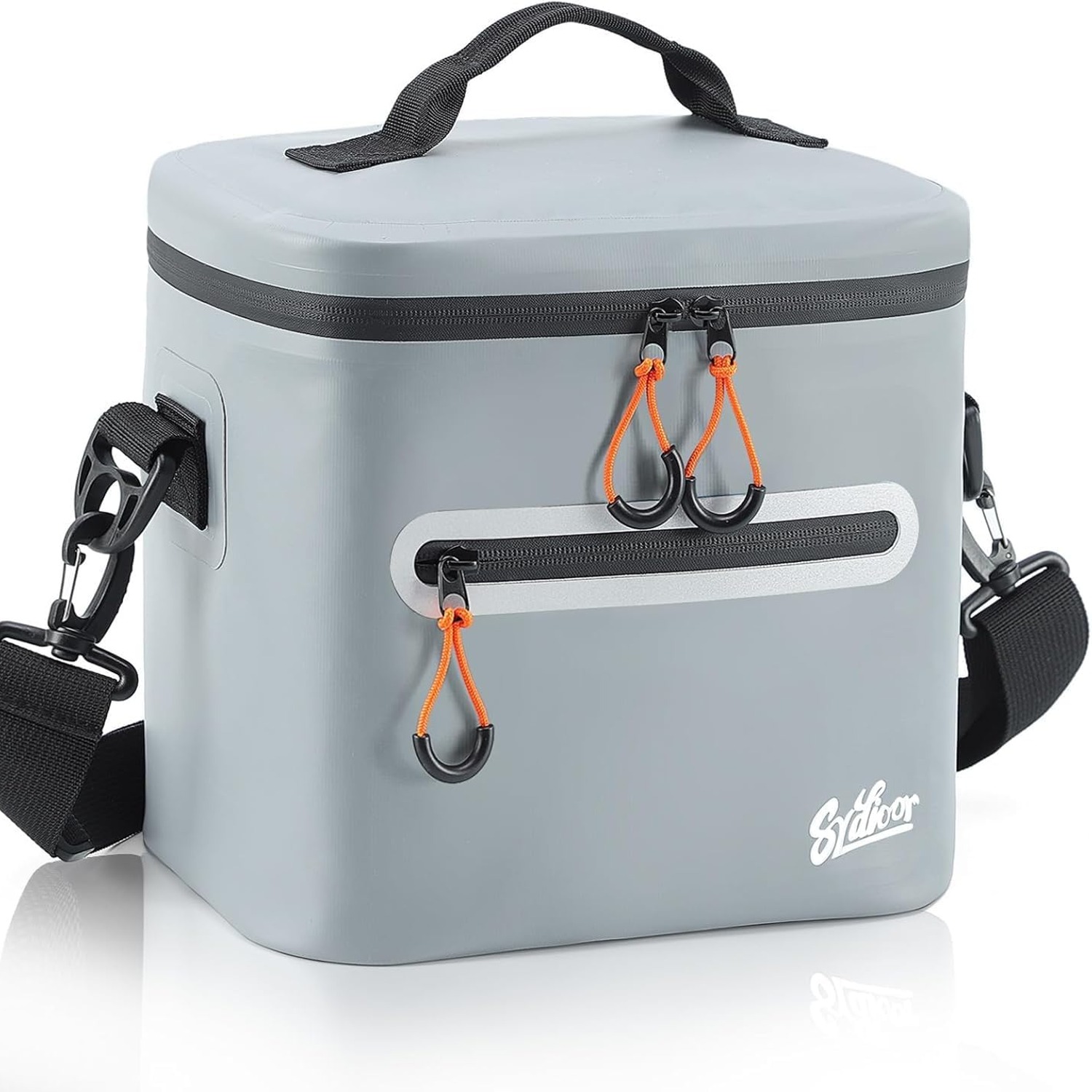
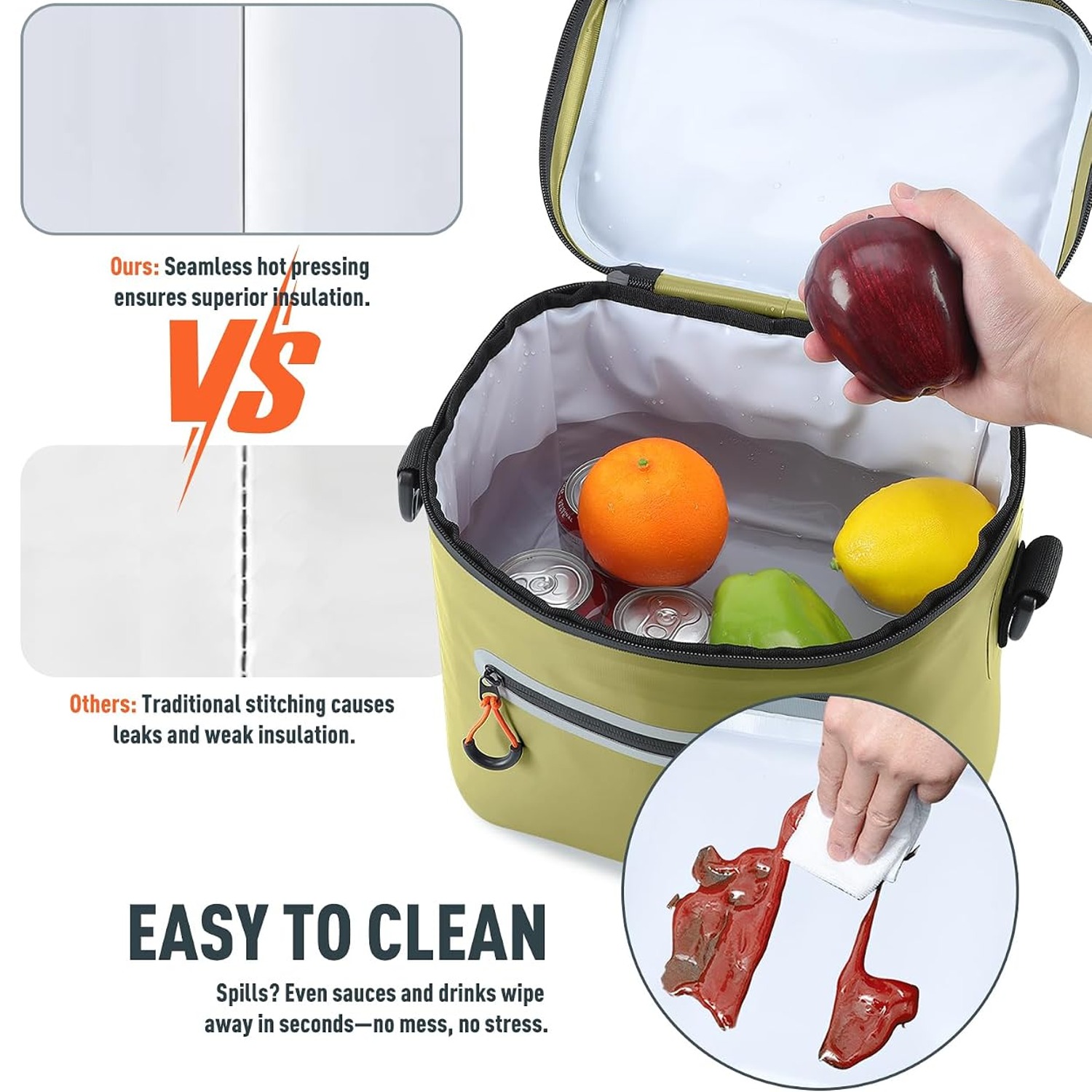
This is why the one-piece five-layer construction on this bag matters. Instead of stitching together panels and bolting on side pockets, the body is built as a single insulated shell. Fewer joins, fewer weak spots, more consistent cold. The trade-off is that you lose the mesh side pockets you see on other bags, which is a deliberate choice. The front zippered pocket covers your keys and cutlery, and the insulation stays intact everywhere else.
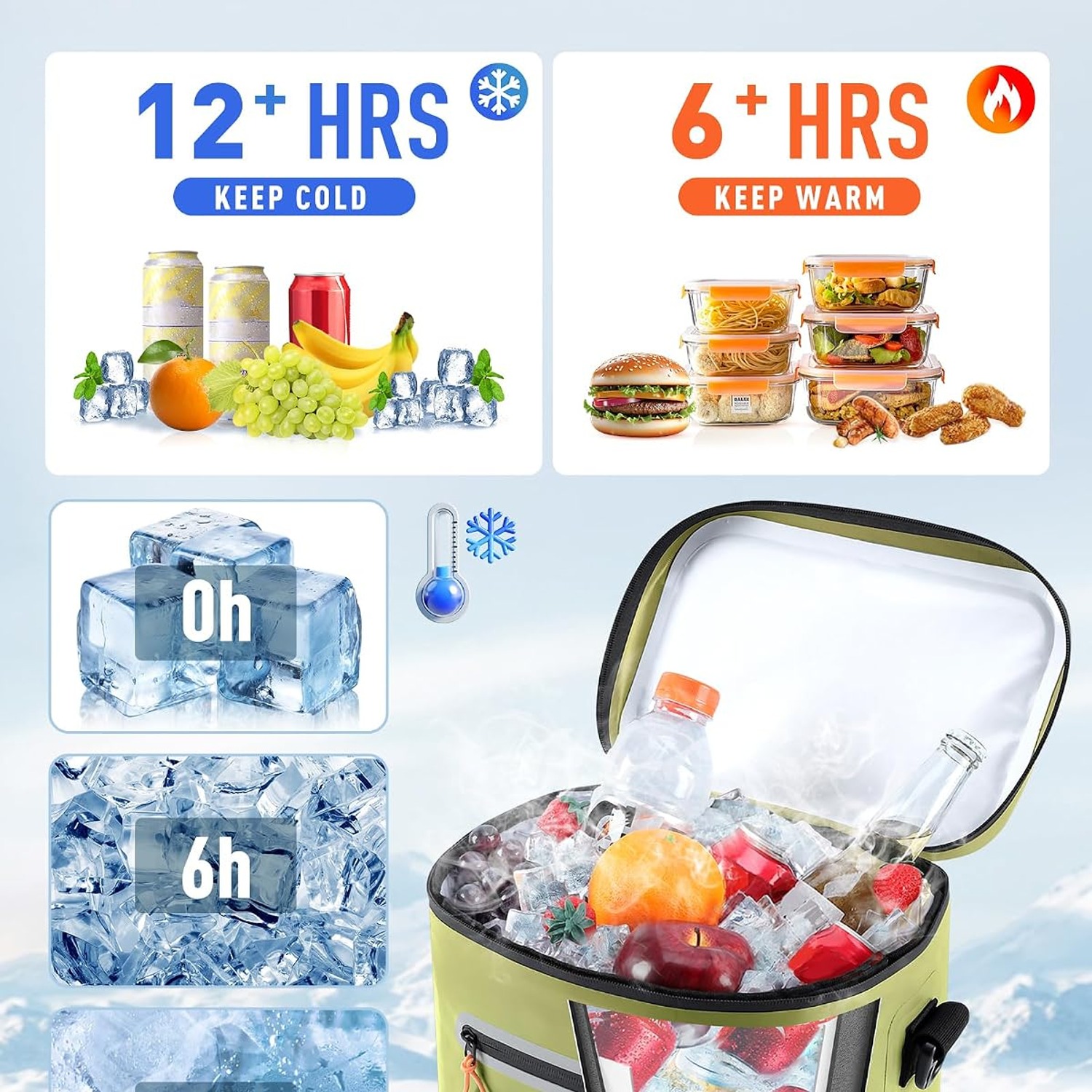
The supplier figure is more than 20 hours of cold retention with ice. Treat that as a best-case number for a well-packed bag in reasonable conditions. On a 35 degree day, half full, with the zip opening every ten minutes, you will see far less. That is true of every cooler ever made, not just this one.
The liner is the bit people overlook
Plenty of cooler bags are sold as insulated but will not hold water. Pour melted ice into one of those and it seeps through the seams, out the bottom, and onto whatever it is sitting on.
This bag uses a food-grade PEVA liner that is built to be leak-proof. Two things follow from that.
First, you can use loose ice instead of being limited to sealed packs. Loose ice is better, because it flows into the gaps between cans and makes contact with everything. Ice packs only cool what touches them.
Second, cleanup is easy. Tip the meltwater down the drain, wipe the inside, done. No wondering what is pooling at the bottom of your car boot. If you are comparing options for the best leak proof cooler, hold the liner open and look for smooth welded seams rather than stitched ones.
Why the TPU shell is worth noticing
Most soft coolers in this price range use Oxford cloth or a similar woven polyester. It is cheap, tough enough and works fine until it gets dirty.
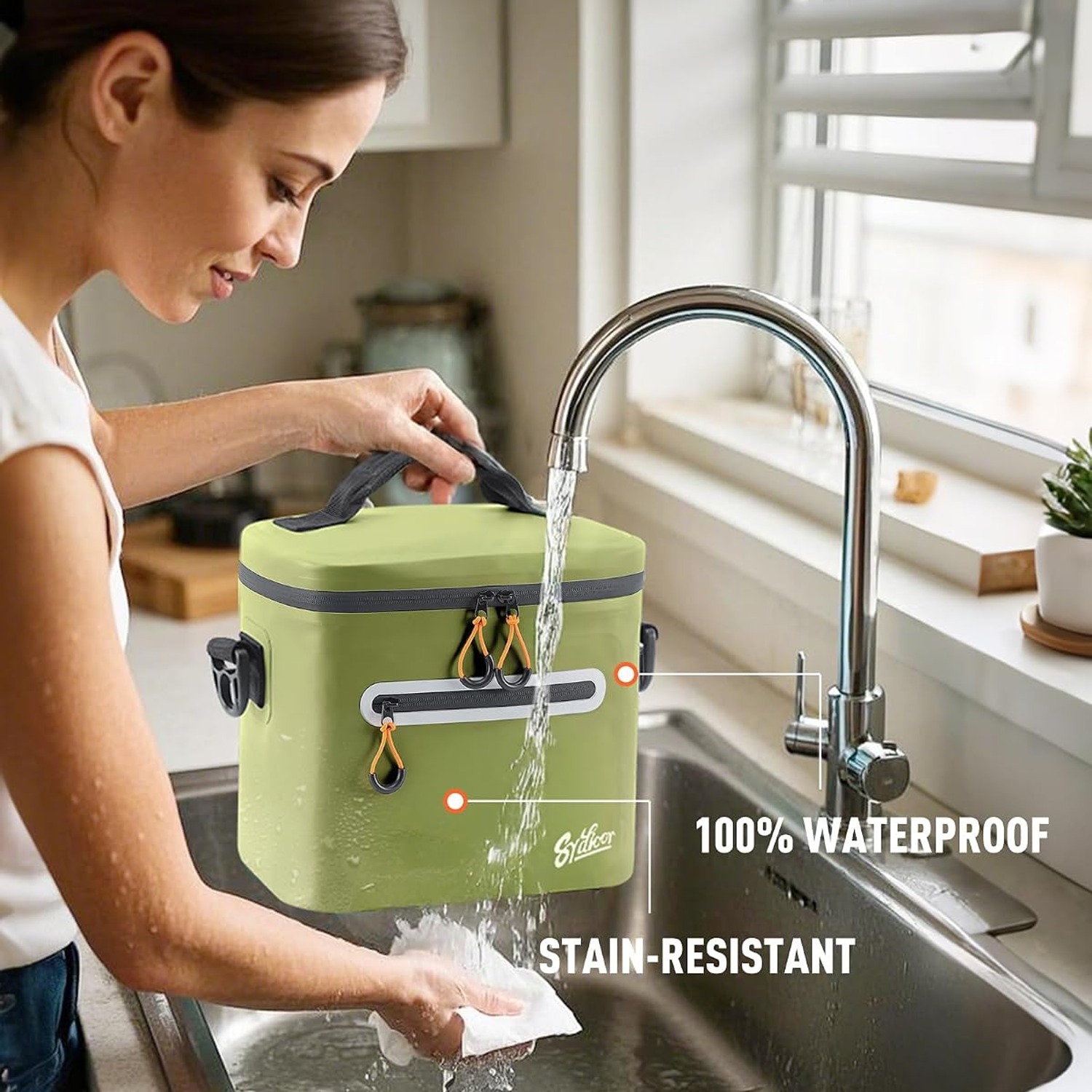
TPU is a different thing. It is a smooth, waterproof material with no weave to trap grit. A surprise shower does not soak through. Sunscreen, barbecue sauce, melted ice cream and beach sand all wipe off with a damp cloth.
That last point sounds minor until you have owned a fabric cooler for two summers. Woven material absorbs spills, holds sand in the fibres and eventually starts to smell. A wipe-clean shell sidesteps that entirely, which is why a waterproof cooler bag tends to age better than a fabric one.
Is 14 litres the right size?
Capacity is where most people get it wrong, usually by buying too big.
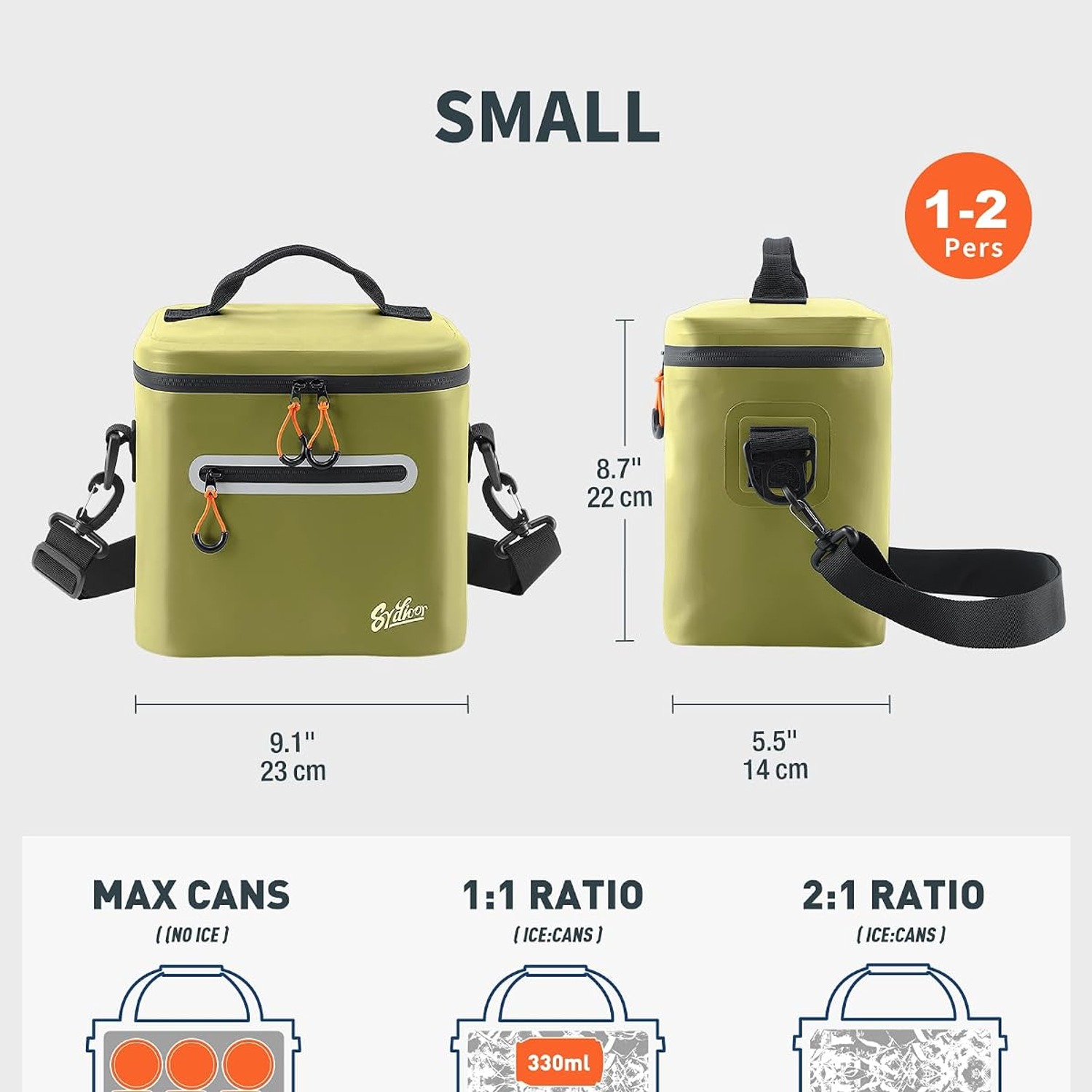
This bag is 14 litres, rated at around 16 cans, with outside dimensions of 19 x 30 x 25 cm. Here is roughly what that means in practice.
For one person on a long drive, it holds a full day of food and drink with room for ice. For two people at the beach or a picnic, it covers lunch plus drinks comfortably. For a family of four on a weekend camp, it is a second bag rather than the main one.
The reason not to go bigger by default is weight and bulk. A 30 litre cooler packed with ice is heavy, awkward to carry and will not slide under a desk or into a footwell. A 14 litre bag you can carry one-handed gets used far more often than a large one that lives in the garage. If you are after the best picnic cooler bag for regular use, pick for your normal day, not your biggest day.
Who it suits
Campers and fishers get the obvious benefit, and both of those are listed among the recommended uses along with boating, picnics and hiking. The waterproof shell earns its keep when the bag is sitting on damp ground or a wet boat deck.
Commuters use it as a lunch cooler bag, though 14 litres is generous for a single sandwich. It makes more sense if you prep meals for several days or carry drinks as well.
Drivers on long trips like it because it fits where a hard cooler will not, and because there is no hard shell to rattle against the door trim.
Beach-goers get the most from the TPU shell. Sand and a woven bag are not friends.
Packing it properly
A few habits make a real difference.
Chill the contents before they go in. A warm can has to be cooled down by your ice, which wastes it. Fridge-cold cans and pre-chilled food stay cold for far longer.
Fill the space. Air warms up fast. A packed bag holds cold much better than a half empty one, so top up gaps with extra ice or a rolled towel.
Put ice on top as well as underneath if you can. Cold air sinks, so a layer across the top does more work than people expect.
Keep it out of direct sun and open it as little as you can. Every opening swaps cold air for hot air. On a long day, decide what you need before you unzip it.
Looking after it
Care is simple because of the materials. After each use, tip out any water, wipe the liner and the outside with a damp cloth, and leave the bag open to air dry. Mild soapy water handles anything sticky.
Do not machine wash it and do not put it in a dishwasher. Heat and agitation are hard on insulated construction.
Store it dry, flat or loosely folded, with the zip slightly open so air can move through. Nearly every musty cooler is a cooler that got zipped shut while still damp. If it ever does pick up a smell, warm water with a little vinegar or baking soda, a wipe and a full air dry usually fixes it.
The short version
A soft cooler bag is only as good as its insulation, its liner and its shell. This one covers all three in a sensible way. Five-layer one-piece body for consistent cold, food-grade PEVA leak-proof liner so you can pack loose ice without worry, and a waterproof TPU outer that wipes clean instead of soaking things up.
At 14 litres it hits the size most people actually need, light enough to carry on a strap, small enough to fit where you want it. Pack it cold, pack it full, keep it shaded and dry it out afterwards, and it will do the job for a long run of summers.