
The complete guide
How To Choose A Pop Up Beach Tent That Actually Lasts The Summer
The problem with a beach day and no shade
Most people learn this the hard way. You arrive at ten, the sun is pleasant, and by midday there is nowhere to hide. The umbrella you borrowed keeps collapsing, the kids are getting pink across the shoulders, and the only option left is to pack up and drive home two hours earlier than you planned.
A proper sun shelter changes the shape of the day. With shade on hand, you stay through the hot part and come back out when the light softens in the afternoon. That is the real value in a pop up beach tent. It is not about luxury, it is about being able to stay.
Why automatic frames changed things
Older beach shelters needed poles. You threaded them through sleeves, you got sand in the joints, and half the time one section would not seat properly while the wind yanked the fabric out of your hands. It was a two person job that nobody enjoyed.
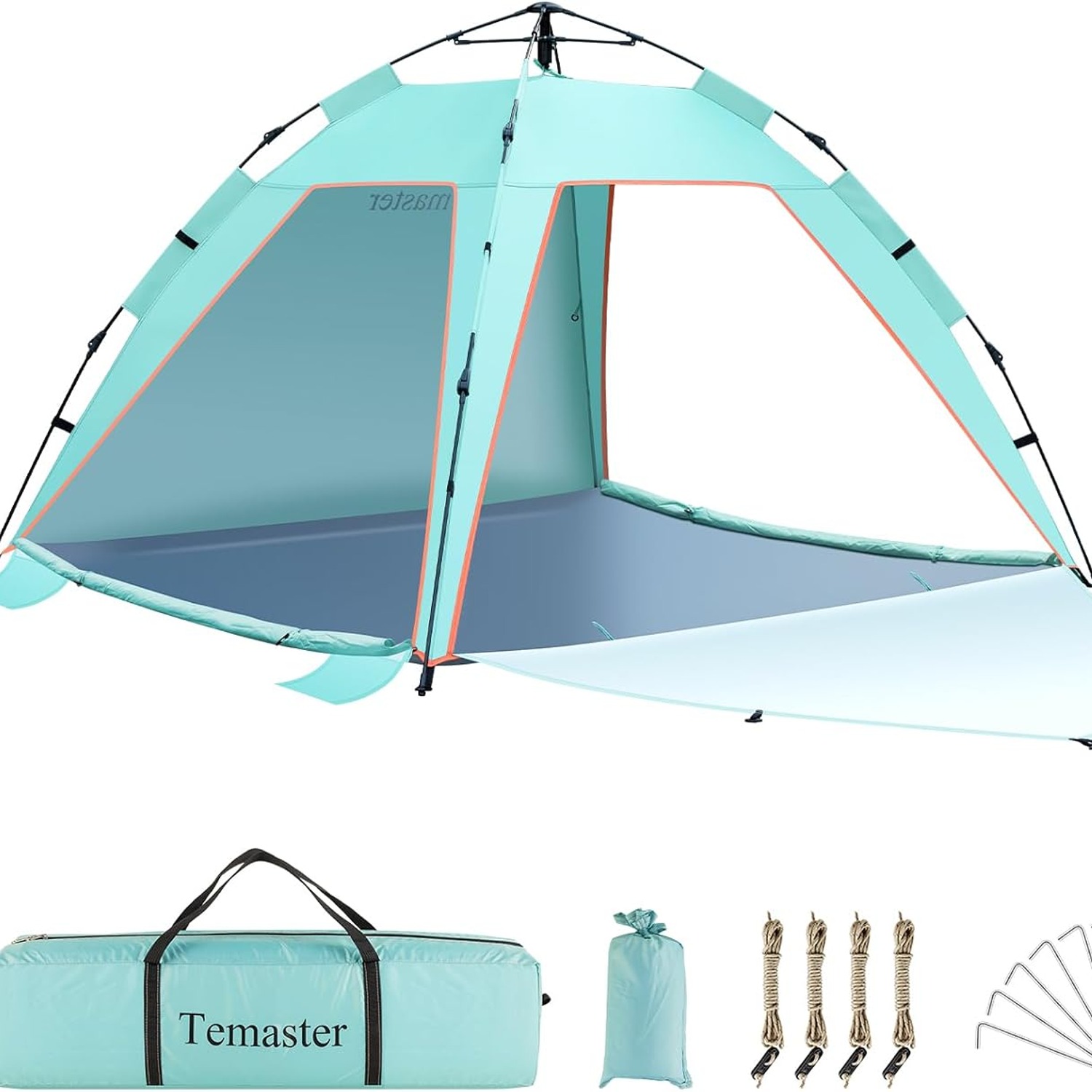
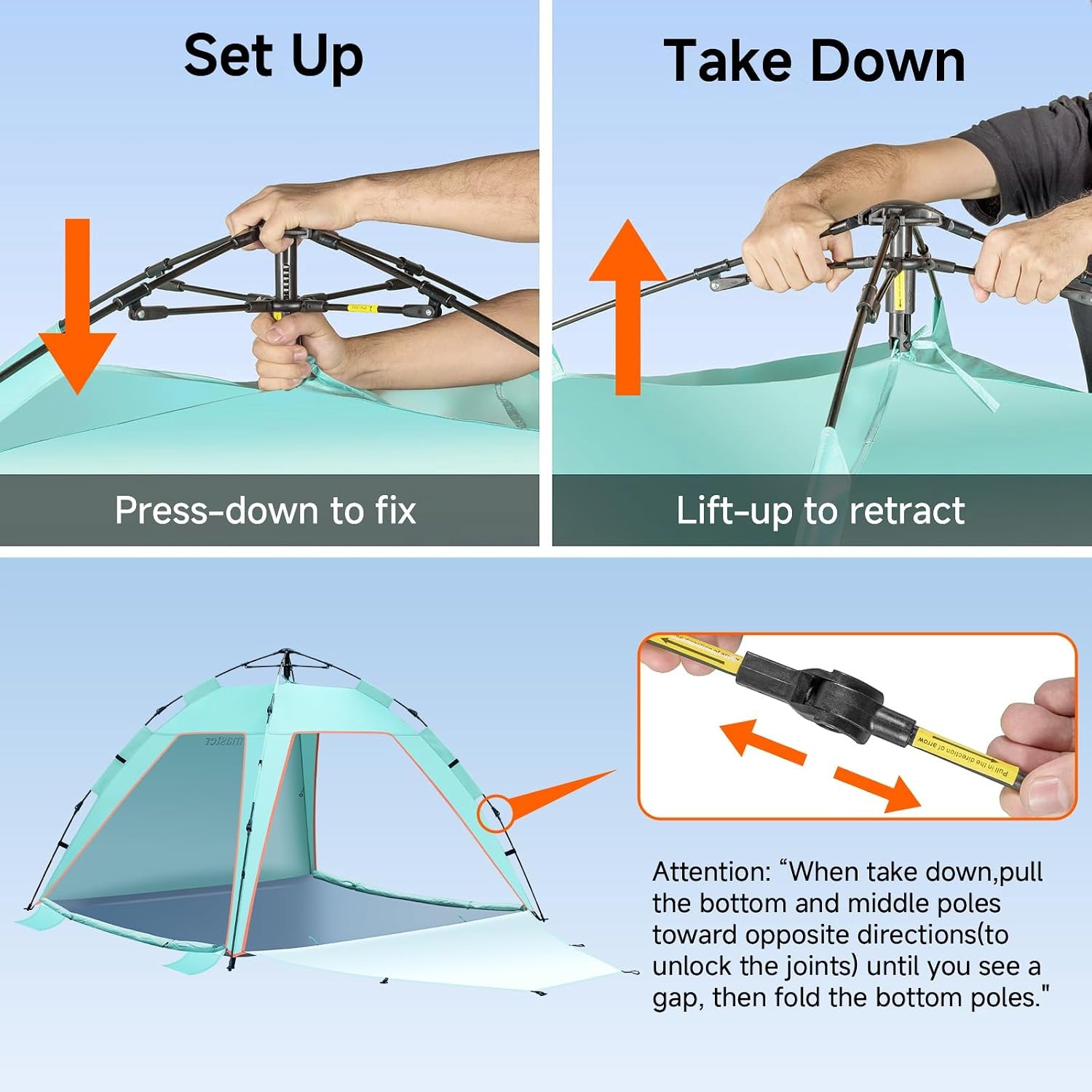
This shelter uses a hydraulic automatic frame built from fibreglass. The frame stores tension while folded. Release it from the carry bag and it opens itself out and takes shape in a second or two. There is nothing to assemble, nothing to thread, and one person can do it alone while holding a coffee in the other hand.
Fibreglass matters here too. It flexes under load and springs back, so a gust that would permanently bend an aluminium pole tends to just push the fibreglass out of shape and let it return. That flexibility is why it is the common choice for pop up shade structures.
The one thing worth practising is the fold down. Collapsing a spring frame has a knack to it, and the first attempt on a windy beach with five people watching is not the ideal time to learn. Open it in the back garden once, read through the folding steps, and do it twice. After that it becomes muscle memory.
Reading the shade numbers
Two figures matter on any sun shelter, the floor size and the UV rating.
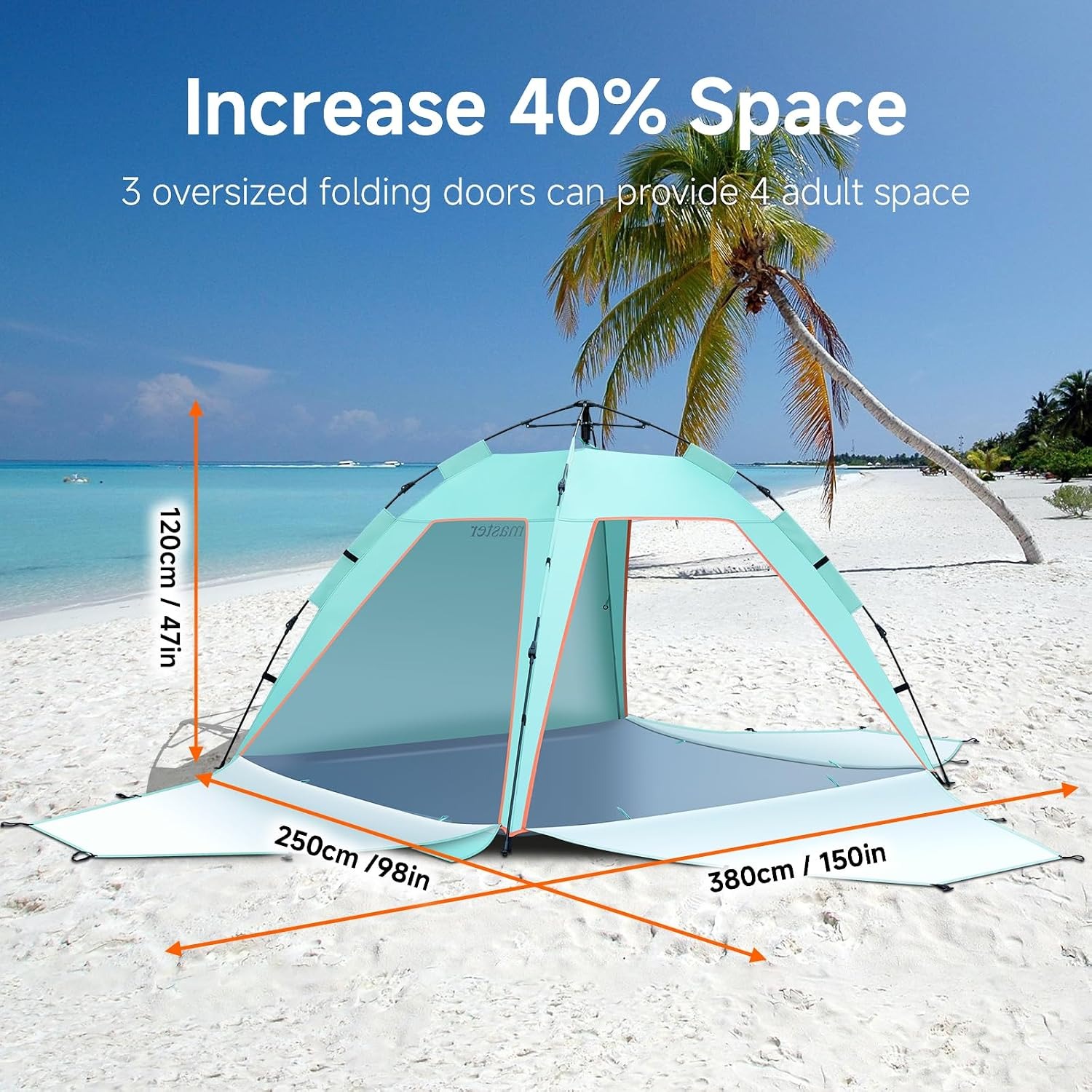
This one opens to 190 cm long, 170 cm wide and 120 cm high. That floor area suits four to five adults seated. For a couple it is roomy, with space for a cooler, bags and a dog. For a family of four it is comfortable, with room for a pram or a stack of boogie boards along one wall. The 120 cm peak height is the number people underestimate. Sitting upright all afternoon without stooping makes a long difference to how pleasant the day feels.
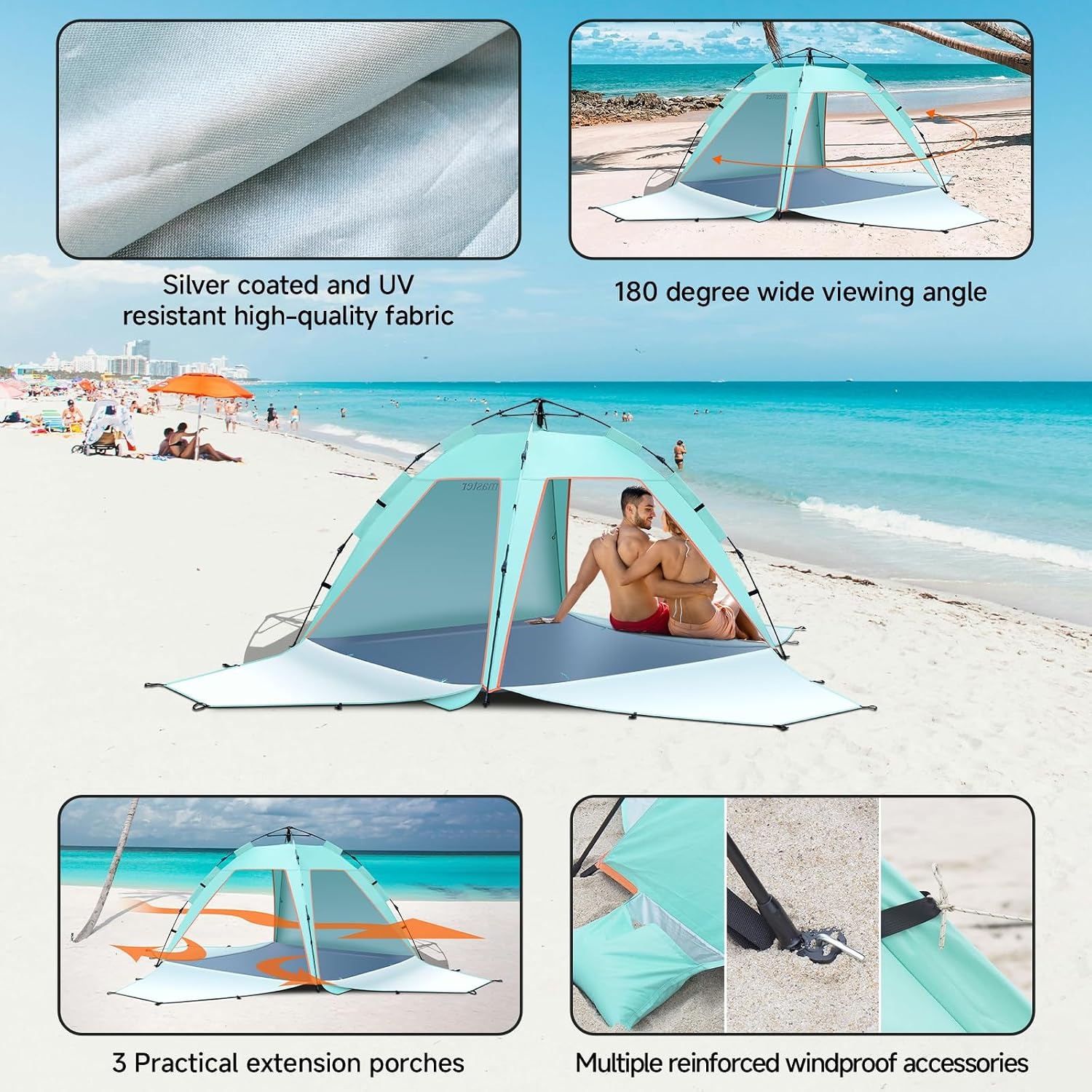
The ultraviolet rating is UPF 50+. UPF is a fabric measure, not a sunscreen measure. It describes how much UV radiation passes through the textile, and 50+ is the highest band in common use. Practically, that means what is coming straight down is handled by the canopy.
What a canopy cannot handle is reflected light. Sand and water throw a surprising amount of UV sideways, and it comes in under the roof from every direction. So keep using sunscreen inside the shelter. Think of the tent as removing the biggest source of exposure, not all of it.
One thing to be clear about. This shelter is listed as not water resistant. It is a sun product. If rain sets in, take it down and dry it out at home rather than hoping the canopy sheds it.
The three door design
Plenty of beach shelters are just a hood with an open front. That gives you shade but little else. This one has three expandable porch doors that run around the body, and each can open out or close in.
Open all three and you get cross breeze flowing right through. On a still, humid day that airflow is the difference between a shelter that feels cool and one that turns into an oven by one o'clock. You also keep a clear line of sight to whoever is in the water.
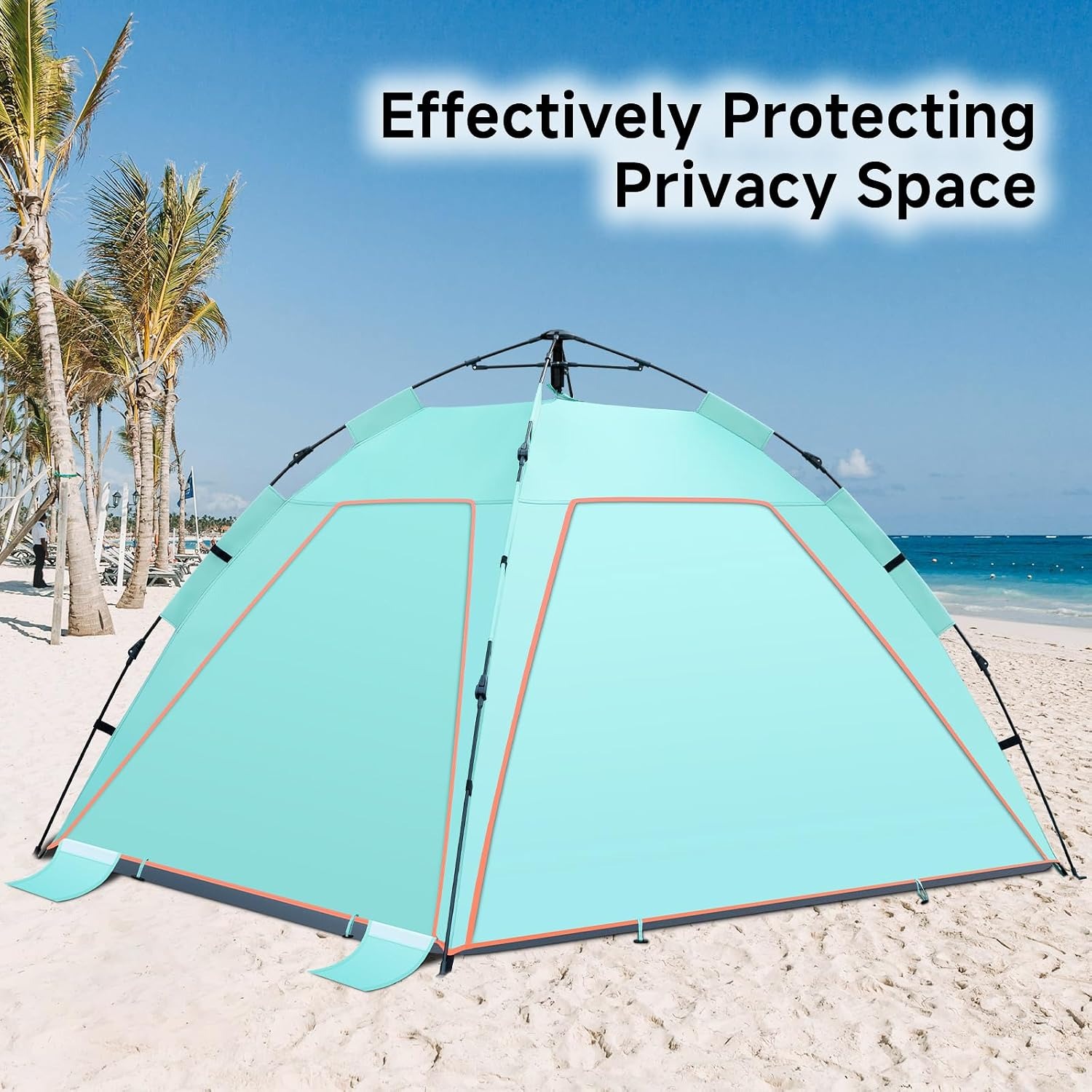
Close all three and you have a private room. That is genuinely useful. Changing out of wet swimmers, feeding a baby, getting a toddler down for a nap, or just lying down for twenty minutes without the world watching. Being able to switch between those two setups in seconds is what keeps a shelter useful from breakfast through to sunset.
In practice most people run a mixed setup. Close the door facing the wind, open the two facing away, and you get shelter from the gusts with air still moving through.
Anchoring, which is the part people skip
Wind is what ends beach shelters. Almost every story about a tent cartwheeling down the sand comes back to the same thing, somebody put it up and never pegged it down.
This one ships with a serious anchoring kit for its size. Twelve ground pegs, four guylines, four oversized sandbags and four reinforced wind strips. The wind strips are sewn reinforcements that spread load across the fabric rather than letting it concentrate at a single stitch line.
Use all of it. Fill the sandbags with sand as soon as the tent is standing, before you do anything else, because an unweighted shelter can take off in a gust that was not there a minute ago. Push the pegs in at an angle leaning away from the tent so they bite rather than slide. If the breeze is noticeable, run the guylines out and peg them wide.
On grass or soil the pegs do most of the work. On hard ground where pegs will not go, weight becomes your only option, so fill the bags with whatever is heavy and tie the guylines to a fence, a bench or a car roof rack.
And know when to stop. No lightweight sun shelter is safe in genuinely strong wind. If the frame is bowing hard and the fabric is cracking like a sail, take it down. It takes thirty seconds and saves a broken pole.
Looking after it
Sand is the enemy of any automatic frame. Grit works into the joints and makes the mechanism stiff over time, which is the most common way these shelters fail. So shake the canopy out properly before packing, and brush sand away from the hinge points.
For cleaning, cool water, a soft sponge and a little mild detergent handle salt and sunscreen marks. Rinse and leave the tent open in the shade until it is bone dry. Never put it in a washing machine, never use bleach or hot water, and never tumble dry it. Those will strip the coating that does the sun blocking work.
Store it dry. A canopy packed away damp comes out smelling musty and can develop marks you will not get off. If it went into the bag wet, open it out at home for an hour before putting it on the shelf.
Keep the storage spot cool and out of direct sun. Long term UV exposure degrades fabric even on a shelter designed to block UV, so a cupboard or garage shelf beats the back window of a car.
Who this suits
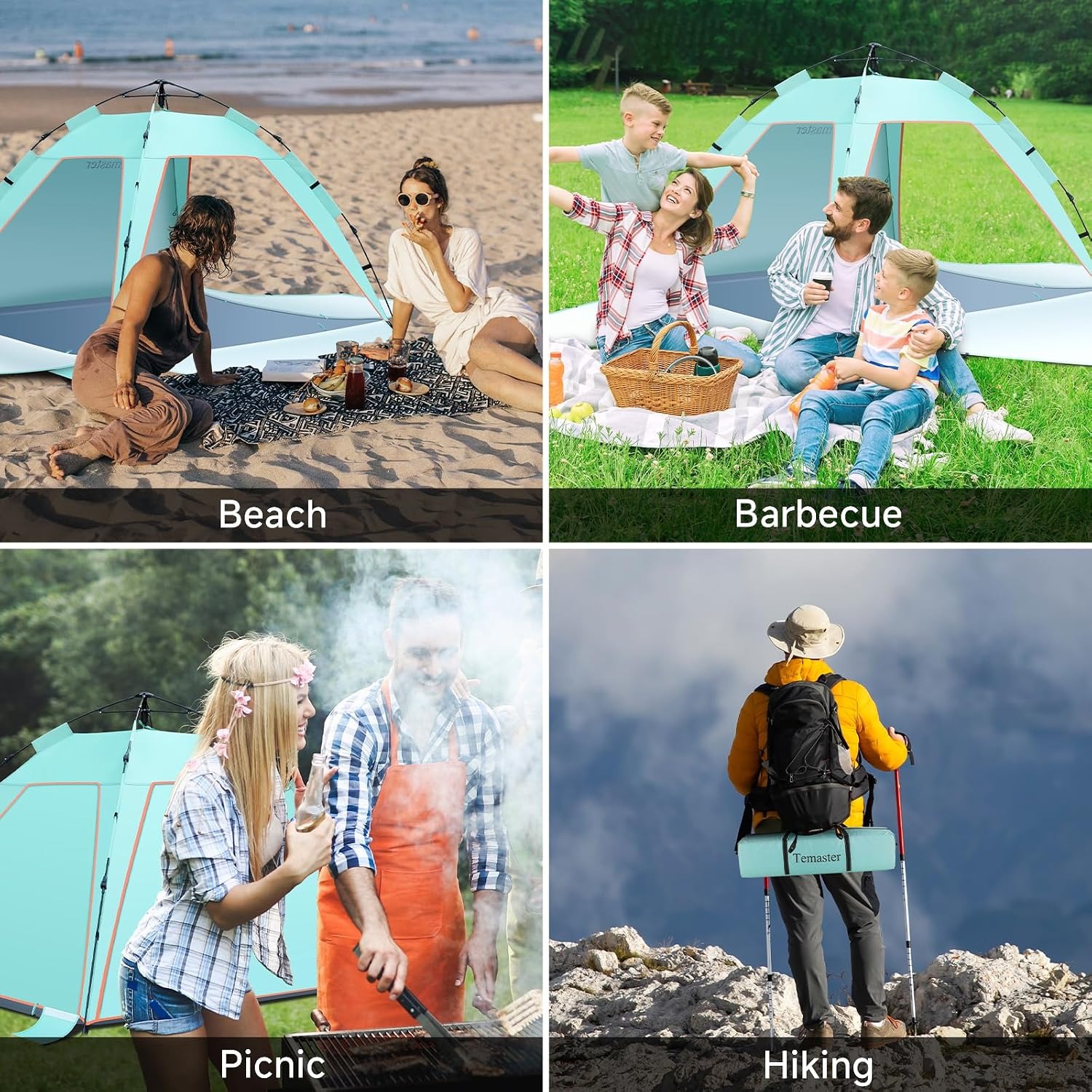
It fits best for families who go to the beach regularly and want shade without a setup argument. It works for couples who want room to spread out. It suits picnics in the park, sports sidelines, fishing days and back garden afternoons over a paddling pool.
It is not a camping tent. No water resistance, and a structure designed for sitting rather than sleeping. If you want something for overnight use, look at a proper camping tent instead.
The short version
You get a shelter that opens itself in seconds, blocks UV at the highest fabric rating band, fits four to five adults seated, and comes with enough pegs, guylines and sandbags to hold its ground on a breezy day. Three doors let you choose between airflow and privacy depending on the hour.
Anchor it properly every time, keep sand out of the frame, dry it before it goes in the bag, and it will see you through summer after summer.