
The complete guide
How to Choose a Thick Camping Sleeping Pad That Actually Lets You Sleep
The real reason you sleep badly in a tent
Ask most people why they came home tired from a camping trip and they will blame the noise, the cold, or the early sunrise. Usually it is simpler than that. They were lying on the ground.
Ground does two things to a sleeper. It presses back hard at your hips and shoulders, which are the parts that carry most of your weight when you lie on your side. And it pulls heat out of you all night, because soil and rock are very good at absorbing warmth from a warm body. A thin foam mat slows that down a little. It does not stop it.
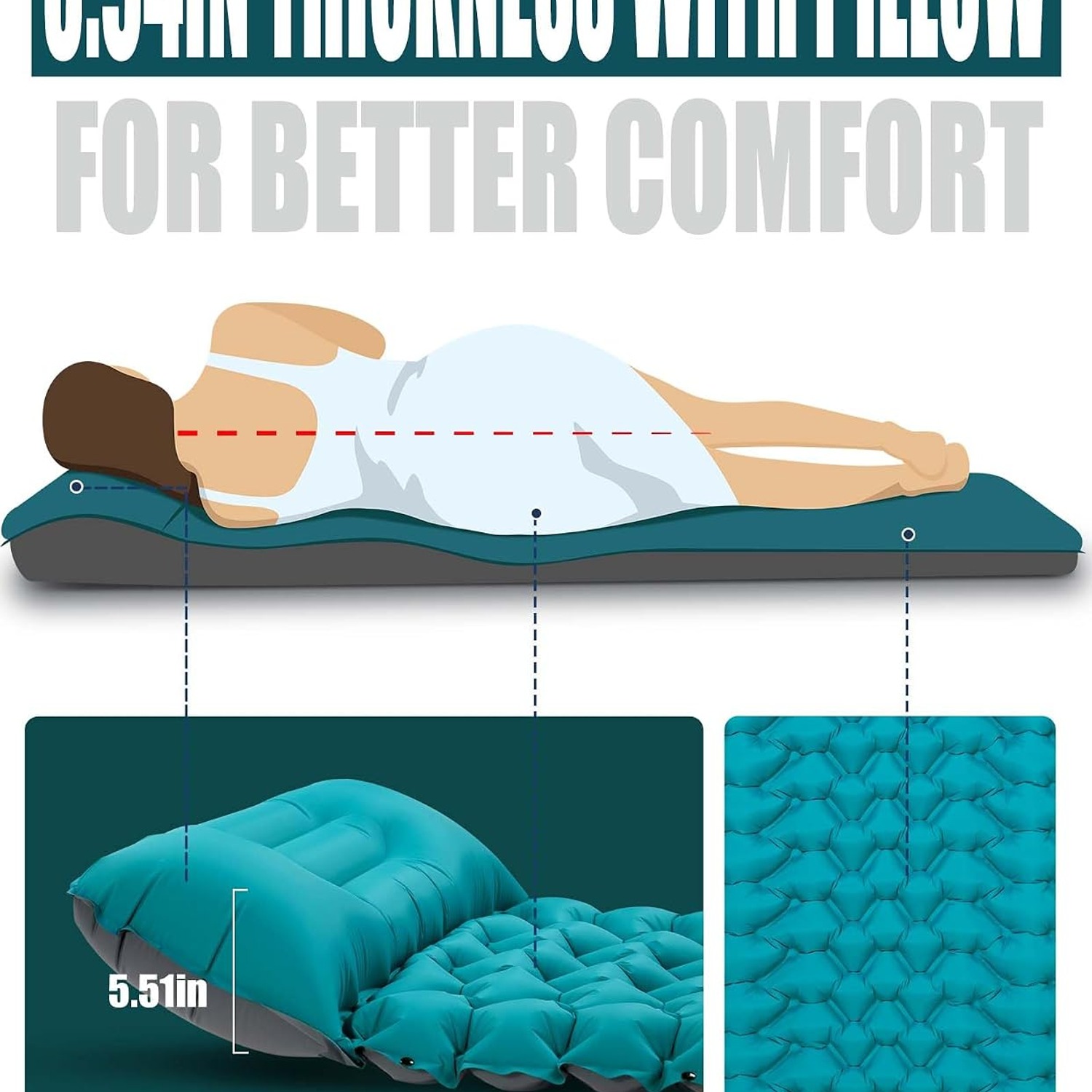
A thick camping sleeping pad fixes both problems with the same trick. It puts a tall layer of air between you and the earth. Air has give, so your hip sinks instead of being pushed up into your spine. Air is also a poor conductor, so less of your body heat drains away. That is why a pad with real thickness often changes someone's opinion of camping entirely.
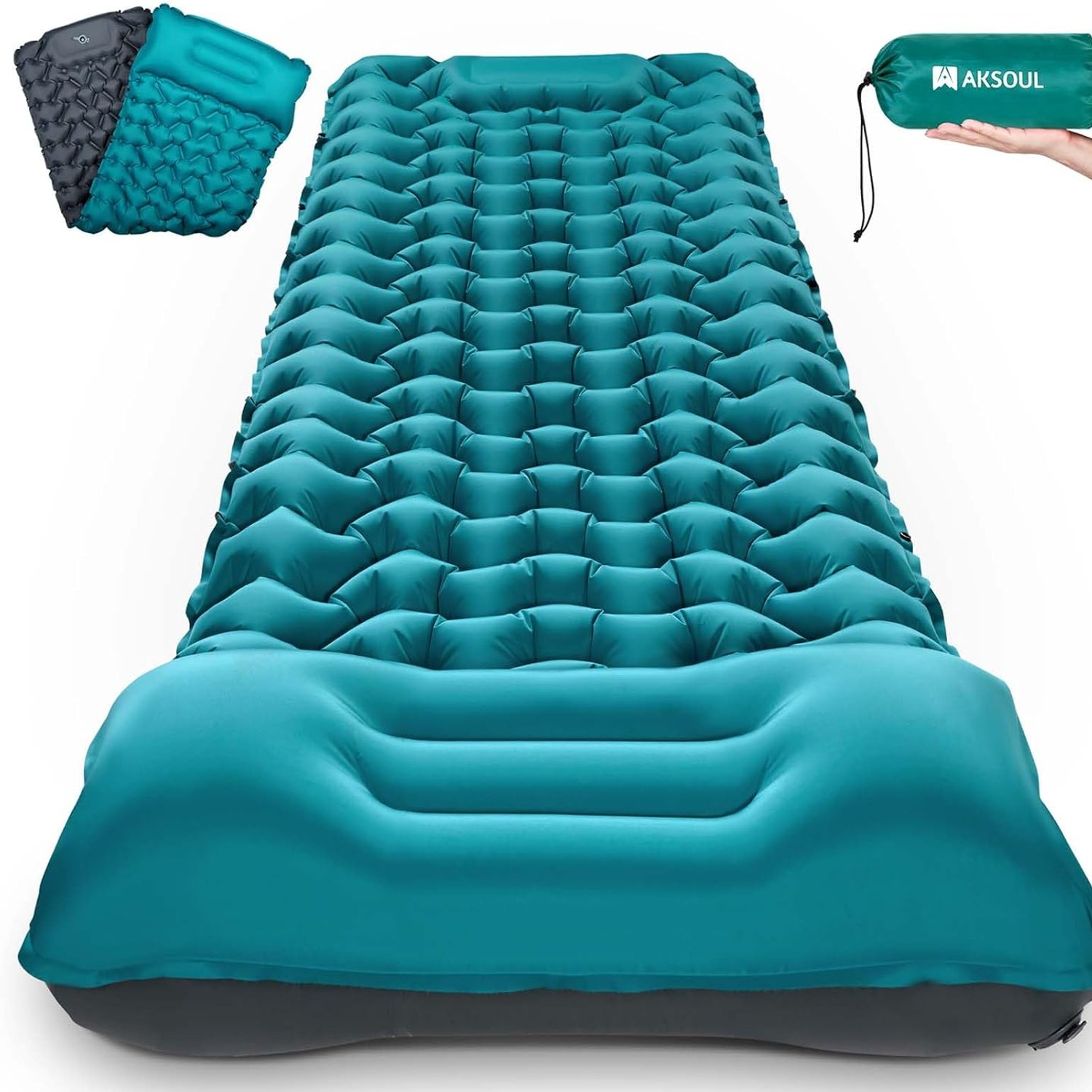
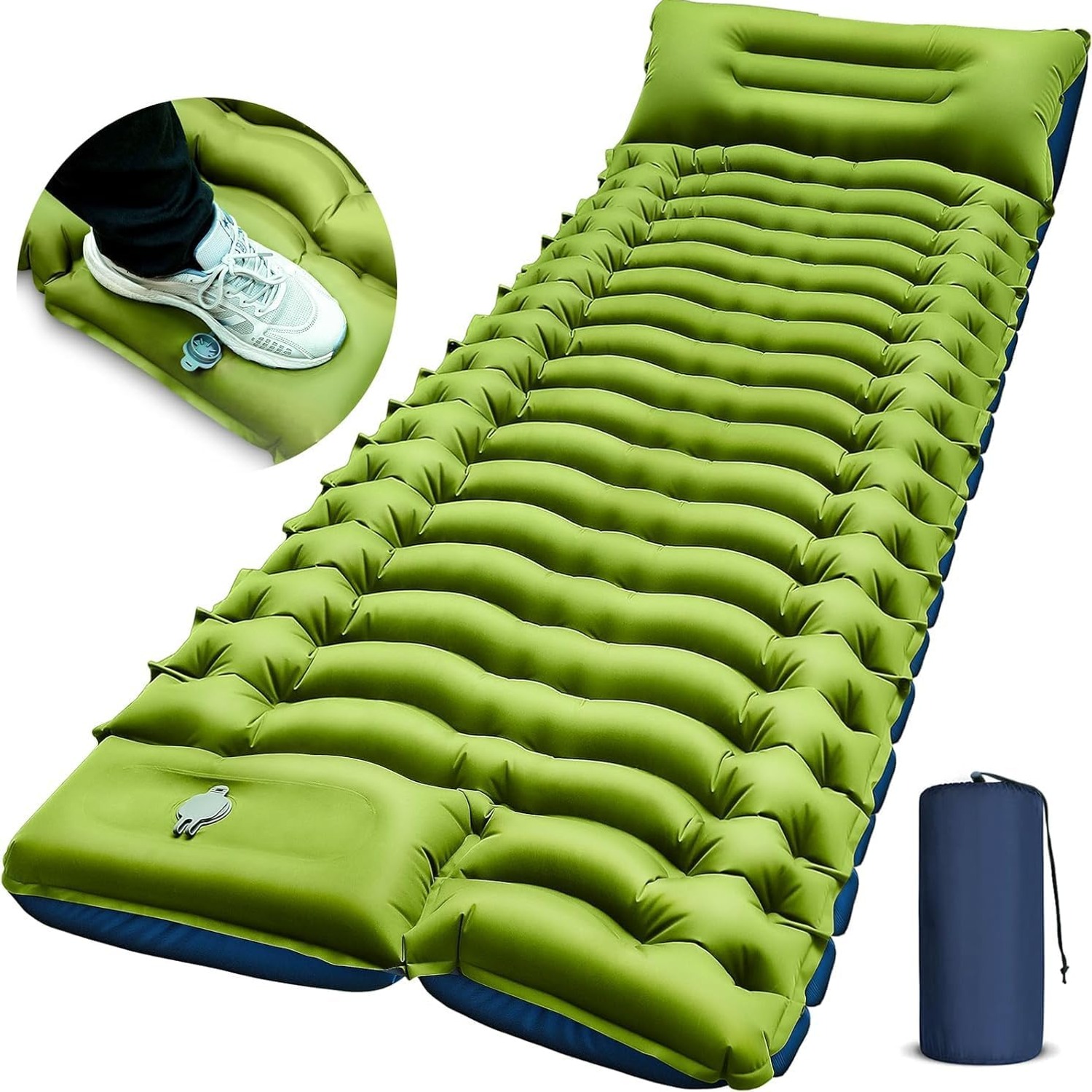
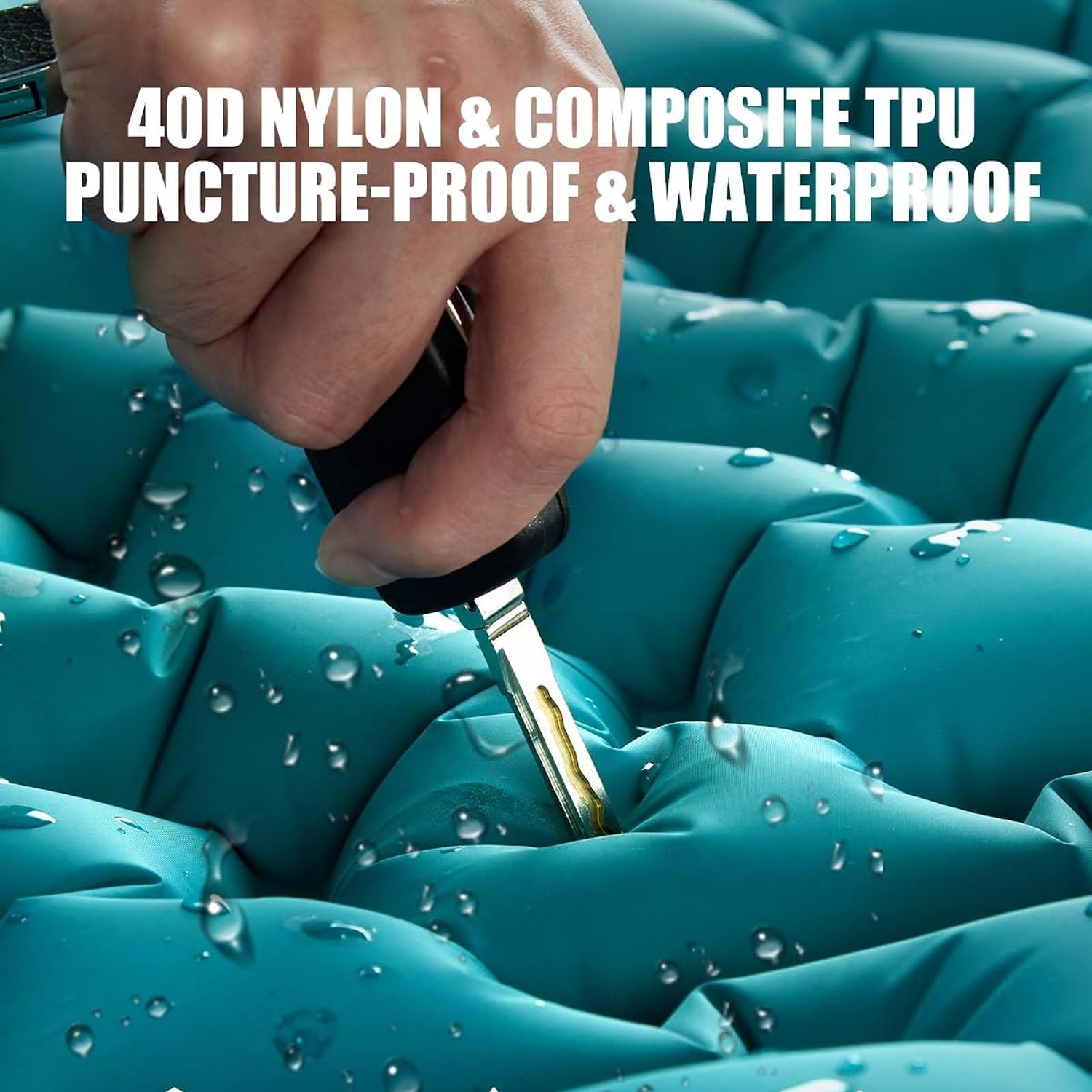
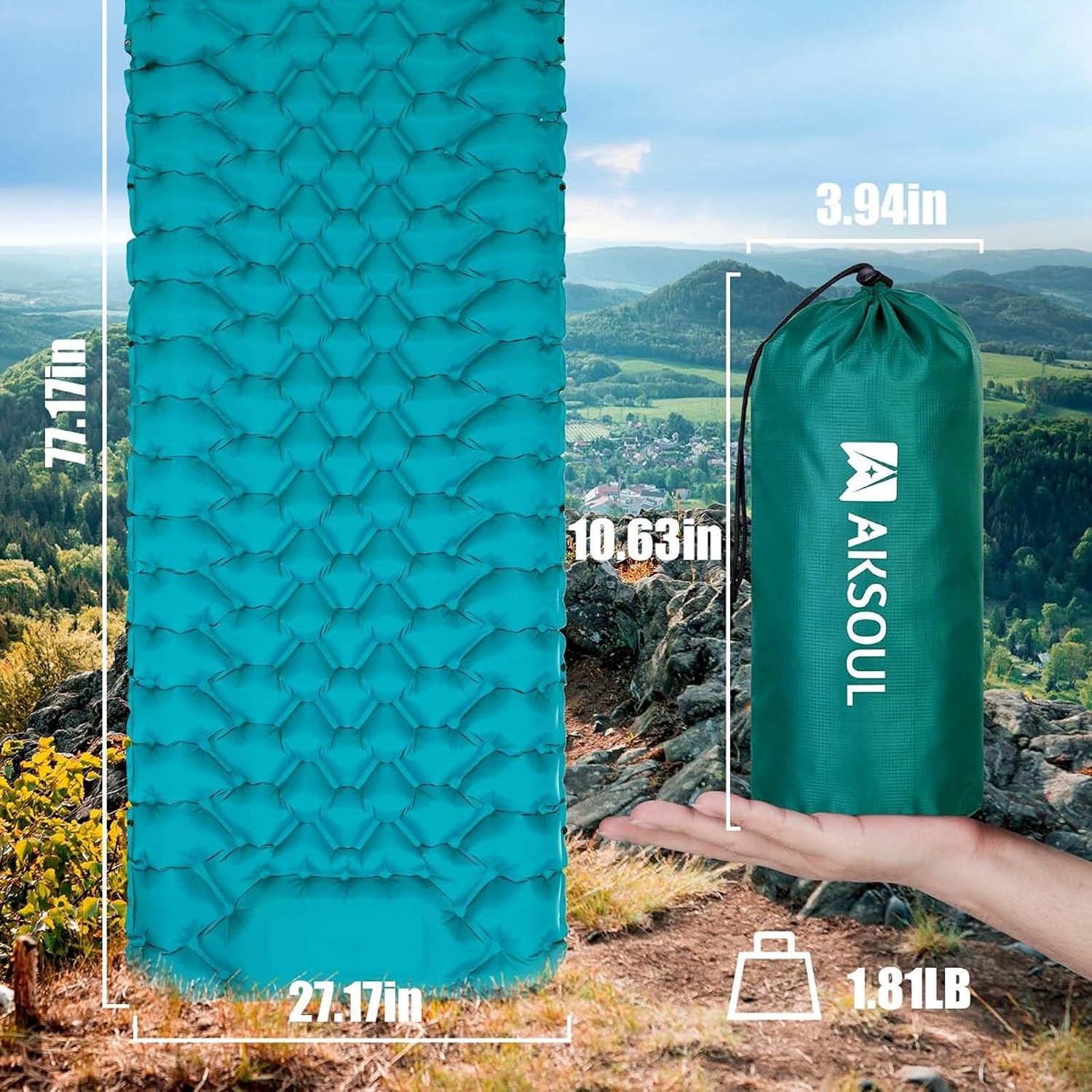
This pad inflates to 9.9 cm thick, which is a genuine cushion rather than a token one. It is listed as a double size at 195.8 cm long and 68.8 cm wide, weighs about 850 g, and uses a two-layer nylon build that is rated water resistant. Stated capacity is 199.58 kg, or 440 lb.
How the built-in foot pump changes things
Inflation is where cheap pads lose people. If you have ever knelt in a dark tent blowing into a valve while your head spins, you know exactly why.
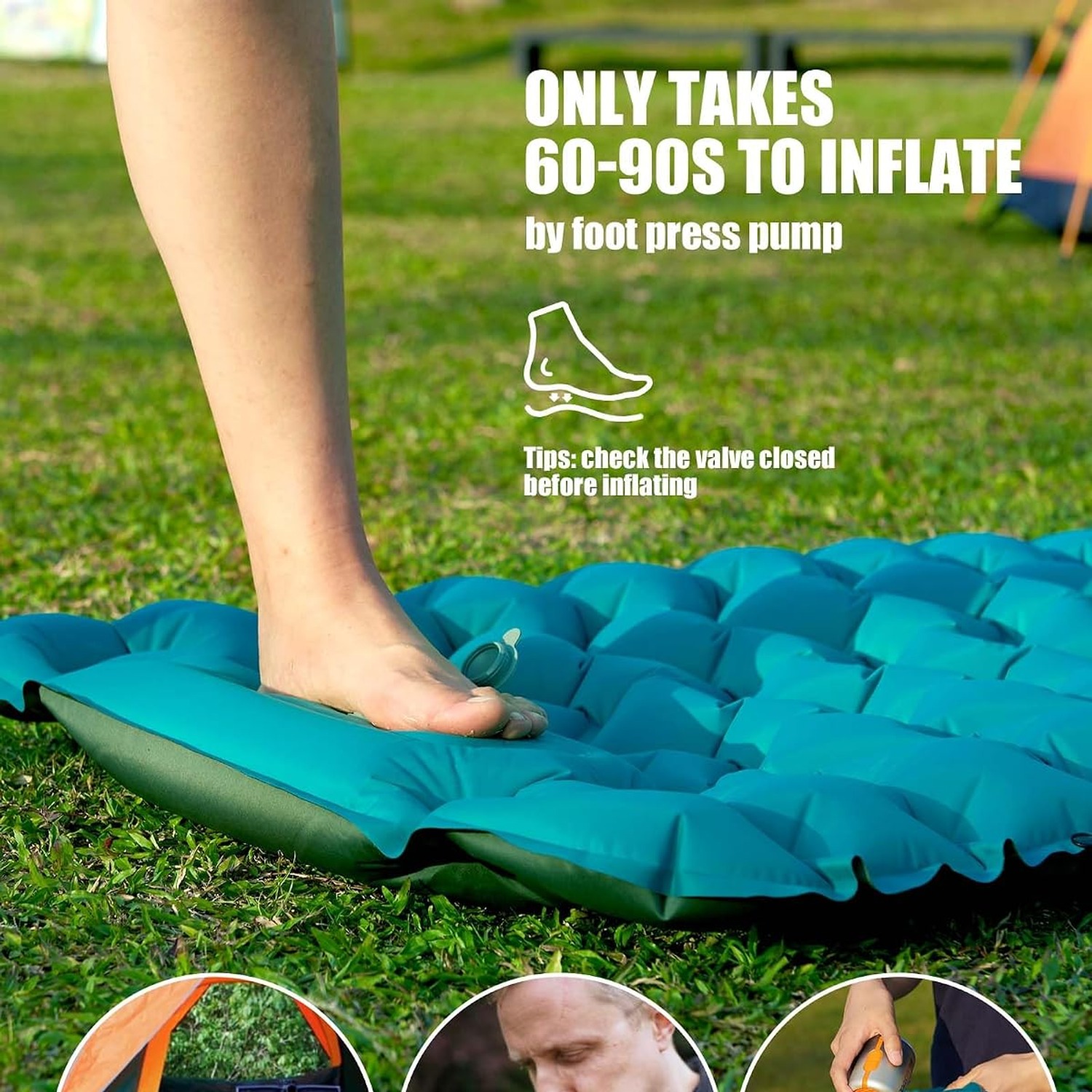
This one has the pump built into the pad. You put your foot on it and press, and the pad fills in about 30 to 40 seconds. Your leg muscles do the work, which is a far better deal than your lungs. There is also nothing extra to carry, nothing with batteries, and nothing to leave behind at the last campsite.
There is a quieter benefit too. Breath carries moisture, and mouth-inflated pads slowly collect damp inside the chamber. Over a season or two that can leave a smell and encourage mould you cannot easily reach. Pumping with air from outside keeps the inside dry.
The flip side is that firmness is in your hands. If the pad feels too hard, open the valve for a second and let a little air escape. Side sleepers usually prefer it a touch softer, so the hip can sink. Back sleepers often like it firmer. It takes one night to find your setting.
Why the snaps matter more than they sound
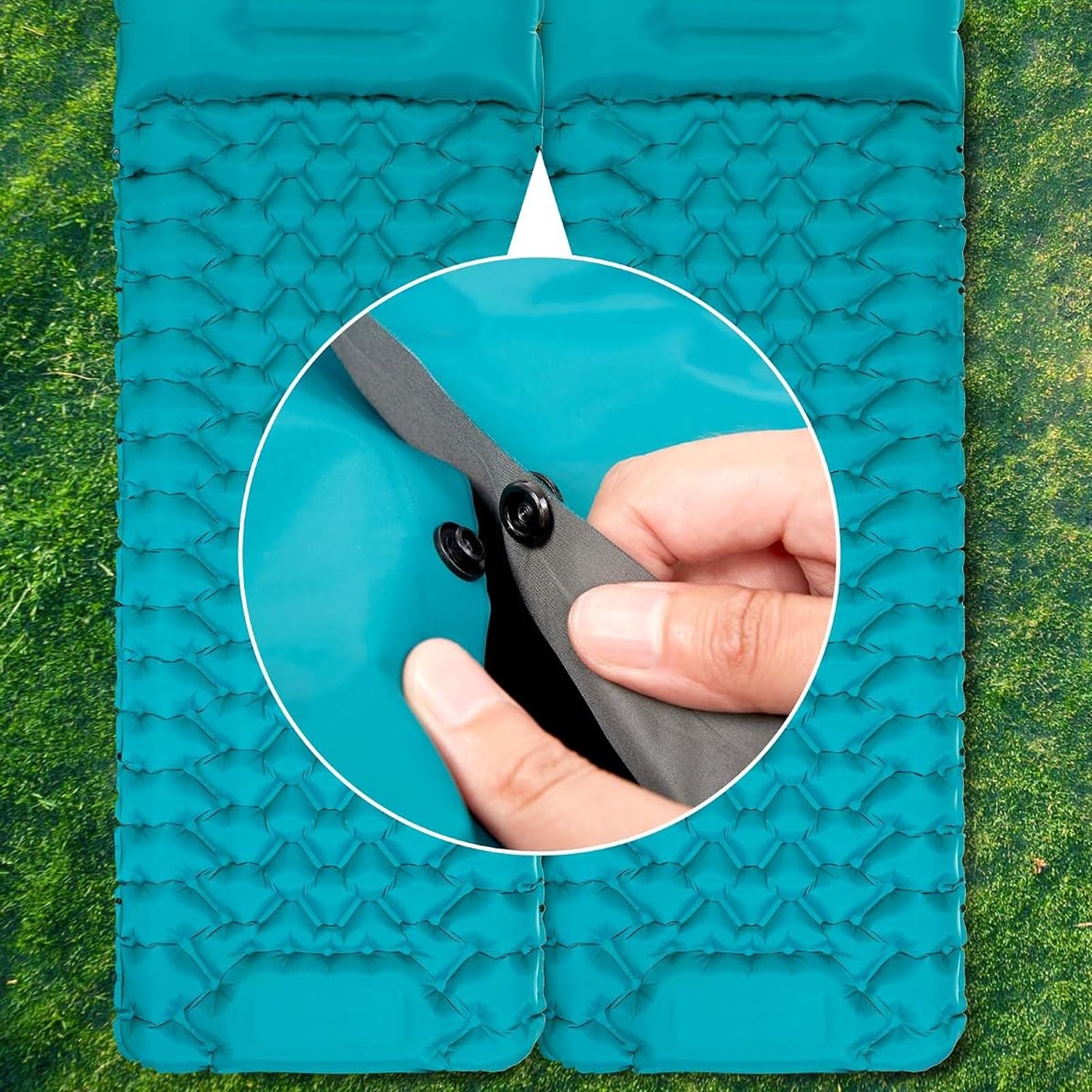
Along the sides of the pad are snaps. Clip two pads together and you get one wide bed with no gap in the middle.
Anyone who has shared a tent with two separate mats knows the problem. The mats drift apart during the night. One person ends up with a knee in the cold strip between them. Blankets fall into the gap. By morning you are both half off your own mat.
Joining two pads removes that completely. For couples it means a single continuous surface. For families, you can run several across a tent floor so nobody is sleeping on bare ground at the edges. And if you are travelling solo, nothing is lost: the pad works perfectly well on its own, and the snaps just sit there unused.
That flexibility is worth thinking about when you buy. One pad now, a second later, and you have a double without buying a whole new system.
Choosing the right pad for how you actually camp
Start with how you get to your campsite, because that drives everything.
If you drive and unload a boot, weight hardly matters and thickness is king. Go as thick as you can and enjoy it. If you walk in with everything on your back, you are balancing comfort against grams. At around 850 g this pad sits in a sensible middle: not the lightest thing on the market, but light enough that most hikers will carry it happily for the comfort they get back.
Next, think about width. Standard single camping mats are often around 50 to 55 cm wide, which is fine if you sleep still and narrow if you do not. At 68.8 cm, this one gives you room to roll over without a limb sliding onto the tent floor. If you are a restless sleeper, extra width matters more than most people expect.
Then consider the pillow. A lot of campers end up stuffing a jacket into a dry bag and calling it a pillow. It works, but it slides away at 3am. Having head support built into the pad means it stays where it should be and you free up space in your kit.
Finally, be honest about conditions. This pad is listed as water resistant, which covers dew, a damp tent floor and the odd spill. It is not a boat. No thermal rating is given in this record, so for cold weather trips pair it with a sleeping bag suited to the temperature rather than expecting the pad to do all the work.
Looking after it so it lasts
Air pads are not fragile, but they are not armour either. A small amount of care goes a long way.
Clear your pitch before you lay it down. Sticks, sharp stones and pine cones are the usual culprits. A groundsheet or the tent floor between the pad and the earth makes a real difference over a season of trips.
Keep it away from the fire. Sparks and nylon do not mix, and a stray ember can put a hole in a pad faster than anything on the ground will.
For cleaning, the record says hand wash only. Wipe the surface with a damp cloth and a little mild soap, rinse lightly, and let it dry fully. Do not put it in a washing machine or a dryer, and skip bleach and ironing entirely.
Storage is the step people get wrong. Rolling a pad down as tightly as possible and leaving it in a hot car boot for six months is hard on the seams and the fabric. Store it loosely rolled, or slightly inflated with the valve open, somewhere dry and out of direct sun. It will be ready to go next trip instead of smelling like a forgotten tent.
If you do get a puncture, it is usually fixable. Inflate the pad, brush soapy water over the surface, and watch for bubbles. Clean and dry the area, then patch it properly and give it time to set before you sleep on it.
Who this suits, and who it does not
This pad makes sense for tent campers who want real cushioning, for couples who want a joined double, for festival goers who need something fast to set up in a crowded field, and for anyone who keeps a spare bed in the cupboard for unexpected visitors. It is also a reasonable pick for road trips, where you want comfort in the back of a van without installing anything permanent.
It is less suited to ultralight racing, where every gram is counted and people accept a thinner mat on purpose. It is also not a replacement for a proper home mattress over months of use. It is a camping pad, and a comfortable one.
The short version
If your main memory of camping is a sore hip and a cold back, the pad is the piece to upgrade first. Thickness lifts you off the ground, air gives under pressure instead of pushing back, and a foot pump means you are set up in under a minute rather than wheezing in the dark.
This one gives you 9.9 cm of air, a double-width 195.8 by 68.8 cm surface, a built-in pillow, side snaps for joining two pads, and a 199.58 kg capacity, all at about 850 g. Hand wash, dry fully, store loose, and keep it off sharp rocks. Do that and it should see you through a lot of good nights outdoors.