

The complete guide
How to Choose a Camp Fry Pan Set That Actually Gets Used
The problem with most camp cooking gear
Most people buy their first camp cookware in a rush, usually the week before a trip. It is cheap, it is light, and it does the job once. Then the handle gets wobbly, the coating starts peeling into the eggs, and the pieces end up scattered across three different bags so you can never find the lid when you need it.
The result is predictable. Cooking outdoors becomes a chore, and after a couple of trips you stop bothering. Dinner turns into whatever can be eaten cold or boiled in a bag. That is a shame, because a hot meal cooked properly is one of the better parts of being outside.
A good camp fry pan set solves this in two ways. It gives you cooking surfaces that behave like real cookware, and it keeps everything together so packing is not a decision you have to make every single time.
What this set actually is
This is a nine-piece camp cook set built around a stainless steel fry pan. All of it is 18/8 food-grade stainless steel, a grade used widely in home kitchens because it holds heat well, resists rust and does not take on flavours from one meal to the next.
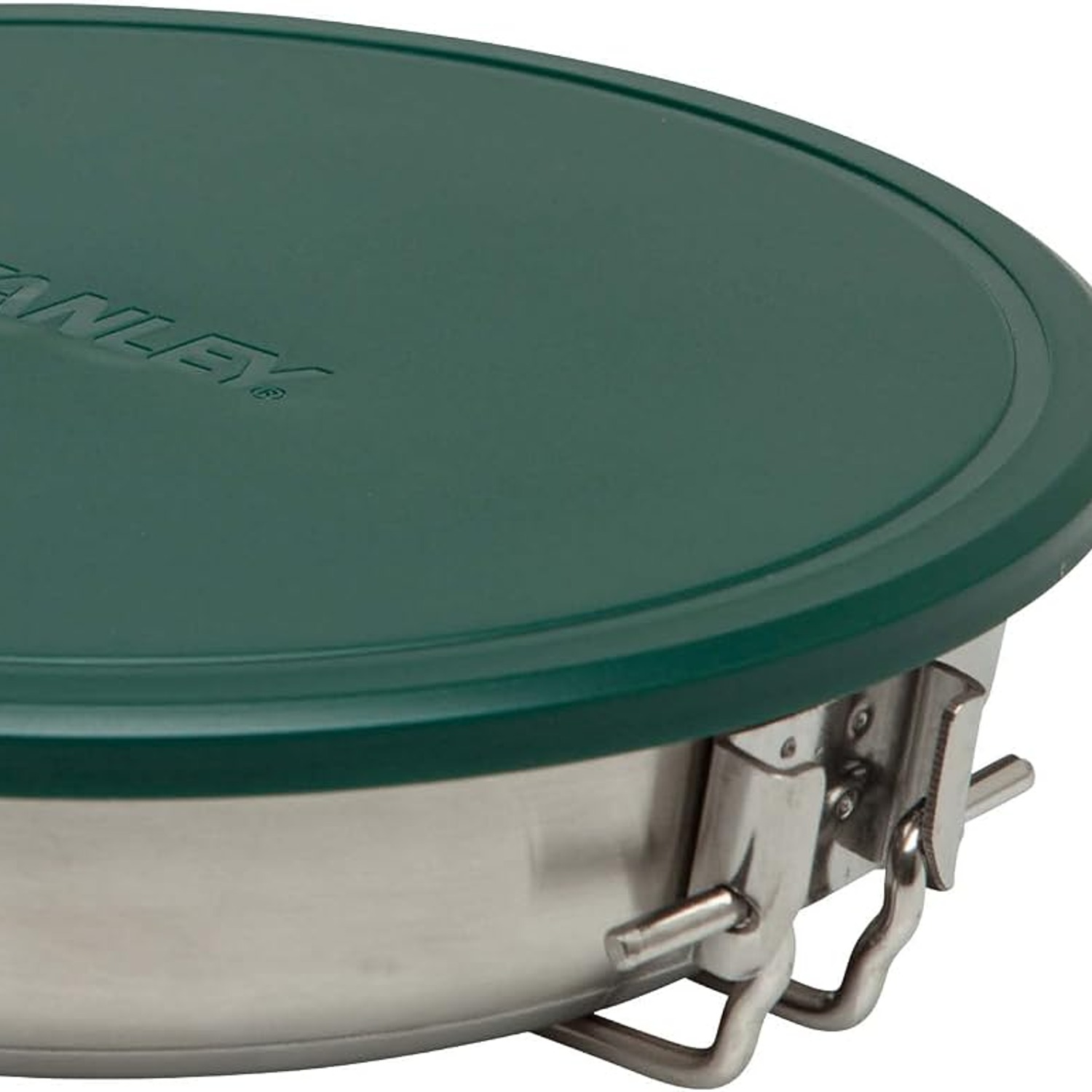
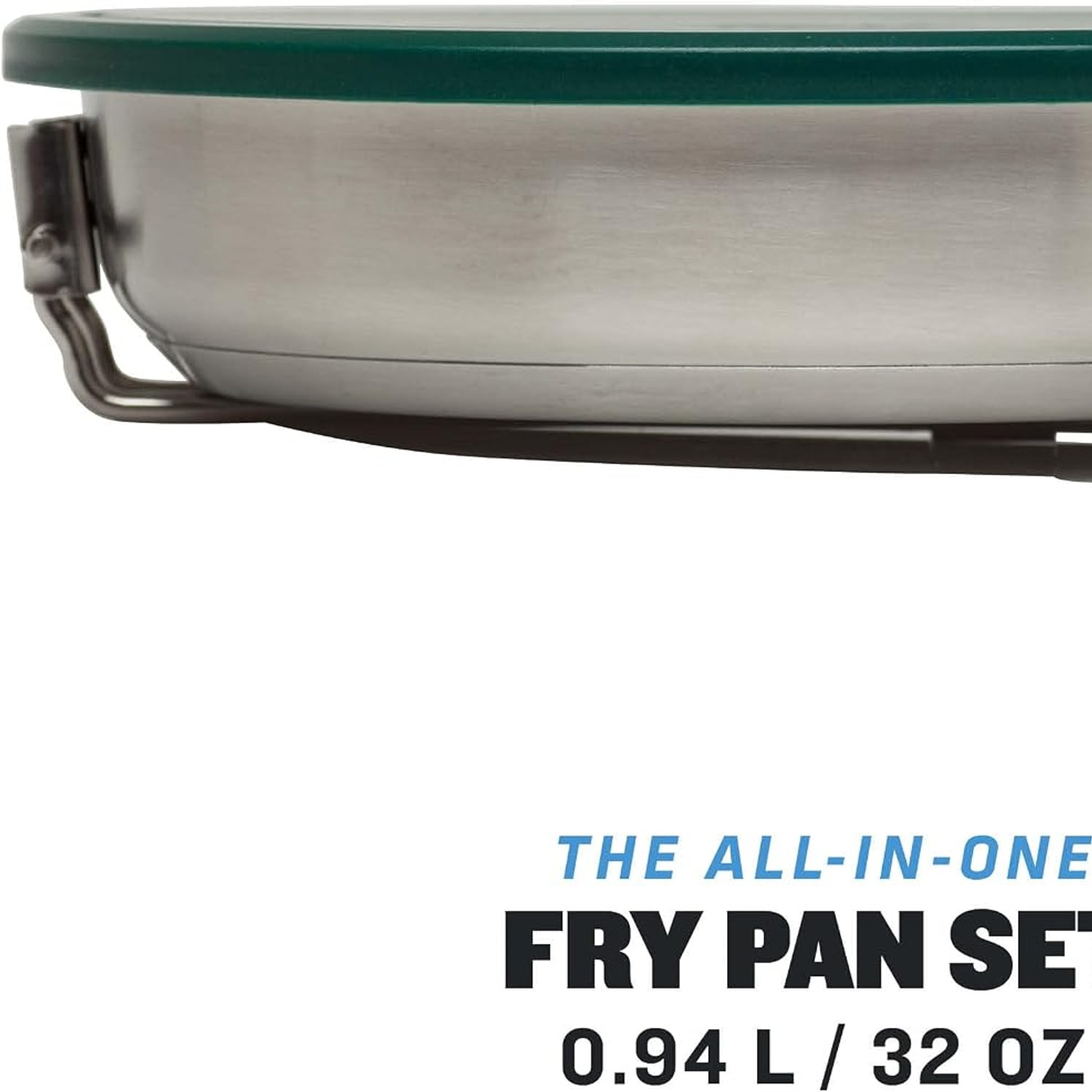
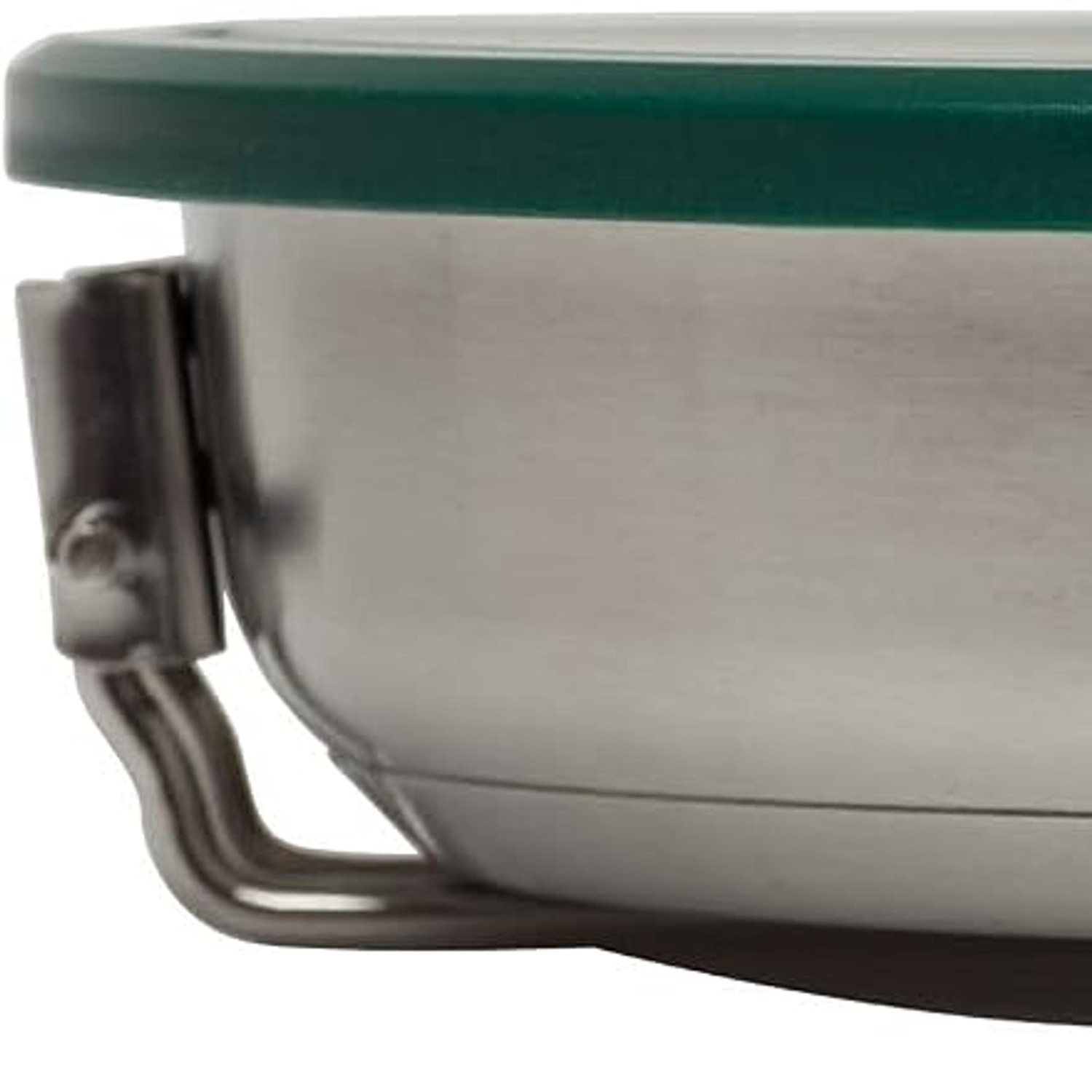
The whole set weighs 0.95 kilograms. The pieces nest into one another, and the handle is the clever bit. It extends and locks for cooking, giving you a firm grip and a pan that sits level on a burner. When the set is packed away, the same handle folds over the lid and clamps the stack shut.
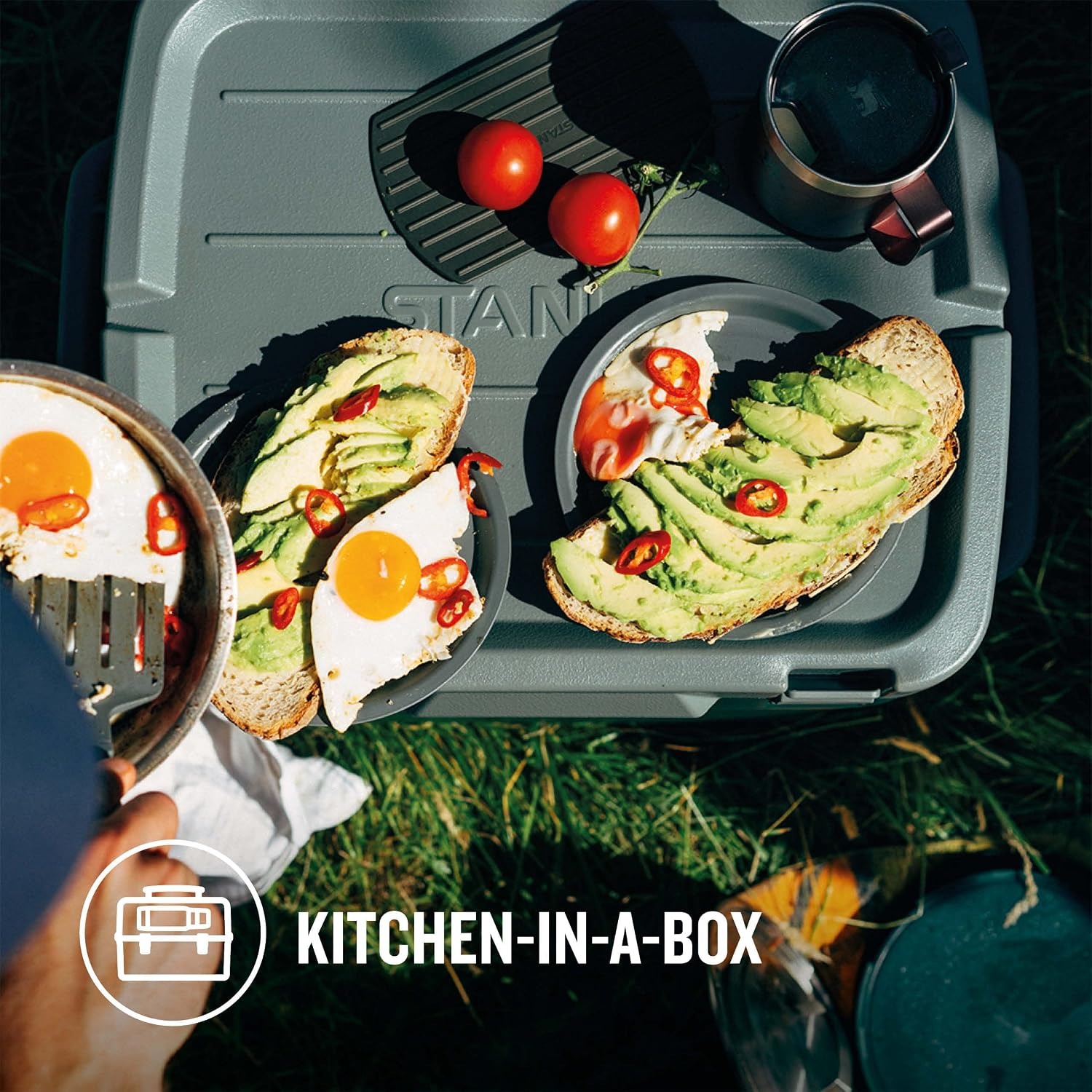
That single detail changes how the set lives in your gear. Instead of a pan here, a lid there and a cup rolling around the footwell, it is one object. You grab it, it goes in the crate, and nothing is missing when you set up.
Why stainless steel over the alternatives
There are three common materials in camp cookware, and each has a trade-off.
Aluminium with a non-stick coating is the cheapest and lightest. Food releases easily, which is nice. The catch is that the coating does not survive metal utensils, hard scrubbing or high heat, and once it starts flaking the pan is done.
Titanium is the lightest option by far and is close to indestructible. It is also expensive and conducts heat poorly, so it develops hot spots that scorch food in one patch while another stays raw. Fine for boiling water, frustrating for frying.
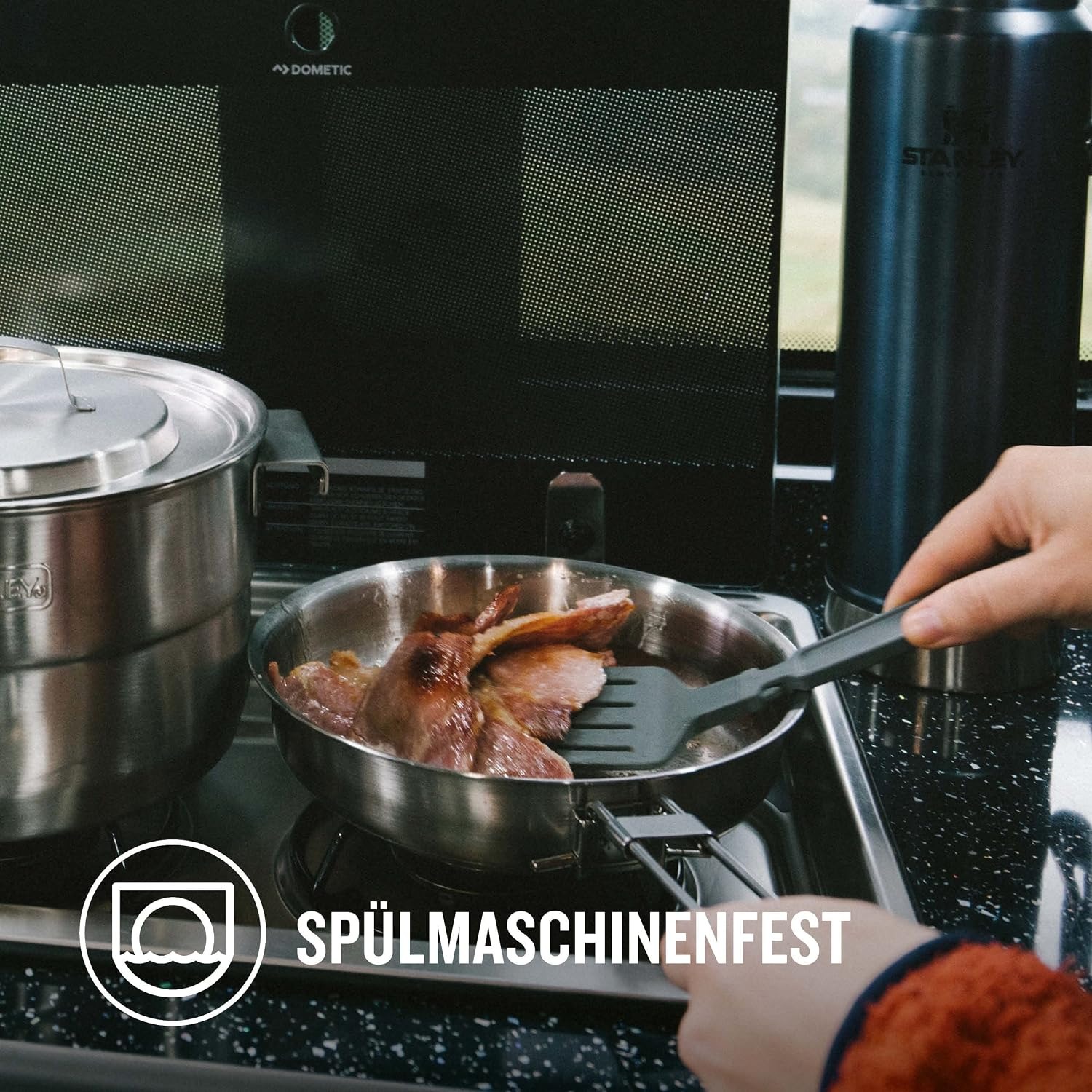
Stainless steel sits in the middle and is the sensible pick for most people. It is heavier, yes. In return you get a surface with nothing to peel, no seasoning routine, no special sponges, and the freedom to use a metal spatula without a second thought. It is rust-proof, BPA-free and goes in the dishwasher. When people ask about the best stainless steel camping cookware, this is the reasoning behind the recommendation.
Who this set suits
It is a strong fit for car campers, caravan and van travellers, and anyone running a basecamp. If your gear travels by vehicle rather than on your back, a kilogram of steel costs you nothing and buys you a pan that will outlast several cheap ones.
It also works well as a first proper kit. Nine pieces is enough to cook and serve a real meal for one or two people without becoming a cupboard you have to haul around. Couples, solo travellers and small families cooking in rounds will all get along with it.
It suits the gift pile too. The lifetime warranty against manufacturing defects means it is not the kind of present that quietly dies in a shed. For someone setting up their first camp kitchen, the best camp kitchen set is usually the one that arrives complete.
Where it is less ideal is multi-day hiking with every gram counted. If you are measuring your pack in grams, a lighter single pot makes more sense. Be honest about how you travel before you decide.
How to choose, in practical terms
Start with how many people you cook for. A pan this size handles one or two portions comfortably and stretches to three if you serve in waves. Bigger groups need a second vessel, not a bigger pan.
Next, look at the handle. This matters more than people expect. A handle that locks out properly means you can lift a full, hot pan without it tipping. A fold-over handle also means it is not jabbing holes in your pack lining.
Then check how it stores. Nesting sets save real space, but only if the whole stack stays together. A set that locks closed beats one held with a rubber band, which will perish in the sun and vanish by the second trip.
Finally, think about cleanup. Camp water is cold and usually limited. Stainless steel tolerates a rough scrub at camp and a proper wash later, which is why so many people land on the best dishwasher safe camp cookware once they have been burnt by a flaking coating.
Getting good results from stainless steel
A lot of people try stainless once, stick an egg to it, and swear off the material. The problem is usually technique, not the pan.
Preheat first. Put the dry pan over a medium flame and let it come up to temperature for a minute or two before you add anything. Then add your oil or butter and let that heat as well. Cold oil in a cold pan is what makes food grab.
Keep the heat moderate. Camp stoves often run hotter than kitchen burners, and a roaring flame scorches the middle of the pan while the edges stay cool. Dial it back and give it time.
Let the food release itself. Steak, fish and eggs will stick when they first hit the surface and then let go once a crust forms. Poke at them too early and they tear. Wait, and they lift cleanly.
Looking after it
Wash the set before you use it for the first time. After that, hand wash in warm soapy water with a soft sponge, or run it through the dishwasher on the top rack only. The top rack is a real instruction, not a suggestion, since the heat at the bottom is harsher on the finish.
Skip the steel wool. It will cut fine scratch lines into the steel. For stuck-on food, a soak does more good than force, and a plastic scraper finishes the job.
Let everything cool before washing, and dry it fully before nesting. Water trapped between stacked pieces is the main cause of spotting on stainless. Stored dry, the set will look much the same years from now as it does on day one.
The short version
This is a nine-piece stainless steel camp cook set that weighs 0.95 kilograms, packs into one locked bundle, and is backed by a lifetime warranty against manufacturing defects. It is made from 18/8 food-grade, BPA-free steel, and every piece goes in the dishwasher on the top rack.
Buy it if you camp from a vehicle, cook for one or two people, and want gear that keeps working after the honeymoon period. Look elsewhere if you are an ultralight hiker counting grams.
For most people, the deciding factor is simple. This is cookware you will still be using in ten years, not something you will replace next season.