

The complete guide
How to Choose a Lightweight Backpacking Tent You Will Actually Use
The night that puts people off camping
Nearly everyone who gave up on camping can name the trip that did it. Rain that found a way in. Poles that would not thread in the dark. A tent that took so long to pitch that dinner became a bag of chips in the car. None of that is about toughness. It is about equipment that makes the simple part hard.
A good lightweight tent solves this in a boring, practical way. It goes up fast, it keeps water on the outside, and it weighs little enough that you stop resenting it halfway up the hill. That is the whole job. Everything else is detail.
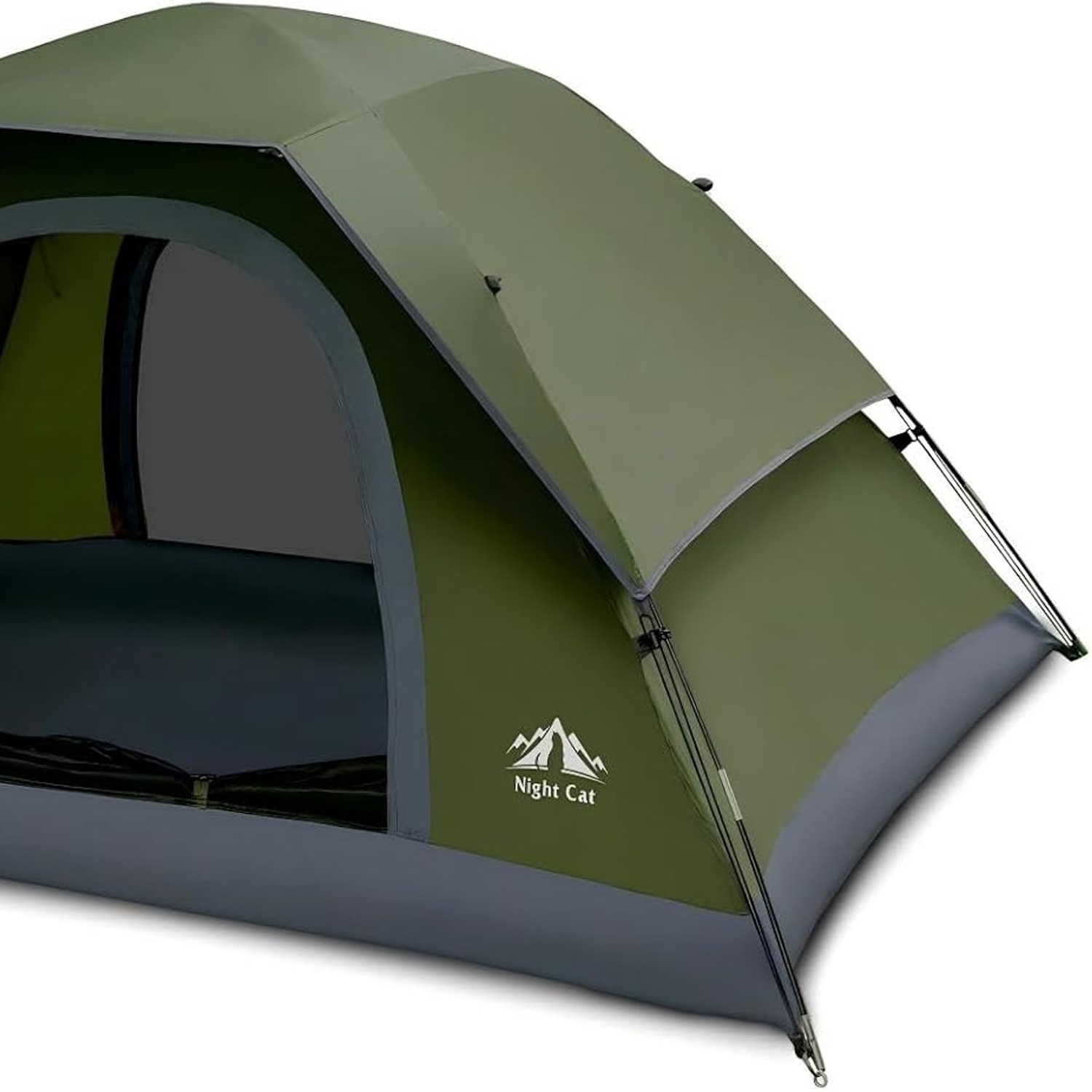
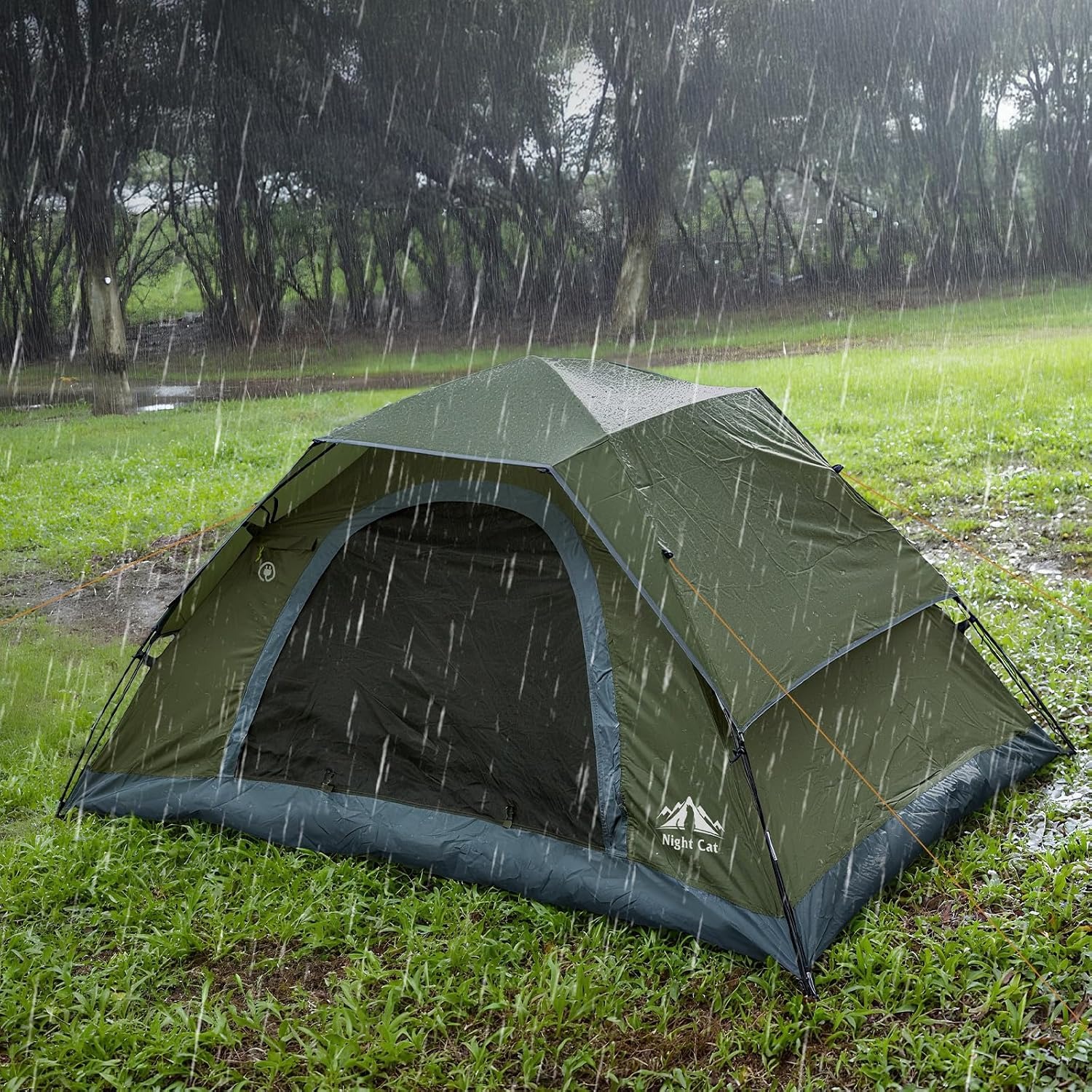
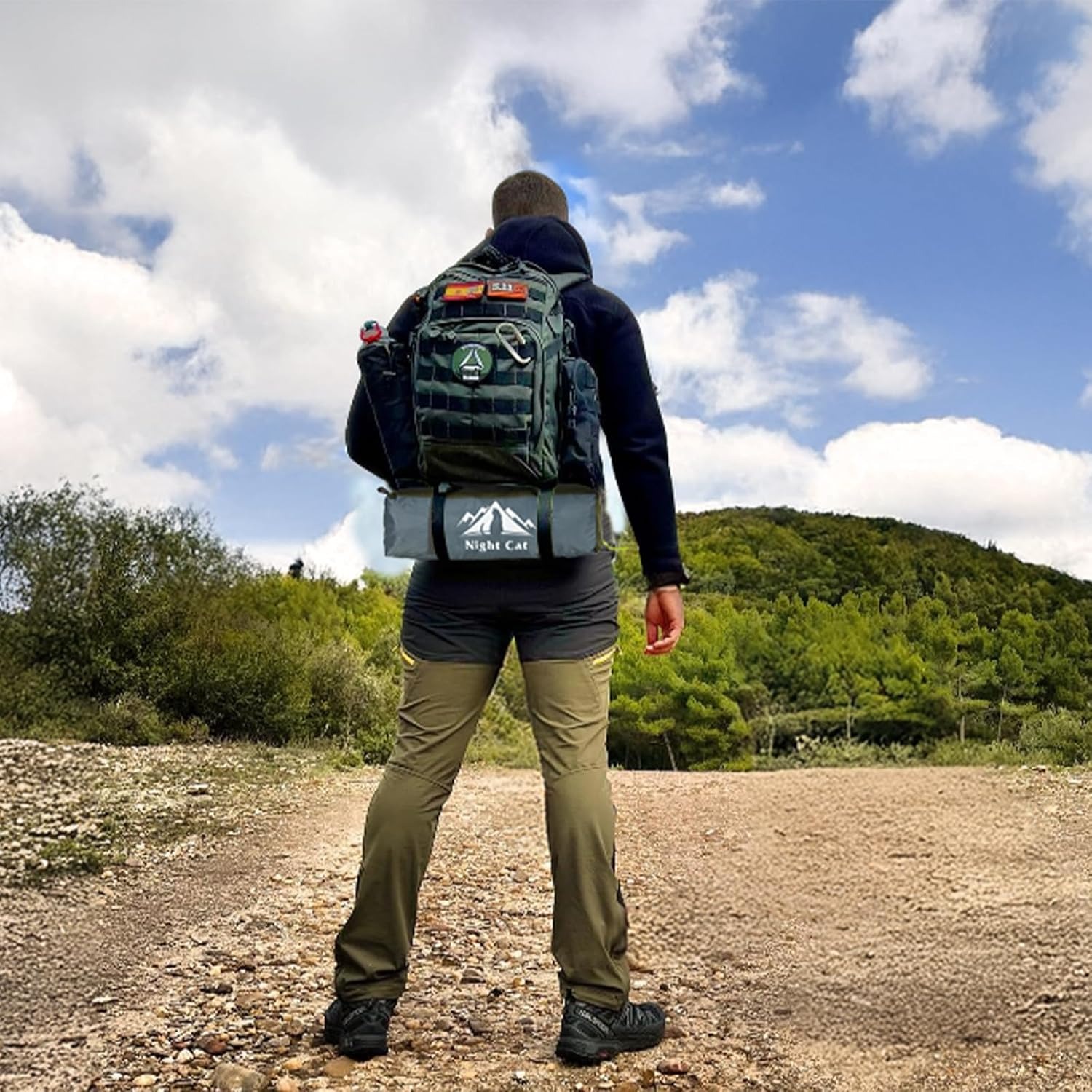
This Night Cat dome weighs 2.45 kg packed, pitches in about two minutes according to the maker, and carries a 3000 mm water resistance rating. Those three numbers tell you most of what you need to know before you read another word.
What the waterproof rating actually means
You will see tents advertised with figures like 1500 mm, 3000 mm or 5000 mm. This is a hydrostatic head rating. It measures how tall a column of water the fabric can hold before it starts to leak through. Higher means more resistant.
At 3000 mm you are in solid middle ground. That handles steady rain and a wet morning with no drama. It is not an expedition rating for days of driven storm, and no tent in this weight class claims to be. For weekend trips, campgrounds, hikes and fishing nights, 3000 mm is a sensible place to be.
The floor matters as much as the canopy. Here it is a 150D Oxford waterproof fabric, which is a heavier weave than the main body. That is deliberate. The floor is the part that gets dragged across gravel, pressed onto wet grass and knelt on with boots still half on.
One tip that costs nothing. Tension the rainfly properly using all four guylines. If the fly sags onto the inner tent, water wicks across at the contact point and you will swear the tent leaks when it does not.
Weight, and why 2.45 kg is the honest number
Tent weights get fuzzy in marketing. Some brands quote a "trail weight" that leaves out stakes, guylines and the stuff sack, then a "packed weight" that includes everything. The gap can be half a kilo.
In this case the item weight and minimum trail weight are both listed as 2.45 kg, which keeps things simple. That is what you carry.
For context, 2.45 kg is comfortable for an overnight or two-night walk, easy on a bike rack, and barely noticeable in a car boot. If you are splitting it between two people, one takes the body and the other takes poles and stakes, and neither of you thinks about it again.
The poles are fibreglass. Alloy poles shave weight and pack a little shorter, and they cost more. Fibreglass is springy, cheap to replace and copes fine with normal use. Just avoid forcing a bent section, and do not leave the tent pitched in strong wind without guylines, because that is when poles take a beating.
Space, and who really fits
Occupancy is listed as 1 person. The floor is 220 cm by 150 cm, about 3 square metres, with a maximum height of 110 cm.
Read that properly. A 150 cm width is wider than many one-person tents, which often sit around 80 to 100 cm. So as a solo tent it is genuinely spacious. You can sleep with your pack inside, spread a mat out, keep boots at the foot end and still roll over freely.
Two adults do fit across 150 cm. Two standard sleeping mats are usually 50 to 65 cm each, so the maths works. What does not fit is two people plus two large packs plus wet gear. If you both travel light, it is fine. If one of you snores and the other needs space, treat it as a solo palace instead.
The 110 cm peak height means sitting up, changing a shirt and reading. Not standing. That is the trade for a tent you can carry.
Two doors is not a gimmick
Single-door tents are cheaper to make and they are fine when you sleep alone. The moment there are two of you, the person on the inside has to climb over the other one every single time.
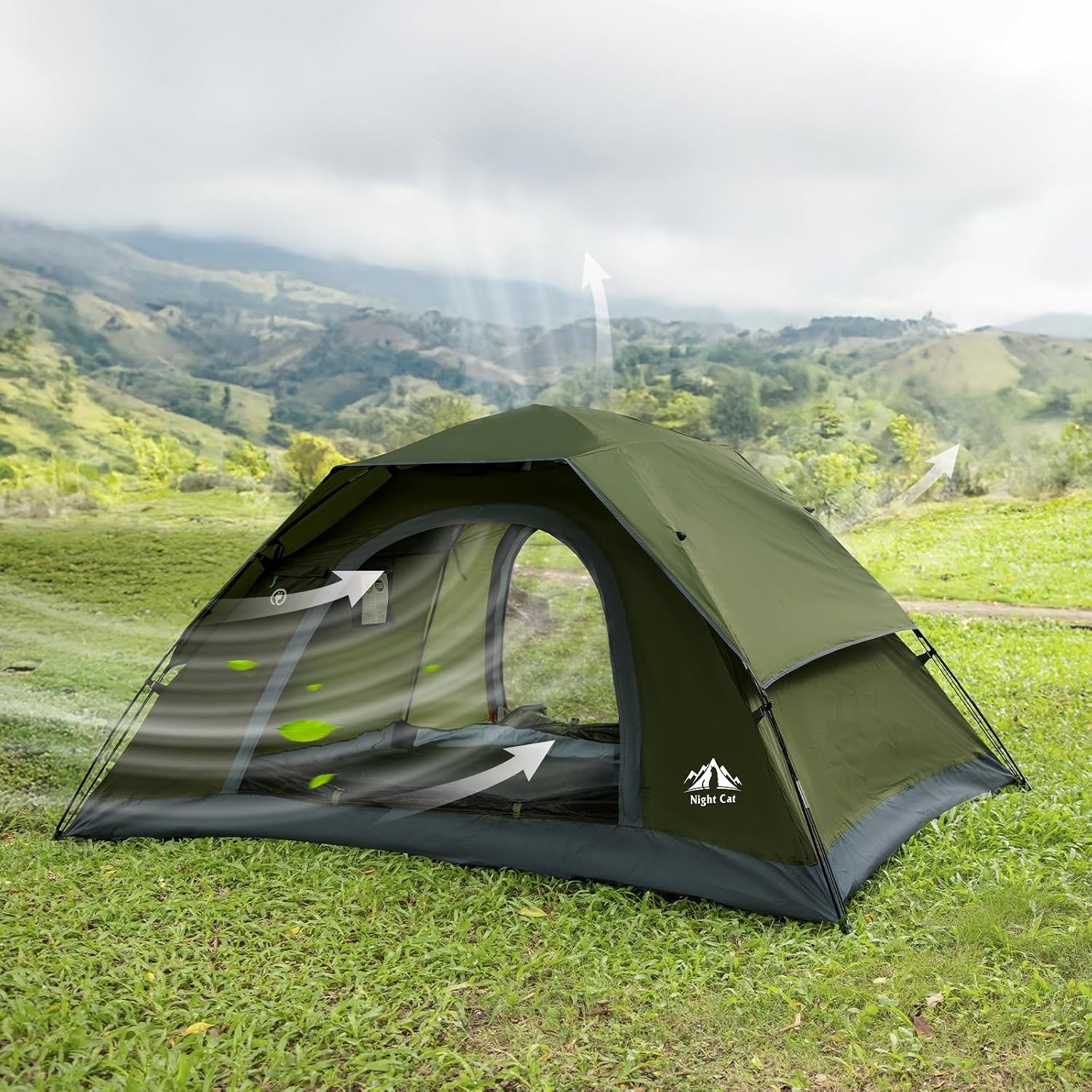
Two doors fixes that. It also gives you real airflow. Open both and you get a cross breeze, which is the main defence against condensation. Condensation is not leaking, it is your own breath and body moisture meeting cool fabric overnight. Ventilation beats it. A sealed-up tent in mild weather will always feel damper in the morning than one with air moving through.
The design here uses parallel poles with doors on both sides, which also makes the interior feel less closed in than a tunnel shape.
Setting it up without the swearing
Clip attachment is the quiet hero of fast pitching. Instead of feeding a long pole through a fabric sleeve across the whole tent, you lay the tent out, spread the poles, then snap clips onto them one by one. It works in the dark, it works in gloves, and it works when one of you is holding a torch and losing patience.
The routine goes like this. Spread the tent body and roughly square it to the ground. Peg the two far corners so it stops sliding. Assemble both poles and clip the body on. Throw the fly over and align the doors. Peg the remaining corners, then run the four guylines out at roughly 45 degrees and tension them.
Ten stakes are included, which is more than the corners need, so you have spares and enough to peg the fly edges down properly.
Do one practice pitch in the backyard before your first trip. It takes ten minutes, and it turns a stressful arrival into a routine one.
Looking after it
Care is simple and it is hand wash only. No washing machine, no dryer, no bleach. Cool water, mild soap, a soft cloth, then rinse and dry.
The single biggest thing you can do is never store it damp. If you break camp in rain, pack it wet, get home, and then forget about it for a week, you will open the bag to a mildew smell that does not come out. Hang it over a door or pitch it in the shade for a few hours until it is bone dry.
Brush grit out of the floor before you roll it. Grit is abrasive and it grinds at the coating every time you pack. Keep the zips clean for the same reason. A soft brush and thirty seconds does it.
Store it loosely in a cool, dry place rather than compressed in a hot car for months. Heat and pressure are hard on waterproof coatings.
Who this suits
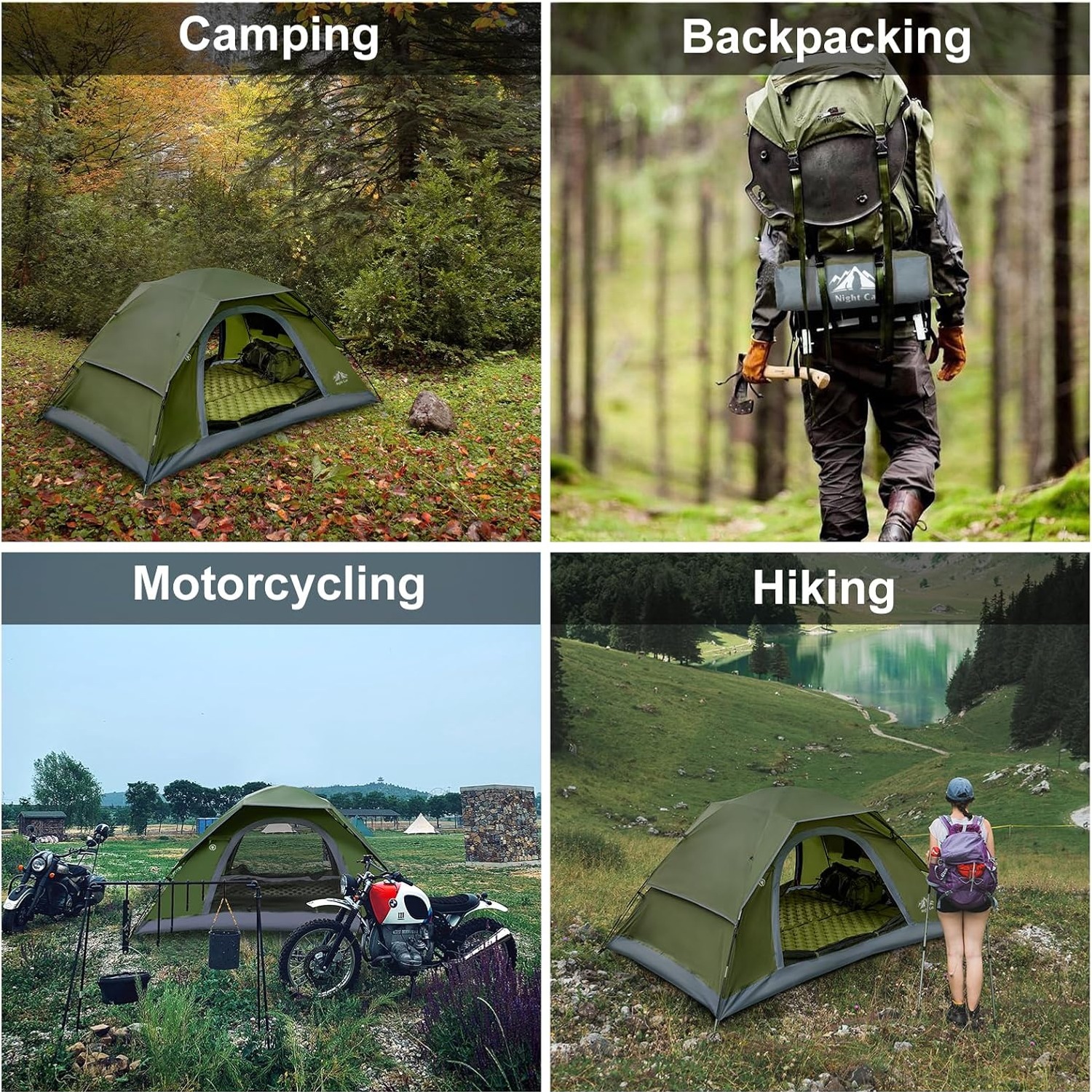
This tent makes sense if you want gear that lowers the barrier to going. Weekend hikers, people doing one-night fishing trips, festival campers, motorbike tourers, anyone who wants a backup tent in the car for spontaneous nights away.
It also works well as a first tent. The best compact tent for travel is the one you can pitch confidently on your second try, and clip-on poles plus a free-standing frame make that likely.
It is less suited to winter mountain trips, long expeditions, or two people who both carry a lot of bulk. Those jobs need more floor area, more headroom and usually alloy poles.
The short version
You get a free-standing dome at 2.45 kg, two doors, a 220 cm by 150 cm floor with 110 cm of headroom, 3000 mm water resistance, a 150D Oxford waterproof base, two clip-attach fibreglass poles, ten aluminium stakes and four guylines. Setup is quoted at around two minutes.
For solo camping it is roomy. For two light packers it works. For anyone who has been putting off a trip because the last tent was a hassle, this is the kind of gear that gets you back out the door.