
The complete guide
How to Choose a Roll Top Camping Table That Actually Gets Used
The problem with cooking on the ground
Anyone who has camped without a table knows the routine. The stove goes on the dirt, the chopping board goes on the esky lid, and the plates balance on a chair. Sand gets into the food. Someone kicks a drink over. By the second night, the camp kitchen has turned into a pile of gear on a tarp.
A table fixes it, but only if the table makes it into the car. That is the real test. Plenty of camp tables are perfectly good and still spend their lives in a shed because they are too bulky or too awkward to bother with. A roll top camping table solves the packing problem first and the surface problem second, which is the right order.
How a roll top actually works
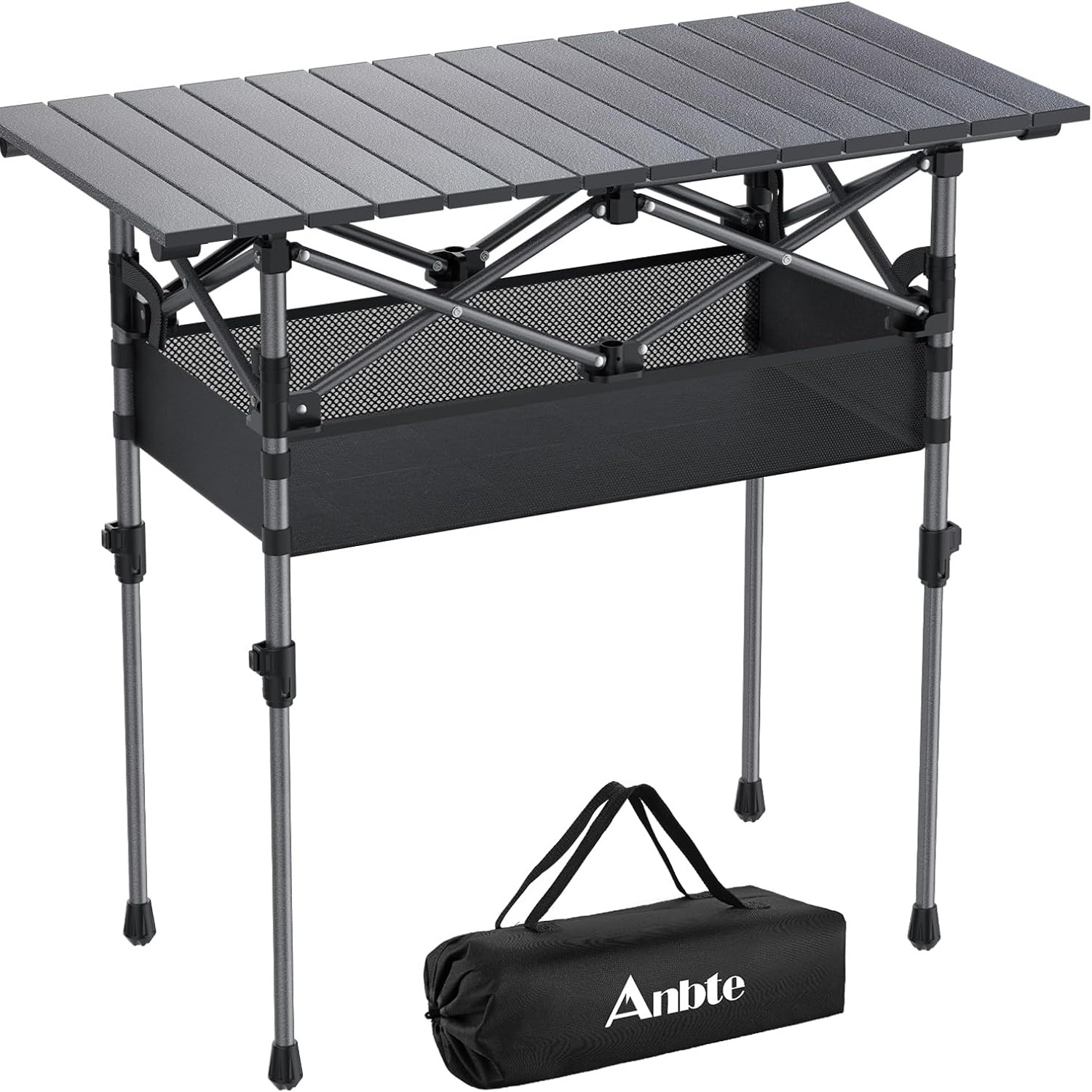
Instead of one solid panel that folds in half, the top is a series of aluminium slats joined side by side. When you release them, they roll up like a bamboo mat. Rolled, the whole top is a cylinder you can hold in one hand.
To set it up, you unroll the slats and slide two lateral rods through the channels along the sides. Those rods are what turn a loose roll into a rigid panel. The top then drops onto the frame, the legs unfold, and you have a flat surface. It takes a minute once you have done it a couple of times.
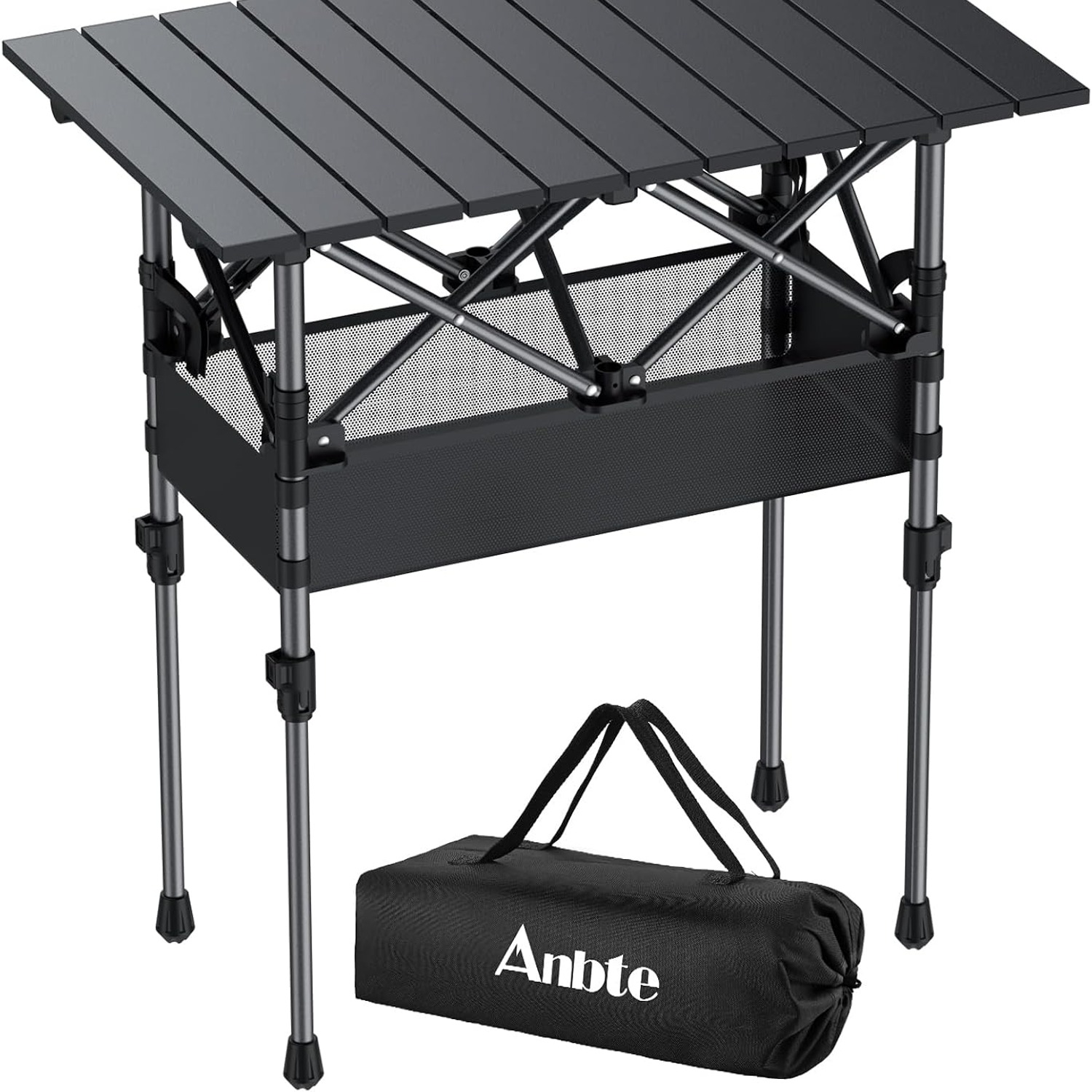
This model uses an X-shaped brace under the top. The brace forms a triangle with the legs, which is the shape that resists wobble. The legs themselves are steel, and the top, frame and handle are aluminium. That combination is why a 4.2 kg table can carry a rated 45 kg.
The numbers that matter
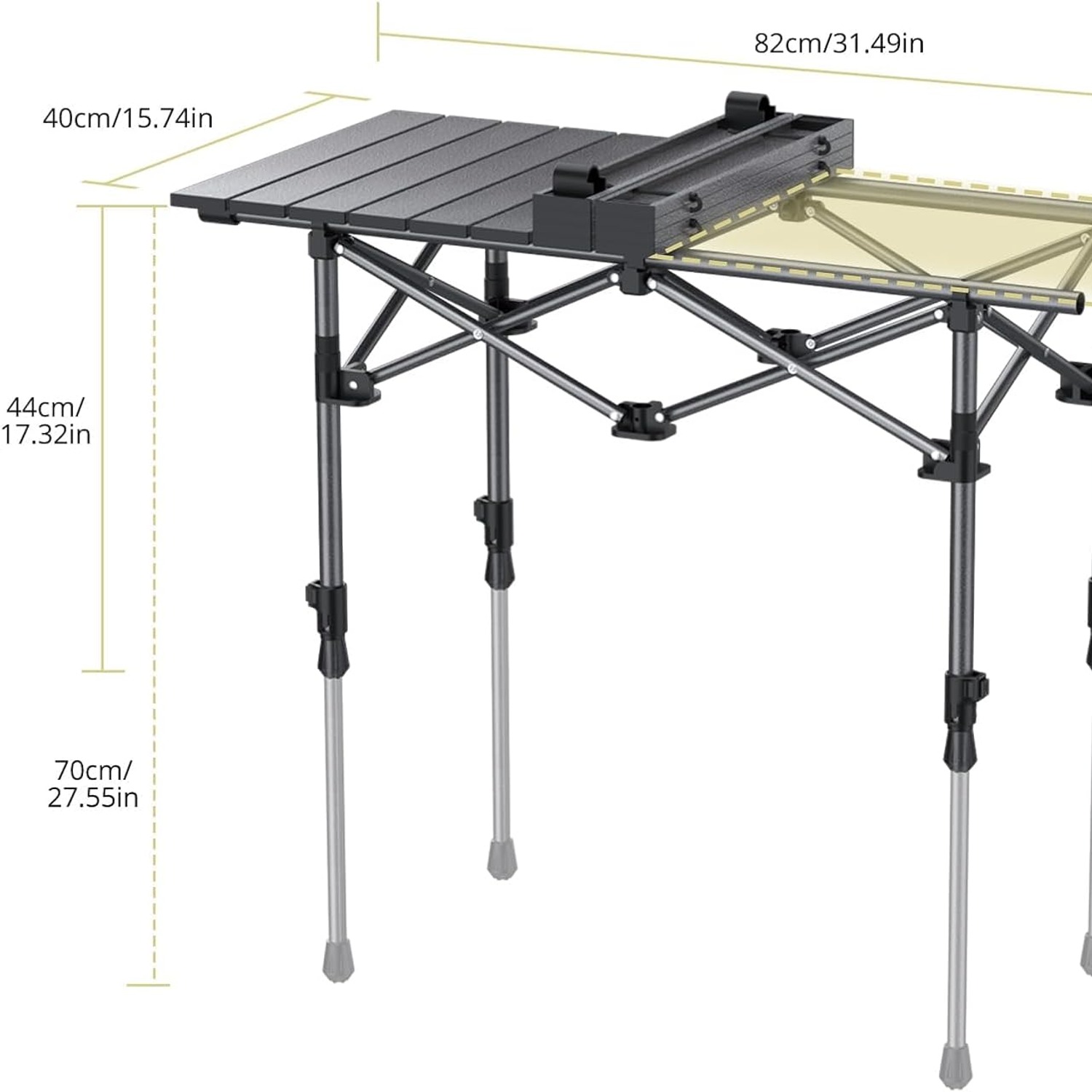
Set up, the table is 81.8 cm wide, 40.6 cm deep and 69.9 cm tall. In practical terms that is about three feet of bench. Two people can eat at it comfortably. One person can run a full camp kitchen on it with room for a board and a stove.
The load rating is 45 kg. That number sounds abstract until you think about what you actually put on a camp table. A full 25 litre cooler is around 30 kg loaded. A cast iron camp oven with a stew in it is maybe 8 kg. A two-burner stove is often under 6 kg. All of those sit inside the rating with room to spare.
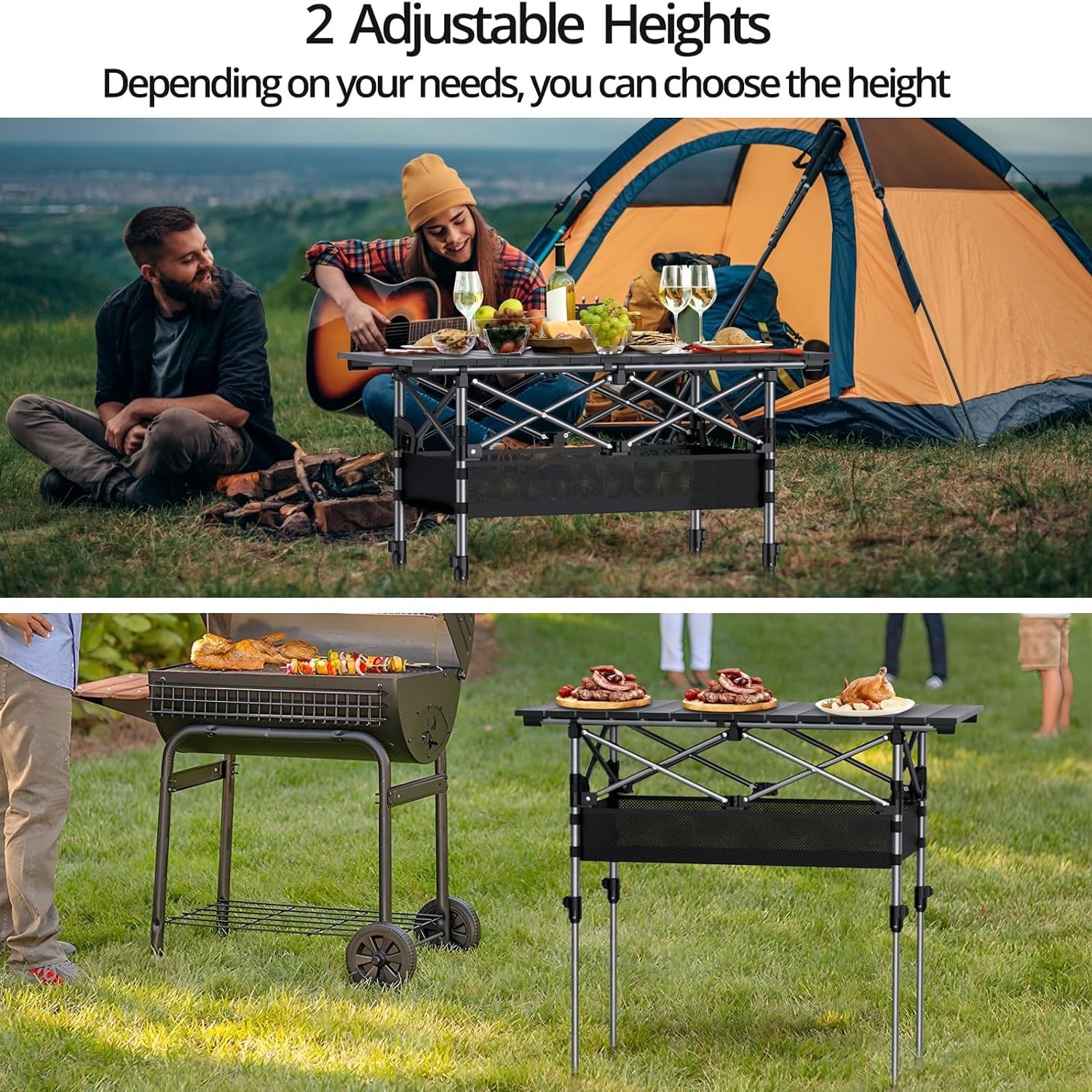
Then there is the height. The legs set at either 44 cm or 70 cm. This is more useful than it sounds. Camp chairs are low, so a 70 cm table means you are reaching up to eat. At 44 cm, the table sits at the right level for a seated meal or a card game. Flip it to 70 cm when you want to stand and prep food, clean fish or lay out a BBQ. Two tables in one, essentially.
Who it suits
Car campers get the most out of it, because the 4.2 kg weight and the carry bag mean it travels without argument. Caravan and motorhome owners like it for the same reason, since it fits in an external locker and comes out when the awning goes up.
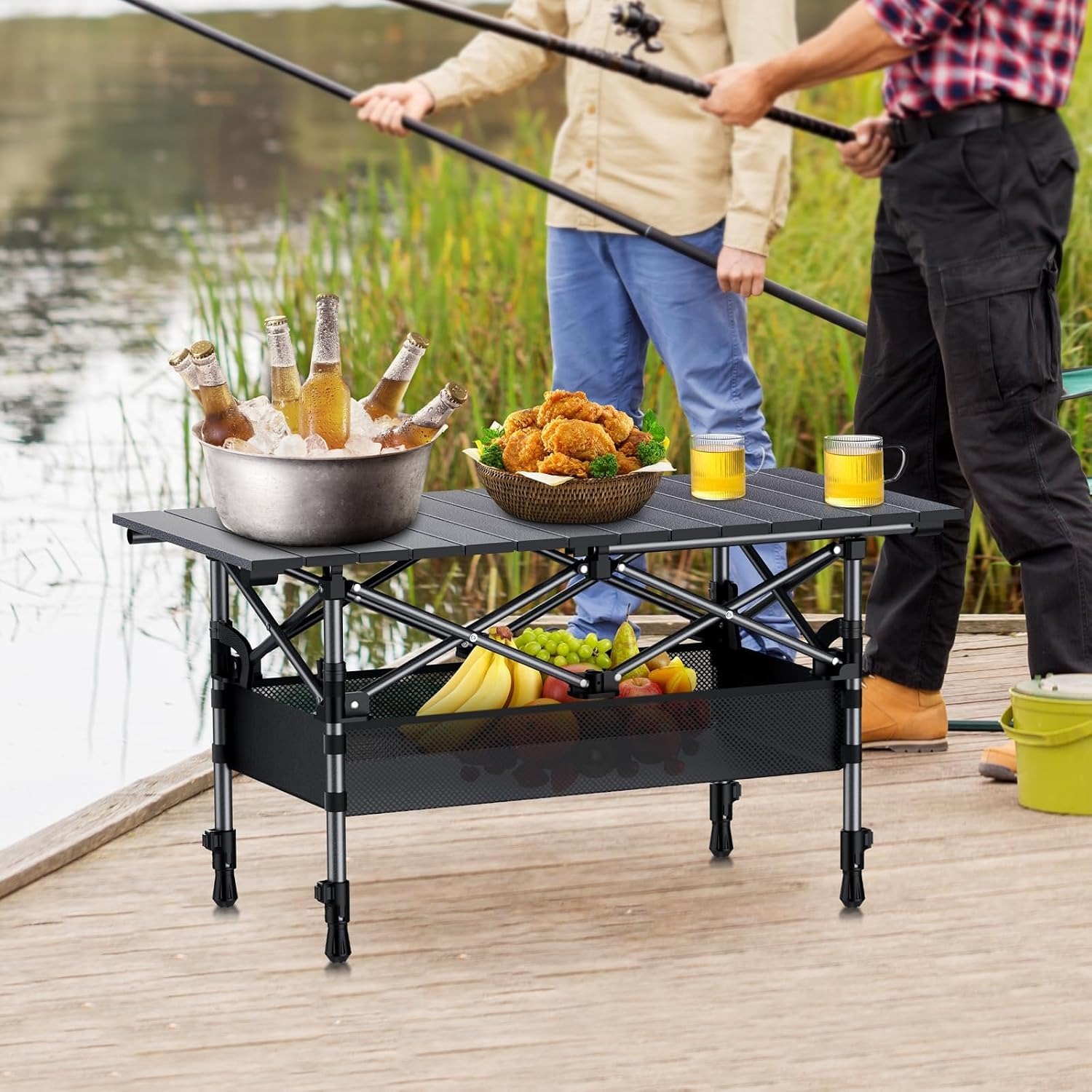
It also works for people who are not camping at all. A picnic in the park. A market stall. A side table for a backyard barbecue. A temporary desk when you need a flat surface in a spare room. The aluminium top and two heights make it more flexible than most folding tables.
If you are shopping for the best compact camp kitchen table, pay attention to the packed size more than anything else. A table that rolls will always beat a table that folds for storage volume, assuming the set-up surface is the same.
What to check before you buy any camp table
Packed size and weight. Measure the space you actually have. A boot corner, a locker, behind a seat. If the table does not fit that space, it will not travel.
Load rating. Look at what you will put on it on the worst day, not the average day. A cooler plus a stove plus food adds up fast.
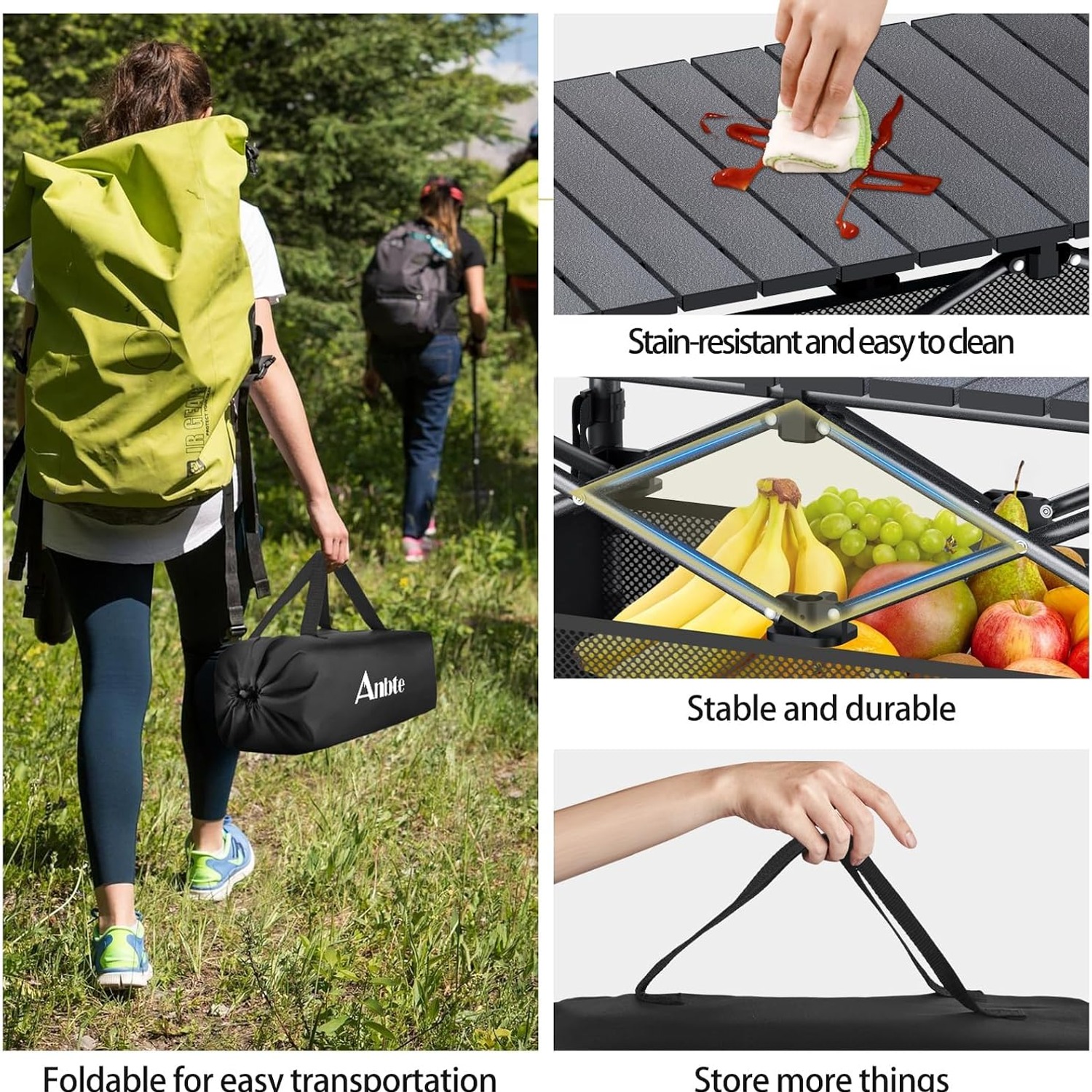
Surface material. Aluminium slats wipe clean and do not absorb spills. Fabric and mesh tops are lighter but hold stains and smells. If you cook, go aluminium.
Leg adjustment. Even a basic two-position system like this one covers both seated and standing use. On uneven ground, adjustable legs also help you get the top level.
Storage underneath. A mesh basket is not a gimmick. On a campsite the ground is where small items disappear. Being able to drop tongs, a lighter and a roll of paper towel into a net under the table keeps the surface clear and the gear findable.
Setting it up and packing it down
The first build takes a bit longer because assembly is required. One person can do it, and a hex key and screwdriver are the suggested tools. Do that build at home on the lounge room floor, not in the dark at a campsite with a head torch.
After that, the on-site routine is simple. Unroll the top, slide the two rods in, unfold the legs, set the height, hang the storage basket. Reverse it to pack. Keep the manual in the carry bag for the first few trips in case you forget which way the rods go in.
One small habit worth forming: roll the top slowly and keep your fingers on the outside edge. The slats move against each other, and that is where pinched fingers happen. The product is rated for adult use, so let the adults handle the rolling.
Looking after it
Wipe the top down with a damp cloth and a mild detergent after each use, then dry it. Grease and sauce come off easily while they are fresh and get stubborn once they bake on in the sun.
Shake grit out from between the slats. Sand and small stones are the main thing that makes a roll top stiff over time. A quick shake and a wipe along the gaps sorts it.
Dry everything before it goes in the bag. A damp table rolled into a closed bag for three weeks is how you end up with musty webbing and corroded hardware. If you have used it near saltwater, rinse it with fresh water first.
Store the bag somewhere dry. A shelf beats a concrete garage floor.
Getting more out of it
A few things people do with this kind of table that are worth stealing. Put a silicone mat or a trivet under the stove so the burner base is not directly on the aluminium. Use the low setting for kids eating in camp chairs and the high setting for adults prepping. Keep a small bin bag clipped to the frame so scraps do not go on the ground. If you camp in wind, weight the storage net with something heavy so the table does not become a sail.
If you camp often with another couple, two of these end to end gives you a long serving bench and still packs into two small bags.
The short version
This is a 4.2 kg aluminium roll top camping table with a 81.8 x 40.6 cm surface, two heights at 44 cm and 70 cm, a 45 kg load rating, a mesh storage basket and a carry bag. It assembles once with basic tools and then sets up in about a minute every time after.
It is for people who want a proper flat surface at camp without giving up boot space. If your current system is a chopping board balanced on an esky, this is the fix.