
The complete guide
How To Choose A Solar Camping Lantern That Still Works In Year Three
The problem with camp lights
Almost everyone has the same story. You pull out the torch, press the switch, and nothing happens. The batteries went flat in the drawer, or they leaked, or someone borrowed them for the TV remote in March. Outdoors, that moment is annoying. During a blackout with kids in the house, it is worse.
The second version of the problem is subtler. You buy a rechargeable lantern, it works beautifully, and then on night two of a long weekend it dies. There is no powerpoint within forty kilometres. Your phone becomes the light, and now the phone is dying too.
Both problems come down to one thing. Most lights have exactly one way to get energy, and when that way is unavailable, the light is just a lump of plastic.
How a three-way charging lantern fixes it
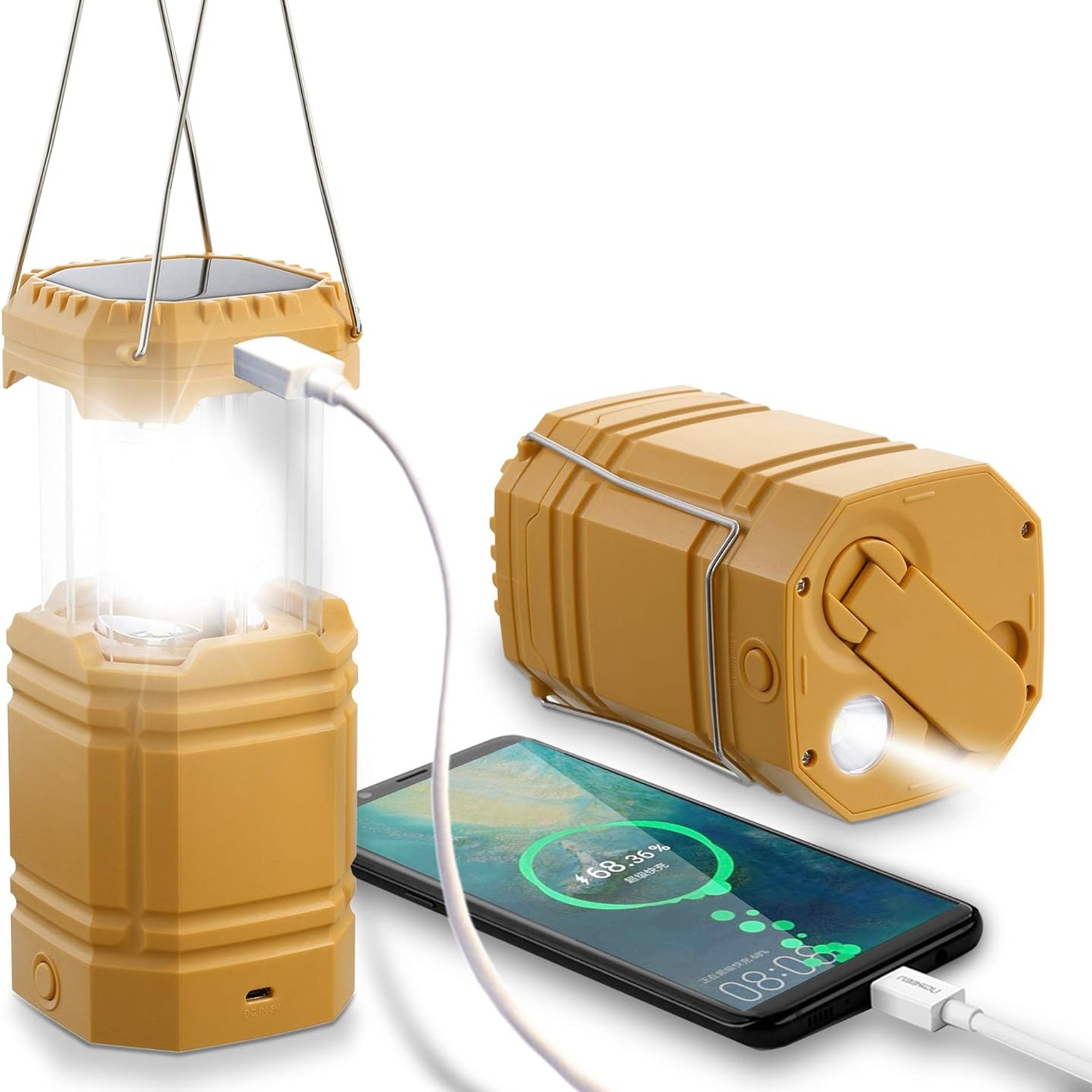
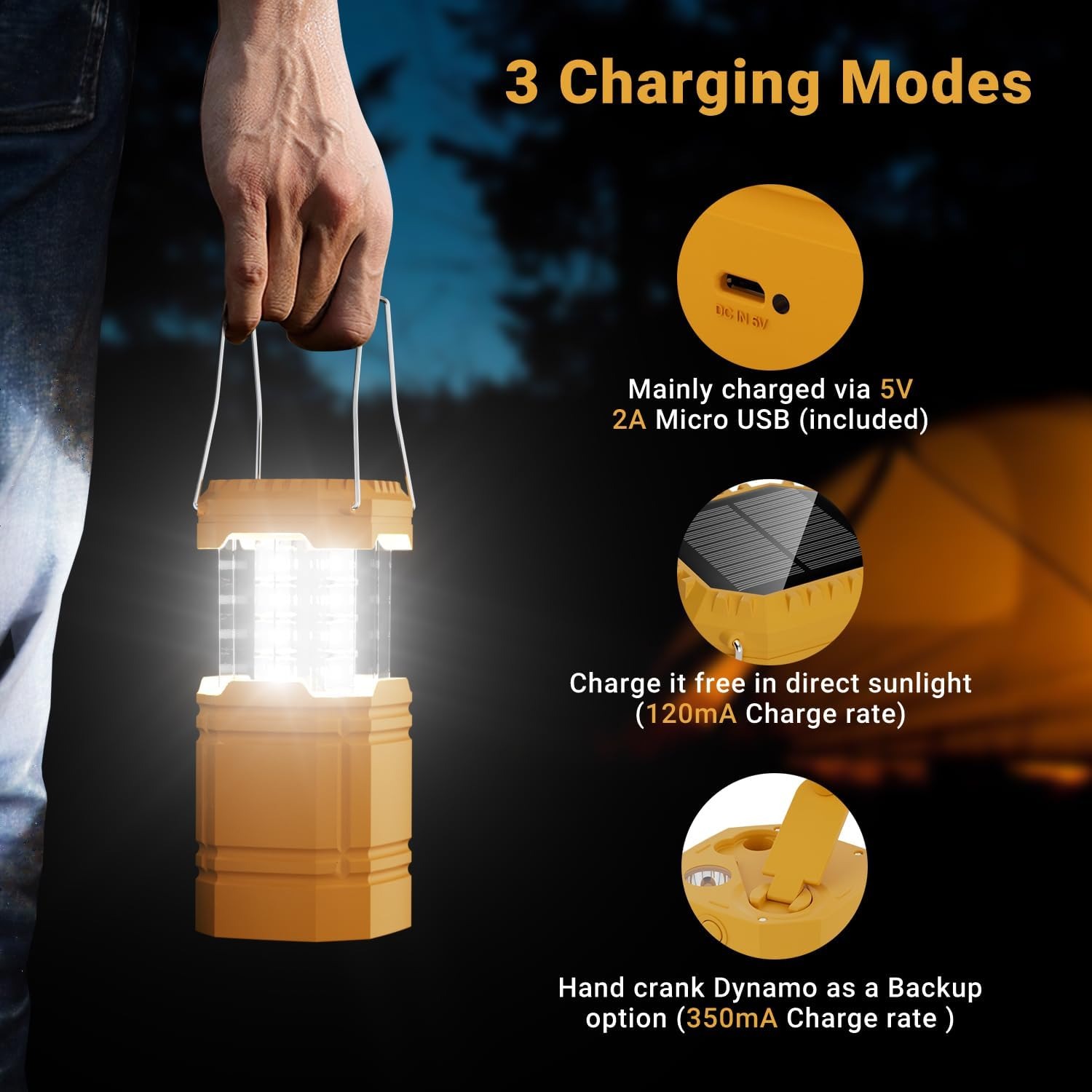
This lantern takes power three ways. You can plug it in with a USB cable at home, which is the fast and obvious method. You can leave the solar panel facing the sun while you are walking or while the lantern sits on a camp table all afternoon. Or you can turn the hand crank and make the power yourself.
Each one covers a gap the others leave. USB is quick but needs mains power. Solar is free and silent but slow, and it does very little on a grey winter day. The crank is the one that never fails. It does not care about the weather, the grid or how long the lantern has been in storage. Wind it and you get light.
That is the whole argument for this kind of lamp. It is not the brightest light you can buy, and it is not trying to be. It is the light that still works.
What you actually get
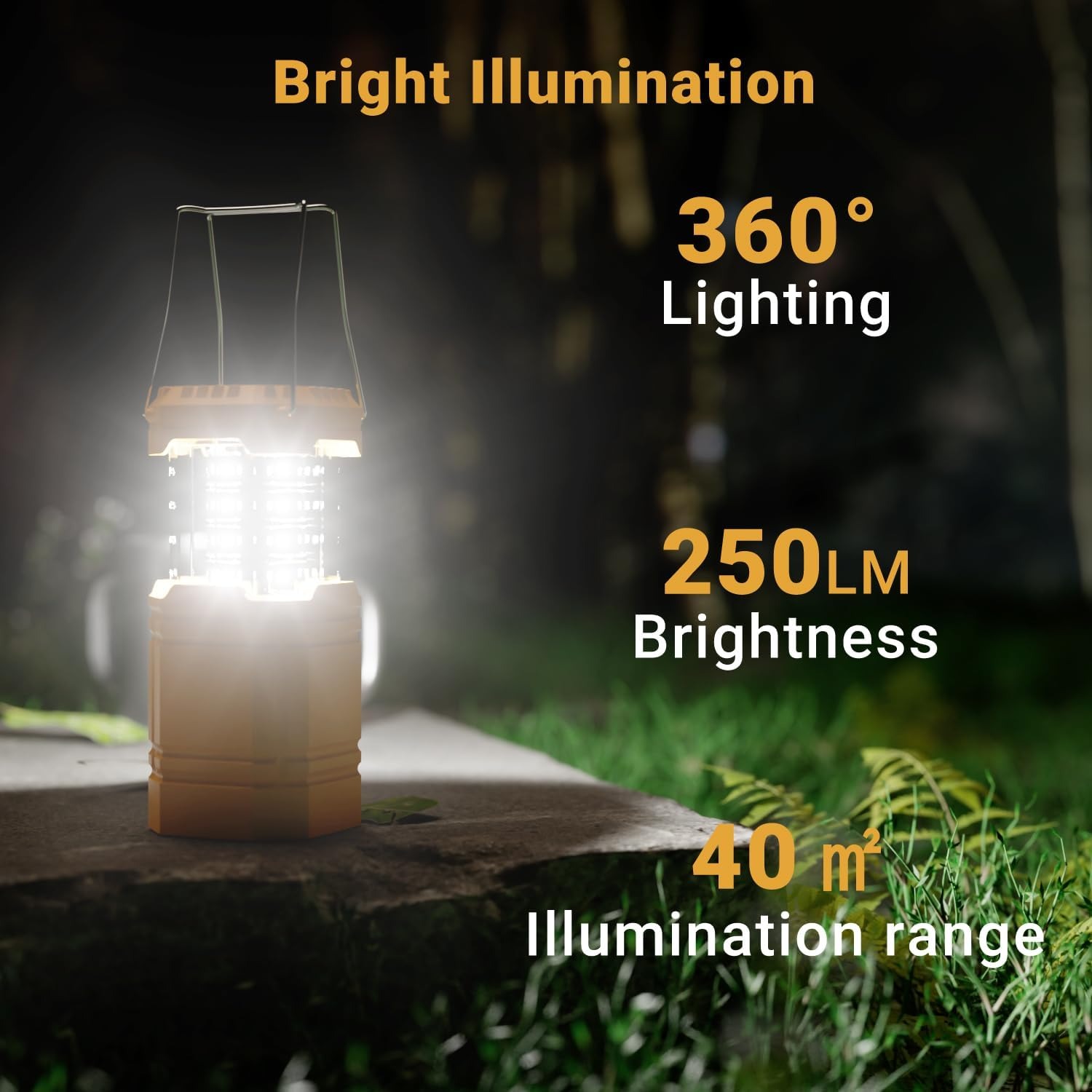
Twelve LEDs produce up to 200 lumens, spread in a 360 degree beam. That is area light. Put it in the middle of a table and the whole group gets a share. It is enough for cooking, cards, reading a map or finding a sock in a tent. It will not light a field, and no sensible lantern this size would claim to.
There is a torch in the base for directional work, which is useful more often than you would expect. Pegs, zips, under the bonnet, the back of a cupboard. An SOS mode is included for signalling if something goes wrong.
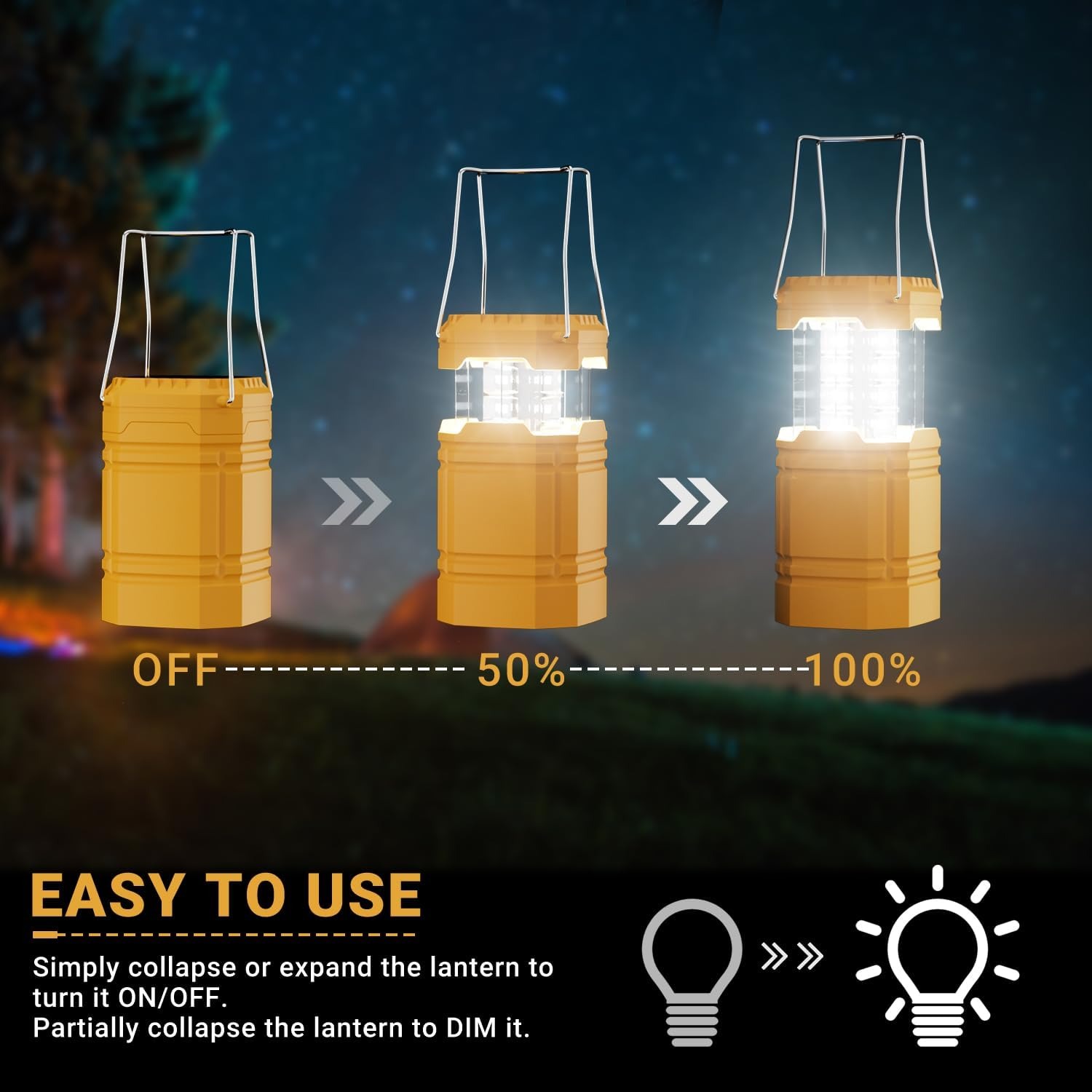
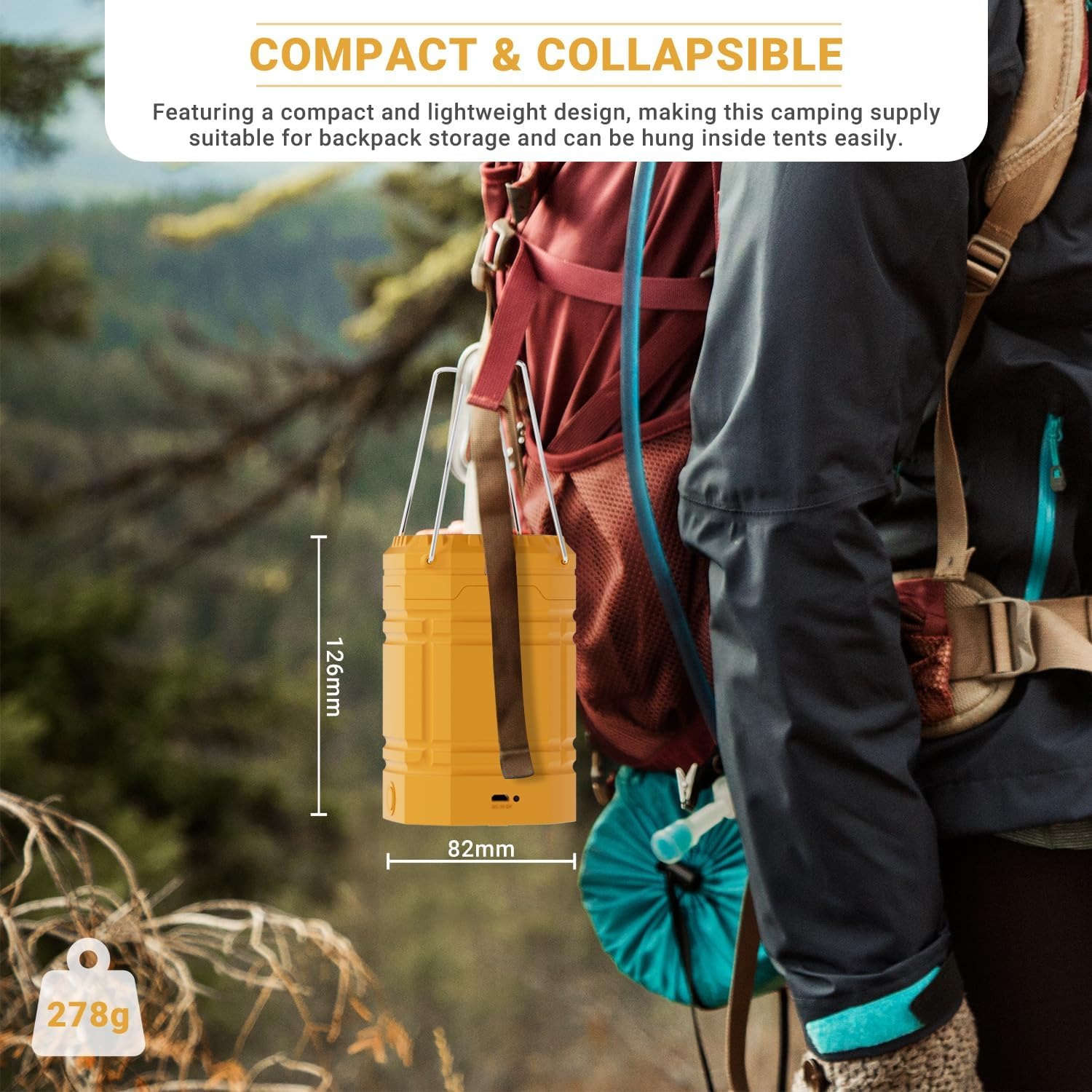
The housing is matte plastic and waterproof, so rain and spray are fine. It weighs 278 grams and collapses down, so it packs small. Operation is a pull to turn on and a push to turn off, with no button to find in the dark. That sounds like a small detail until you have fumbled with a tiny rubber switch while holding a tent flap with your teeth.
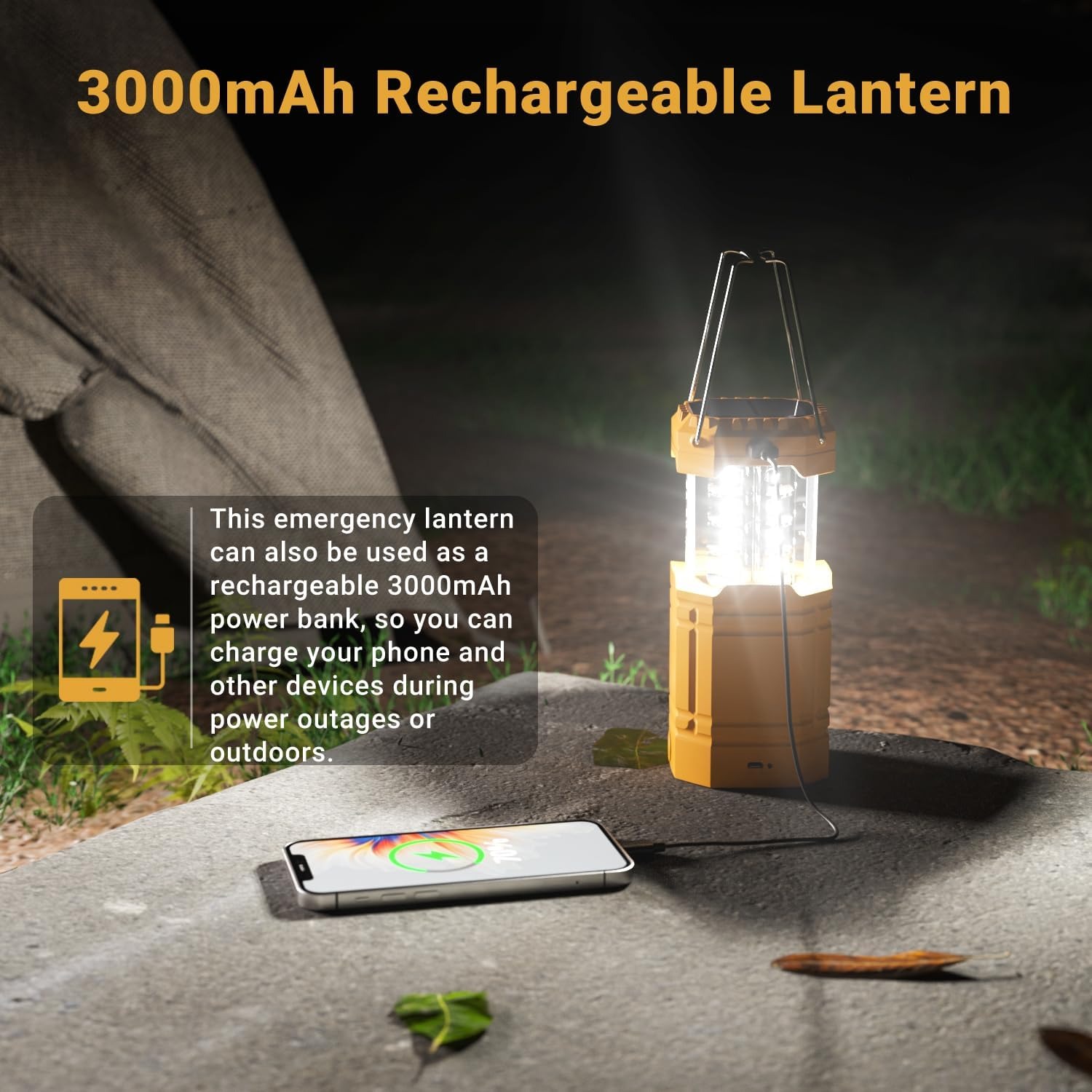
The lithium-ion battery also acts as a power bank at 5 V, so you can feed a phone when there is nothing else around. Think of it as a top-up, not a full recharge, because light and phone charging draw from the same battery.
Who this suits
Car campers and caravanners get the most out of it, because the lantern spends the day on a dash or a table soaking up sun and the evening on the table doing its job. Families like it because it is simple enough for a child to operate and there is no flame involved.
Fishers appreciate the waterproof housing and the 360 degree spread on a bank or a deck. Dog walkers use the base torch. Festival goers like that it is light and that it recovers from a flat battery without a powerpoint.
Then there is the emergency use, which is honestly where a crank lantern earns its place. Keep one in the glovebox, one near the switchboard and one in the go-bag. A lantern that makes its own power is the only kind that is guaranteed to be alive when you reach for it after a year of neglect. For anyone assembling a kit, this is the sort of survival lantern that does not need maintenance to stay useful.
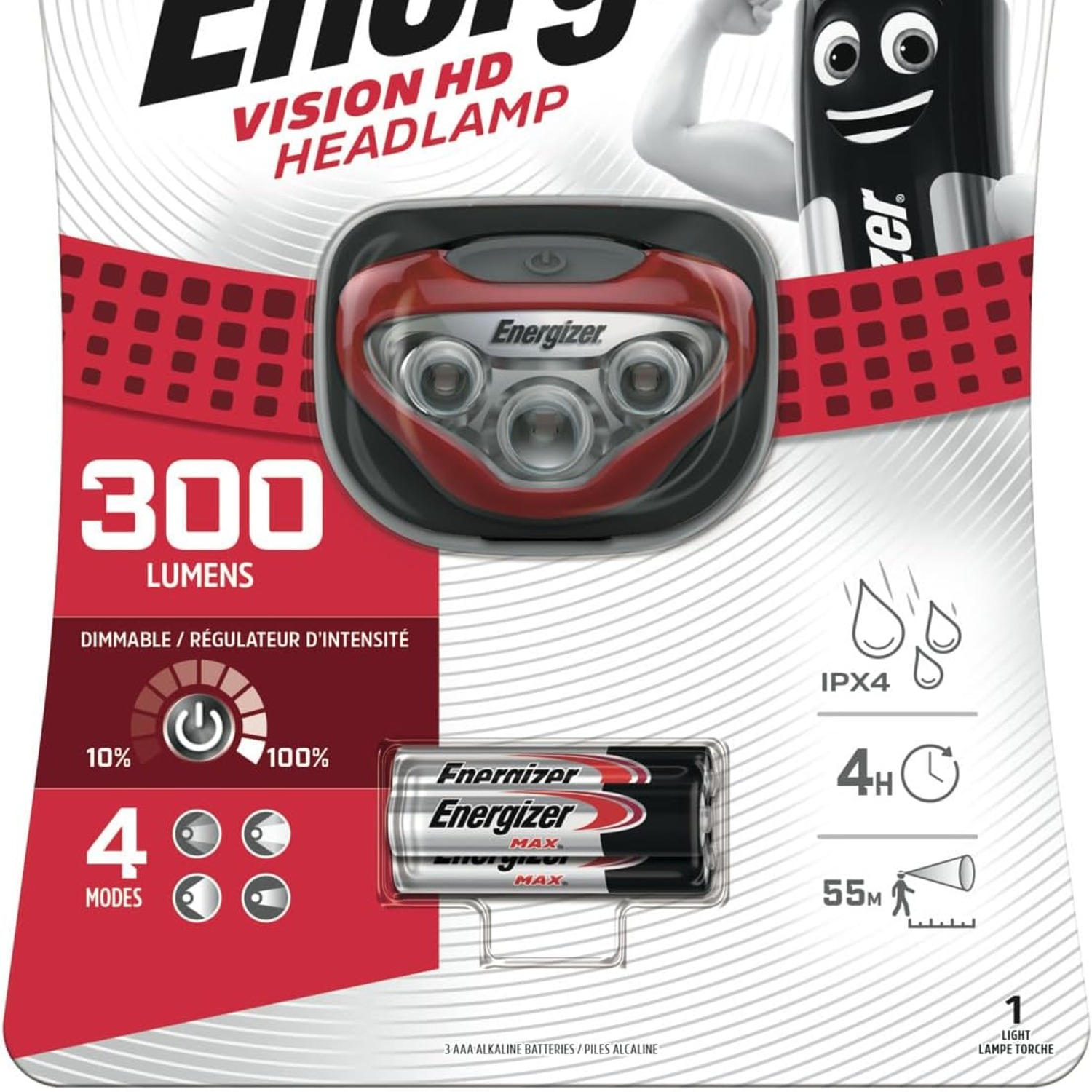
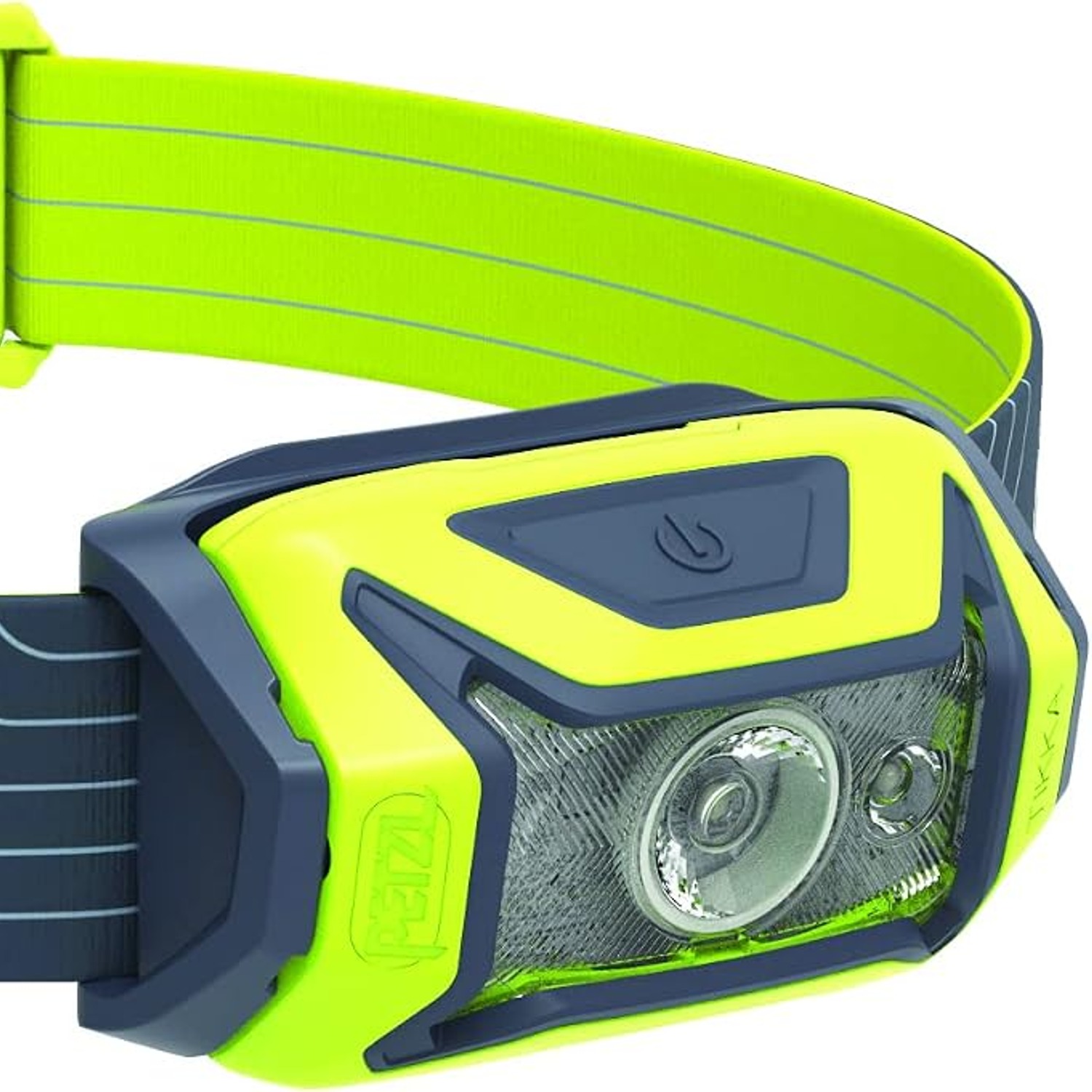
Ultralight hikers counting every gram may still prefer a headlamp. For almost everyone else, 278 grams is nothing.
How to choose between lanterns
A few things matter more than the spec sheet suggests.
Think about how you will recharge it in real life, not in theory. A lantern with only USB charging is fine if you camp with a power site or a big battery bank. If you do not, multiple charging paths are worth more than extra lumens.
Look at the beam pattern. A 360 degree lantern is for sharing light. A torch is for pointing at things. Having both in one body, as this one does, means you carry fewer items.
Consider how it turns on. Buttons get stiff, get pressed accidentally in a pack and get hard to find at 2 am. Pull-up operation avoids all three issues.
Think about weight and packed size honestly. People overestimate how much they will tolerate carrying. A collapsible camping light that folds flat gets packed. A bulky one gets left at home.
Finally, be realistic about brightness. Two hundred lumens is plenty for a tent, a table or a room. Chasing very high lumen numbers usually means a bigger battery, a heavier body and a light that is uncomfortable to sit next to anyway.
Getting the most out of solar
Solar charging rewards a bit of habit. Keep the panel clean, because dust and fingerprints cut the charge rate more than people expect. Thirty seconds with a damp cloth at pack-down is worth it.
Give it direct sun, not shade or window glass where possible. A dashboard works. A picnic table works. Clipped to the outside of a pack while you walk works. Flat on the ground under a tree does not.
Treat solar as a slow trickle that tops you up through the day, not as a fast charge. Arrive at camp with a full battery from a USB charge at home, then let the sun keep it there. The crank sits behind both as insurance.
Care and storage
Wipe the housing and panel with a soft damp cloth and let it dry before it goes away. Skip solvents and scourers, which haze the solar panel and dull the plastic. Keep the charging port covered and dry.
Do not submerge it. Waterproof means it handles rain and splashes, not swimming.
For storage, collapse it, keep it dry and keep it out of direct heat. Give it a charge every few months if it is sitting unused, because lithium batteries prefer not to sit completely flat for long stretches. If it lives in a car, tuck it under a seat rather than on the dashboard, since baking summer heat is hard on any battery.
And store it somewhere you will actually remember. The best emergency light for blackouts is the one you can find in the dark without thinking.
The short version
This is a 200 lumen collapsible LED lantern that charges from the sun, a USB cable or your own hand. It gives 360 degree light for a table or tent, has a torch in the base, an SOS mode, a waterproof plastic body and a battery that can top up a phone. It weighs 278 grams and turns on by pulling it open.
It is not the brightest lantern on the market. It is the one most likely to work when you need it, which over a few years of camping trips and power cuts turns out to be the thing that matters.