
The complete guide
How To Choose An Ultralight Camp Chair That Is Actually Worth Carrying
The problem with camp chairs
Most camp chairs are built for a car boot. They are wide, padded, have a mesh cup holder, and weigh three or four kilos. That is fine when the campsite is ten steps from the tailgate. It falls apart the moment you have to walk anywhere.
So hikers sit on rocks. Or logs. Or a folded sleeping mat on wet ground. After a long day on your feet, that is not rest, it is just a different kind of discomfort. Your back has nothing to lean on and your legs go numb.
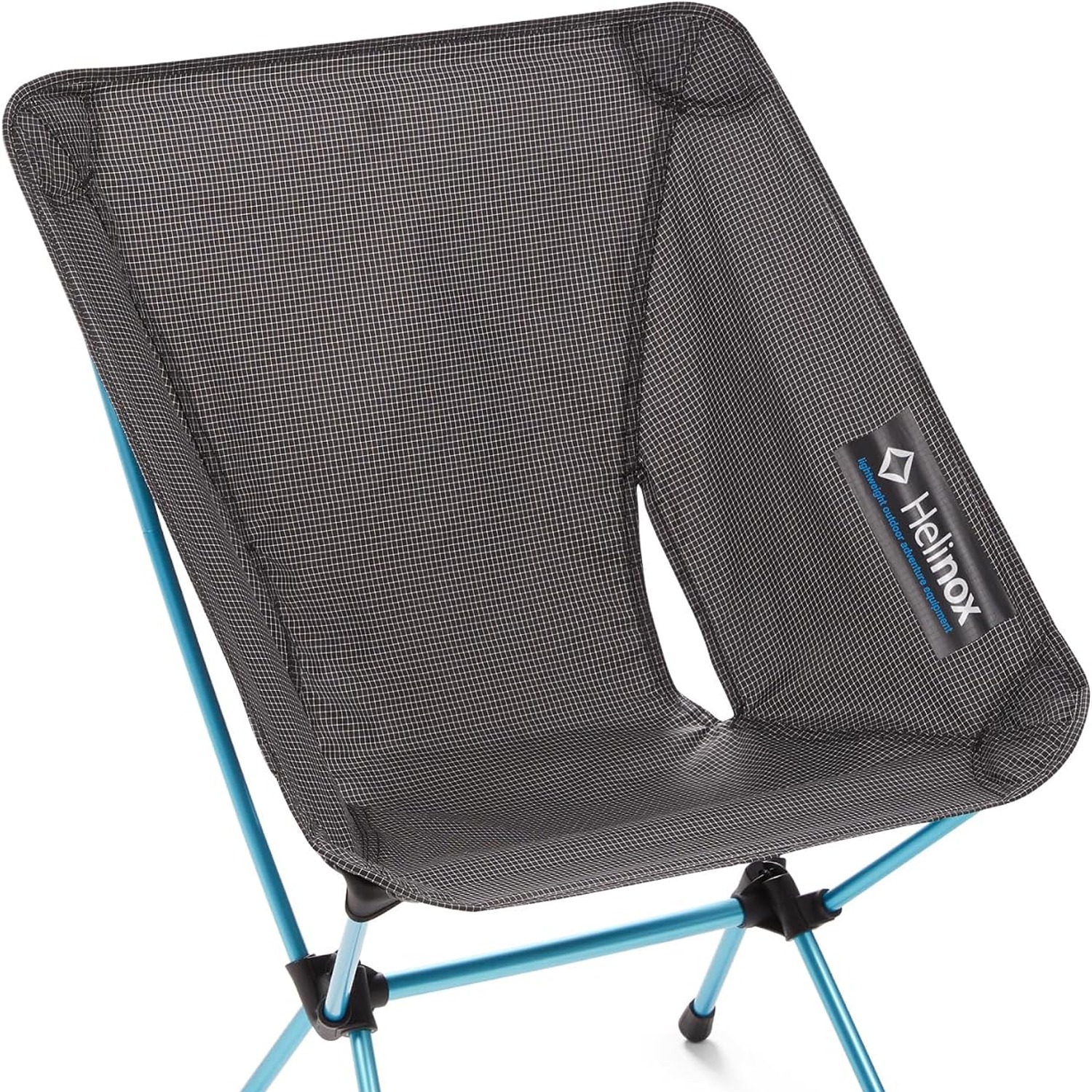
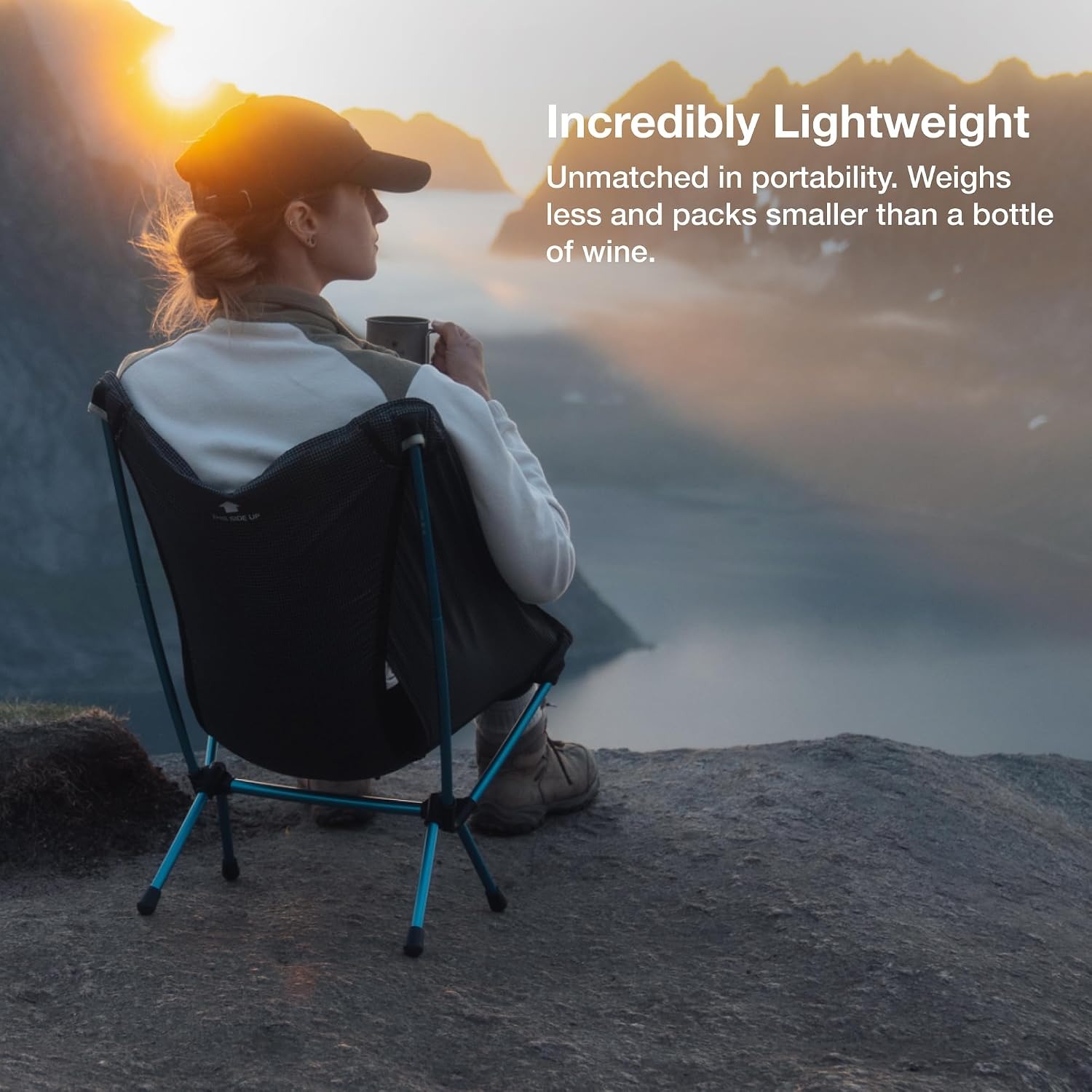
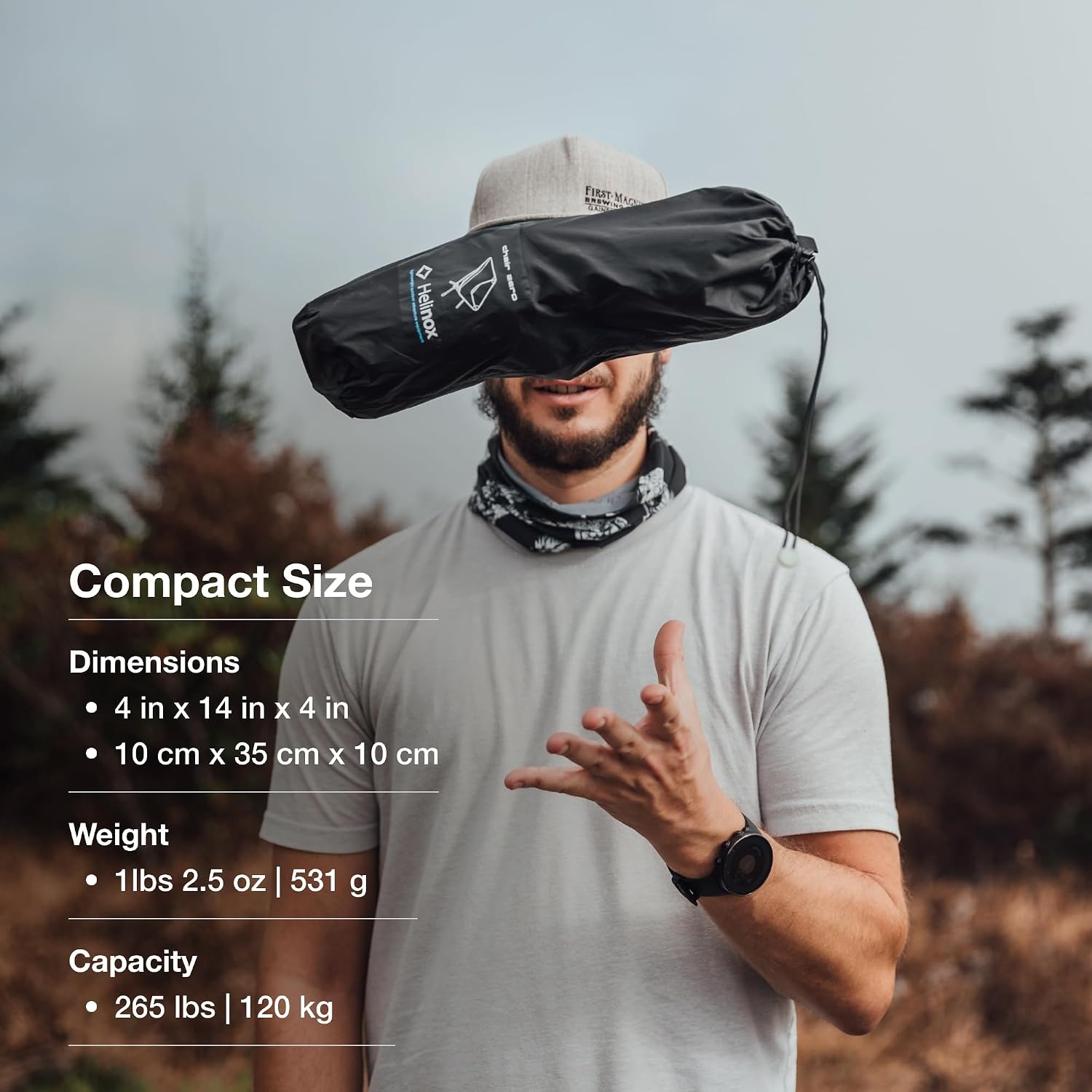
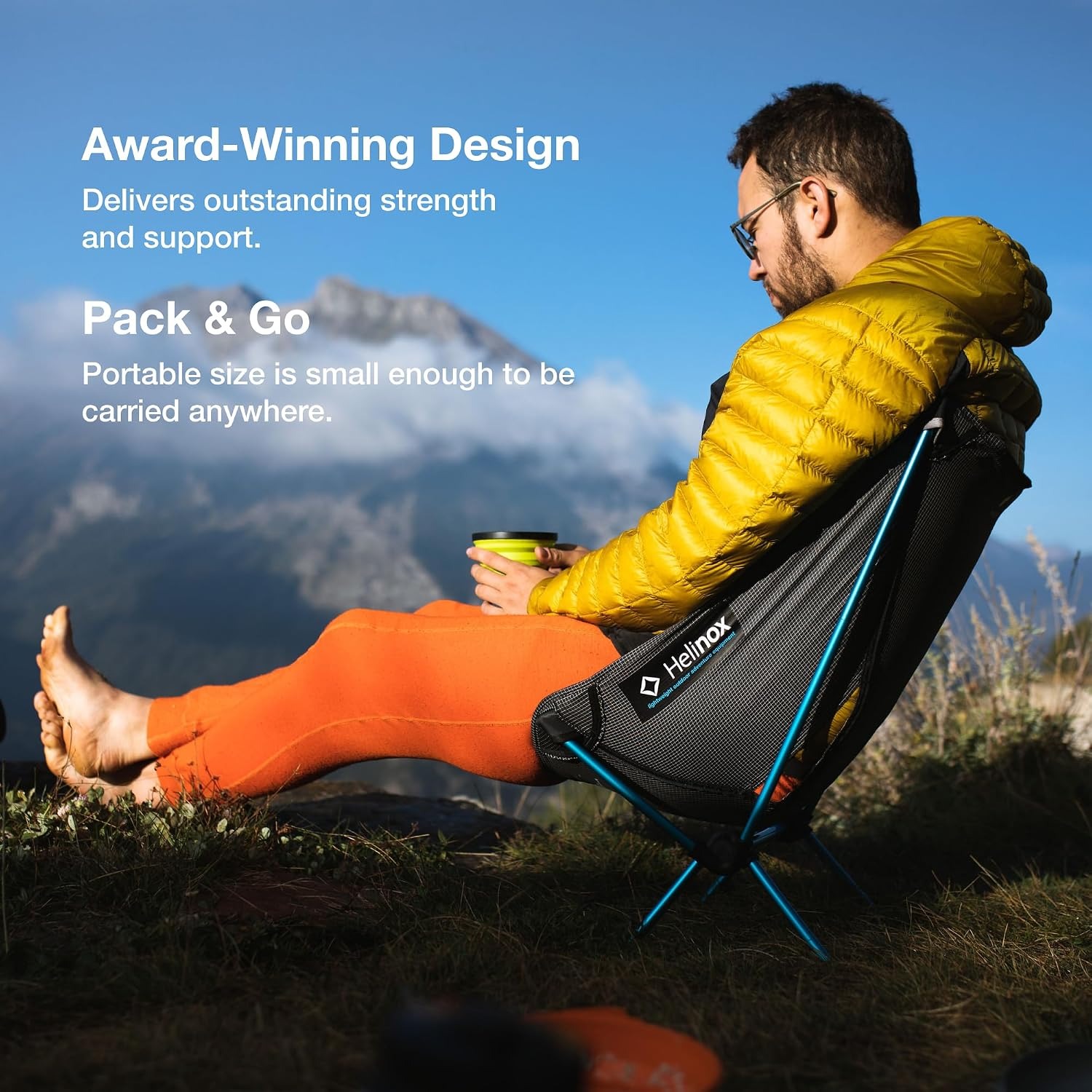
The Helinox Chair Zero exists to solve exactly that gap. It weighs 510 g and folds into a case that slips inside a pack. It is not a lounger, and it does not pretend to be. It is a real seat with a real back that you can carry up a hill.
How a pole-and-fabric chair works
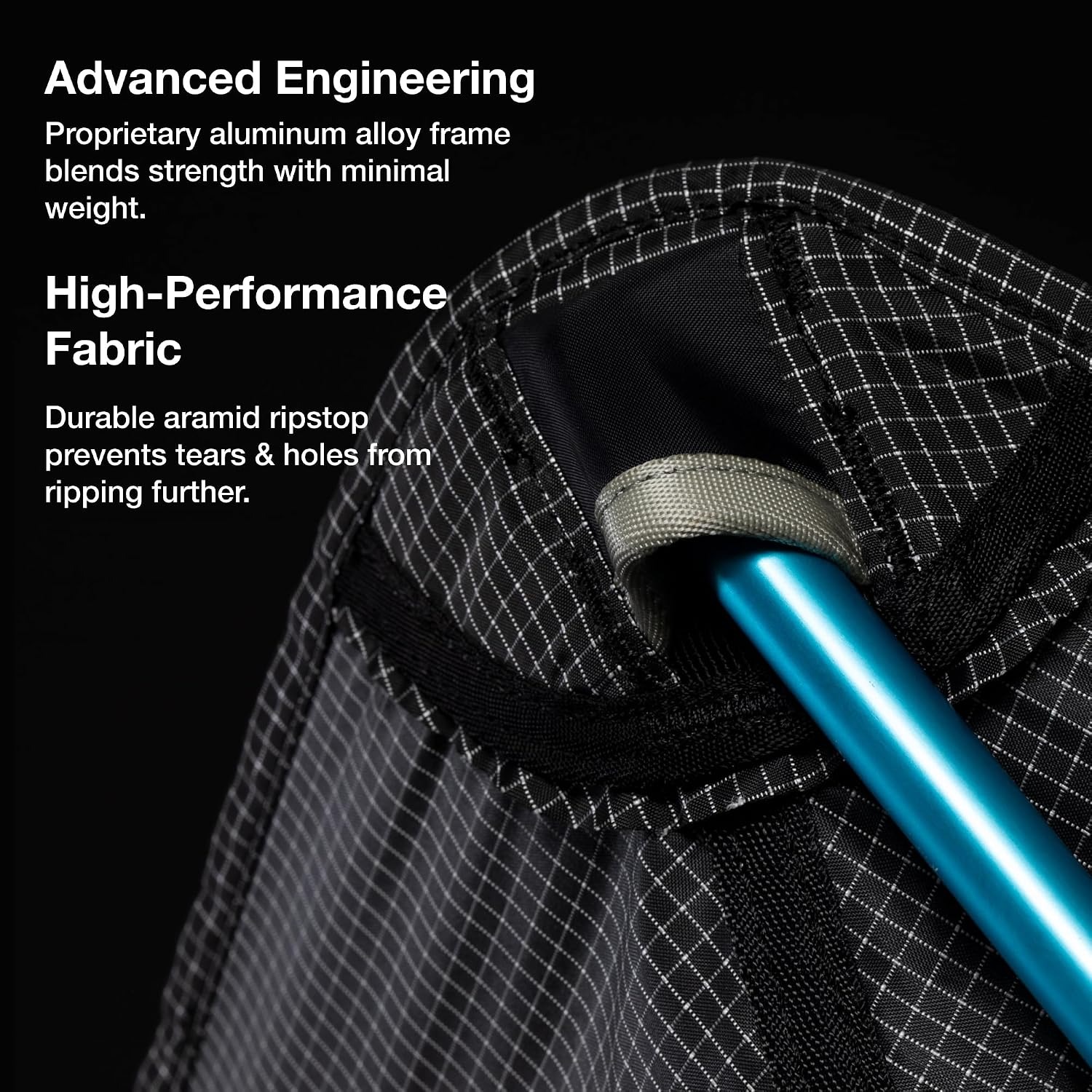
The design is simple once you see it. A set of aluminium poles is threaded with an internal shock cord. Pull them from the transport case and they want to line up. You push the segments together, form the hub, and you have a frame.
Then the ripstop polyester seat hooks over the four pole tips. The fabric goes under tension, which is what gives the chair its strength. Your weight pushes down on the sling, the sling pulls the poles inward, and the whole structure locks itself together. Nothing is bolted. Nothing needs a tool.
This is why it can be so light. A traditional chair needs heavy hinges and steel tubing because the frame carries the load on its own. A tensioned fabric chair shares the load across the sling, so the poles can be thin. Helinox lists the maximum weight recommendation at 120.2 kg, which is a serious number for something this size.
Taking it down is the same in reverse. Unhook the seat, pull the hub apart, and the poles fold at their joints. Thirty seconds, maybe less once you have done it a few times.
Who it suits
Hikers and thru-hikers. If you count grams, 510 g is a real decision. Some people carry it on every trip and some leave it behind on fast sections. The ones who carry it tend to keep carrying it, because an hour of comfortable sitting at the end of a 25 km day changes how the next morning feels.
Paddlers. Kayak and canoe trips have volume limits rather than strict weight limits, and this packs tiny. It also dries fast, which matters when everything gets splashed.
Bikepackers. The packed size fits in a frame bag or a seat pack. That is unusual for a chair with a backrest, and it is why riders looking for the best compact camp chair keep landing on this one.
Festival and event people. Carrying a chair across a car park and through a gate for six hours is miserable with a heavy one. This weighs almost nothing and takes up no room when you are standing near the stage.
Travellers. Van trips, beach days, kids' sport sidelines. It works anywhere that packing small matters more than having a padded armrest.
How to choose
Start with weight, because that is the whole point. If you are not going to walk with it, a heavier chair will probably be more comfortable for less money. The Chair Zero makes sense when the walk is part of the plan.
Next, look at seat height. This one sits at 8.5 inches, which is low. Low is stable, and it is relaxing. It is less ideal if you have knee or hip issues that make getting up from the floor hard. Try sitting on a low step at home to see how that feels before you commit.
Then think about the ground you will actually use it on. Small feet sink in soft sand and mud. That is a trait of every chair in this category, not a fault. A small foam pad, a flat rock, or a set of aftermarket foot discs solves it, and most people only need that on beach or snow trips.
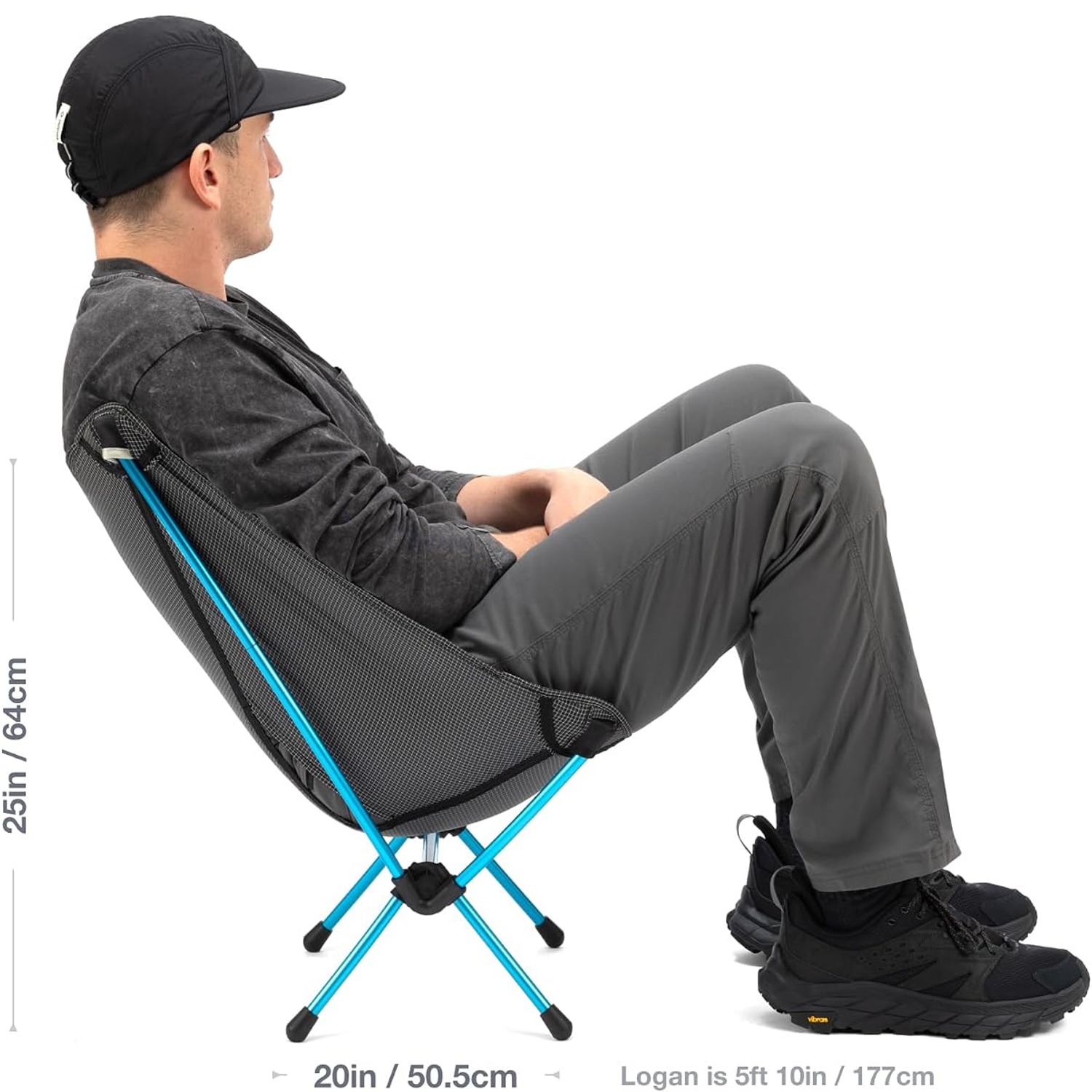
Check the dimensions against your body. Set up, it is 48 cm deep, 52 cm wide and 64 cm high, with a 52 cm seat depth. That is a proper adult footprint, not a stool. If you are tall, the low seat means your knees sit higher than your hips, which many people find comfortable but some do not.
Finally, consider the warranty. A manufacturer's five-year warranty is a reasonable sign that the maker expects the chair to last. Thin aluminium and lightweight fabric get a lot of suspicion, and a five-year commitment answers some of it.
Living with it
The first few setups feel fiddly. By the third one you will stop thinking about it. The shock cord does most of the work, and the seat only hooks on one way.
Treat the pole ends with some care. The fabric corners take the load, so hook them on fully rather than half-seated. Pulling the seat off while the frame is still under tension is the quickest way to stress a corner.
Keep grit out of the joints. Sand is abrasive, and aluminium ferrules wear if you keep jamming them together with sand inside. Tap the segments out and wipe them after beach trips and you avoid the issue entirely.
Dry it before it goes in the bag. Polyester dries fast, but a wet chair sealed in a case for a week will smell. Hang it over a tent guyline for twenty minutes and it is done.
Care is otherwise easy. Wipe clean with a damp cloth. No machine washing, no dryer, no bleach. Store it out of direct sun, since UV is what ages outdoor fabric fastest.
What it is not
It is not a padded recliner. There is one reclining position and no tilt. There is no cup holder, no side table, no insulated pocket.
It is not the cheapest chair you can buy. Ultralight gear carries a price for the engineering and materials that make it light.
It is also not a children's chair. The age range is teen and adult, and the slim frame is best treated with some respect.
Being clear about this helps you decide. If you want a chair to sit in all afternoon beside a car with a drink in the holder, buy a big one. If you want the best backpacking chair you can carry twenty kilometres and still be glad you brought, this is the conversation.
The short version
The Helinox Chair Zero weighs 510 g, sets up in seconds on a shock-corded aluminium frame, and holds up to 120.2 kg on a ripstop polyester sling. It stands 64 cm high with an 8.5 inch seat, packs into an included transport case, and is covered by a manufacturer's five-year warranty.
It is black, it wipes clean, and it does one job well. If the reason you have never carried a chair is that every chair was too heavy, that reason has run out.