

The complete guide
Choosing a Head Torch, A Practical Buyer's Guide
The problem with holding a torch
Think about the last time you needed light in the dark. Maybe a fuse tripped and you were feeling your way along a hallway. Maybe you were pitching a tent after a long drive, or looking for a dropped keyring under the car seat. In nearly every one of those moments, you needed both hands and you only had one.
That is the whole case for a head torch. It is not a clever gadget looking for a problem. It solves one of the oldest small annoyances there is, which is that light and hands compete for the same limited resource. Strap the light to your head and the competition disappears. You look at the thing, the light lands on the thing, and your hands do the work.
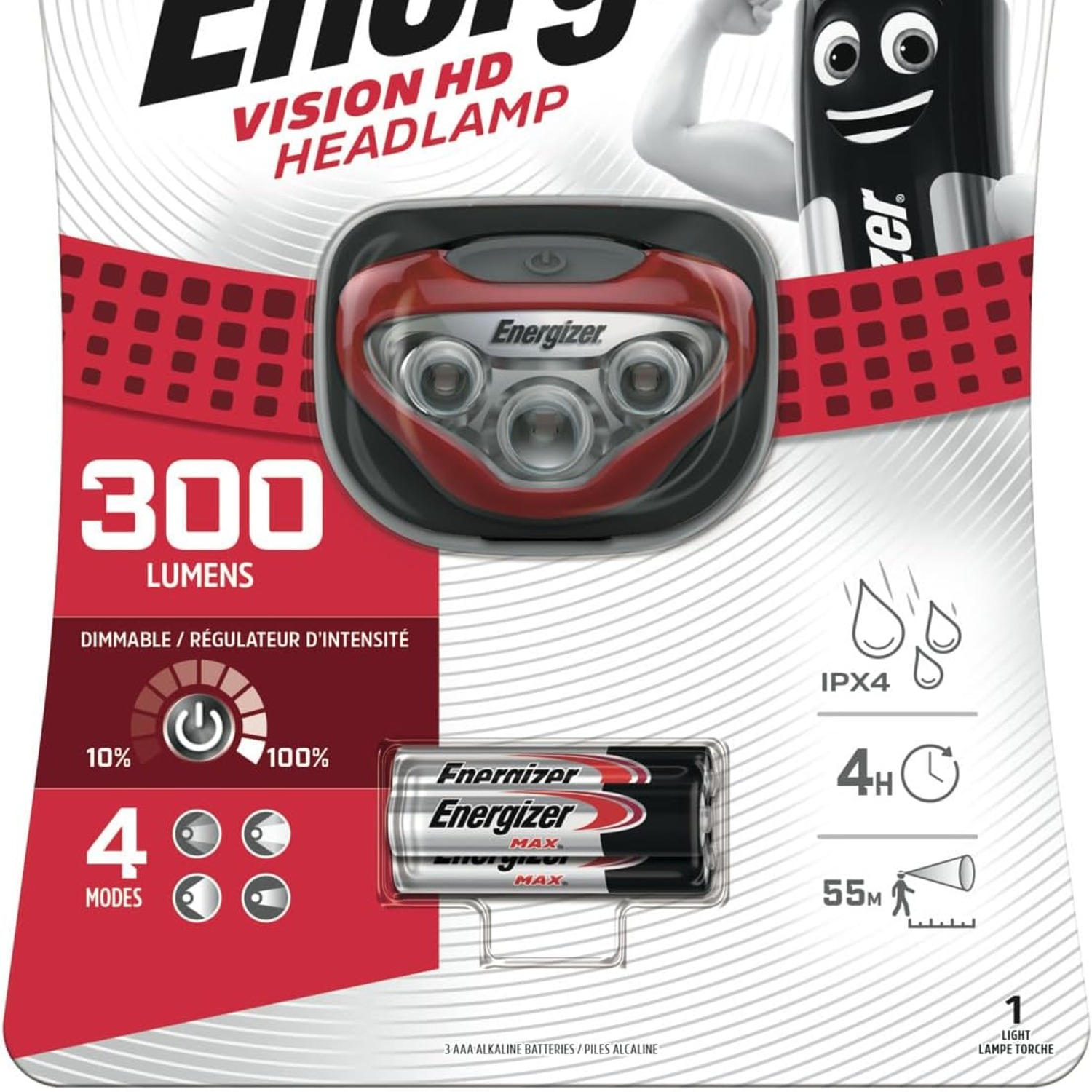
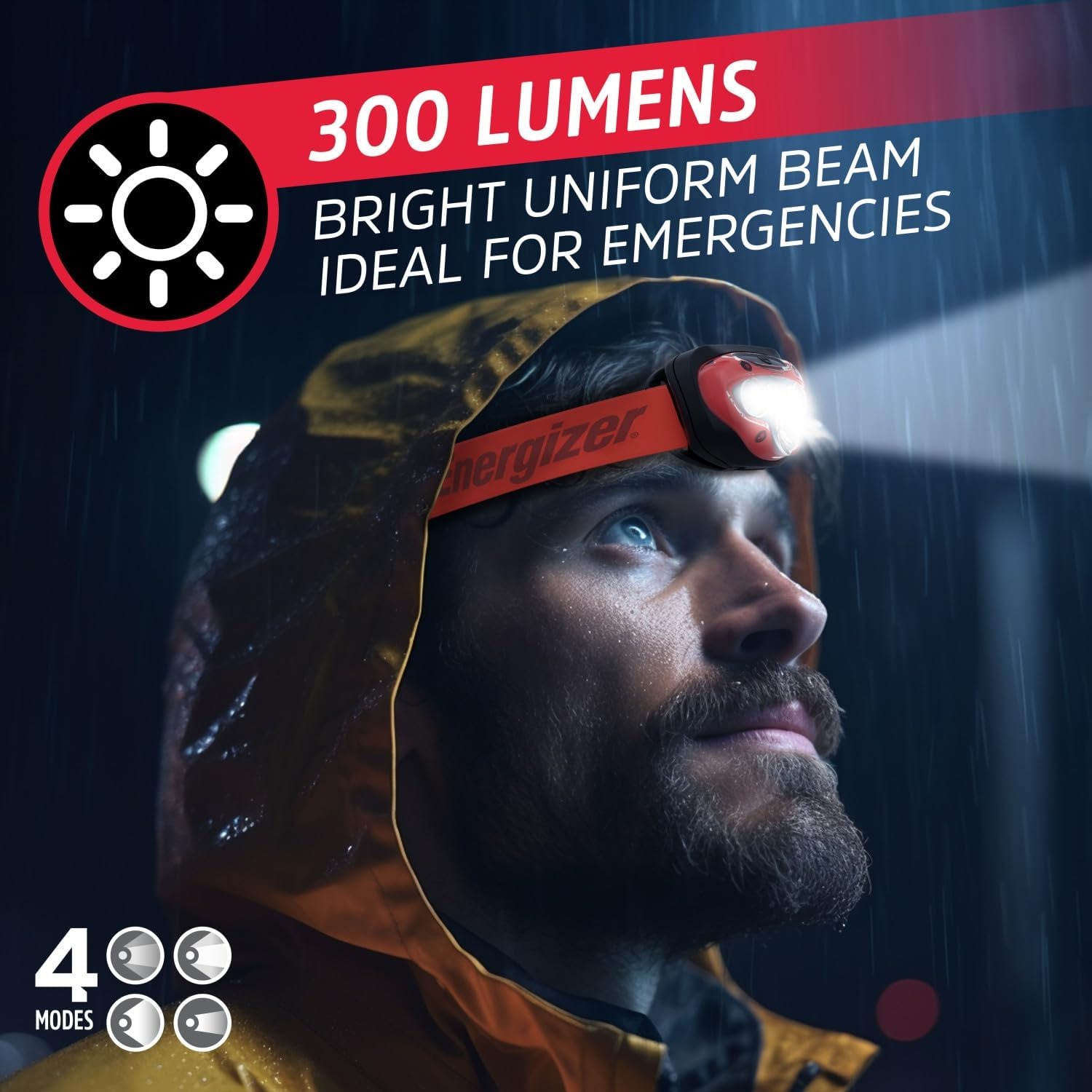
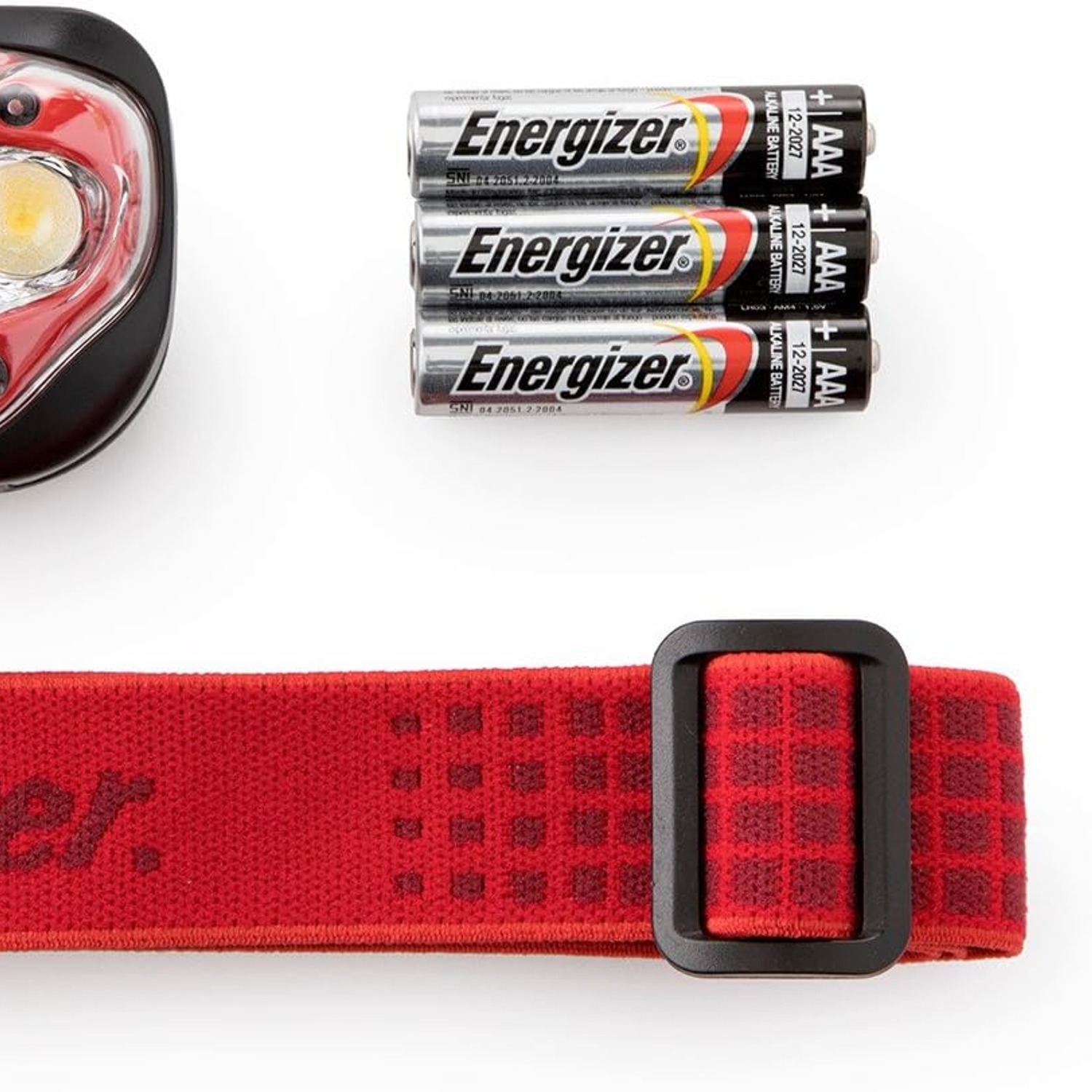
The Energizer Vision HD is a straightforward version of that idea. Four LED light sources, a rated 150 lumens of white light, an 18 metre beam and three AAA alkaline batteries that come in the box. It weighs 60 grams. There is nothing exotic about it, and for most everyday use, that is exactly the point.
How a head torch actually works
The mechanics are simple. A small housing holds the LEDs, a lens and the battery compartment. An adjustable strap holds the housing against your forehead. Most designs let the housing tilt so you can angle the beam down towards your hands instead of straight ahead into someone's face.
Two numbers tell you most of what you need to know. The first is lumens, which measures total light output. The second is beam distance, which tells you how far that light usefully reaches. This model lists 150 lumens and 18 metres. Those figures sit in the comfortable middle of the range for general use.
Higher is not automatically better. A very high lumen torch drains batteries faster, costs more, and can be genuinely unpleasant indoors because it wrecks your night vision and dazzles anyone you look at. For reading in a tent, finding gear in a boot, working under a sink or walking a known path, something in the 100 to 200 lumen band is the sweet spot. You only really need big output for off track navigation or search work at a distance.
Who this kind of torch suits
Energizer lists the recommended uses as indoor activities, outdoor activities, camping, hiking, running, biking and emergency situations. That is a broad list, but it reflects how head torches get used in practice.
Campers probably get the most value. Setting up in the dark, cooking, finding the toilet block, reading in a sleeping bag, all of it goes better with a hands free light. Anyone shopping for the best head torch for camping usually lands on a compact AAA powered unit for the simple reason that spares are cheap and fit anywhere.
Walkers and runners benefit for different reasons. Weight becomes the deciding factor there. A 60 gram unit barely registers, while a bulky torch bounces with every stride and gets abandoned after one outing. Cyclists often add a head mounted light alongside their bar lights, because a head torch shows you the corner you are looking into rather than the one you are pointed at. That said, a head torch is not a substitute for road legal bike lights, so check your local rules.
Then there is the home side of things. Tradespeople, hobbyists and anyone who maintains their own house will find a head torch earns a permanent spot in the tool kit. And everybody should own at least one as an emergency light. A blackout is far less stressful when you can walk to the metre box carrying a phone, a key and a cup of tea without needing a third hand.
How to choose between options
Start with the power source, because it shapes everything else. Replaceable AAA cells, like this unit uses, mean you can buy a fresh set in any supermarket or petrol station anywhere in the world. There is no cable to lose and no waiting for a charge. The trade off is ongoing battery cost and the need to carry spares on longer trips. Rechargeable torches flip that balance. If your light lives in an emergency kit or a camping box for months between uses, replaceable cells are usually the safer bet, as long as you store it with the batteries removed.
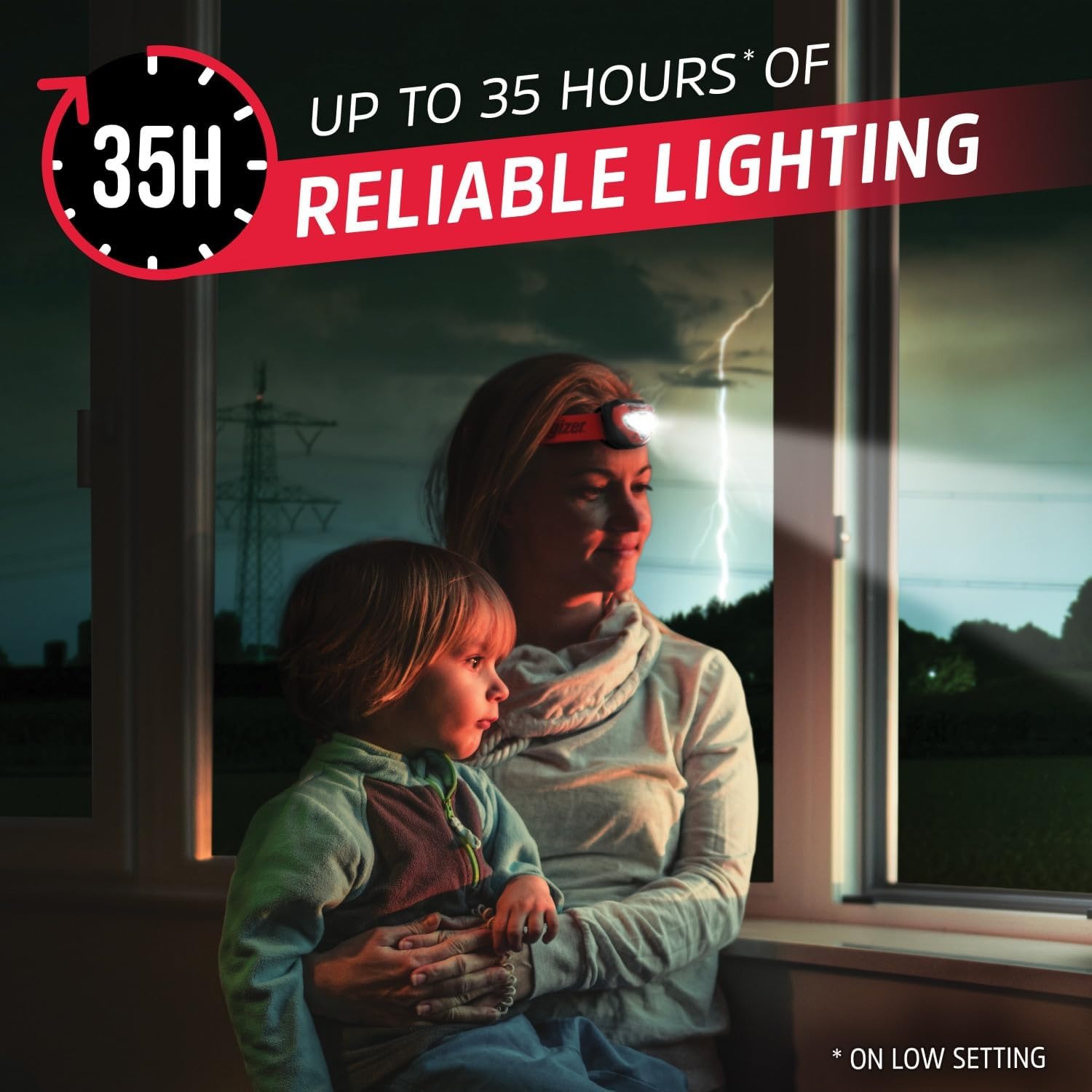
Next, think about runtime. This model lists 4 hours. For a weekend of camping where you use the torch in short bursts, that goes a long way. For an all night task, plan on a spare set. Remember that cold weather shortens alkaline battery life noticeably, so winter use eats into the figure.
Weight is the third factor and the one most people underestimate. Anything light enough to forget about gets worn. Anything heavy gets left in the bag. At 60 grams this one is firmly in the first category.
Finally, consider fit and size. The compact 18 by 16 by 29 millimetre housing packs away easily, which matters if you are counting grams in a pack or trying to keep a glovebox tidy. The adjustable strap should sit snug without pinching, and it should still fit over a beanie or a cap.
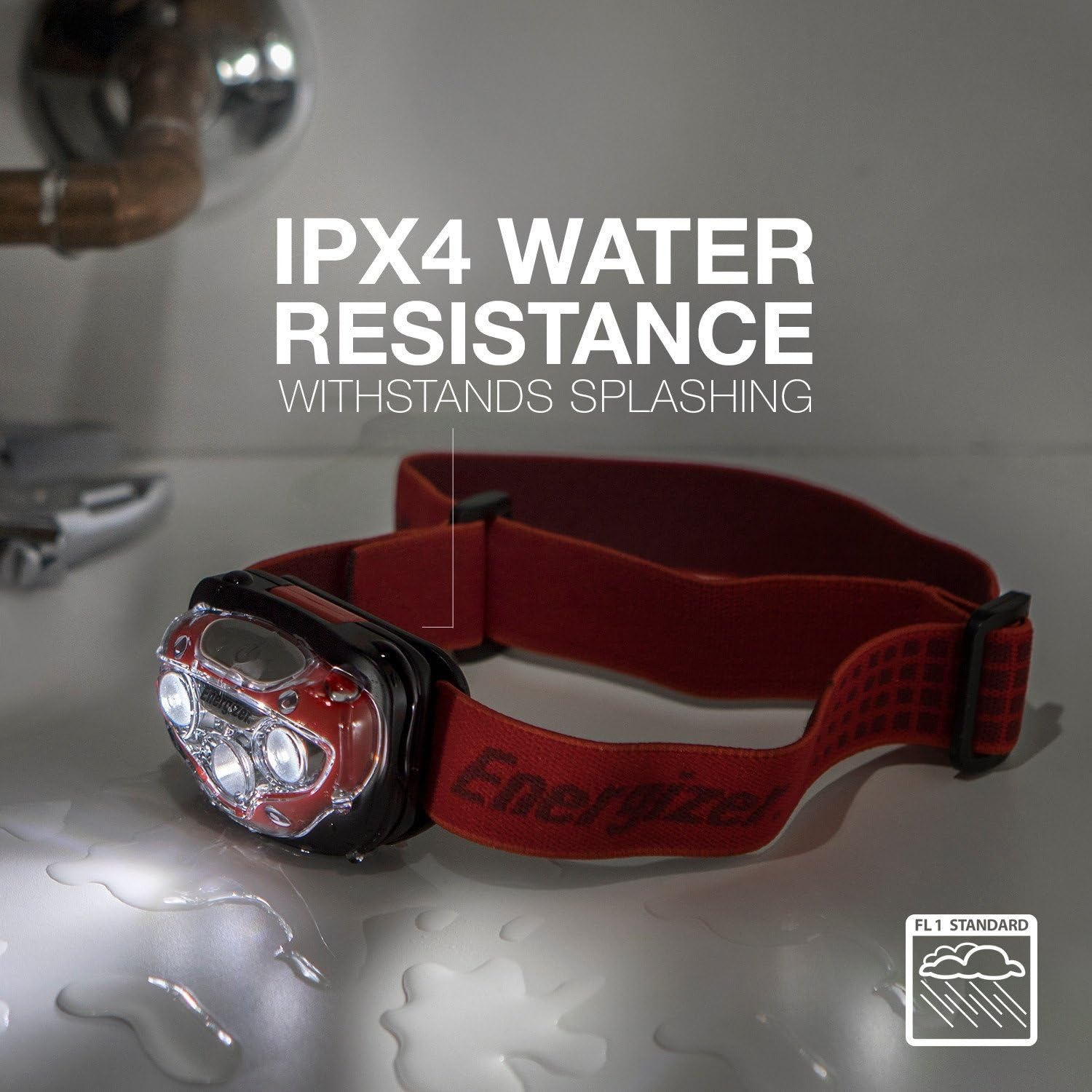
One note on water resistance. The supplier data for this model is inconsistent on that point, listing both a waterproof feature and a not water resistant rating. Because those contradict each other, we are not claiming a confirmed rating. Treat it as a torch to protect from heavy rain and never submerge.
Looking after it
Care is not complicated, but a few habits make a real difference to how long a torch lasts.
Wipe the housing and lens with a soft, slightly damp cloth and dry it before putting it away. Skip solvents and scouring pads, which cloud plastic lenses fast. Hand wash the strap in cool water when it gets sweaty or grubby, then let it dry fully.
The most important habit is battery management. If the torch is going into storage for more than a few weeks, take the three AAA cells out. Alkaline batteries can leak over time, and leaked electrolyte ruins the contacts. A torch stored with the batteries out and a fresh set taped beside it will still work in three years. One left loaded in a hot car might not.
When you do replace batteries, change all three at once rather than mixing a fresh cell with two tired ones. Match the polarity markings inside the compartment and close it firmly. Store the torch somewhere cool and dry rather than on a sunny windowsill or a dashboard.
The short version
A head torch is one of those purchases that seems minor until you own one, and then you quietly buy two more. The Energizer Vision HD covers the ordinary cases well. It gives 150 lumens from four LED sources, reaches about 18 metres, runs around 4 hours on three included AAA alkaline batteries, and weighs just 60 grams on an adjustable head mount.
If you want a light for serious night navigation across rough country, look at higher output options and carry a backup. If you want something reliable for camping, walking, running, biking, DIY and the next power cut, this sits comfortably in that space. Keep a spare set of AAA cells with it, store it with the batteries out, and it will be ready the next time you need both hands and some light.