
The complete guide
How to Choose an Adjustable Camping Table That Actually Gets Used
The problem with eating outdoors
Camping gear tends to fall into two piles. There is the stuff you use every single trip, and the stuff that lives in the garage because it is too big, too heavy or too annoying to unpack. Tables are usually in the second pile. A full-size trestle table is great in theory and a pain in practice, especially if you are already squeezing in a tent, an esky, chairs and bedding.
Meanwhile the actual problem never goes away. You need somewhere flat to put food. Somewhere to run a stove that is not wobbling on tussocks. Somewhere to set a drink down without it tipping into the grass. People end up using the esky lid, the tailgate, or a flat rock, and all three are compromises.
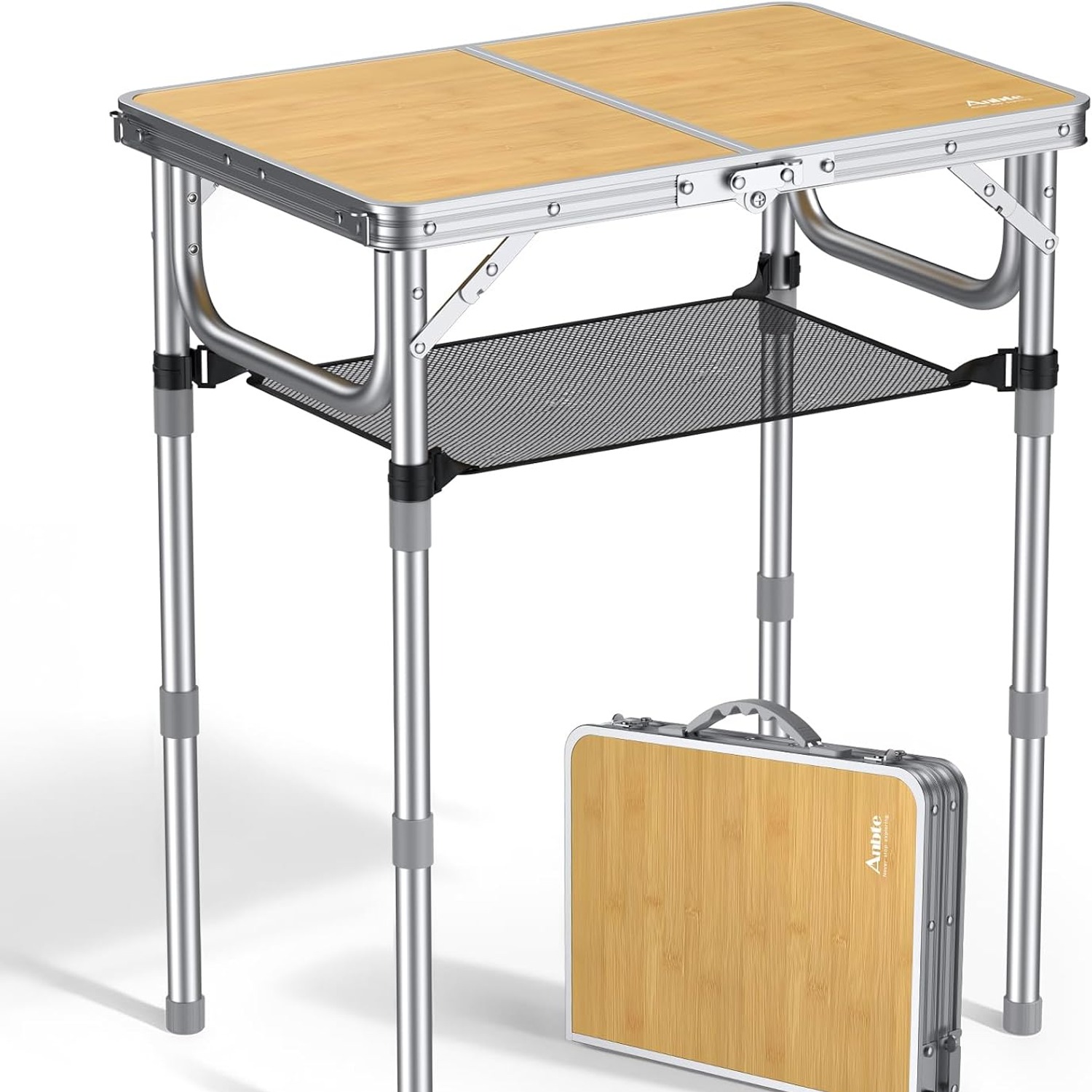
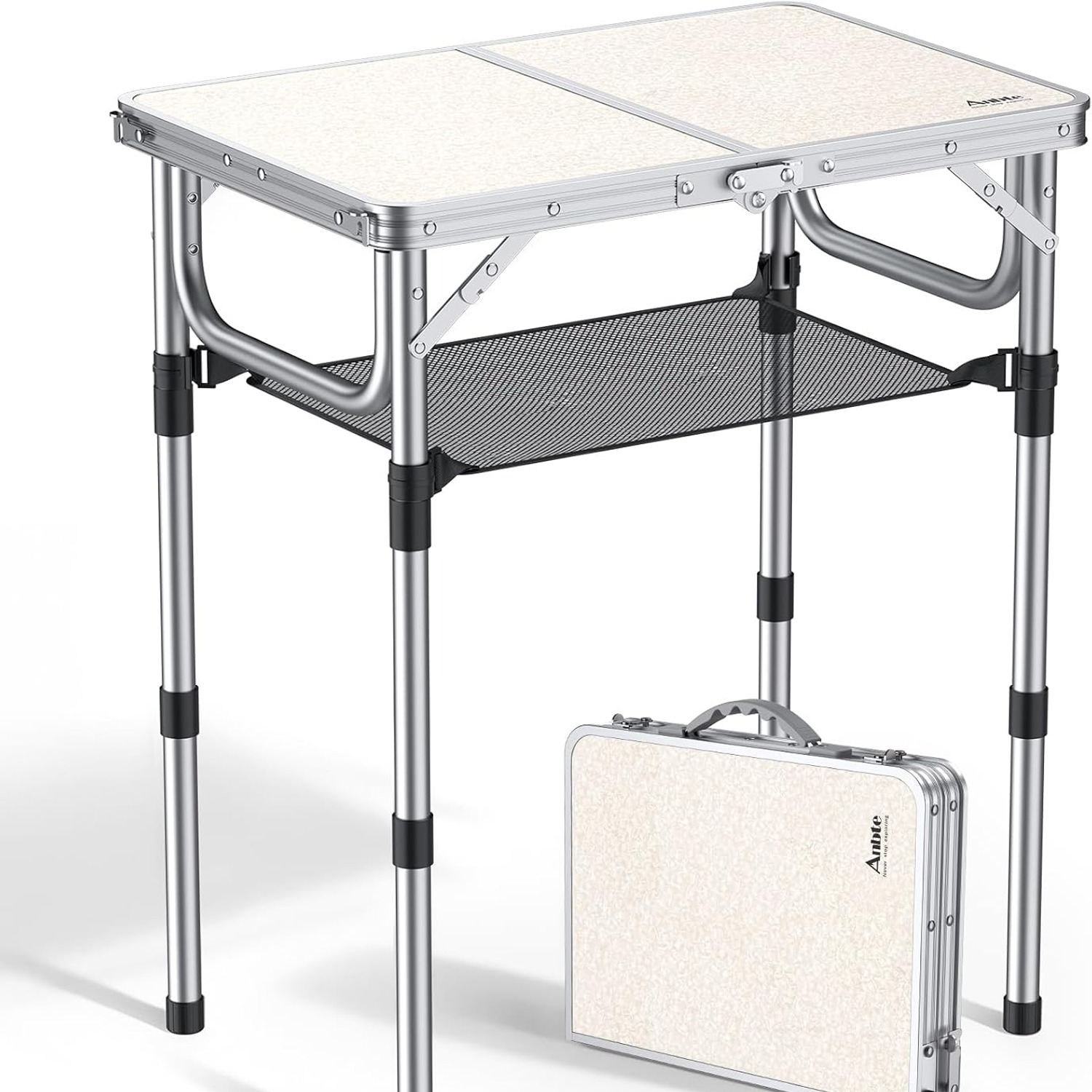
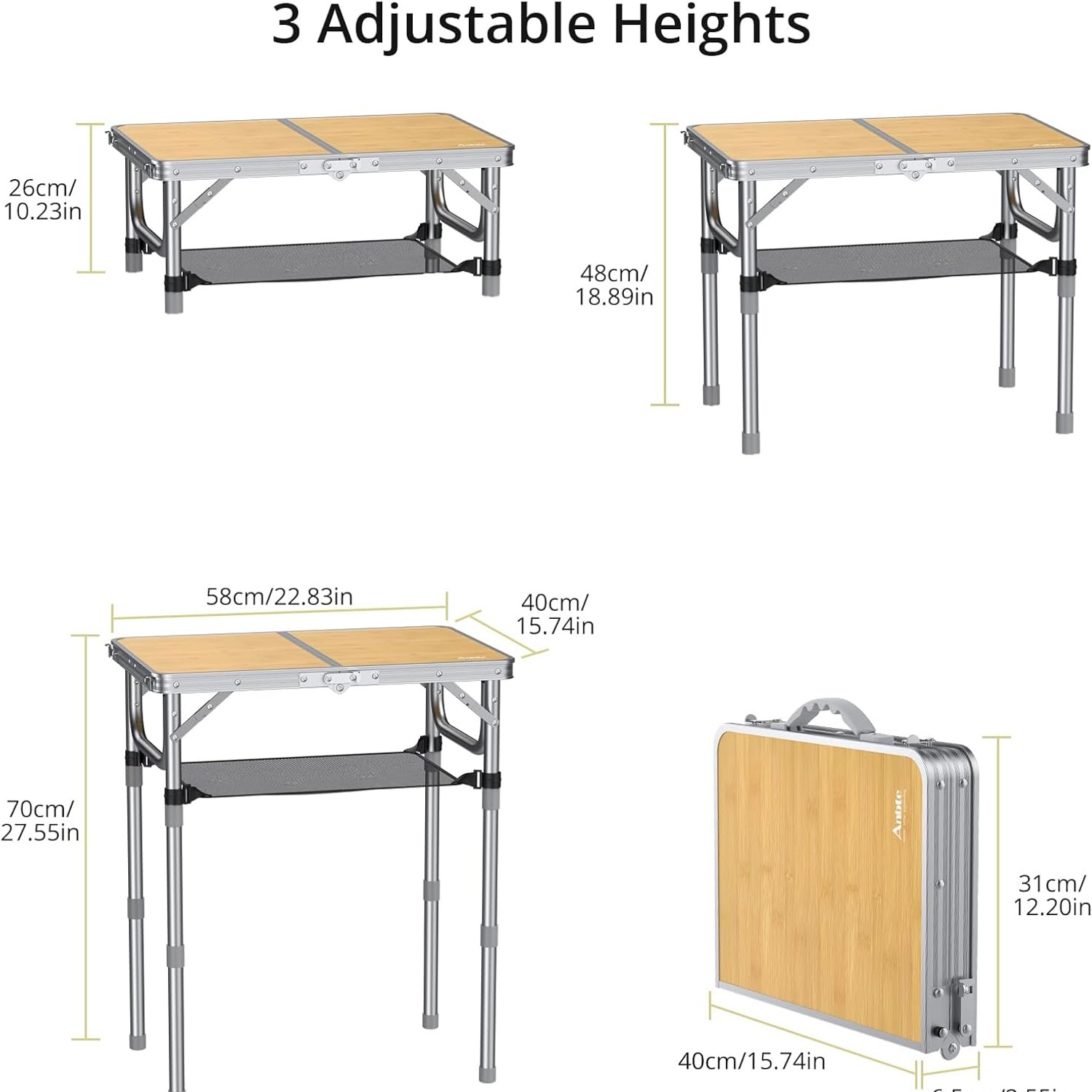
A small folding camp table solves this at a size you will tolerate carrying. This one sets up at 57.9 cm wide and 39.9 cm deep, stands 69.9 cm tall at the full setting, and weighs 2.235 kg. That is enough surface for two people to eat comfortably or four to share drinks and snacks, in a package you can carry one-handed.
How the adjustable height works
The feature that makes this table more useful than a basic fold-out is the leg system. Instead of one fixed height, there are three. You build the legs out of sections, and how many sections you use decides how tall the table sits.
Why that matters comes down to how people actually sit outdoors. On a picnic rug or at the beach, you are at ground level and a standard table height is useless, you end up reaching up to your food. On a low-slung beach chair you want something in between. On a proper camp chair or standing beside a grill, you want the full 69.9 cm.
One table covering all three means you are not buying a low picnic table and a tall side table. It also means the table adapts to the trip rather than the trip adapting to the table. A beach day and a caravan park weekend want very different heights, and this handles both.
Changing height takes seconds and does not need tools once the table is assembled for the first time. There are no clamps to slip or knobs to lose.
What the frame and top are made of
The frame is aluminium tube. Aluminium is the standard choice for portable outdoor furniture for one simple reason, it does not rust. Steel frames are stronger per gram but they corrode once the coating chips, and camping gear chips. Aluminium also keeps the weight down, which is how a table this size lands at 2.235 kg.
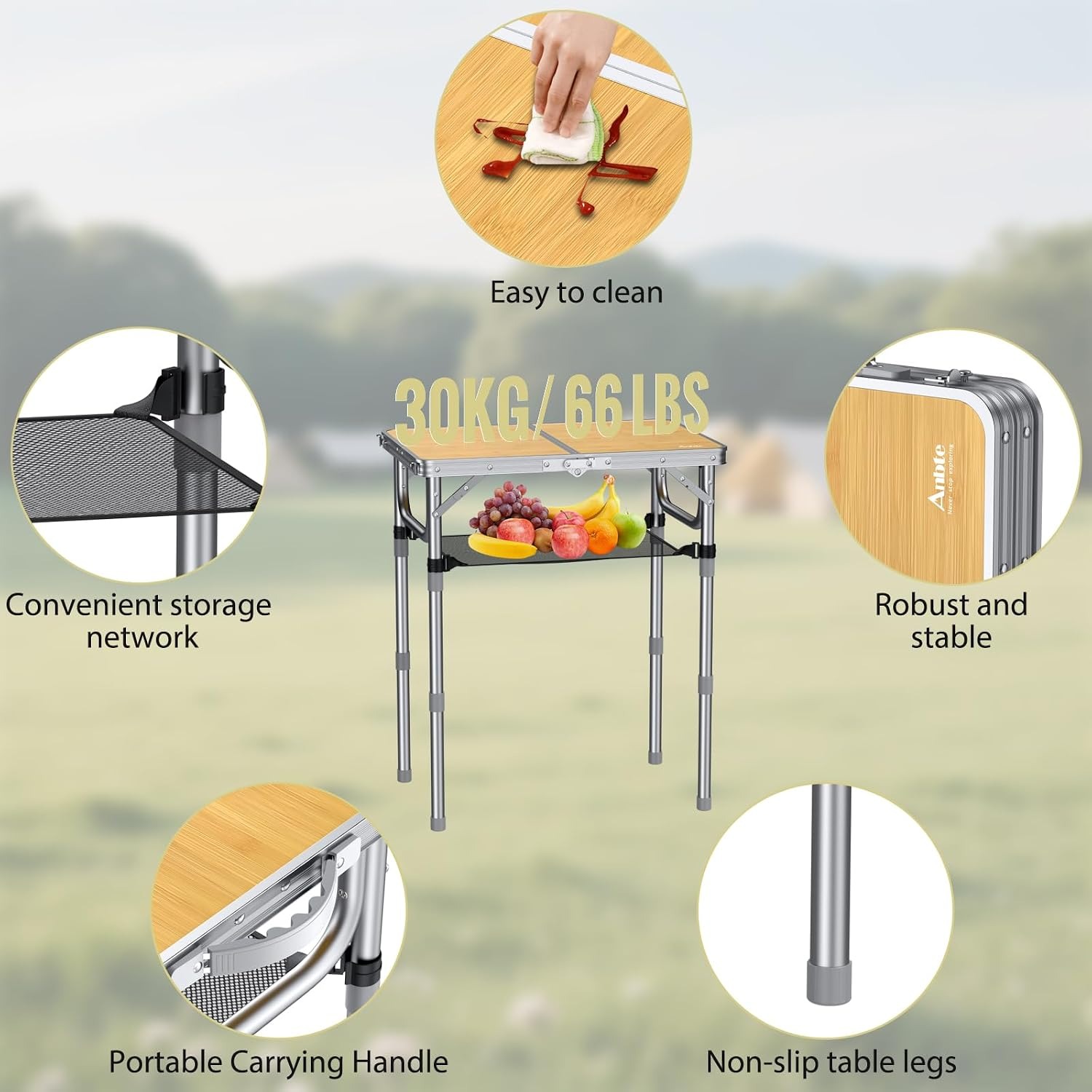
The top is engineered wood, MDF, with a painted finish in yellow. MDF gives you a genuinely flat, rigid surface at low weight, which is harder to achieve with fabric or thin plastic tops. It is listed as stain resistant, so sauce, marinade and spilled drinks wipe off rather than staining in.
The trade-off with MDF is water. Engineered wood does not like prolonged damp, and the manufacturer's care guidance is direct about it, do not use the table in wet or rainy conditions. Treat that as a real rule, not a suggestion. If you camp in weather, keep the table under an awning, and dry it before packing.
Load capacity is 30 kg. That covers a two-burner stove with a pan on it, a loaded food tray, a stack of plates and a few drinks, all at once. It is not a workbench and it is not a place to stand on, but for cooking and eating it has plenty of margin.
Who it suits
This size of table works best for a few specific groups.
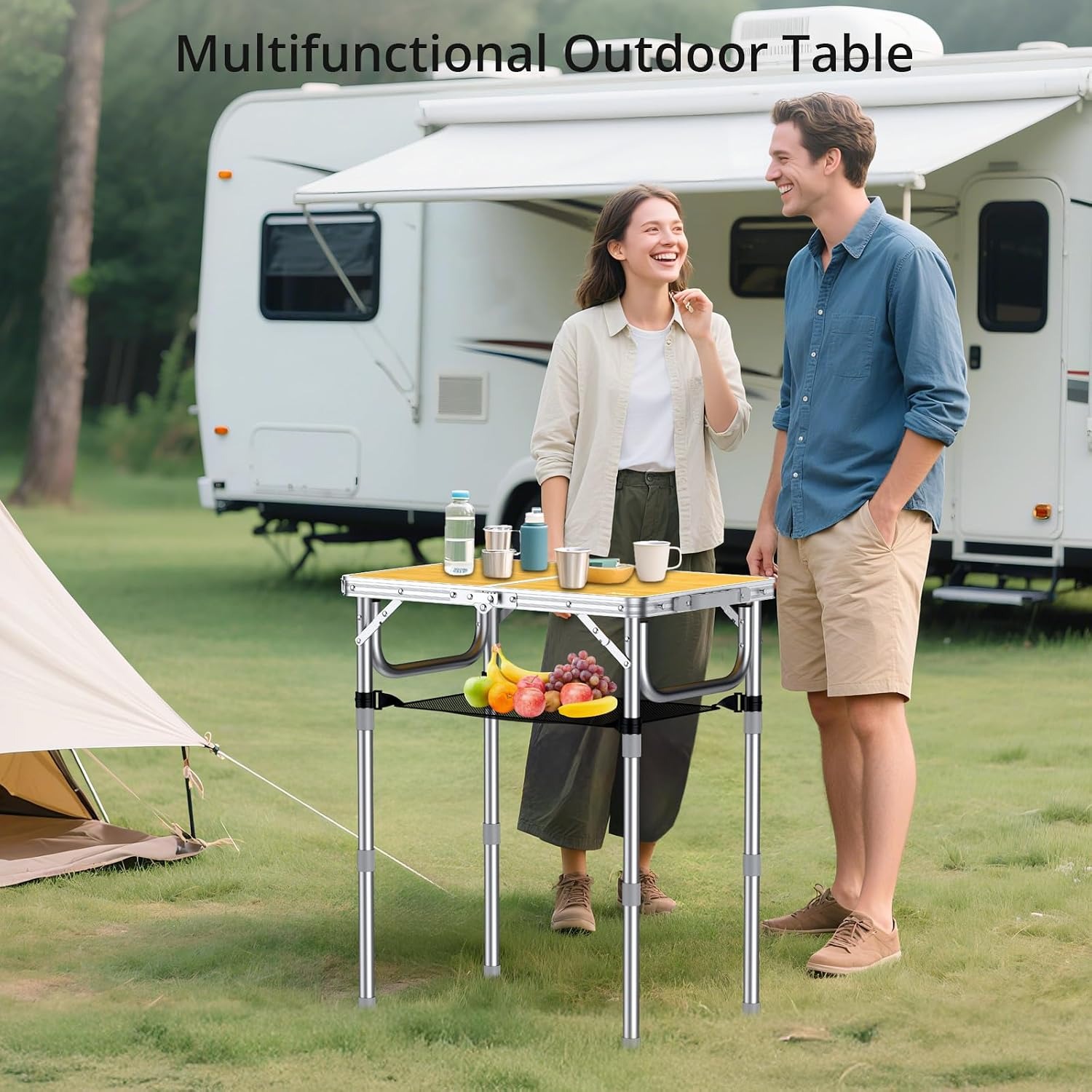
Car campers and caravanners get the most out of it. It stores flat in a locker or behind a seat, it comes out as a prep surface beside the camp kitchen, and at the end of the trip it goes away without a fight. If you already have a big table, this becomes the second surface you did not know you needed.
Day-trippers are the other obvious fit. Beach, fishing, picnic in the park, kids' sport on a Saturday. Carrying 2.235 kg from the car park is nothing, and the storage net means you are not putting phones and keys down on the sand.
Festival and event-goers use it as a tailgate table. It is compact enough to carry in with the rest of your kit and sturdy enough to hold a food spread.
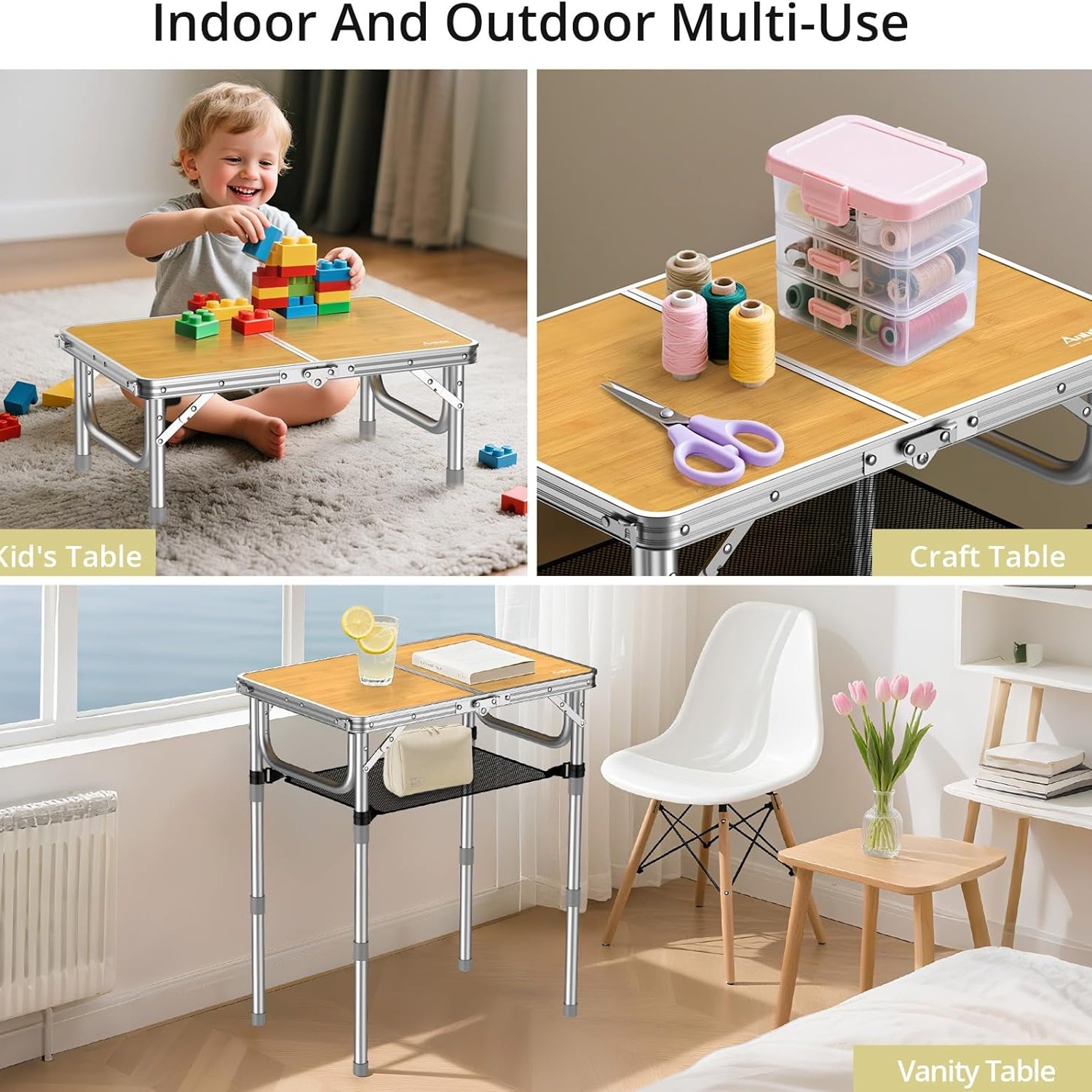
It also doubles indoors. The specifications list a study room as a room type, and at the full height it works as a temporary desk or craft table that folds away when you are done.
Who it does not suit: anyone who needs a full-size family dining table outdoors, or anyone who wants to leave a table set up permanently outside in all weather. Different product, different build.
Choosing the right size for your setup
Start with how many people you feed. A 57.9 cm by 39.9 cm top handles two full place settings comfortably. Four people can share it for drinks, cards or snacks, which matches the listed seating capacity of four. If you regularly cook and serve for five or more, plan on this being the prep or side table and bring something larger for dining.
Then think about pack space. Flat-folding tables win here, because flat things stack. A table that folds into a thick box eats boot volume even when it is light. This one folds into a flat case with a carry handle and its own bag.
Next, check your chairs. Measure the armrest height of the camp chairs you already own. If your chairs are low-slung beach style, you will likely live on the middle leg setting. If they are standard director-height camp chairs, the tall setting is your default. Knowing this before you buy saves disappointment.
Finally, be honest about weather. If most of your camping happens in sunny or dry conditions, an MDF top is a great choice because it is flat, light and easy to wipe. If you routinely camp in rain without an awning, a moulded plastic or aluminium-slat top is a safer match.
Using and caring for it
Set it up on the flattest ground you can find. After the legs are in, press gently on the middle of the top to check it is seated and level. On soft ground, a small plate or offcut under each foot stops the legs sinking.
Use the storage net the way it was intended, for small light things. Tongs, napkins, sauces, sunscreen, cutlery, a phone. It keeps the tabletop clear and stops you crouching every two minutes to find something in the grass.
Keep heat away from the surface. Hot pans, hot grill plates and anything near open flame should go on a trivet or a heat mat, not straight onto the top. Keep the whole table at a sensible distance from the fire pit.
Clean as you go. A damp cloth with a little mild detergent handles almost everything, and the stain-resistant finish means you are not scrubbing. Dry the top immediately afterwards. Do not soak it, and do not leave it sitting in a puddle.
Before you pack it into the bag, make sure every part is dry. Folding a damp table into a closed bag is the fastest way to ruin a wood-based top. Store it somewhere dry and out of harsh direct sun.
The short version
If you want one portable surface that works on the ground, in a low chair, and at standing height, this adjustable camping table covers all three. It is 57.9 cm by 39.9 cm, stands up to 69.9 cm, weighs 2.235 kg, holds up to 30 kg, and folds flat with a carry handle and bag.
The aluminium frame keeps it light and rust-free. The engineered wood top stays flat and wipes clean. The net underneath keeps small gear off the ground. Keep it dry, keep hot pans off it, and it will come on a lot of trips.